A few years back I received the following image from a colleague, who shares this handout with students and teachers:
The question is, “Which one are you today?”
Are you the one smiling and standing on top? Crossed-armed and alone out on a limb? Are you helping someone climb on? Watching someone fall?
This simple image can lead to a fruitful discussion of personal success, challenges, and concerns. It also helps to stop and reflect from time to time, since our place and activity in this image can change. What caused the change? Circumstances? Attitude? Actions?
Try this activity with your colleagues or class the next time you have a few spare moments. It’s a good start or end to a session. Take the opportunity to intentionally self-evaluate.
Or here is a superhero alternative, featuring everyone’s favorite Canadian superhero Wolverine (art by the amazing Scottie Young):
Are you the triumphant, classic costumed Wolverine on top? The squished one in the middle? The samurai-inspired noble warrior at bottom right? The Wolvie losing his hat? The one with the claws?
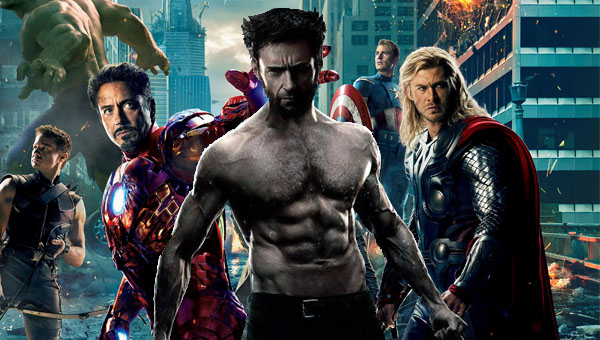
Or maybe you prefer the Wolverine portrayed by Hugh Jackman in nearly 20 years of film. Even though it’s the same hero and same actor, there are plenty of moods and mannerisms to choose:
Like superheroics, teaching is a serious business requiring grit, bravery, and “a fighting spirit.” But it’s also essential to find moments of humor and fun.
Op, op, op, op oppa Gangnam Style . . .
Most importantly, teachers (and students) should take time to pause and consider their personal attitudes and positions. Are we behaving and thinking appropriately for the given situation? How can we help those around us?
(And always resist the urge to go into “berserker mode.”)
The next BIG superhero movie coming to theaters is The LEGO Batman Movie!
In a promotional stunt, LEGO Batman appeared alongside LEGO superheroes from DC Comics’s CW television shows, which you can check out below:
What makes this video clip special is it is the first time DC superheroes from the CW TV channel (Green Arrow, Flash, Supergirl, The Atom) have merged with a DC superhero from the movies (Batman).
“Big deal?” you think?
Actually there’s been a lot of chatter among fans, critics, and industry reporters about the pros, cons, and possibilities of merging film and TV-based superheroes. These are characters that come from the same comic book universe, but are featured in separate media outlets–theatrical, broadcast television, or streaming.
DC, for example, has Batman, Superman, and Wonder Woman dedicated to film, along with other heavy hitters from the Justice League (Green Lantern, Aquaman, Flash). This gets problematic, however, since The Flash also stars in his own television show on the CW (as do Green Arrow and Supergirl, who has also met a TV version of Superman).
Confused? You’re not the only one, and some people argue these two “universes” should stay separate (see here and here). Others think there could be a way to have a crossover of sorts between TV and Film (read more here).
More intermingling makes sense for Marvel superheroes, since theoretically, many of these characters actually DO live in a single universe shared between the movies (Avengers, etc.) and television shows (Agents of SHIELD, Agent Carter, Daredevil, Luke Cage, etc.).
Some people claim Marvel could and should have film and TV shows cross over. Others point out that such an event would still be a monumental and unwanted task. And that’s not even dealing with different Marvel heroes contracted out to different movie studios (e.g. X-Men/Fantastic Four with 20th Century Fox, although Wolverine actor Hugh Jackman said he’s happy to meet the Avengers sometime).
And let’s take a closer look at teachers from different universes (i.e. different grade levels).
The Teacher Channel’s blog “Tchers’ Voice” shares commentary on learning from teachers of different grades. The blog post is called “Pathway to Collaboration,” and it’s just the tip of the iceberg. Challenge yourself to find new ways to team up and learn with colleagues in your building, district, and beyond.
Sadly, there’s not much else out there about cross-grade teacher collaboration, although someone did do a doctoral dissertation on this topic. (If you need a little light reading, you can find the entire 418-page document here.)
I’ll conclude with examples of insight gained and projects accomplished when my world collided with those of other teachers.
A fourth grade teacher who showed me all kinds of management techniques and student jobs that I could also apply in my high school classroom.
A middle school science teacher who collaborated with me to successfully submit a grant for highway safety physics curriculum.
A business teacher who modeled practical classroom procedures for high school seniors, giving flexibility and freedom to young adults weeks away from graduating.
And several more colleagues, mentors, current and former students co-presenting and co-publishing academic work.
No movies or television projects yet, but maybe someday.
I stole borrowed this blog title from a recent countdown article by Brian Conin and the folks at Comic Book Resources, named “15 D-List Superheroes Who Went A-List.”
For the uninitiated, “A-List” heroes are big name characters known across the globe: Superman, Wonder Woman, Batman, Spider-Man, and so on. In the past decade, Iron Man joined this group due to Robert Downey Jr.’s iconic portrayal in the Marvel movies. (Before then, people considered Iron Man more of a “B-List” hero.)
B-lister at best
Immediate A-lister
“D-List” heroes fall much further down the rankings. These are the obscure, silly, and often forgotten characters no one really cares about. Only super fans know about these heroes, including where and when they appear in comic books and other media.
Movies and television, however, have done an amazing job of bumping up the status of many lesser-known characters. Take a look at CBR’s list to find 15 heroes you probably never heard of before they appeared in film or TV.
Better yet, watch the recently released trailer for Guardians of the Galaxy Vol. 2 (coming Summer 2017!) to see FIVE of these former D-listers in action:
That new telepathic character adorning antennae near the end is Mantis, and I’m willing to bet she’ll become another D-list-to-A-list hero in the upcoming year.
The whole letter-grade system (A, B, C, D, etc.) is at the front of my mind this time of year, near the end of a semester.
This is when many teachers spend overtime scoring tests, reading final papers, perusing projects, and altogether compiling grades. This is also when numerous students suddenly become obsessed over every single grade for every single assignment. (For some reason, too many students don’t seem to care until the last minute.)
Unfortunately, letter grades can easily get too much focus in place of more important outcomes.
Grading has many critics, such as Alfie Kohn, who calls grades “relics of a less-enlightened age” and cites research about their negative impact on student learning and motivation. You can read more in the NEA Today article, “Are Letter Grades Failing Our Students?” and learn about alternative ideas used in different states and districts.
One of my favorite stories is of the Central Park East elementary school, known for its progressive “whole child” approach to education in inner city Harlem. In one of her books (The Power of Their Ideas, I believe), former CPE principal Deborah Meier describes how they removed their A-B-C grading system in favor of “Satisfactory” and “Unsatisfactory”-type ratings. Soon, however, they added an “Advanced”-level designation. Then they decided to include a +/- system to further delineate student performance.
In other words, they went from A-B-C-D to A-S-U, plusses and minuses and all.
I’m not saying grades are good or bad, but they certainly have become entrenched in most educational systems. The key is to focus on learning and growth, with grades providing one type of data to guide teacher decisions and communication. Also, it’s important to remember the differences between “assessment” and “evaluation.”
I highly recommend reading Thomas Guskey’s article “Making the Grade: What Benefits Students?” in the ASCD’s journal Educational Leadership. You will find a useful section at the end that provides a historical summary of grading practices and research through the years.
Most importantly, teachers can consider how to reach and teach ALL of their students, regardless of past academic performance. With the diverse range of strengths and weaknesses in a given classroom, one’s definition of success can differ greatly. Find ways to engage each student, equipping them for further achievement and advancement.
Consider how various superheroes have changed from being jokes, relics, or “one-offs” into major players or even champions of their universes (and publishers). In many cases, this transformation did not occur just because of a Hollywood appearance. It also takes someone (or someones) to see potential in a character and give him or her the attention they deserve. Often, it includes a unique perspective and innovative approach.
The same goes for students in our schools. Not everyone is a Superman. But they could be a Star Lord.
Who knows? Maybe the next Squirrel Girl is sitting in your very classroom.
While Marvel Movies are chugging along with critical and commercial success, Marvel Comics have stumbled as of late. The most glaring issue is “event fatigue,” with too many major event stories tripping over each other in attempts to be bigger and bolder than ever before!
This slideshow requires JavaScript.
Here is a list of recent crossover mini-series/maxi-series. Keep in mind that each of these involve 4-12 special issues, in addition to numerous tie-in issues happening throughout regular series.
Siege (2010)
Realm of Kings (2010)
Second Coming (2010)
Age of X (2011)
Fear Itself (2011)
Schism (2011)
Spider-Island (2011)
Avengers vs. X-Men (2012)
Age of Ultron (2013)
Infinity (2013)
Battle of the Atom (2013)
Original Sin (2014)
AXIS (2014)
Spider-Verse (2014-15)
Secret Wars (2015-16)
Avengers: Standoff! (2016)
Civil War II (2016)
Dead No More: The Clone Conspiracy (2016-17)
Death of X (2016-17)
As one comic book store owner observes, “There are quite a few Marvel loyalists that have begun branching out and trying DC titles . . . possibly from Marvel event burnout.”
“Burnout” is a common issue faced by teachers, too, popping up in those loooong middle months or near the end of the semester. Teachers may find themselves overwhelmed, frustrated, and missing a certain spark in the classroom.
Teacher burnout is frequently linked to stress, which can arise from many factors, summarized by Kyriacou (2001):
Teaching pupils who lack motivation;
Maintaining discipline;
Time pressures and workload;
Coping with change;
Being evaluated by others;
Dealings with colleagues;
Self-esteem and status;
Administration and management;
Role conflict and ambiguity;
Poor working conditions.
Stressors are specific to each individual teacher in his or her unique context. Likewise, successful ways to deal with stress and potential burnout differ from teacher to teacher. Even so, here are some strategies Kyriacou suggests:
Try to keep problems in perspective;
Avoid confrontations;
Try to relax after work;
Take action to deal with problems;
Keeping feelings under control;
Devote more time to particular tasks;
Discuss problems and express feelings to others;
Have a healthy home life;
Plan ahead and prioritize;
Recognize ones own limitations.
You can find plenty more burnout tips and tools everywhere–from research literature to cyberspace to your closest loving relative. Here are a few resources I’ve uncovered, with some of my favorite highlights (and comments):
4 Warning Signs of Teacher Burnout – “Teacher Burnout is a dark place, and only complaints can live there.” (Sort of like the Negative Zone–tread lightly.)
Ryan Gosling attending the ‘Blue Valentine’ Photocall during the 63rd Cannes Film Festival in Cannes, France on May 18, 2010. Photo by Hahn-Nebinger-Orban/ABACAUSA.COM (Pictured: Ryan Gosling) 63rd cannes film festival – blue valentine photocall
10 Tips for Surviving and Thriving in Your First Year Teaching – “7. Don’t Neglect Your Body: Sleep. Rest. Eat well. Exercise.” and “9. Catalogue Every Single Success in the Classroom: Write them down. Make lists of what’s going well.” (One of my mentors calls these “attaboys” or “attagirls,” and you should keep these in a box somewhere. Or turkey.)
Finally, here’s an inspirational quote I came across recently from master chef Julia Child, which reveals the right attitude:
“Find something you’re passionate about and keep tremendously interested in it.”
Teachers, hopefully you are already passionate about teaching and learning. And “keep that fire burning,” so to speak, by fueling your educator’s engine.
As my mother used to say, “In order to burn out you must first be on fire.”
And so as the Human Torch says, “Flame On!”
Kyriacou, C. (2001). Teacher stress: Directions for future research. Educational Review, 53, 28- 35.
We’re not talking about Charles Darwin and biological evolution. Although if you’re into that stuff, you can find all kinds of humorous imagery like this:
And if you like teacher accessories, you can snag this image on a mug, t-shirt, apron, mouse pad, and more HERE.
The type of evolution this post deals with is that of teachers (inspired by superheroes, of course).
YouTube user (and movie fan) Burger Fiction has put together some nifty videos highlighting every film and television appearance of various superheroes.
The most recent hero featured in these videos is Marvel’s Captain America, which you can watch here:
You can find similar “Evolution of . . .” clip collections celebrating heroes Iron Man, Superman, and Batman. Each video includes vintage footage and obscure appearances alongside iconic sequences (live action and animation alike).
What I find most significant in these highlight reels, though, is the ongoing development and expansion of each character over time. Like these heroes, effective teachers undergo change and growth through the years.
This is where the term “evolution” truly applies, going back to the word’s original meaning in the mid-1600s. Thanks to the Online Etymology Dictionary, we know that evolution’s English origins arose from Latin “evolvere,” meaning “to unfold, open out, or expand.”
This same evolution process occurs for both teachers and superheroes. And the parallels don’t end there.
Like Captain America above, many teachers would rather forget some of the earliest footage of their work. Everyone looks back at their initial efforts and cringes at what they see:
Sluggish transitions.
Awkward pacing.
Stilted dialogue.
Clumsy execution.
Poor methods.
Novice mistakes.
Cheesy humor.
And outdated fashion and technology, of course.
But observe what happens when the years go by. As time advances, so do your abilities and confidence. In fact, the most recent footage is downright awesome and exhilarating.
Am I talking about superheroes or teachers here? It doesn’t matter.
Be brave and dig up old footage of your teaching. Take a quick look and notice how your teaching has unfolded, opened up, and expanded.
Watch a more recent video of your teaching and be encouraged by your growth. And if you find you still exhibit cringe-worthy tendencies, challenge yourself to fix those bad habits.
I’ll bypass seeing the film in theaters, waiting for a toned down, broadcast-friendly version on TV. (But from the sound of things, a cleaned-up edited version would last about 15 minutes.)
The “sound of things” is actually the topic of this blog post. Specifically,
What is the sound of your voice?
We’ve talked before about the importance of what teachers say in the classroom (namely questions). But it’s also important to consider howyou say it.
What’s your tone of voice when you talk in class? How loud? How fast? How much variety?
In comic books, characters speak in “word balloons” (or “speech bubbles”), and it’s fascinating to notice the unique techniques creators use to convey dialogue on the page.
Just like people, comic book heroes have unique voices, and letterers (the folks who draw word balloons) often use specific styles for particular characters.
For instance, Deadpool always speaks (and thinks) in yellow word balloons. No one is sure what it’s supposed to sound like, aside from a mix of sarcasm and crazy.
Take a moment and consider what your words would look like if someone drew balloons around them.
Are you snarky to the point of annoying? (Do you need to tone it down?)
Or maybe you’re more robotic, like the android Vision. (Should you add more emotion?)
DC/Vertigo’s Sandman hero Dream (a.k.a. Morpheus) talks in wavy inverted speech bubbles. (Are you putting your students to sleep?)
Or does your voice reflect the tenor of Ghost Rider, Marvel’s Spirit of Vengeance? (To quote Educator Harry Wong, remember to stay “calm, real calm.”)
Some teachers start quiet and docile, not maintaining healthy classroom boundaries. And then when students get too far out of control, these teachers release a verbal attack like Marvel’s Inhumans hero Black Bolt. (Deal with the small things sooner, so you don’t have to explode.)
Eric Wong at the Sequart Organization wrote a nifty article about the different ways comic books communicate sound. As you examine these examples, think about the sounds in your classroom. What is helpful? What is hurtful or distracting?
Teachers should record their classroom instruction and interactions from time to time. You don’t have to sit down and watch an entire lesson. Just listen to a few minutes and notice what your students actually hear.
Acknowledge the fact that nobody likes the sound of their own voice. (Blame science.) But who cares? Either out loud or in your head, ask yourself,
“What can I do to sound better?”
Here are some ideas:
1. If your voice is monotone and flat, study television news anchors to learn about adding variety in pitch. (And drink more coffee.)
2. If you have a tendency of erupting, take a deep breath and stay calm (but firm). (And eat more chocolate.)
3. If you have a snarky streak, save it for open mic night at the comedy club. Students respect teachers who show them respect first.
So whatever kind of “word balloons” you use in the classroom, make sure they fit the space and focus on learning.
Back to school time is here, which means families are filling department stores to find the best bargains. But it’s not just students. Teachers are also looking to stock up on supplies and spruce up their wardrobes.
Take a look at a typical “Back To School” advertisement or website and you’ll see gobs of superhero clothing and accessories. Superheroes are famous for how they look just as much as they are for what they do.
Here are some helpful lessons teachers can learn from these lists:
#1 – Maintain Functionality
Many of the “Best” costumes work because they look like something you could actually see in real life. Rather than adhering too closely to garish comic book colors or styles, the designers keep things grounded and user-friendly.
Teachers should consider their daily tasks and possible actions, then dress appropriately. Fabric that breathes, stretches, andcovers is a must, along with some comfortable footwear.
Comfortable shoes, yes, but NO SNEAKERS (unless you teach gym). Strapping on a pair of Asics Gel Virage 4 shoes is the quickest way to ruin an otherwise perfect teacher outfit.
(It’s called “business casual,” NOT “business triathlon.”)
If you need super-supportive shoes that are also subtle, take a look at this list provided by We Are Teachers (although I squirm at the sight of #10). This focus on footwear leads us to another lesson from live-action superheroes.
#2 – Focus on Simplicity
A quick comparison of the “Best” and “Worst” film costumes reveals a glaring difference in details. In many cases, the outfits in the “Worst” category are just TOO MUCH.
Resisting the impulse to add another buckle here or kneepad there, the “best” outfits keep it simple. By doing so, these film versions highlight key elements that evoke iconic imagery. In some cases, this means ditching the costume and favoring functional garb (see #1 above) with hints of style and symbolism.
Teachers are iconic, and their choice of clothing should reflect their critical role in society. Instead of chasing the latest fashion (floral vs. geometric print, fat tie vs. skinny tie, boot-cut vs. skinny jeans), focus on conveying an image that is classy and timeless–just like good teaching.
In case you think it’s passé to stick with the basics, take a look at two USA Todayarticles about teacher attire. One is from 2003, the other from 2012.
Despite being nearly a decade apart, both articles list some of the same “Should’s” and “Should Not’s” for teacher apparel and appearance. Neat and clean are always “in.” Spaghetti straps, tight tops, short bottoms, excessive piercings and tattoos should stay out of the classroom.
#3 – Lean toward Conservative
We’re talking clothing here, not politics. (Vote your conscience.) In discussing attire, teachers should consider how to keep the focus on learning as opposed to fashion.
Whenever you struggle with what to wear, here are several mottos you can remember: “Dress older.” “Dress like your boss.” “Dress for the job you want.”
“Teacher” is not the first profession that comes to mind.
These sayings will help with decisions as you stand in front of your closet. Skewing conservative also works as you stand in front of the bathroom mirror. Just like excessive makeup on movie superheroes, teachers with too much mascara will likely turn off their students.
#4 – Tone down the CGI
‘Nuff said.
Hopefully these Hollywood examples will help teachers consider their choice of classroom attire. For anyone wanting more ideas, check out this Education World article discussing jeans and flip-flops, or this About Education blog with useful guidelines, especially for younger teachers.
The Avengers: Age of Ultron movie is out, and apparently it’s doing very well. I did my part by seeing the film twice (continuing education credits for my geek certification).
With box office business, there are always those “glass-half-empty” folks defining success. We’ve talked about “What is Success?” before, related to teaching and heroics. And last time we examined the issue of too much integration, whether it be heroes or school subjects.
This time, though, let’s dig deeper into one of the bigger topics in the film:
Technology gone wild!
Of course, the Avengers were worried more about global safety and saving human lives; but we can still tackle technology with respect to the classroom and student learning.
Since my background is primarily science education (see “geek” self-identification above), I’m going to concentrate on that specific classroom context. Focusing on a single subject, however, still results in fuzzy conclusions.
For example, here are a few reports on research examining virtual versus hands-on lab activities:
– Students (elementary/primary age) participating in virtual activities (3D animations, interactive) showed significantly higher scores in cognitive understanding compared to those in a traditional setting (El-Sabagh, 2011).
– Overall, no significant differences in learning gains have been found between virtual and traditional hands-on labs in college (Hawkins & Phelps, 2013).
– Although college students report liking virtual-type labs (easy and quick to do), they feel they would learn more by doing real world labs as well (Keeney-Kennicutt & Winkelmann, 2013).
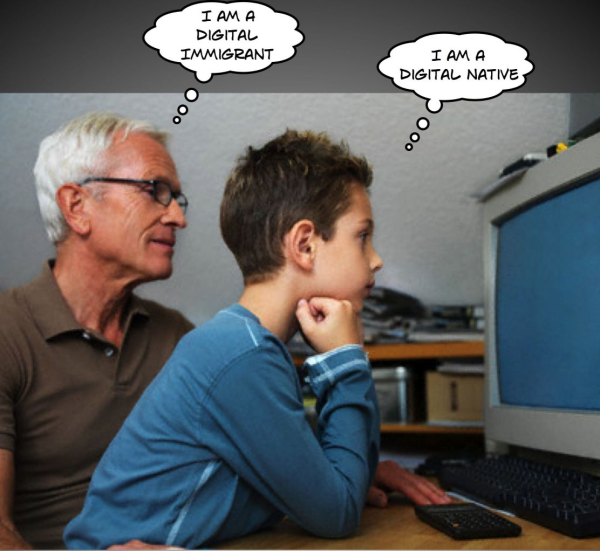
It’s worth noting that–in these studies, at least–younger students responded more favorably to technology-based activities than older students. One could claim this is because today’s younger students are more exposed to technology than older students. (It’s the old digital native/digital immigrant demarcation, although hasn’t everyone gone native by now?)
You could also argue that older students are more reflective about their educational experiences and recognize what’s needed for robust comprehension.
Age differences aside, I’d argue that there needs to be a balance between old-school nitty-gritty hands-on lab activities and fancy-schmancy whiz-bang virtual activities.
– Since both virtual and hands-on labs have their advantages and disadvantages, blending the two throughout a course may have the most benefits for learning and motivation (Abdulwahed & Nagy, 2009).
– A recent study at Carnegie Mellon University focused on young students (ages 6-8) and found that participants using a “mixed-reality set-up” of both real and virtual components learned five times better than those using virtual-only features (Yannier, Koedinger, & Hudson, 2015).
So maybe student age doesn’t have anything to do with it. Have we solved the technology problem? I’m afraid it’s a never-ending issue, a never-ending battle all teachers face.
As teachers, we must be ever-vigilant about technology use in our classrooms, and I’m just not talking about keeping an eye on our students’ computer and tablet screens. We must also be sure our technology use actually enhances learning, as opposed to hindering authentic understanding. In other words, technology must remain our friend, not our enemy.
A little TOO friendly, Ultron.
Let’s use an analogy from Avengers: Age of Ultron(slight spoiler alerts follow, yo).
Some humans (i.e. some teachers) see a new technology as the answer to all of our big problems, akin to Tony Stark’s vision for a global protector. More often than not, what actually comes into existence is a shaky, slightly grotesque prototype.
A few missteps should be expected. Problems occur, however, when misguided plans typhoon into blind initiatives touting innovative, revolutionary, and other game-changer buzzwords.
Over time, the technology transforms into sleek, next-generation models. Updates happen so fast that we must keep up for fear of being branded “obsolete.” (Not that far from “oblivion.”)
You’ve seen the trailer, right? Watch this one again, looking for a classroom metaphor. (Hint: All the evil robots are iPads.)
I’m no technophobe. This is a blog article. With pictures and video. I’m typing this sentence using my MacBook Pro. (It hasn’t eaten me yet.) I love indoor plumbing. Big fan of electricity, too. Wi-fi? =hugs=
But as much as these advances make life more pleasant, we must be careful to ensure technology is the tool, not us.
If you have a lot of time, check out a book Olson and Clough helped put together called “The Nature of Technology: Implications for Learning and Teaching.” It has all kinds of chapters dealing with issues of technology use in the classroom. As a bonus, here is the book’s cover, which by itself should give you pause and something to think about:
Technology by itself is not the problem. In Avengers: Age of Ultron, the good guys (and gals) used all kinds of technology–Quinjets, holograms, and even Hawkeye with his bow and arrows. Throughout history, the classroom has been a hub of technology, be it chalkboards or SMART Boards, pencils or tablet styluses.
The ultimate “bad guy” in Avengers was not technology, but misguided Artificial Intelligence (A.I.). Likewise, teachers must battle the dangers of artificial intelligence, instead fighting the good fight for authentic learning and meaningful application.
It’s been a while since our last blog post and we have all kinds of critically important issues to talk about, starting with . . . OH YEAH! AVENGERS: AGE OF ULTRONsuper-duperblockbusteropensTHISWEEKEND!
The latest greatest superhero movie can provide a useful springboard for exploring the dangers of relying too much on technology (e.g. resulting in an evil sentient robot that tries to kill all humankind). Forget a vengeful Ultron or iPad; beware of students plugged in but tuned out to meaningful learning.
We’ll table that discussion for another time, however, given recent chatter about another famous Marvel character who may possibly join Earth’s Mightiest Heroes on the big screen: Spider-Man.
Thanks to Photoshop, we already have a poster!
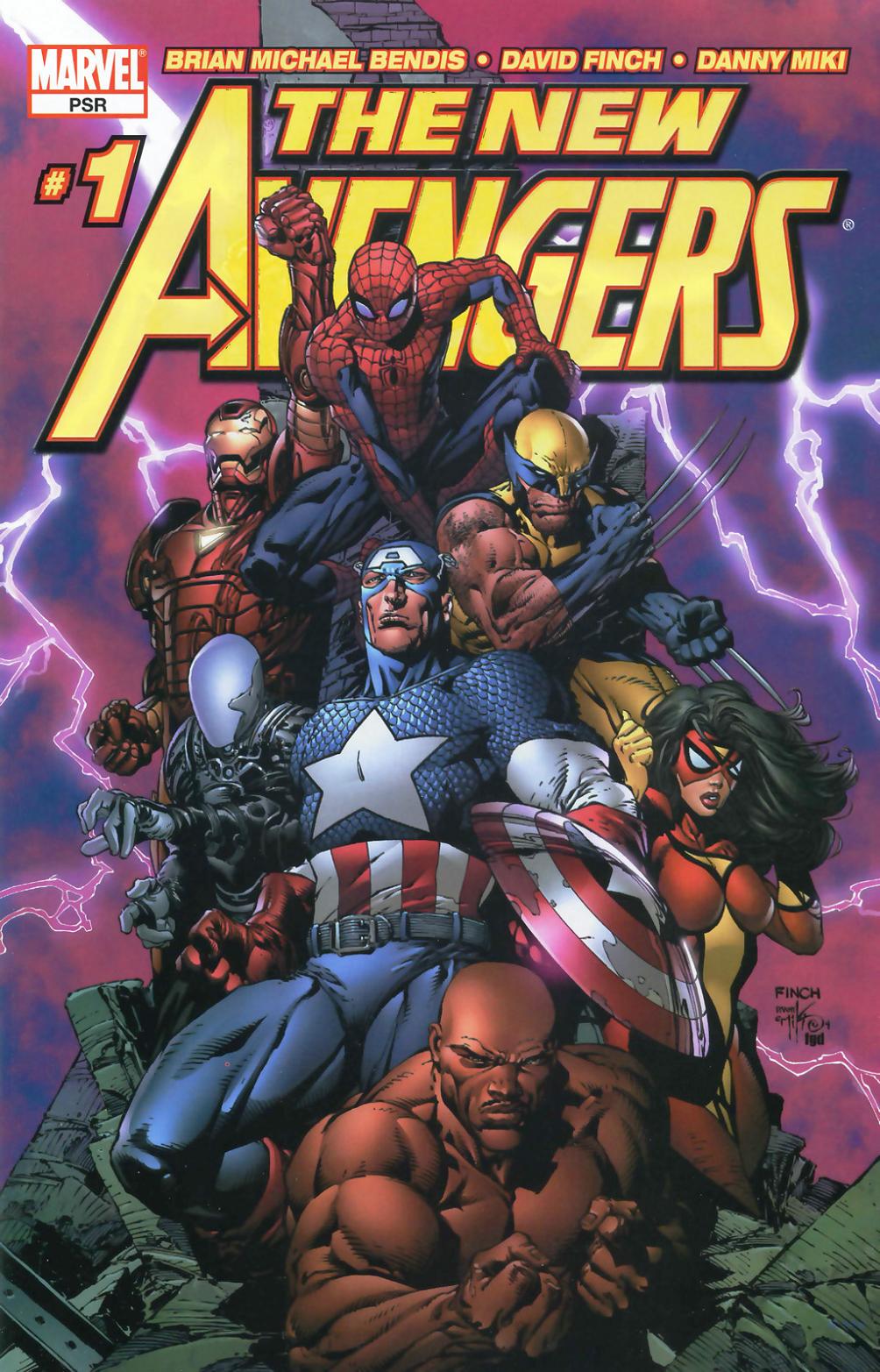
Like Captain America and company, Spider-Man is a mainstay Marvel Comics character. But up until now, everyone’s favorite web-slinger has appeared in his separate series of movies due to film rights owned by Sony Pictures.
Confused? Don’t worry, because bigwig producers have signed important papers and the stars have aligned and now Spidey can swing along with the Avengers in the official “Marvel Cinematic Universe,” or MCU.
Fan reaction has been understandably joyous, given the potential team-up between Marvel’s flagship hero and Marvel’s flagship hero team. Heck, the good folks at IGN have already imagined what Age of Ultron would look like with Spider-Man in the mix. Take a look at their trailer here, if you’re curious.
Enthusiasm has erupted for integrating even more heroes in the movies. Speculation abounds if Marvel’s other movie heroes – the X-Men, the Fantastic Four – could ever merge into the MCU. Even Wolverine’s Hugh Jackman wants to join in the mix.
Coming to a movie theater near you?
Such integration of superheroes (a.k.a. worlds colliding) may appear as a bounty of riches; but there could be a downside.
Ever heard of too much of a good thing?
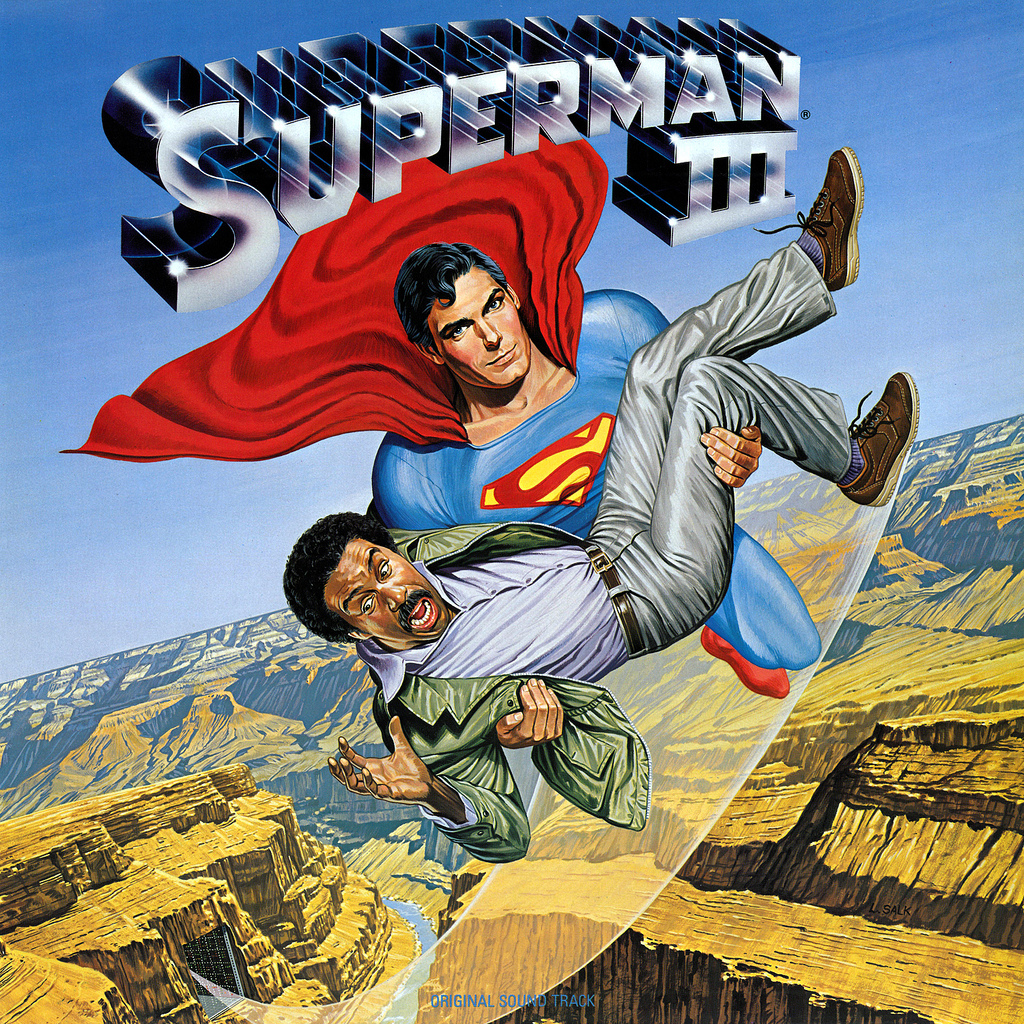
A common feature of disappointing superhero movies is a glut of characters in the script. Spider-Man 3 had Sandman and Venom and the Green Goblins clogging the villain faucet. Batman & Robinwas actually Batman and Robin and Batgirl and Poison Ivy and Bane and Mr. Freeze. Superman III had Richard Pryor.
Proving that “Two’s a Crowd.”
Curriculum Integration in schools is another appealing mash-up that may have a hidden downside or two.
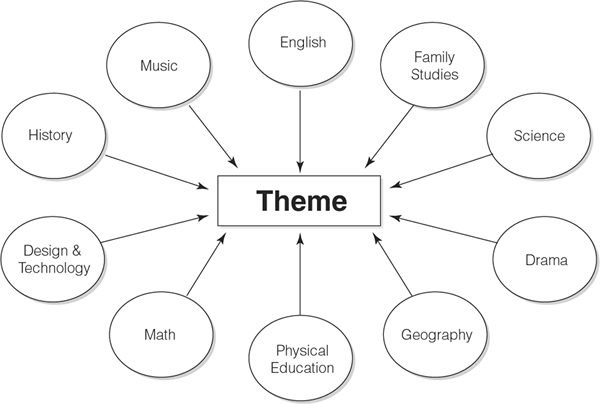
Basically, integrating curriculum is what teachers do when they teach lessons combining two or more major subjects or disciplines. Examples are as obvious as teaching algebra and graphing with a science experiment, and as unique as an instructor’s imagination. I know of a middle school that features a building-wide interdisciplinary unit all about the Greek Olympics. Every class studies some aspect of the ancient athletes – math, history, language arts, visual arts, science, P.E., and more.
Sounds neat, right? And perhaps a little daunting to pull off, given the coordination of teachers, resources, and activities. But that’s just a challenge, not the downside. The upside is collaborative educators and students energized by explicit and relevant connections among various scholarly endeavors (subjects).
The danger of curriculum integration in classrooms is similar to those in superhero movies. Cramming in too much can end up in confusion and misconceptions. Content may be watered down, spread thin, or lost in the shuffle.
Take a minute to look at this article, “A Caveat: Curriculum Integration Isn’t Always a Good Idea,” by Jere Brophy and Janet Alleman for a more robust examination of this strategy. Better yet, print it out and read it while you wait in line for your Avengers movie tickets. Or download it on your portable digital device.
Technology can be great. So can curriculum integration. Just be careful.