Flex Plan

Standard

Where will you be in five years?

If you like superheroes, a good bet is you’ll be sitting in a theater watching the latest Marvel or DC movie.  And chances are you’ll have seen multiple superhero movies between now and then.

A recent Warner Bros. shareholder meeting featured the announcement of several tentpole movie projects into the year 2020.  This list includes TEN films starring DC Comics superheroes (and antiheroes).

upcoming-dc-films1

Not to be outdone, Marvel Studios held a special shindig where they announced NINE movies set in their “Marvel Cinematic Universe,” involving the Avengers, Guardians of the Galaxy, Black Panther, Dr. Strange, and more.

Avengers-Infinity-War-logo

“Infinity” sounds about right.

If you add in movies based on other Marvel Comics heroes (X-Men, Spider-Man, Fantastic Four, etc.), that makes OVER 40 FILMS currently planned for Marvel or DC comic book characters.

And that’s not even counting additional comic book and superhero projects.  So we’re headed either into the Double Platinum Age of Comic Book Movies or Major Market Saturation.

Of course, many of these projects may get derailed or delayed along the way.  (Don’t hold your breath for “Unannounced Female Character Spider-Man Movie” in 2017.)

Plans change, and no one knows that better than teachers.

Adventures with Scope & Sequence

Those of us in the field of education know about something called “Scope and Sequence.”  Not only does “Scope and Sequence” sound like a terrific crime-fighting duo, S&S is a general phrase given to long-term planning in the school year.

Here is an example Scope and Sequence from an elementary art teacher, courtesy of the smARTteacher website.

Art ScopeSequence BIG

I think of scope as the overall main ideas and concepts students should learn in a class, and sequence is the general order in which they could learn, connect, and practice these main ideas.

Notice the language used here:  “overall”  “general”  “could.”

It’s important to remember that long-term planning should be flexible, like the Ever-Elastic Mr. Fantastic! 

mr fan in action

Sometimes adjusting to curriculum guides can feel like deflecting bullets.

All kinds of variables arise during a school year that require adjustment and revisions:  prior knowledge, curriculum mandates, assessment schedules, special events, weather cancellations, and–MOST IMPORTANTLY–student learning.

Districts often have a Pacing Guide that indicates the key content, units, and even activities teachers should use in their specific courses.  Here are some pacing guides for science teachers in Mobile County Public Schools (AL), if you’re curious.

The key word here is “guide.”  Classroom teachers know their students best, and therefore the best methods and schedules for helping students learn.

To coin a scientific-sounding mantra:  Student learning should be the constant, with time as the dependent variable.

If students require more time to master a topic, give them more time.  Don’t plow through a chapter just because you think you need to stay “on track” to finish a certain textbook.  (Who said you had to finish the textbook in the first place?)  Conversely, don’t slog through something the kids already know or don’t need to know.

A Super Biology Teacher

I met a science teacher who was just one of six teachers who taught Biology 1 in his school building.   The basic requirement was all Biology 1 teachers had to get through Chapter 10 by the end of December.  The reason was students could switch teachers at the semester break, so everyone needed to be at “the same spot” beginning in January.

Sounds logical, but not every teacher (or student) will work at the same rate or want to focus on the same content.  Some concepts and skills are more important than others.  So what do you do if you don’t agree with a prescribed schedule?

I love what this science teacher did.  He made sure he was done with Chapter 10 by the end of December, but he shuffled chapters to create the most meaningful sequence for his students.  Moreover, this teacher spent more time on some chapters and less time on others that weren’t as necessary for learning fundamental biology concepts.

Sound out of order?  That’s nothing new to readers of comic books, where odd numbering systems abound (see multiple #1 issues, #0 issues, #-1 issues, backwards releases, flipped issues, etc.).  Heck, there’s even a blog totally committed to the convoluted topic of Comic Book Numbering.

The bottom line in comic books is finding strategies and gimmicks to sell the most issues.  The bottom line for teaching is arranging lessons and units to encourage the most learning.

So whether you’re talking about billion-dollar film franchises or the infinite potential of today’s students, do take time to plan ahead.  But always keep your plans open to change.

And always leave the door open for a dynamite sequel.

superman2

Question(s) & Answer

Standard

Question_34

One comic book character who is prime for a screen adaptation is DC’s The Question.  In fact, the folks at  WhatCulture.com list The Question as one of their “10 Obscure Superheroes That Badly Need a Movie Treatment.”

A movie may work fine, but an ongoing Question TV Series would be a perfect fit, featuring a street-level noir hero with regular crimes and conspiracies to solve. If you want to see The Question in animated action, you can find some highly regarded appearances in the Justice League Unlimited series.

You can also find a nifty short YouTube documentary on “Who is the Question?” right here.  The most iconic version is Vic Sage, although more recently the moniker (and mask) was taken over by Renee Montoya, best known as a detective in the Gotham City Police Department.  [A live TV version of Det. Montoya has appeared in Fox’s Gotham series.  No sign of any Question(s), though.]

250px-Reneequestion

In case you’re wondering, there IS a superhero known as The Answer in comic books.  You can read more about The Answer here and here.  Judging from his appearance, I’d say a more appropriate name is The Exclamation Point or The Interjection!

the-answer-1

In teaching, we know that “Questions are the Answer.”  Often, what makes or breaks a lesson is how the teacher interacts with students during the activity.

Rather than just talking at students, teachers must ask questions throughout each lesson.  Questions and similar prompts are effective ways to encourage thoughtful reflection, promote engaged discussion, monitor student thinking, and more.

Unfortunately, research has found that a vast majority (70-80%) of questions asked by teachers require nothing more from students than reciting facts or guessing simple answers (Gall, 1984; Watson & Young, 1986; Bergman & Morphew, 2014).

So the question is this:  What kind of questions do you ask?  

Challenge yourself to challenge students by habitually asking  questions that require high-level thinking, such as those skills classified in Bloom’s taxonomy of educational objectives:  Application, Analysis, Synthesis, and Evaluation (Bloom, 1956).

How do you begin?  Here are a few resources I’ve recently come across that may be a good start:

– From Edutopia: “5 Powerful Questions Teachers Can Ask Students”

– From The Huffington Post*“25 Ways to Ask Your Kids ‘So How Was School Today?’ Without Asking Them ‘So How Was School Today?'”

*This second resource is more for parents, but teachers can gain ideas from the example questions for encouraging conversation.

The goal is to get kids thinking, reflecting, and sharing so you and their classmates can also think, reflect, and share ideas.

I’m glad there are two Questions running around in comic books. It reminds us that teachers need to use multiple questions in our interactions with students.  One question is often not enough.

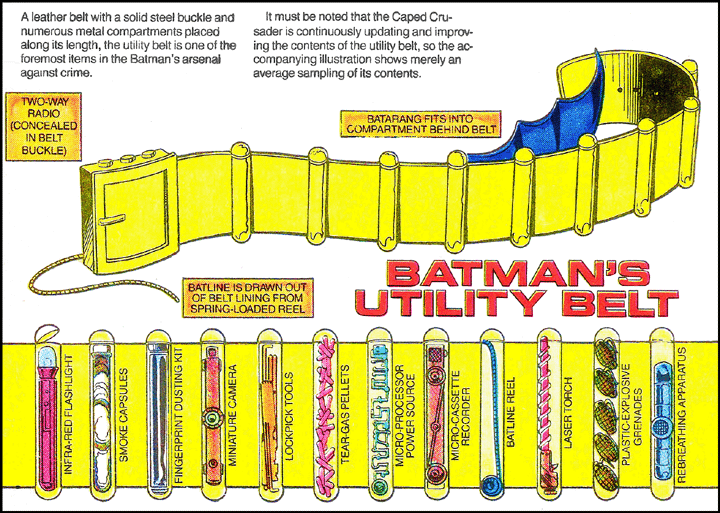
Like Batman and his utility belt, you should have an entire arsenal of prompts and queries at your ready, posing the right one at the right time.

Batman utility belt

I don’t own a utility belt, but I do keep a small index card in my pocket with question stems such as “In what ways . . .?”  “For what reasons . . .?”  “How might you . . .?” and many more.  Whenever I’m stumped for a good question, I can check my list to keep the conversation going.  And like Batman with his belt, you should continuously update and improve your questioning strategies.

Unlike the hero The Question, however, you will want to add engaging facial expressions.  Smile a little.  Make appropriate eye contact.  And talk in a welcoming tone of voice.

question image

Not the face you want to see in a classroom.

The Question wants to hide an identity and frighten bad guys.  Teachers, on the other hand, need to be personable and supportive of students.  Your questions and interactions, when used effectively, are an important part of this equation.

Speaking of which, there is no mainstream superhero called The Equation.  Get on it, math teachers!

It’s SHOWTIME!

Standard

The fall television season is upon us, and it’s full of several shows (some old, some new) featuring superheroes.

In fact, there are so many comic book-based shows on TV that you could make the argument it’s the “Golden Age of Television Superheroes.”

comic-tv-line-up-2014

I’m waiting to see how these shows turn out and how the Netflix/Marvel deal transpires.  On the surface, though, things look promising.  Here’s a useful list summarizing all of the current, new, and future superhero and/or comic book-themed shows, courtesy of the fine folks at Newsarama.

Also from Newsarama, here are their 10 BEST and 10 WORST Comic Book Live-Action TV Series of All Time.  (Animated series is a whole different category, but it’s safe to bet on anything related to Bruce Timm and Paul Dini.)

For now, I’d say the Golden Age of TV Superheroes was the mid-1970s to mid-1980s, which gave us gems like The Incredible Hulk, Wonder Woman, The Greatest American Hero, and Spider-Man on The Electric Company (with narration by Mr. March of the Penguins himself, Morgan Freeman).  

SPIDER-MAN_seagren_031911

As a bonus, this era also included The Six Million Dollar Man and The Bionic Woman, and preceded the wave of cool-vehicle-based shows like Knight RiderAirwolf, Street Hawk, and Magnum, P.I., which featured the one-two combo of a Ferrari 308GTS and Tom Selleck’s mustache!

magnum-pi

‘Stache trumps the car every time . . .

Getting off topic here, so let’s talk about television and teaching.

How do you use TV and videos in the classroom?

Shameless plug:  I’ve done a little writing in the past about using movies and video clips to enhance science lessons.  You can read a little bit about that here and here.

No matter what you teach, below are a few tips about sharing video clips with your students:

1. Decide WHY you need the video.

What does the video do that you can’t do in another way, including hands-on experiences, interactive presentations, collaborative discussions, outdoor investigations, role-play scenarios, and more?  Sure, using a video clip is easy because you can pop in the disc or click on the computer.  But what materials and activities will create the most meaningful and memorable learning?  If it’s a video, then go for it!

2. Make it an active, not passive process.

Related to #1 above, students should not just act as passive audience members during the viewing.  Give them something to do while they watch.  Observe and categorize specific attributes, list examples and/or questions, answer questions or prompts on a handout.

With the handout approach, be careful that you don’t make it a scavenger hunt for trivia.  If you do, students will pay attention to those tidbits only and not benefit from the overall experience.  If you want them to complete a handout, be sure you emphasize just a few key concepts so students don’t get bogged down looking to fill in a mundane list of blanks.

Very rarely will a video by itself teach the students anything worthwhile.  As a teacher, you need to be there to guide students’ thinking and foster discussion.  This includes before and after the video, as well as during.  (You’ve got that pause button for a reason!)  Remember the ideal rating of “TG:  Teacher Guidance Suggested.”

3. Decide WHEN you should show the video.

Videos are more than “rewards” students can enjoy at the end of a unit or after a test.  What’s the value if you wait until then to show it?  Instead, reflect on your unit sequence and consider when a particular video best serves the students’ learning.  You could use it as an eye-catching opening, part of an introductory pretest or puzzler, a formative review or extension, a prompt for homework or application, or even part of a summative assessment.

4. Keep it short and sweet.

Very rarely should something as dull as a “movie day” occur in your classroom.  A common rule of thumb in education is no activity or task should last longer than 20 minutes during class.  By breaking things up, teachers can help students stay focused and motivated to learn.  The same goes for video clips.  Stick to showing the key scene or segment that matters, which may only be a couple of minutes at a time.

Furthermore, when using a clip from a popular movie or television show, I never show the ending.  Sometimes I don’t even show the end of the scene, leaving the students with a cliffhanger and spawning a chorus of disappointed groans from the class.  But consider how much this motivates them to think further after class is finished.  What parent wouldn’t be thrilled if their son or daughter asked them to check Netflix or take a trip to Family Video so they can finish a movie they first saw in school?

BusJump

Bus jump from “Speed.”  Will Keanu and Sandra make it?  Let’s do PHYSICS!

Another reason for using a specific clip is to edit out any superfluous or inappropriate content.  Speaking of which . . .

5. Get parental and principal approval.

When using any entertainment-based media, or even educational materials that may be controversial, plan ahead and check with your supervisors (principal, department chair, etc.) to see if they have any concerns or advice.  At times, they may recommend sending a note or email to students’ parents/guardians so everyone is clear on the content and purpose of the media.  And for any sensitive topics, it provides the opportunity to opt out if anyone objects.  It also is helpful to have a back-up activity or alternative task for those who may not watch the video, whether by choice or by circumstance.

6. Keep it legal.

All kinds of stories exist about the proper use of media by teachers and threatening lawsuits from corporations.  If you’re not sure what is okay or not okay about using media, check with your school’s media specialist (a.k.a. librarian), who usually knows the latest.

Also, here is a terrific resource for teachers regarding copyright and “fair use” guidelines, provided by TechLearning.  I’ve saved this PDF onto my computer and printed copies to keep in my teaching binders as a quick reference.

For me, the most important guideline is found in the “Fine Print” about videos: “use should be instructional, not for entertainment or reward.”

So will anything from the current crop of Superhero TV shows be worthy of classroom use?  Tune in to find out!

Academy, Asylum, or . . . ?

Standard

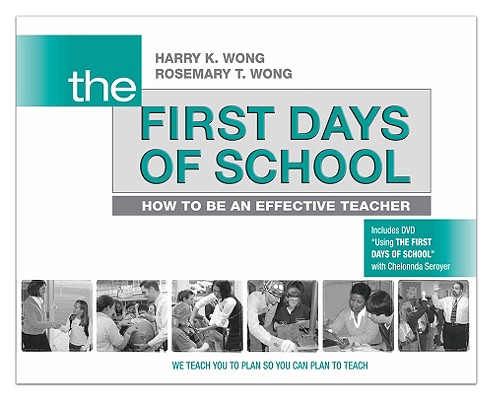
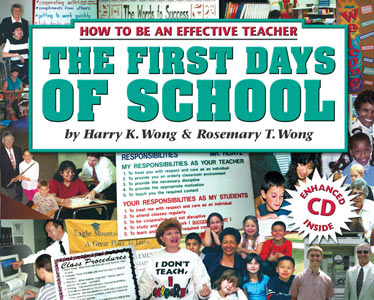
It’s Back-to-School time, and hopefully everyone is off to a terrific start, implementing new district policies and applying Harry and Rosemary Wong’s wisdom about “the first days of school.” (Routines and procedures, practice, practice, practice.)

The-First-Days-of-School-9780976423317

Batman is back in the news too, mainly the upcoming Ben Affleck movie version with Superman a la Frank Miller’s The Dark Knight Returns miniseries (e.g. short pointy ears). I’m sure we’ll have more to talk about that topic and teaching connections in the future (e.g. short pointy ears).

bat comparison

Comparison courtesy of artist Dean Trippe @deantrippe

In the near future, a bunch of new Batman-related comics are coming out. Namely, two series start this fall, as announced by Entertainment Weekly.

One title is Arkham Manor, in which Bruce Wayne (Batman’s nice face) decides to donate his Wayne Manor to house Gotham City’s criminally insane. The mansion that’s known for masking the underground Batcave has now become the new location for Arkham Asylum. There goes the neighborhood.

Arkham Manor     Gotham Academy
 

Another Bat-title from DC—Gotham Academy—focuses on the city’s private school for rich kids.  Plaid skirt uniforms and everything.

(Side note: I’m curious about the depiction of Gotham’s public schools.  If you are curious as well, the best we can do is watch the movie Dangerous Minds and assume that instead of being a former marine, Michelle Pfieffer’s character is Selena Kyle after giving up the Catwoman costume in Batman Returns. It almost works!)

As for the comics, we’ll see what happens as both series progress in the months to come. The reason I bring them up here is to encourage all of us teachers to consider our school environment.

Academy?

Does your school building feel like an academy? It’s a fancy word, coming from the Greek “grove of Akademos,” where Plato did his teaching. Good company, no? People nowadays use the term “academy” to refer to a special institution for scholarship or for the advancement of the arts or science. 

You don’t have to teach in a special institution to advance the ideas of scholarship and appreciation for culture. Wherever and whatever you teach, consider how you can promote an “academic” attitude in your students. I’m not talking about being a snob or out of touch with reality. But we can still create an environment where learning is looked upon as a noble endeavor and great adventure.

Sometimes our schools have too much adventure, though, and may even feel like an insane asylum.

Asylum?

Does anyone in your school drink from a mug like this?  

crazy mug

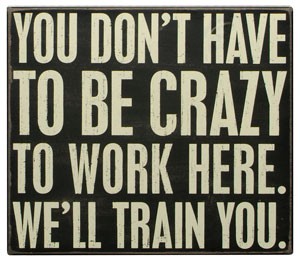
Or post this sign in their classroom or office?

crazy sign


Schools can often feel like a facility for the mentally unstable. Beyond the humor, though, there is some truth to that notion. Think about our students’ mental, emotional, and physical states. Most of them are, in fact, a little unstable. A little “shaky,” so to speak. They should be. They’re still growing up.

And that’s why we teach them. During a school year, teachers introduce students to hundreds of ideas and skills. Our students should investigate, reflect, and practice the content, all the while strengthening (and stabilizing) their foundations—intellectually, emotionally, and more. This learning process is often challenging and frustrating, even destabilizing at times, and ultimately rewarding.

Learning can create a sense of vulnerability, and students need a safe place to learn—no matter what kind of school or classroom. 

We looked at the origin of the word “academy,” so let’s do the same for asylum. Although often associated with housing the mentally ill, the word “asylum” comes from the Latin word for “sanctuary,” a “safe or secure place.”

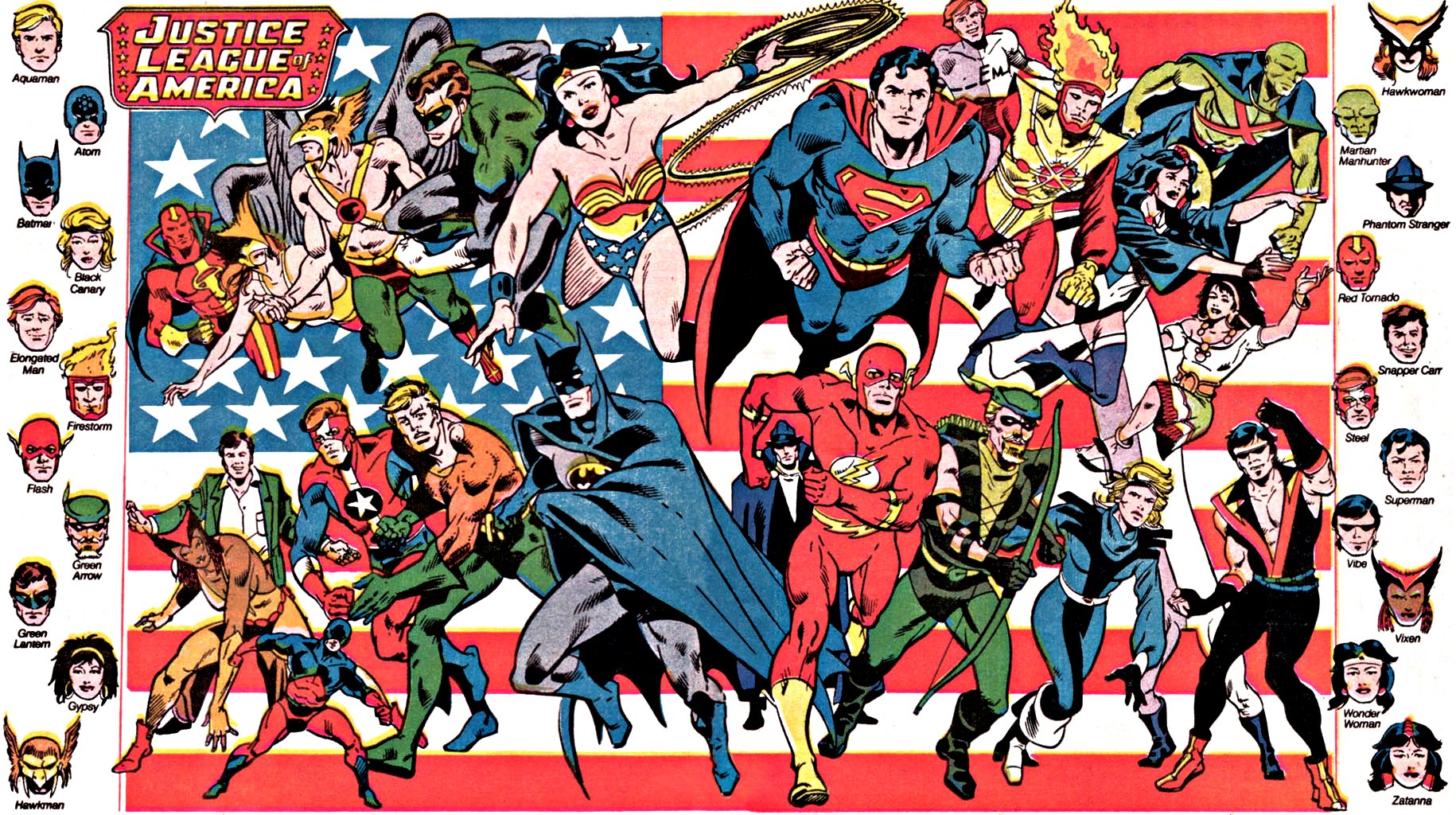
We can never protect kids from every unsafe event or bad influence, but we can all do our part. None of us can do it alone. Heck, even Batman has the Justice League. (And Alfred. And several Robins. And Nightwing. And the Gotham City Police Department. And the Outsiders. And Batman Incorporated. And Batmen of All Nations. And Ace the Bat-Hound.)

justiceleague


Fight the good fight with your trusted colleagues, mentors, and friends. (And pets.)  You get to pick who wears the cape.

Good luck in the coming year in whatever classroom you teach. Wherever you are, it can be both an academy and an asylum for your students. And so much more.


Future and Past

Standard

Yes, this post will discuss yet ANOTHER super-hero movie that recently blasted into theaters across the globe.  It’s the golden age for super-hero movies, so we might as well bask in it.

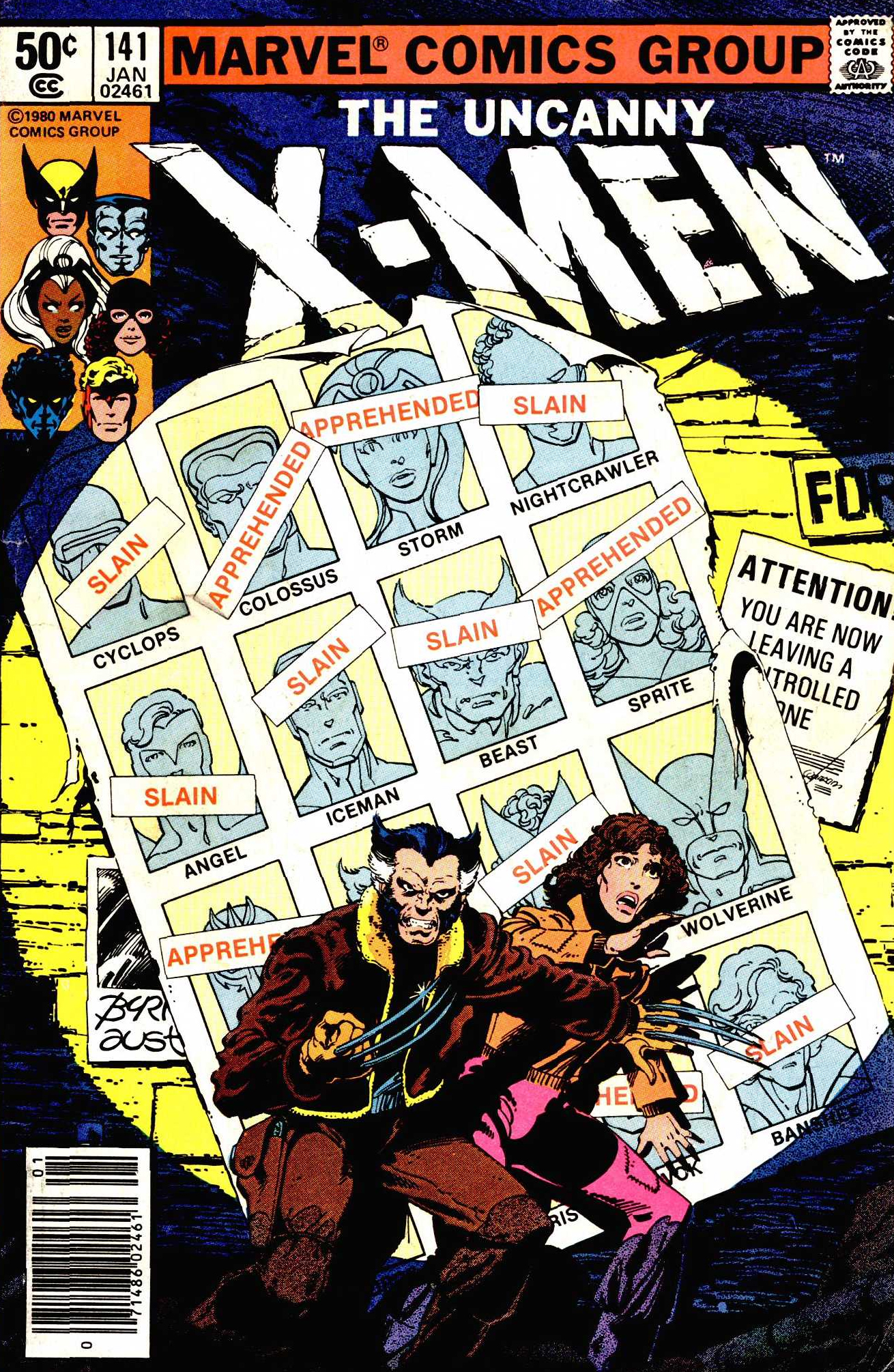
The latest super-flick selling popcorn and semi-satisfying critics/fans is X-Men: Days of Future Past.  Bonus points (i.e. “geek cred”) if you can name every character in the following poster:

XDOFP-poster-995c8

The basic premise of the film (and the classic comic book story it’s loosely based on) is that the future ends up being a mostly dismal place for mutants and humans alike.  Those grizzled heroes that are still alive decide their only hope lies in sending someone back in time (or at least their mind) to stop events that ultimately cause social dystopia.  Basically, they want to “reset” the world to make a better future.

X-Men-Days-of-Future-Past-comic-cover


It’s a story that is equally depressing AND hopeful, even if the title makes no grammatical sense at all (and created a wad of continuity problems in the X-Men cinematic universe).


Even if you have no interest in time travel or mutant oppression, I do encourage you to stop and think how teachers can learn a lesson from this story.

How many of us wish we could go back in time (the start of the school year) and try again to establish a positive, productive classroom environment?


The truth is, the “first days of school” are critical to creating a climate that will endure throughout the academic calendar.  What you teach, practice, and reinforce (and what you let slide) will eventually shape the classroom setting.  It’s so important, in fact, that the best-selling teacher book of all time deals with this issue.

the_first_days_of_school book

My copy is a little more “used.”

Even though early classroom moments are so critical in establishing classroom expectations and habits, there is still hope for teachers who think they may have “lost their way” and lost their classroom to disorder and disrespect, confusion and chaos.

In fact, one of the biggest champions of this “reset” method is Harry Wong, co-author of The First Days of School.  During one of his “Effective Teacher” videos (Vol. 4), Dr. Wong describes how at the end of each day, teachers erase the classroom board in preparation for the next day’s learning.  This action should illustrate how we as teachers should view our work.

OLYMPUS DIGITAL CAMERA

Every new day is a new opportunity to “start over,” so to speak.  Even though it may be the middle of the school year, teachers can still erase past mistakes and memories and work to create a new classroom culture.  This “reset” will most likely require more than one day’s work, but we can still purposefully cultivate the type of environment we know is best for teaching and reaching our kids.  This endeavor also takes serious reflection, intentional planning, practice, reinforcement, and redirection–all in order to reestablish the classroom our kids (and we teachers) deserve.

On a larger scale, consider how the current “summer break” season is another a chance to reset your teaching expectations and actions.  Don’t stop at reorganizing your desk drawers and replacing tattered posters with shiny new bulletin board materials.  Revitalize your classroom procedures, routines, and attitudes to foster a refreshing learning environment.

The advantage to summer rejuvenation is that most of your students won’t know anything changed.  They’ll assume you’ve always been a model educator who demands excellence and champions the cause of learning.

At times, such work may seem just as challenging as mutant time travel.  But it’s definitely worth it.

 

What is Success?

Standard

Image

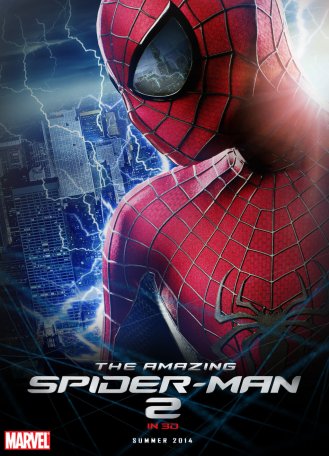
It’s not even mid-May and we’ve already got two superhero movies out in theaters, with more to come.  While Captain America: The Winter Soldier made record-breaking April box office numbers, The Amazing Spider-Man 2 recently opened and also topped the $90 million mark for its weekend debut.  Not too shabby.

Or is it?

Such an astronomical income may look, well, amazing.  But some entertainment pundits are asking, “Is it a success?

Such a question is not so strange when comparing ticket sales among similar movies, including prequels and sequels.  Another item to consider is how much money it takes to make the movie (salaries, special effects, marketing, insurance, craft services, etc.).  Making 90 million bucks over a single weekend may not seem so spectacular when it reportedly cost triple that amount to make the film.

All this talk about multimillions may have you thinking about teacher paychecks, but that’s not the real purpose of this post.

Actually, the big question “What is success?” should be asked frequently in our schools and classrooms.


Report Card Time

Recent results from the National Assessment of Educational Progress (NAEP)–also known as “the nation’s report card“–show that American students haven’t really increased their success rate in the past five years.  We’ve talked previously about how it’s important for teachers to closely review assessment data and speak out when and where they can (shameless plug).  But it’s also important to examine results and consider what is success.

The NAEP report finds that for U.S. high school seniors, less than 40% are proficient (or higher) in reading, and only one fourth (26%) are proficient or better in math.  Results also indicate that gaps in achievement among races/minorities are as wide as ever.

Ouch.  That doesn’t sound like success to me.

So many factors contribute to assessment results, more than we have time or space (or attention span) to discuss here.  But it is important to stop and determine our definition of success in schools.


Image

First off, it’s essential we not equate 100% with success.  Major League Baseball players are potential All-Stars if they get a hit one out of every three times at bats.  Babe Ruth’s career batting average was .342.  On the current list of active MLB players, the batting average leader is some guy named Joe Mauer, sitting at .322 (my apologies, Minnesota Twins fans).

I remember band directors telling us that we had to hit 100% of our musical notes during every performance, comparing our task with those slacker multimillionaires in ball caps.  Full disclosure: I never played every note perfectly during every concert.  Didn’t stop the audience from clapping.  And it didn’t stop me from playing.

Winning Percentages

Even Spider-Man himself didn’t win every comic book battle.  (It’d be boring if he did, wouldn’t it?)  According to Marvel’s own statistics, the webbed hero was victorious less than 60% of the time, just below villain Nightmare (59.4%) and above Iron Man (57.8%).  Check out the interactive and informative (and awesome) “Battle Breakdown” of Marvel Comics characters, courtesy of Wired magazine and author/designer Tim Leong.

(You should also check out Tim Leong’s website and Tumblr, along with his award-winning book Super Graphic: A Visual Guide to the Comic Book Universe, for some super-nifty graphical analyses of superhero stats.  Here’s a sample, this one a breakdown of primary colors among hero costumes:

ff_supergraphics_goodevil_2f primary colors  )


Interestingly, anti-hero The Punisher (as in “The Ohio State University”) has the highest winning percentage (86.9%, and only 2 ties) above all the other Marvel heroes.  This roster includes Captain America, Mr. Fantastic, the Hulk, Thor, Wolverine, and Daredevil.
Image

Winning Tip #1: Bring a bazooka to a gun fight.

Still, I think I’d rather be rescued by many other heroes before seeking The Punisher’s help.  It’s “Punisher” with a capital P, after all.  In his quest for vigilante justice, Frank Castle puts a permanent end to bad guys (i.e. dead), as opposed to more noble champions who abide to a higher moral code.  As teachers, we know that a little bit of mercy can go a long way.

Maybe winning isn’t everything.  Maybe success depends on context.

In baseball, 33% hitting is great.  In music, you aim for 100% (unless it’s jazz).  In civil engineering, I hope it’s also close to 100%.  I don’t want a bridge built by someone who earned an 80% in geometry.

So what is success in education?

According to the No Child Left Behind Act of 2001, the goal was for EVERY child to perform at grade level in reading and math by the year 2014.

Have we reached that level yet?  We only have half a year to go!

In one of my graduate classes, our instructor (a high school principal whose last name was Mann, so he was literally “Principal Mann!”) once told us the following with respect to student achievement:  “You can feed a donkey the best oats, give it the best trainer and exercise regimen, and hire the best jockey.  But when you race that animal in the Kentucky Derby, it’s still a donkey.”

Not every kid will be a straight-A student.  If they were, what’s so special about straight-As?  Success is different for each individual.

I remember sitting in one of my undergraduate science classes (astrophysics), and another professor had just posted grade results outside in the hall.  A mob of students clumped in front of the list, eager to learn the results.  Among the mumble and grumble, one jovial dude thunder clapped his hands and cheered, “D-plus!!!”


Success is relative, maybe.

But that doesn’t mean we can’t push each other (and ourselves) to get better.

Hopefully, you aren’t aiming for the plus side of below average.  Hopefully, you aren’t hoping for 80%.  I want all of my students to perform at a 100% level.  I know that probably won’t happen.  But it doesn’t mean I won’t try for it.

Another mentor of mine–Dr. Clough (rhymes with rough ‘n’ tough!)–used to say, “Aim for perfection, and you will reach excellence.”  

Is that optimism?  Or realism?  Optirealism?

Let’s put aside our pessimism that some kids will just “never get it” and focus instead on what they can do.  The results may amaze you.

I’m optimistic that another Amazing Spider-Man sequel will show up in the coming years.  I’m optirealistic that it’ll be good.


High Flying Falcon

Standard

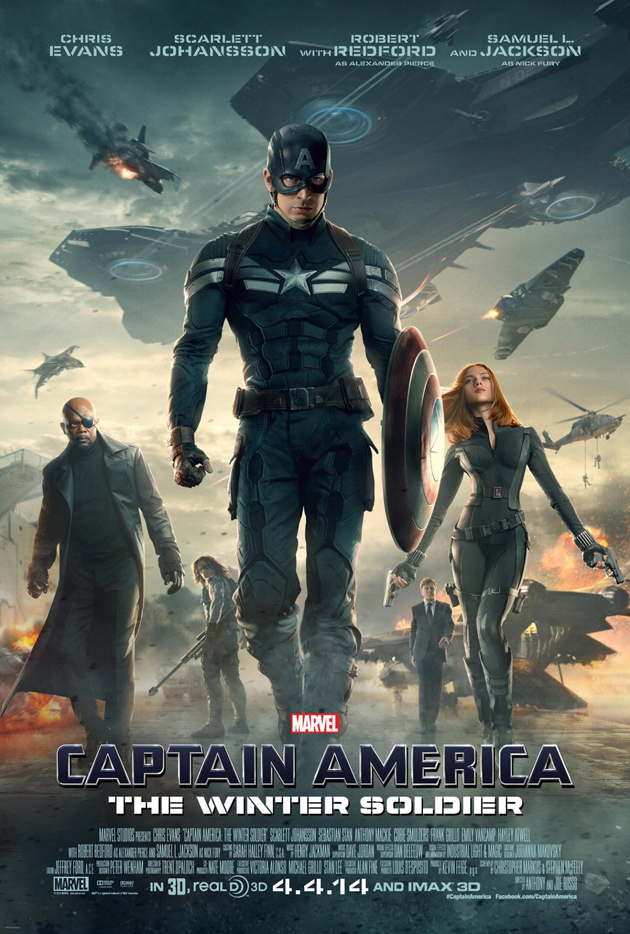
captain-america-2-poster-us-full

So Captain America: The Winter Solider celebrated a record-breaking $96.2 million opening for the month of April.  (Haven’t seen it, so don’t spoil it for me!)

But what I have seen is co-star Anthony Mackie (a.k.a. The Falcon a.k.a. A Younger Will Smith) making his memorable appearance on The Tonight Show with Jimmy Fallon a few days ago.

TheFalcon marvel-falcon_large

All teachers should see this clip, too, and take away some of the actor’s enthusiasm.

Watch Anthony Mackie egg on Bill O’Reilly at the 1:00-minute mark, and then look for the main event around 3:25, in which the actor explodes with energetic commentary of his own movie clip.

Try something like this the next time you show a video in your classroom.

Maybe tone it down a notch, so your students can actually hear important information.  And don’t curse.

But don’t lose that sky-high excitement!

(Sorry. Couldn’t resist.)

Iconic Images

Standard


A nifty cool comic book blog everyone should check out is “Comics Should Be Good” via the Comic Book Resources website.


Every once in a while, the folks at CSBG post a new entry in their “Top Five Most Iconic Covers” collection, in which they list the five most iconic covers of a particular superhero (or villain).  Neat stuff!


CSBG’s latest hero getting Iconic Covers treatment is Captain America, probably because of the upcoming release of a little film called Captain America: The Winter Soldier (coming to a theater near YOU on April 4th, 2014!).


If you’re curious, here are the top five iconic Captain America comic book covers, according to Comics Should Be Good.


If you’re doubly curious, here are MY top five covers of the StarSpangled Avenger, in chronological order:

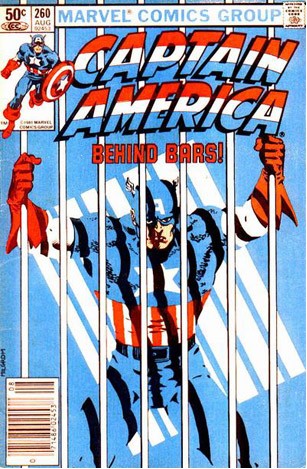
Captain America, Vol. 1, #260; cover by Al Milgrom; August 1981

Image


Captain America, Vol. 1, #332; cover by Mike Zeck and Klaus Janson; August 1987

 Image

These first two images may be downers, but they’re still iconic.

How about more heroic images?  Okay.

Captain America, Vol. 1, #450; cover by Ron Garney; April 1996

Image

Captain America, Vol. 4, #1; cover by John Cassaday; June 2002

Image


Captain America, Vol. 5, #1; cover by Steve Epting; January 2005

Image

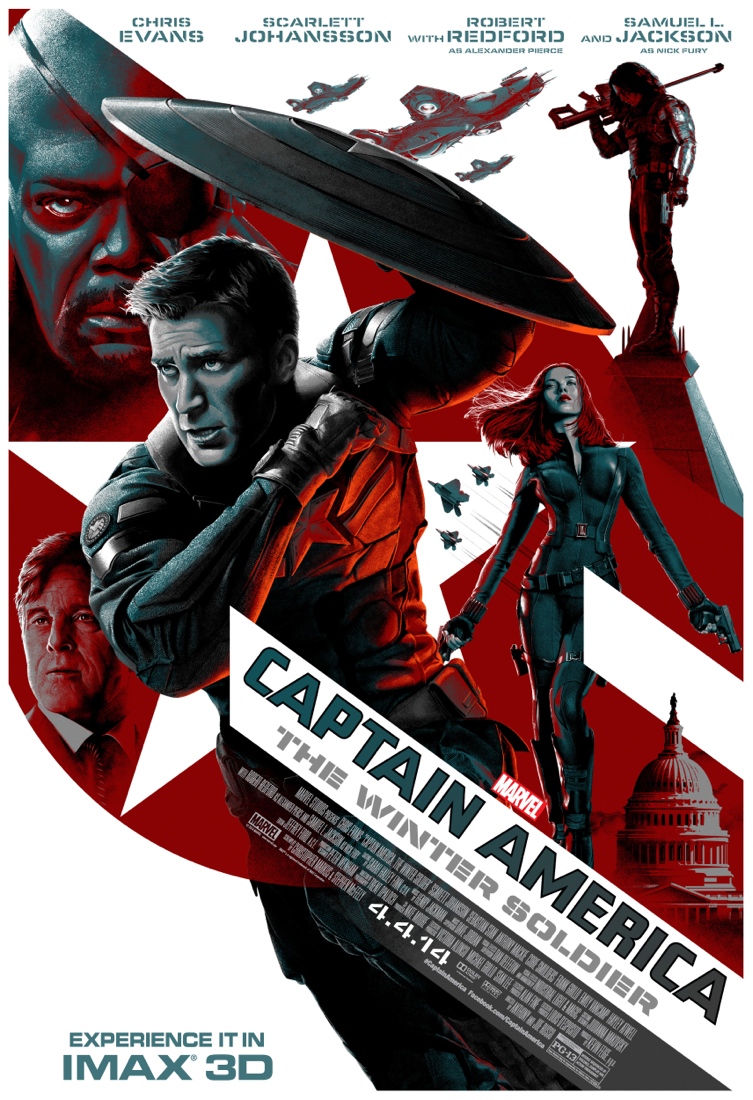
This last cover by Steve Epting encapsulates the recent multi-year run by writer Ed Brubaker, with its Jack Ryan/Jason Bourne super-spy vibe, which the new movie seems to be following. Have you seen the latest posters?

Here’s a sample, and since the poster is celebrating the IMAX release, it’s HUGE:

Image


We could talk all day about iconic movie posters, but not this day.


Let’s talk about teaching.  Namely, what is your iconic image of a teacher? 


I’ve done some research* into popular teacher portrayals in the Google Images search engine.  Since my background is in science (yes, I’m that much of a geek), I did a specific analysis of science teachers.

Here’s a sampling of what I found:

Image  Image  Image


That’s right.  According to Google, science teachers are white dudes with bad hair, poor eyesight, and lame taste in fashion–until hipsters start wearing lab coats, but then that would just be ironic fashion, not iconic.


Putting aside any ethnographic analysis of cultural imagery and stereotypical classroom depictions, here are the questions I want to ask:


What is your iconic teacher image?  What is your “look?”


Are you this kind of teacher?

Image


Or maybe this one?

Image


Or something else?

Image


I hope you’re not this last one.


Images often depend on one’s perspective, as revealed by this stunning photo collection of famous landmarks.


Consider how your students perceive you. What is your “iconic image” in their eyes?


One terrific way to gain perspective is video recording your teaching.  Recording technology is nearly ubiquitous these days, so use your favorite gadget.


No one needs to watch your recording except you. That alleviates any concerns about privacy, and more importantly, you can take an honest look at yourself.  If you don’t have time to record or review an entire class period, just focus on five minutes of a lesson. I guarantee you’ll learn something about your teaching and your students, giving you ideas for enhancing instruction.


Make it habit to record and watch yourself from time to time.  It’s one of the best ways you can get better.


Who knows?  Maybe your teaching will even reach “iconic status” (in a good way).


*Bergman, D.J. (2013). The portrayal of science teachers found in Google Images and implications  for science teacher education. Paper presentation at the International Meeting of the Association for Science Teacher Education. Charleston, SC: January 9-12.