Worlds Collide

Standard

lego-batman-banner

The next BIG superhero movie coming to theaters is The LEGO Batman Movie!

In a promotional stunt, LEGO Batman appeared alongside LEGO superheroes from DC Comics’s CW television shows, which you can check out below:

What makes this video clip special is it is the first time DC superheroes from the CW TV channel (Green Arrow, Flash, Supergirl, The Atom) have merged with a DC superhero from the movies (Batman).

“Big deal?” you think?

Actually there’s been a lot of chatter among fans, critics, and industry reporters about the pros, cons, and possibilities of merging film and TV-based superheroes.  These are characters that come from the same comic book universe, but are featured in separate media outlets–theatrical, broadcast television, or streaming.

DC, for example, has Batman, Superman, and Wonder Woman dedicated to film, along with other heavy hitters from the Justice League (Green Lantern, Aquaman, Flash).  This gets problematic, however, since The Flash also stars in his own television show on the CW (as do Green Arrow and Supergirl, who has also met a TV version of Superman).

The Last Children of Krypton

Confused?  You’re not the only one, and some people argue these two “universes” should stay separate (see here and here).  Others think there could be a way to have a crossover of sorts between TV and Film (read more here).

mv1

More intermingling makes sense for Marvel superheroes, since theoretically, many of these characters actually DO live in a single universe shared between the movies (Avengers, etc.) and television shows (Agents of SHIELD, Agent Carter, Daredevil, Luke Cage, etc.).

Some people claim Marvel could and should have film and TV shows cross over.  Others point out that such an event would still be a monumental and unwanted task.  And that’s not even dealing with different Marvel heroes contracted out to different movie studios (e.g. X-Men/Fantastic Four with 20th Century Fox, although Wolverine actor Hugh Jackman said he’s happy to meet the Avengers sometime).

wolverine-avengers

Sorry, Wolverine.  No shirt, no crossover.

While not requiring millions of dollars, the habit of teachers collaborating can also seem like a difficult ordeal.  But it’s worth it, with research finding higher student achievement in schools with higher levels of teacher collaboration.

getting-along-with-coworkers

We’ve talked before about teachers getting along with other teachers and here’s another resource with useful teacher collaboration ideas, including virtual tools, co-planning, scheduling, and more.

And let’s take a closer look at teachers from different universes (i.e. different grade levels).

lego-teachers

The Teacher Channel’s blog “Tchers’ Voice” shares commentary on learning from teachers of different grades.  The blog post is called “Pathway to Collaboration,” and it’s just the tip of the iceberg.  Challenge yourself to find new ways to team up and learn with colleagues in your building, district, and beyond.

Sadly, there’s not much else out there about cross-grade teacher collaboration, although someone did do a doctoral dissertation on this topic.  (If you need a little light reading, you can find the entire 418-page document here.)

I’ll conclude with examples of insight gained and projects accomplished when my world collided with those of other teachers.

  • A fourth grade teacher who showed me all kinds of management techniques and student jobs that I could also apply in my high school classroom.
  • A middle school science teacher who collaborated with me to successfully submit a grant for highway safety physics curriculum.
  • A business teacher who modeled practical classroom procedures for high school seniors, giving flexibility and freedom to young adults weeks away from graduating.
  • And several more colleagues, mentors, current and former students co-presenting and co-publishing academic work.

No movies or television projects yet, but maybe someday.

D-List to A-List

Standard

I stole borrowed this blog title from a recent countdown article by Brian Conin and the folks at Comic Book Resources, named “15 D-List Superheroes Who Went A-List.”

For the uninitiated, “A-List” heroes are big name characters known across the globe:  Superman, Wonder Woman, Batman, Spider-Man, and so on.  In the past decade, Iron Man joined this group due to Robert Downey Jr.’s iconic portrayal in the Marvel movies.  (Before then, people considered Iron Man more of a “B-List” hero.)


“D-List” heroes fall much further down the rankings.  These are the obscure, silly, and often forgotten characters no one really cares about.  Only super fans know about these heroes, including where and when they appear in comic books and other media.

Movies and television, however, have done an amazing job of bumping up the status of many lesser-known characters.  Take a look at CBR’s list to find 15 heroes you probably never heard of before they appeared in film or TV.

Better yet, watch the recently released trailer for Guardians of the Galaxy Vol. 2 (coming Summer 2017!) to see FIVE of these former D-listers in action:


That new telepathic character adorning antennae near the end is Mantis, and I’m willing to bet she’ll become another D-list-to-A-list hero in the upcoming year.


The whole letter-grade system (A, B, C, D, etc.) is at the front of my mind this time of year, near the end of a semester.

This is when many teachers spend overtime scoring tests, reading final papers, perusing projects, and altogether compiling grades. This is also when numerous students suddenly become obsessed over every single grade for every single assignment.  (For some reason, too many students don’t seem to care until the last minute.)

Unfortunately, letter grades can easily get too much focus in place of more important outcomes.

letter_grades_debate-e1440012924103


Grading has many critics, such as Alfie Kohn, who calls grades “relics of a less-enlightened age” and cites research about their negative impact on student learning and motivation.  You can read more in the NEA Today article, “Are Letter Grades Failing Our Students?” and learn about alternative ideas used in different states and districts.

One of my favorite stories is of the Central Park East elementary school, known for its progressive “whole child” approach to education in inner city Harlem.  In one of her books (The Power of Their Ideas, I believe), former CPE principal Deborah Meier describes how they removed their A-B-C grading system in favor of “Satisfactory” and “Unsatisfactory”-type ratings.  Soon, however, they added an “Advanced”-level designation.  Then they decided to include a +/- system to further delineate student performance.

In other words, they went from A-B-C-D to A-S-U, plusses and minuses and all.

grade_marks


I’m not saying grades are good or bad, but they certainly have become entrenched in most educational systems.  The key is to focus on learning and growth, with grades providing one type of data to guide teacher decisions and communication.  Also, it’s important to remember the differences between “assessment” and “evaluation.”

evaluation-vs-assessment-image


I highly recommend reading Thomas Guskey’s article “Making the Grade: What Benefits Students?” in the ASCD’s journal Educational Leadership.  You will find a useful section at the end that provides a historical summary of grading practices and research through the years.

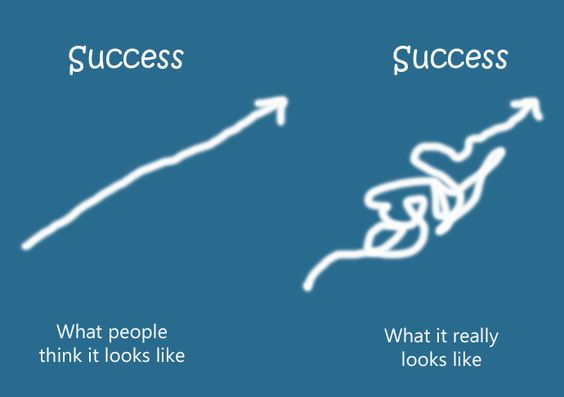
Most importantly, teachers can consider how to reach and teach ALL of their students, regardless of past academic performance.  With the diverse range of strengths and weaknesses in a given classroom, one’s definition of success can differ greatly.  Find ways to engage each student, equipping them for further achievement and advancement.


success-look-like


Consider how various superheroes have changed from being jokes, relics, or “one-offs” into major players or even champions of their universes (and publishers).  In many cases, this transformation did not occur just because of a Hollywood appearance.  It also takes someone (or someones) to see potential in a character and give him or her the attention they deserve.  Often, it includes a unique perspective and innovative approach.

The same goes for students in our schools.  Not everyone is a Superman.  But they could be a Star Lord.


Who knows?  Maybe the next Squirrel Girl is sitting in your very classroom.

squirrelgirl


Flame On

Standard


While Marvel Movies are chugging along with critical and commercial success, Marvel Comics have stumbled as of late.  The most glaring issue is “event fatigue,” with too many major event stories tripping over each other in attempts to be bigger and bolder than ever before!

This slideshow requires JavaScript.

Here is a list of recent crossover mini-series/maxi-series.  Keep in mind that each of these involve 4-12 special issues, in addition to numerous tie-in issues happening throughout regular series.

  • Siege (2010)
  • Realm of Kings (2010)
  • Second Coming (2010)
  • Age of X (2011)
  • Fear Itself (2011)
  • Schism (2011)
  • Spider-Island (2011)
  • Avengers vs. X-Men (2012)
  • Age of Ultron (2013)
  • Infinity (2013)
  • Battle of the Atom (2013)
  • Original Sin (2014)
  • AXIS (2014)
  • Spider-Verse (2014-15)
  • Secret Wars (2015-16)
  • Avengers: Standoff! (2016)
  • Civil War II (2016)
  • Dead No More: The Clone Conspiracy (2016-17)
  • Death of X (2016-17)

As one comic book store owner observes, “There are quite a few Marvel loyalists that have begun branching out and trying DC titles . . . possibly from Marvel event burnout.”

burnout

Burnout” is a common issue faced by teachers, too, popping up in those loooong middle months or near the end of the semester.  Teachers may find themselves overwhelmed, frustrated, and missing a certain spark in the classroom.

Teacher burnout is frequently linked to stress, which can arise from many factors, summarized by Kyriacou (2001):

  • Teaching pupils who lack motivation;
  • Maintaining discipline;
  • Time pressures and workload;
  • Coping with change;
  • Being evaluated by others;
  • Dealings with colleagues;
  • Self-esteem and status;
  • Administration and management;
  • Role conflict and ambiguity;
  • Poor working conditions.

Stressors are specific to each individual teacher in his or her unique context.  Likewise, successful ways to deal with stress and potential burnout differ from teacher to teacher.  Even so, here are some strategies Kyriacou suggests:

  • Try to keep problems in perspective;
  • Avoid confrontations;
  • Try to relax after work;
  • Take action to deal with problems;
  • Keeping feelings under control;
  • Devote more time to particular tasks;
  • Discuss problems and express feelings to others;
  • Have a healthy home life;
  • Plan ahead and prioritize;
  • Recognize ones own limitations.

You can find plenty more burnout tips and tools everywhere–from research literature to cyberspace to your closest loving relative. Here are a few resources I’ve uncovered, with some of my favorite highlights (and comments):

4 Warning Signs of Teacher Burnout – “Teacher Burnout is a dark place, and only complaints can live there.”  (Sort of like the Negative Zone–tread lightly.)

3209433-negativezone


Reboot: 5 Resources for Teacher Inspiration – Read, share and create Ryan Gosling memes.  (A few of my favorites below.)


Stop, Drop, and Roll With It: Teacher Burnout Prevention – “Finding a hobby that allows you to get away from education-related stuff is important.”  (This author even suggests playing video games – BONUS!)

videogame-chalkboard


And for all of you new teachers . . .

10 Tips for Surviving and Thriving in Your First Year Teaching – “7. Don’t Neglect Your Body: Sleep. Rest. Eat well. Exercise.”  and  “9. Catalogue Every Single Success in the Classroom: Write them down. Make lists of what’s going well.” (One of my mentors calls these “attaboys” or “attagirls,” and you should keep these in a box somewhere.  Or turkey.)

julia_turkey_tx800

Finally, here’s an inspirational quote I came across recently from master chef Julia Child, which reveals the right attitude:

“Find something you’re passionate about and keep tremendously interested in it.”

Teachers, hopefully you are already passionate about teaching and learning.  And “keep that fire burning,” so to speak, by fueling your educator’s engine.

As my mother used to say, “In order to burn out you must first be on fire.”

And so as the Human Torch says, “Flame On!”

human-torch-kirby-flameon


Kyriacou, C. (2001). Teacher stress: Directions for future research. Educational Review, 53, 28- 35.

Know Gimmicks

Standard

gimmick ˈɡimik/  noun

  1. a trick or device intended to attract attention, publicity, or business.
    synonyms: publicity stunt, contrivanceschemestratagemploy;

    informalshtick

 Every Marvel movie features snappy quips, and one of my favorite lines from Captain America: Civil War comes from hero Falcon, when he and Bucky first run into Spider-Man:

ca-cw-gimmick

Gimmicks have a long history in comic books.  Specifically, let’s look at comic book gimmick covers.  Like any good “publicity stunt,” gimmick covers draw attention to sell more comic books. Typically these specific issues celebrate milestone anniversaries, debut series, or other special events.

The good folks at Comic Book Resources (CBR) recently shared their “All-Time Greatest Comic Book Gimmick Covers,” and you can read about it right here.

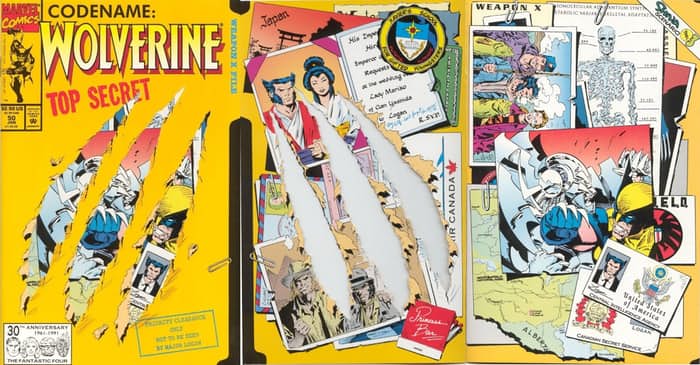
In this list, you’ll learn all kinds of neat history and trivia, including what made these gimmicks special.  Behold covers with poly-bagged pop-ups, glow-in-the-dark skeletons, embossed chromium and/or foil, die-cut claw marks, bullet holes, and more.

wolvie-gimmick

My favorite is the Superman “Colorform” cover, where you can create your own battle scene using the reusable plastic pieces.  (iPad got nothin’ on Coloforms.)

superman-lobo

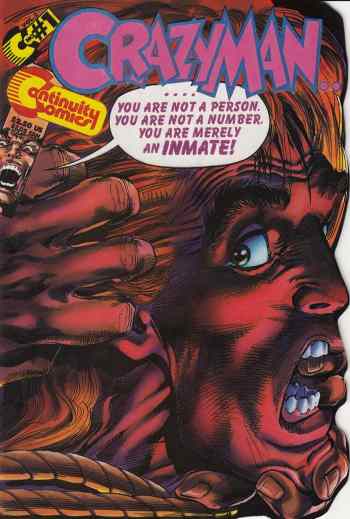
Gimmicks are fun, but they can also go horribly wrong.  To wit, CBR contributors also compiled the “All-Time Worst Comic Book Gimmick Covers,” which you can read here if you dare.

crazyman-gimmickbad6a

These unfortunate “shticks” include lenticular artwork, face-shaped die-cut covers, duplicate monochrome colors, Magic Eye illusions, body heat-sensitive “thermochrome,” and more bullet holes.

gimmickbad0c deathwatch.jpg

Gimmick comic book covers have mostly disappeared, but new ideas (or old revivals) pop up from time to time.  The same is true for educational gimmicks.  Teachers must be vigilant in protecting their students (and themselves) from too many gimmicks, fads, and ploys.

 What are some of these educational gimmicks?  For a start, take a look at the following graphic highlighting “20 Years of Educational Fads,” put together by Te@cher Toolkit (“the most influential blog on education in the UK”).

20-years-educational-fads

You can read more here about each gimmick, myth, fad, and/or hearsay, and see how much you agree.

Such new (or repackaged) educational ideas begin as noteworthy or eye-catching.  A financial boost often jumpstarts such initiatives.  But eventually the dollars dwindle away, followed by fading enthusiasm and support.  Given the effort and time spent by various stakeholders, you can imagine the subsequent feelings of resentment and distrust.

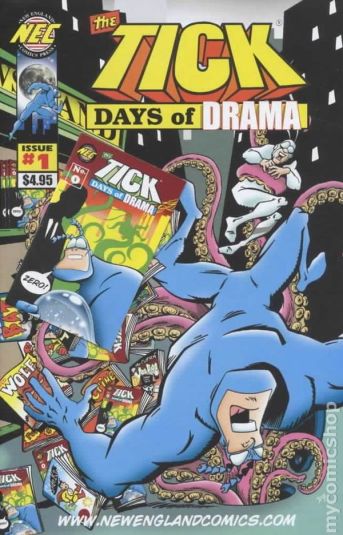
Please note that I am not poo-pooing all gimmicks.  After all, I’m the guy who forked over cash to get this hologram-highlighted wrap-around cover:

Uncanny_X-Men_Vol_1_304_Wraparound_Cover.jpg

And this foil embossed beauty:

avengers_vol_1_369

And even this one:

tick days of drama.jpg

 (Yup, that’s a special #0 issue mini-comic glued to the cover of the #1 issue regular-sized comic.)

Gimmicks can be good for a laugh.  And sometimes they are a breath of fresh air.  Used right, gimmicks can make cute mementos, quick distractions, and useful object lessons.

Nevertheless, it’s important to distinguish between a novel trick (that’s fun for a little while) and a credible research-supported practice (that stands the test of time).

What about you?  What educational gimmicks have you enjoyed, advocated, and/or suffered?

Job Juggler

Standard


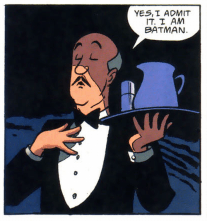
A recent Batman comic book story features Alfred Pennyworth, Bruce Wayne’s trusty butler, donning the cape and cowl to be Batman.

Below is one page of the comic, and you can find a nifty preview of this scene here, so take a look to see how it plays out.

alfred as batman


Alfred’s temporary stint as the Caped Crusader prompted website Newsarama to make a top ten list, where they ranked different jobs performed by Batman’s butler.

alfred batman tas


Of course, “butler” was the #1 job.  But you’ll also find a range of occupations such as surgeon, actor, spy, super-villain, and more.

This list includes many jobs performed by your typical teacher.  Consider the ways in which teachers must act in the following roles:

alfred 1943 detective


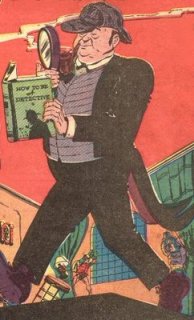
Detective – Teachers may not solve crimes, but they must investigate, question, and examine evidence from their students’ behaviors and performances in order to make conclusions about learning and lesson planning.


Alfred-Pennyworth-is-Batman


Actor – Teaching is NOT theater, but there are certainly times when teachers must add some theatrics to catch their students’ interest and elevate the content.


alfred doctor


Surgeon – Let’s go with Doctor here to be more general.  There’s a reason teachers have to annually renew training on how to deal with blood-born pathogens. Schools have nurses, but teachers often deal with students’ minor injuries on the front lines. Just ask any teacher with playground duty.


alfred hugging


Father – Alfred has been a “father figure” to numerous heroes.  How many teachers have been accidentally called “dad” or “mom” by their students?  It’s universally subconscious.


I would add even more jobs to Newsarama’s list for Alfred, and argue that teachers also juggle these jobs during a typical school year.

alfred tailor


Tailor – To put it figuratively, teachers must tailor their lessons to fit students’ needs and standards requirements.


alfred helping figure out


Assistant Problem Solver – Alfred has been Batman’s trusty assistant when it comes to numerous bat-cave experiments and analyses.  Likewise, teachers “facilitate” learning when they help students think through problems and challenges.


alfred sparring partner


Sparring Partner – Sometimes the role of assistant includes acting as an antagonist.  Like Alfred (seen here with a young Bruce Wayne), teachers can provide a safe avenue for students to “wrestle with ideas” and face opposition.


alfred ding dong


Comic Relief – Like fighting crime, learning is an endless venture.  In addition to all of the jobs needed above, an effective bat-butler/teacher can share a sense of humor to reduce stress and lighten the mood.


What other roles does Alfred perform for Bruce Wayne/Batman?

What about teachers with their students?  How many different jobs do you juggle?


alfred mentor


Super-Quotes

Standard

With the dawn of the school year upon us, what better way to begin than with some inspirational quotes?

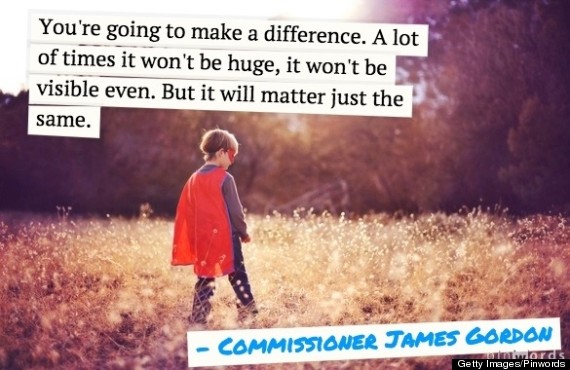
The Huffington Post (with State Farm and Getty Images) put together a terrific collection with equally inspiring images.

Here are two of my personal favorites:

o-BATMAN-QUOTES-570

o-JIM-GORDON-QUOTE-570

And you can find the rest of them HERE.


Such quotes can be motivational tools for TEACHERS as much as their STUDENTS.

Here are several non-superheroic (but still super) quotes I share in my classes.

    We do this not because it is easy, but because it is hard!    – John F. Kennedy


    Life is meant to be a never-ending education, and when this is fully appreciated, we are no longer survivors but adventurers.   – David McNally


    Excellence is not an act but a habit. The things you do the most are the things you will do best.     – Marva Collins


    Not everything important is measurable and not everything measurable is important.     – Elliot Eisner


What about you?

Which quotes or mottos do you share with your kids?  What do you use to keep yourself inspired?  Please share!


Summer Break 2016

Standard

Time for another summer break from blog posts at Teach Like a Superhero!

Hit the beach and hang ten!

surfing superheroes

We’ll be back for “back-to-school” season with news and resources celebrating superheroes and teachers.

Until then, follow our Facebook page and take a look at some highlights from the previous academic year:

What’s in a Name? – How should students address teachers?

Ms. Pronunciation – How should teachers address students?

Spoiler Alert! – Whether it’s a movie, a comic book, or the classroom, a spoiler can sabotage true enjoyment and engagement. So how do you teach students without spoiling them?

Secret Hideout – Where do you go for peace, quiet, and rejuvenation?

Word Balloons – Comic books use creative ways to convey voice tone.  How does your voice sound in the classroom?

Silent Issues – How much do you communicate without making a sound?


Reboots and rebirths are all the rage this year in comic books.  Use the summer to recharge for your students in the fall!

REBIRTH-splash-small.jpg


(Starting NOW!)

marvel-now-cropped-183913

Ms. Pronunciation

Standard

It’s graduation season, that wonderful time of year to commemorate scholarly success.

As an added perk, I get to dress up like a superhero.  (One of my students even said I looked like a Hogwarts professor – Wingardium Leviosa!)

phd gowns

Power Professors . . . Unite!

Besides Halloween, when else can someone strut their stuff in a color-coordinated, velveteen-trimmed billowy costume (i.e. regalia) without receiving strange looks?  It’s like academic Mardi Gras.

That’s Mardi Gras, pronounced “ˈmär-dē-ˌgrä.”  In New Orleans, pronounced “awr-lee-uhnz,” or “awr-leenz,” or “aw-linz,” depending on your demographics.

Pronunciations are important. How important?

With comic books being a visual medium, readers may have seen a superhero’s unique name for years but never heard it spoken out loud.  When we hear the audible title, the correct pronunciation can be surprising.


darkseidTake DC villain Darkseid, for instance.  First introduced in 1970, this big baddie predates  the Star Wars movies by several years.  But his name is pronounced “Dark Side.”  (For the longest time, I thought his name sounded like “dark seed,” which is more menacing in my opinion.)


Namor-Sub-Mariner

Or Namor the Sub-Mariner.  When I see his name, I still hear it as “submarine-r,” sounding like the underwater vessel with an “r” at the end.  (Like a trucker who drives a truck.)  Actually, the name of Marvel’s first mutant got its inspiration from the Coleridge poem, “The Rime of the Ancient Mariner,” and the emphasis is on “mariner” like a sailor or Seattle baseball player.


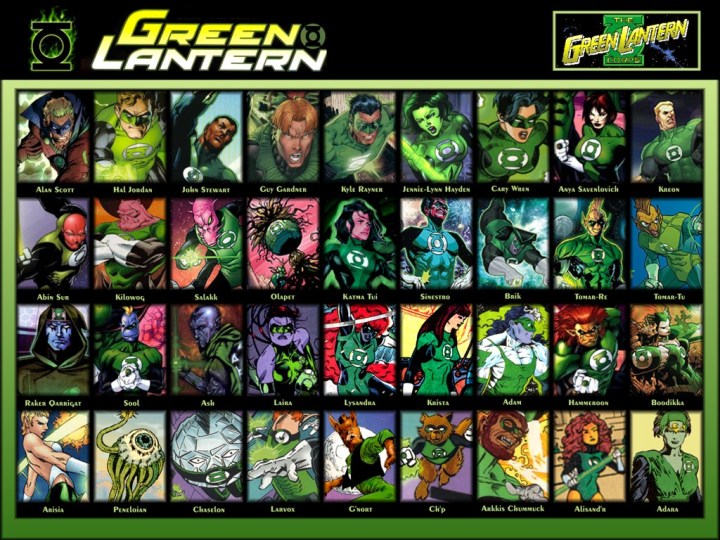
Here is an article about commonly mispronounced superhero names.  And we haven’t even talked about folks like Ra’s al Ghul, Ka-Zar, and half the Green Lantern Corps.


green_lantern_corps

Next year’s classroom portraits


Let’s not forget about all kinds of odd-sounding objects, too, like the Crimson Gem of Cytorrak, the Eye of Agamotto, or Thor’s mystical hammer Mjolnir.


Mispronunciations are not a problem exclusive to fictional characters.  All kinds of comic book creators have hard-to-pronounce names (Quesada, Nicieza, Madureira, DiDio, Lee).

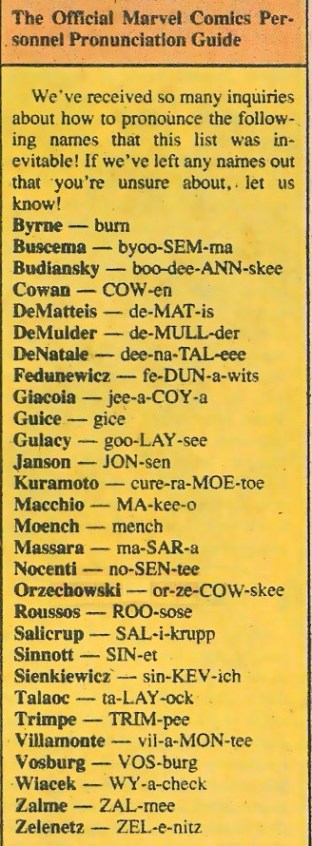
In fact, during the ’90s Marvel produced an official pronunciation guide for many of their writers and artists:

Marvel pronunciation


Most of this tongue-twisting is light-hearted.  But think of more serious repercussions in education.

graduate-student-woman-think-graduating-look-empty-area-isolated-white-background-asian-beauty-53035960


Witness the blushes and giggles (or worse, the cringes and frowns) at a graduation ceremony.  What should be the triumphant celebration of a student’s academic career becomes an uncomfortable, clumsy moment.


Consider the same unfortunate effects in the classroom.  How many students shudder at the sound of a teacher messing up their name during roll call?  This occurrence is not limited to back-to-school season, either.  Some botched names continue unnecessarily for months.

Here’s an interesting article by Ed Week about students and educators raising awareness and appreciation for diverse and difficult names.  Titled “Mispronouncing Students’ Names: A Slight That Can Cut Deep,” it tackles a lot of issues you may not even consider when reviewing your classroom roster.

What’s the worst way someone has mispronounced your name?  How do you handle it as a teacher?

Hopefully not like this:


Here’s one strategy I learned to use in my teaching:

During the first days of school, I have my students complete a handout sharing different bits of information.  One line on the form asks students to write their names as they are phonetically pronounced, as well as what the student would like to be called.

This may seem like overkill, but it comes in handy and reduces one more hurdle in promoting positive student-teacher relationships.

For instance, is Cara pronounced “Care-uh” or “Car-ah?”  Since I read her information sheet, I already know. I’ve also had students that go by middle names, initials, or something different than what’s written in their official records.

I’ll be ready when I have Mr. Mxyzptlk in class.  Will you?

mxyzpltk


Teacher Evolution

Standard

Don’t get riled up by this blog post’s title.

We’re not talking about Charles Darwin and biological evolution.  Although if you’re into that stuff, you can find all kinds of humorous imagery like this:

TrEvolMug

And if you like teacher accessories, you can snag this image on a mug, t-shirt, apron, mouse pad, and more HERE.

The type of evolution this post deals with is that of teachers (inspired by superheroes, of course).


YouTube user (and movie fan) Burger Fiction has put together some nifty videos highlighting every film and television appearance of various superheroes.

The most recent hero featured in these videos is Marvel’s Captain America, which you can watch here:


You can find similar “Evolution of . . .” clip collections celebrating heroes Iron Man, Superman, and Batman.  Each video includes vintage footage and obscure appearances alongside iconic sequences (live action and animation alike).

What I find most significant in these highlight reels, though, is the ongoing development and expansion of each character over time.  Like these heroes, effective teachers undergo change and growth through the years.

This is where the term “evolution” truly applies, going back to the word’s original meaning in the mid-1600s.  Thanks to the Online Etymology Dictionary, we know that evolution’s English origins arose from Latin “evolvere,” meaning “to unfold, open out, or expand.”

This same evolution process occurs for both teachers and superheroes.  And the parallels don’t end there.

cap am images

Like Captain America above, many teachers would rather forget some of the earliest footage of their work.  Everyone looks back at their initial efforts and cringes at what they see:

  • Sluggish transitions.
  • Awkward pacing.
  • Stilted dialogue.
  • Clumsy execution.
  • Poor methods.
  • Novice mistakes.
  • Cheesy humor.
  • And outdated fashion and technology, of course.


But observe what happens when the years go by.  As time advances, so do your abilities and confidence.  In fact, the most recent footage is downright awesome and exhilarating.

Am I talking about superheroes or teachers here?  It doesn’t matter.

Be brave and dig up old footage of your teaching.  Take a quick look and notice how your teaching has unfolded, opened up, and expanded.

Watch a more recent video of your teaching and be encouraged by your growth.  And if you find you still exhibit cringe-worthy tendencies, challenge yourself to fix those bad habits.

If you need inspiration or ideas on “teacher evolution,” here are a couple of useful articles: one dealing with National Board Certification, and another focusing on a teacher’s journey of “personal transformation” that includes burnout, pink slips, and awards.

Evolve your teaching.  You don’t need a multi-million dollar Hollywood budget, either.  Just the guts to get better.

superhero evolution

Con Season

Standard

This blog post is unique because I’m writing it from San Diego, where I’m attending a convention.

sdcc

No, not THAT convention – San Diego Comic-Con International – although the Convention Center is just across the street.

sandiegoconventionctr

The above photo is what the Center looks like this week.  During Comic-Con, it appears more like the photo below:

san-diego-the-first-ever-comic-con-got-seriously-weird

Or this one:

sdcc-cosplayers-25697

Or this one, if you’re lucky:

Avengers_Age_of_Ultron_SDCC_2014_panel


Like I said, I’m not lucky enough to be in town the same time as Comic-Con.  But I am lucky enough to be at a convention with hundreds of other educators.

caep-con-2016-logo-w-theme

This particular “con” is focused on accreditation of teacher preparation programs.

The topic may sound dryer than San Diego heat, but it’s not too bad.  Most sessions are led by educators, who know a thing or two about engaging a crowd of semi-disinterested individuals.

Here are three take-home lessons I’ll share with you (and take home from California):

empty school room

No excitement here.

1. A convention center without fans, celebrities, and cosplayers is like a school building without students, teachers, and staff.  A brilliant building with fancy facilities is a wonderful thing to behold; but it only makes a difference when it hosts a crowd of excitable and exciting characters.


2. What convention are you attending next?   I’m not talking about a district-required in-service necessary for churning out continuing education credits.

Seek out a teacher-focused conference or convention that expands your network of colleagues, refines your thinking, and builds on your repertoire of strategies.  Better yet, sign up to SHARE a session or workshop with your professional peers.  


3. Someday I hope to visit San Diego again and attend Comic-Con.  Until then, here are some conferences I’ve attended (or will attend) recently.  Check one out, if you’re interested.  Or find something else that more closely matches your field of expertise.

-Kappa Delta Pi International Educational Honor Society Biennial Convocation

-National Science Teachers Association Regional Conference

International Meeting of the Association for Science Teacher Education

-Kansas Association of Science Teachers “KATS Kamp” Conference

-Council for the Accreditation of Educator Preparation Spring Conference


Where are you going?

You don’t have to attend a “con” somewhere far away or expensive.  Most of those I go to are within driving distance, and many times you can pay a discounted fee to attend only part of the convention.  In most cases you get what you pay for, though, and it’s healthy to expand your horizons beyond your home district or state.


Find a super group of teachers to encourage and educate you – and you can do the same for them.  They’re waiting for you!

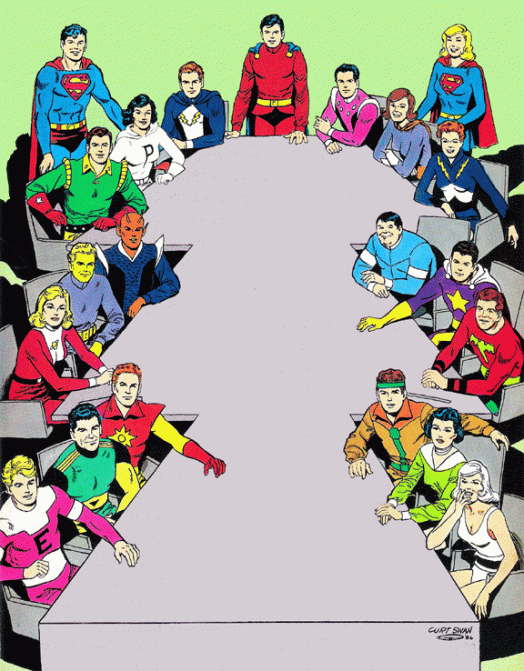
legion at table