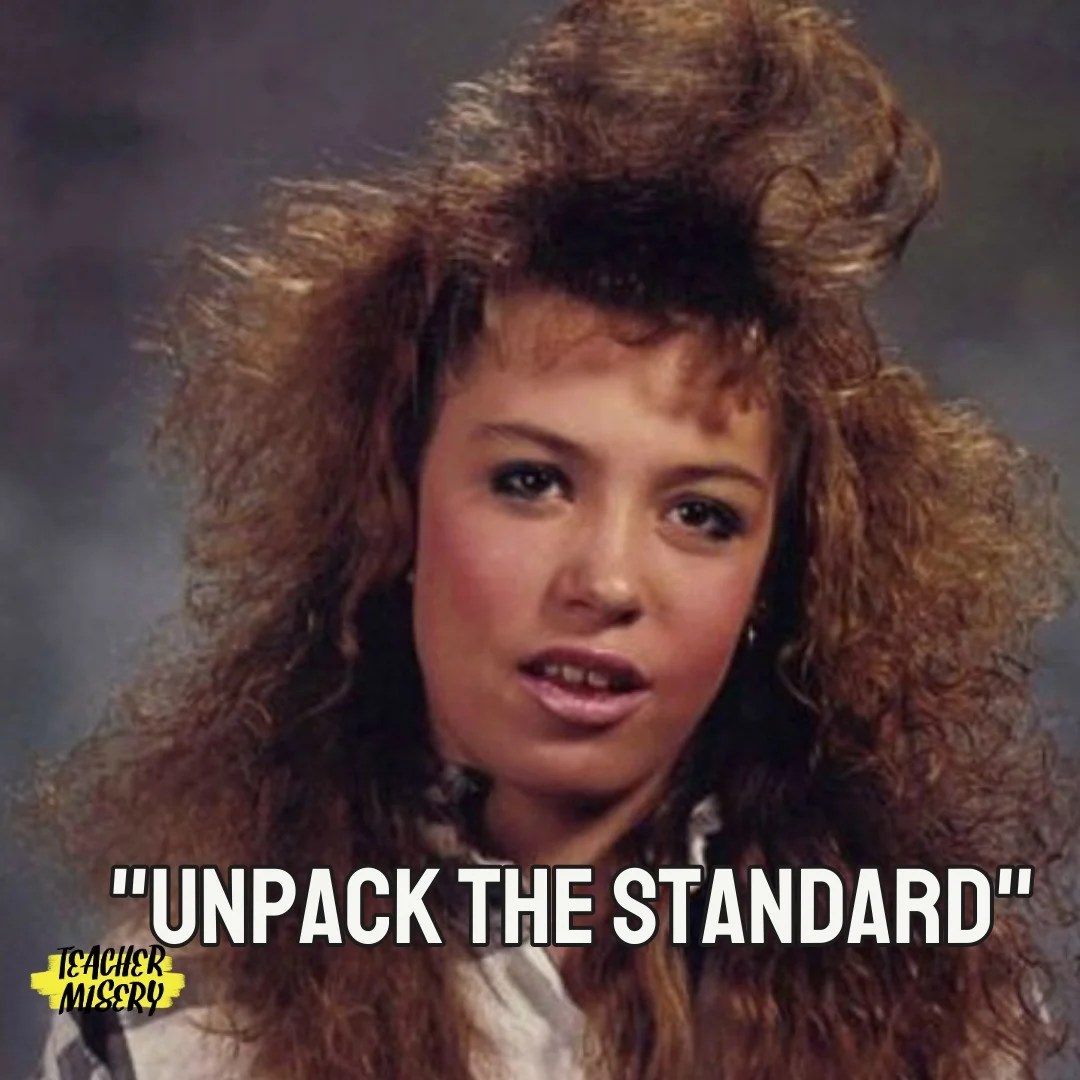
Teachers may have seen the goofy gallery mixing educational jargon with bad 80s haircuts. Here are a few favorites, and you should check them all out at Teacher Misery.
Creator Jane Morris explains her distaste for buzzwords and mottos: “[T]hey take a fairly simple concept that most teachers do anyway and turn them into complicated, irritating nonsense.”
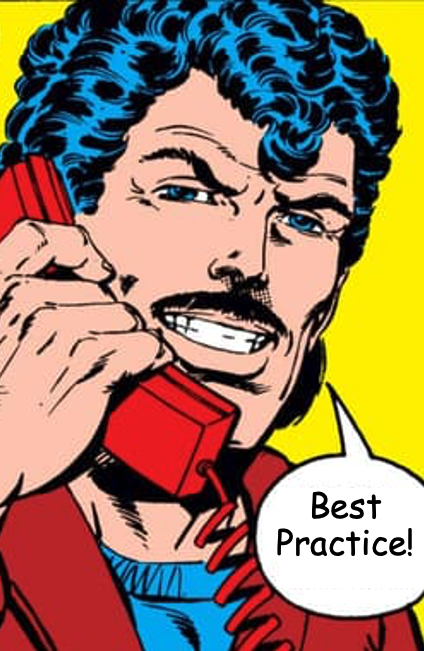
Inspired by this wombo-combo, I’ve created my own mini-album of buzzwords using 80s era Marvel superheroes (and super-hairdos). Behold!
All fun aside, it is a serious matter for educators to go beyond superficial labels or condescending catchphrases. (Even superheroes get lampooned with silly slogans or benign battle cries.)
Consider the true origins of such sayings, and reflect on what these terms REALLY mean.
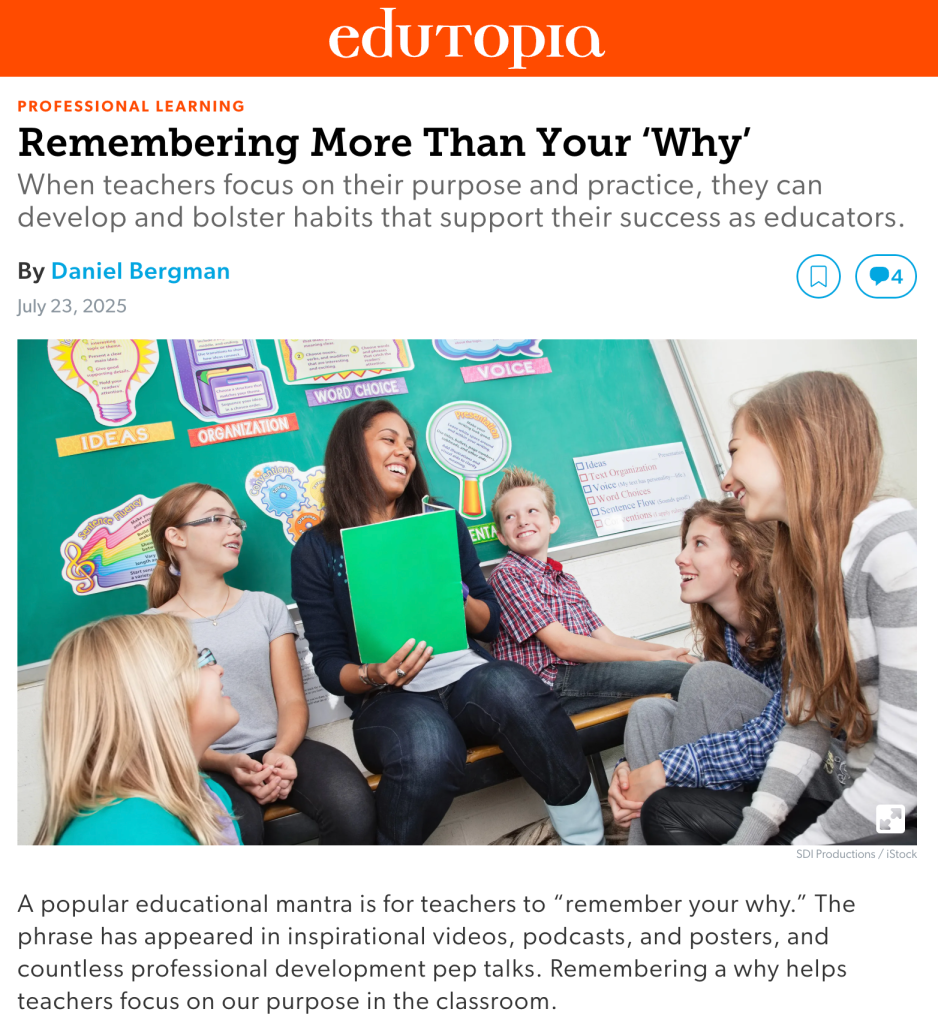
To help with reflection, take a look at an article I wrote for the great folks at Edutopia.
Click HERE (or on the image above) to read the entire thing, and please share your comments here or there.
Either place, I’d love to learn what buzzwords drive you nuts (and why), along with what bad hairdos you secretly like.
Thunderbolts* is the newest movie in the Marvel Cinematic Universe (MCU), and it’s a good one!
So good, in fact, that it got a brand NEW title right out of the gate (spoilers ahead, of course):
Beyond the clever name change (i.e. marketing ploy), the film itself is memorable for its meaningful look at mental health. Numerous news outlets have explored this key ingredient in the film, including interviews with the film’s creators and stars (such as this article from Entertainment Weekly).
Like the superheroes (super-spies? super-thieves?) in Thunderbolts*, educators also face challenges with stress and self-care.
In one survey, teachers and principals both fared worse than other working adults in multiple mental factors. Here’s a visual summary courtesy of the folks at Education Week.
Granted, this report is from 2022 as schools were crawling out of a pandemic shadow. Still, a more recent study finds similar issues, as indicated by its title, “The Teachers are Not All Right.“
In better news, things are improving with educators’ awareness and ability to find help. Another Education Week survey found that teachers are better at supporting one another in their work. Check out this nifty graphic summary:
In the linked Entertainment Weekly article above, actress Florence Pugh elaborates on the importance of collaboration and kindness:
“[T]he real message is we have to be together. We have to connect, we have to help each other. We have to be humans and actually care, and love, and look after each other. And that is the key.”
She’s talking about fictional superhero characters, but the same holds true for real teachers in real life. Amid a notoriously labeled “isolatedprofession,” educators must seek support from each other AND for each other.
Even so, don’t rely on colleagues to provide and receive all necessary assistance. There are numerous resources from health experts and professional organizations, some of which teachers can use with their students.
Earth Day was just a few weeks ago, so here’s your annual reminder to take care of our planet EVERY day!
And if you need a SUPER reminder, here’s Captain Planet and his Planeteers!
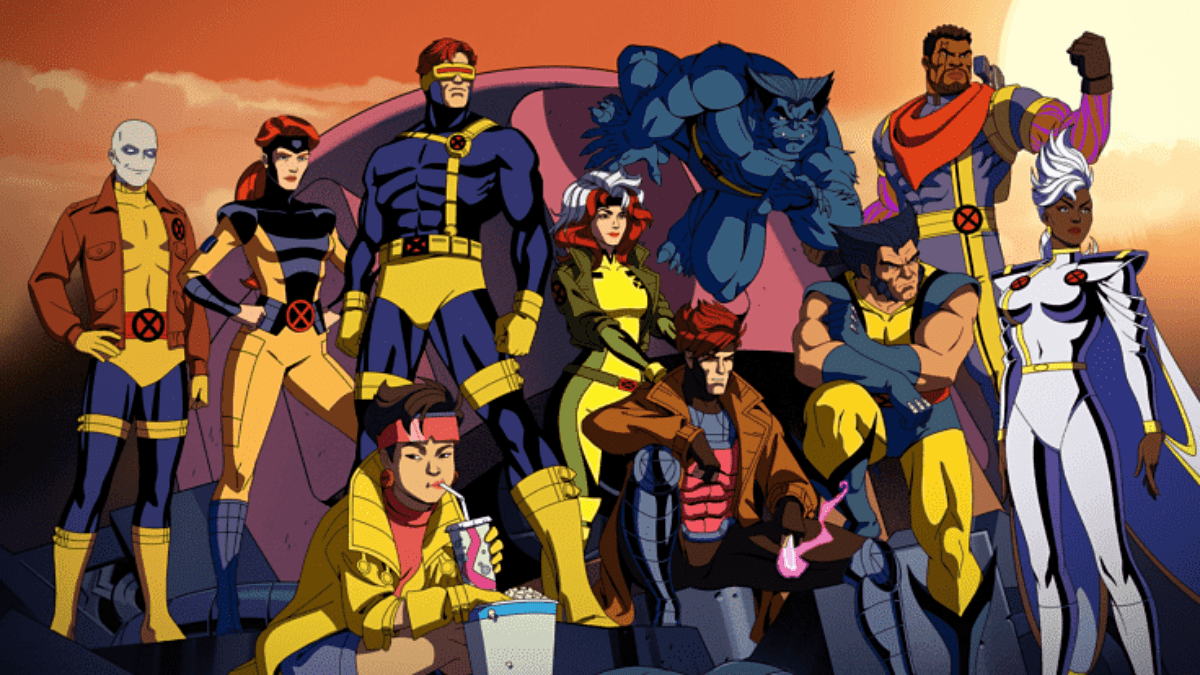
Another 1990s product has recently made a triumphant return. X-Men ’97 is receiving“rad”reviews for its continuation of character arcs and plot threads created over 30 years ago on a Saturday morning cartoon. Check out the show’s neo-retro trailer:
Confession time: While the X-Men were my “first love” among superhero comics, I didn’t pay much attention to the animated series. For one, our household TV didn’t get the Fox channel. Second, I thought the cartoon was a pale imitation of the more “authentic” comic book continuity.
I’ve consumed enough pop culture, however, to recognize that any continuity of a decades-long franchise is flimsy at best, beholden to whoever is in charge at the moment. Fans should just pick the stuff they enjoy and ignore the rest.
And now I’m enjoying this new/old cartoon with my own kids. The show captures two main draws of Marvel’s “merry mutants” in animated form:
1) Style (snazzy outfits with bonus buckles).
2) Soap opera melodrama (in a handful of episodes, we’ve already gotten deaths, births, rebirths, clones, time travel, and enough love triangles to prove the Pythagorean theorem thrice over).
Of course, one must always be careful with nostalgic viewing through ruby-quartz glasses (get it?). This applies to both entertainment and education.
Just because something evokes fond memories doesn’t mean it was flawless. We can easily forget the rough spots. In teaching, this comes up whenever you hear comments like, “Why can’t we go back to . . .?” and “Things were a lot better when . . .”
Of course, a similar hazard is ogling at the latest trend and thinking it’s all that and a bag of chips. (There’s another 90s reference for you.)
If you find yourself chasing fads, watch the following video from the Veritasium channel about “the most persistent myth” in education, namely the assumption that some new thing will revolutionize education:
There’s a third danger, particularly to veteran teachers. Anyone who’s been around education for a while will eventually experience déjà vu. That’s not surprising. Every year is an astronomical loop, back to where we started.
Hang around long enough in education, and you’ll notice hints of familiarity among “innovative” ideas. Teachers may be tempted to assume a jaded stance and grumble, “Here we go again,” or “We’ve already tried this.”
Please resist this apathetic posture. Yes, shiny school things are often simply repackaged relics. But consider the strength of something that runs through waves of reform. Maybe there’s a reason it reappears time and again. (Sort of like a phoenix?)
We’re talking about teaching here, but the same is true for the X-Men and other superheroes. How many times have classic stories and key character moments recurred over the years among different media?
Heck, as I’m writing these words, my family has been enjoying Little Women on TV. This is the 2017 “Masterpiece Theatre” version, not the movie from 2019. Or 1994. Or the four other films before those. There are other adaptations, too, like graphic novels and manga.
Multiple retellings reveal a beloved and durable tale. Whether it’s X-Men, Little Women, or classroom instruction, focus on elements that withstand the test of time and trendy tides.
This doesn’t mean sticking to a single interpretation, but rather celebrating and cultivating quality. Whether something is new or classic, deconstructed or reimagined, relevance relies on excellence.
Even though the new year has barely begun, it’s always a good time to reflect and review.
Unfortunately, the previous year wasn’t kind to superhero shows. (Or maybe it’s the other way around: Superhero shows weren’t kind to 2023.) Here is a list of superhero movies from last year and their scores on the “Tomatometer” –
Notice that only two films reach the equivalent letter grade of an “A” (both animated, by the way). And seven of these ten movies average out to a “C” or worse – including three below 50%. (Ouch.)
Aside from critics’ reviews, a film’s success also depends on how much money it makes (and also how much it costs). The criteria for “hit” movie, then, is multifaceted.
In the same way, teachers must consider a variety of factors when reflecting on classroom success.
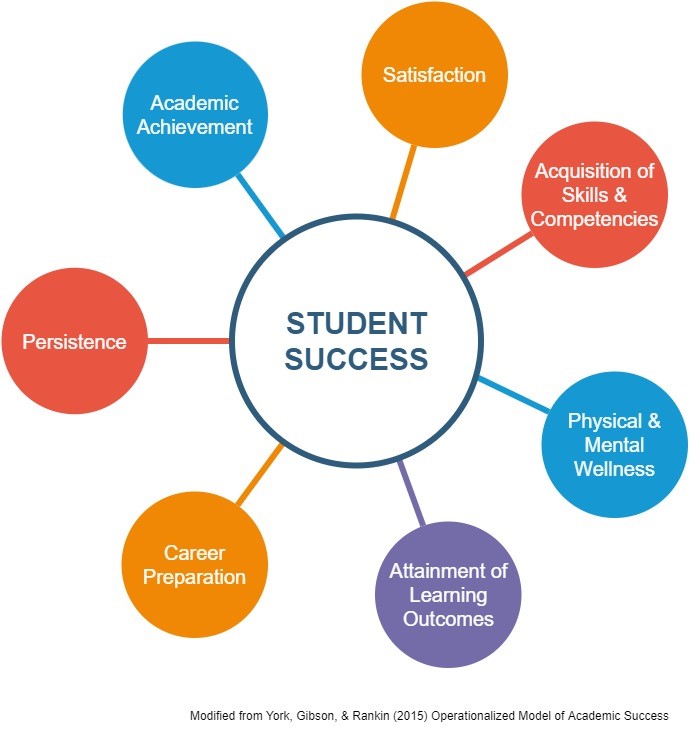
Beyond summative assessment scores, we should account for pre-assessments, school context, and external factors. And go beyond academic measures for “success,” acknowledging the power of social and affective factors.
Again, I would argue these aspects (and more) influence all kinds of success, not merely “academic.”
We’ve talked before on this blog about defining success and evaluating outcomes. But for now, let’s focus on reviewing teachers. How do we measure teaching effectiveness? And who should do it?
Not long ago, Edutopia asked this latter question, and summarized research into various teacher evaluation methods. This is their headline and graphic, and you should click HERE to read more.
For now, here’s a quick summary (you’re welcome) on some useful elements to enhance teacher evaluation:
Teachers should review their teaching with a peer, including fellow experts in content and pedagogy.
Well–writtenrubrics (and well-trained evaluators) help provide structure and intentionality.
Video recordings afford flexibility and efficiency for review, as well as opportunities for self- and peer-reflection. (This one is a personal favorite, and helps you reach “iconic” status.)
Student feedback can be a powerful supplement to other evaluations, especially to gauge rapport, management, and relative rigor.
Teachers, what do you think? How do you use any or all of these in your self-evaluations and self-improvement?
That last one – student reviews – can be tricky. The researchers acknowledge this, noting that some students may evaluate their teachers too harshly. In the entertainment biz, it’s called “review bombing,” and teachers can be mindful of such pitfalls, however rare. (As one of my mentors used to remind her colleagues, “consider the source.”)
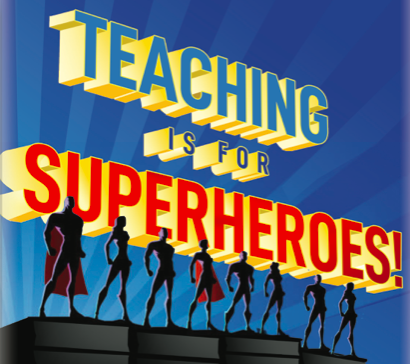
I’m encountering a new sort of review process now that my book, “Teaching Is for Superheroes!” is out and in the public. (Have you heard? Or seen? Or both?)
I’ll admit, I’ve taken a peek at a few reviews of my book. They’re not too bad (yet). And hey, I’ve still been writing! (Exhibit A: This blog.)
Still, I don’t want to get bogged down in second-guessing, cringe-inducing, and/or back-patting obsessions.
Teachers must also be careful in focusing too much on reflection and review that they forget to actually teach. Use reviews purposefully and proactively, but not at the expense of your instruction.
Teachers, what else do you do to review, reflect, and improve your teaching?
Please share your ideas. (Sharing and supporting the profession is a great way to help others AND yourself.)
Here’s one more suggestion: Check out a book on teaching! (I have a recommendation.)
And when you do, please provide an honest review at your favorite online merchant (or two), Goodreads, social media, or your own personal blog or podcast. I promise not to look at it . . . more than twice.
If your answer is “NO,” you’re not alone. The Marvels had the worst box office opening ever for a movie in the MCU franchise.
Considering the Marvel Cinematic Universe has earned a worldwide gross income of nearly THIRTY BILLION DOLLARS* from its combined movies, I’m sure they’ll be fine.
*That’s “Billion” with a B-b-b-b-b-b . . . .
I’m even more confident in Marvel’s well-being given recent comments by one of their up-and-coming stars.
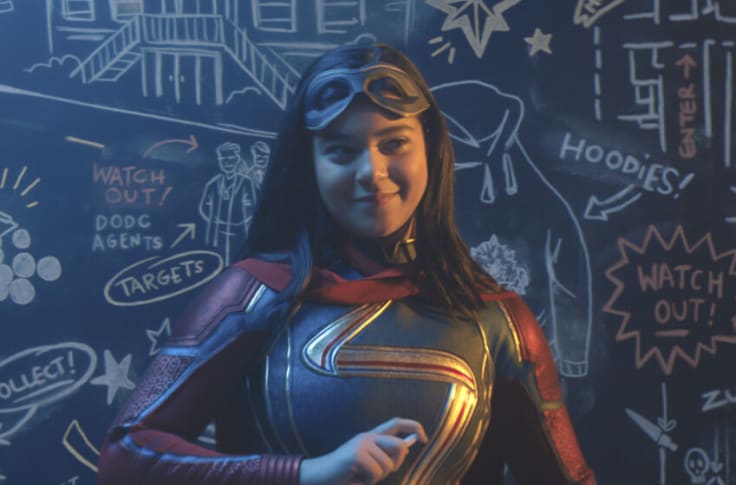
In an interview with Yahoo Entertainment, actress Iman Vellani (Ms. Marvel herself) shared her honest feelings about the film’s performance and audience perceptions.
“I’m happy with the finished product, and the people that I care about enjoyed the film. It’s genuinely a good time watching this movie, and that’s all we can ask for with these films. It has superheroes, it takes place in space, it’s not that deep and it’s about teamwork and sisterhood. It’s a fun movie, and I’m just so happy that I can share it with people.”
Whether you like The Marvels or not–heck, whether you even go see the movie or not–you have to respect the Ms. Vellani’s positive outlook. Enjoy the creativity and enthusiasm, and share that enjoyment with those who are important to you.
I bolded that previous statement because thesame approach applies to TEACHERS.
Like movies, schools may find themselves in the headlines due to lackluster performance. Often, the stumbles and setbacks get more scrutiny than the successes.
Or maybe we don’t have thick sin, but a magical bracelet that combines with our mutant powers to create a shield of hard light energy. That’d be nice . . .
Here’s another excerpt from the interview with Iman Vellani:
“I had a lot of experience in high school alone when I would share my excitement with someone, and then they’d immediately shut me down for being so excited . . . . If people are excited about something, let them be excited about it. And if you have constructive criticism, voice it — but never be the wet blanket on someone else’s excitement.”
Wise words from a 21-year-old.
And not only sage advice, but also a practical strategy for teachers working with students.
We all encounter kids who have grand ideas, but maybe not the best plans. Effective teachers are those who can encourage and cultivate enthusiasm in the classroom.
Marvelous teachers harness that energy for productive outcomes inside school and beyond.
We–AND our students–should cherish such experiences.
You may think this blog’s title refers to the relative lack of new posts in recent months.
I wouldn’t blame you. Hopefully we’ll get back to a semi-regular schedule soon.
But I’ve had my reasons for such blog-paucity. It’s been a busy fall semester. Exhibits A-J . . .
Actually, the topic of “Excused Absences” comes from a social media post by Marvel Studios.
Check out this “Permission Slip” fans can use to skip school or work (or both if you’re a teacher).
What’s your reaction to this note?
Ha! That’s funny.
Hey, that’s not a bad idea.
Gasp! How dare they make light of skipping school and/or work, especially in light of data on chronic student absenteeism and the detrimental effects on learning and retention?
If you responded closest to #3 above, chances are you’ve had some prior experience with students that miss or skip classes.
(Still, I’d hope you can take it as a clever joke. And maybe sympathize with those of us excited to witness two landmark events in the wider Marvel Cinematic Universe.)
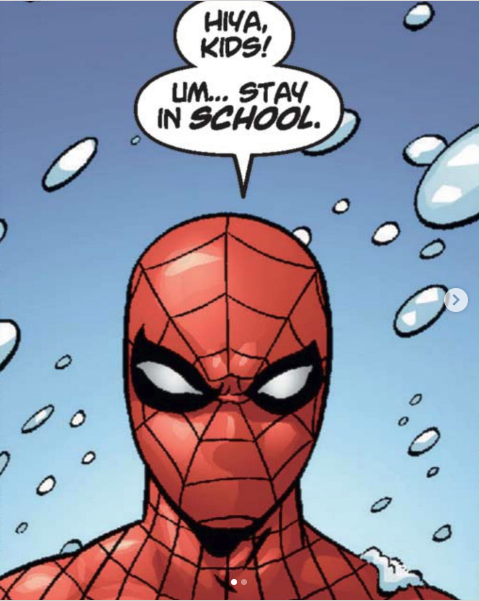
But since the issue is on the table, let’s look at students who miss school. And if it’s any encouragement, superheroes go missing all the time . . . .
Focusing on STUDENTS, the causes and effects of missing school are diverse and interdependent. For example, is a student not doing well because they are missing class, or are they missing class because they are not doing well?
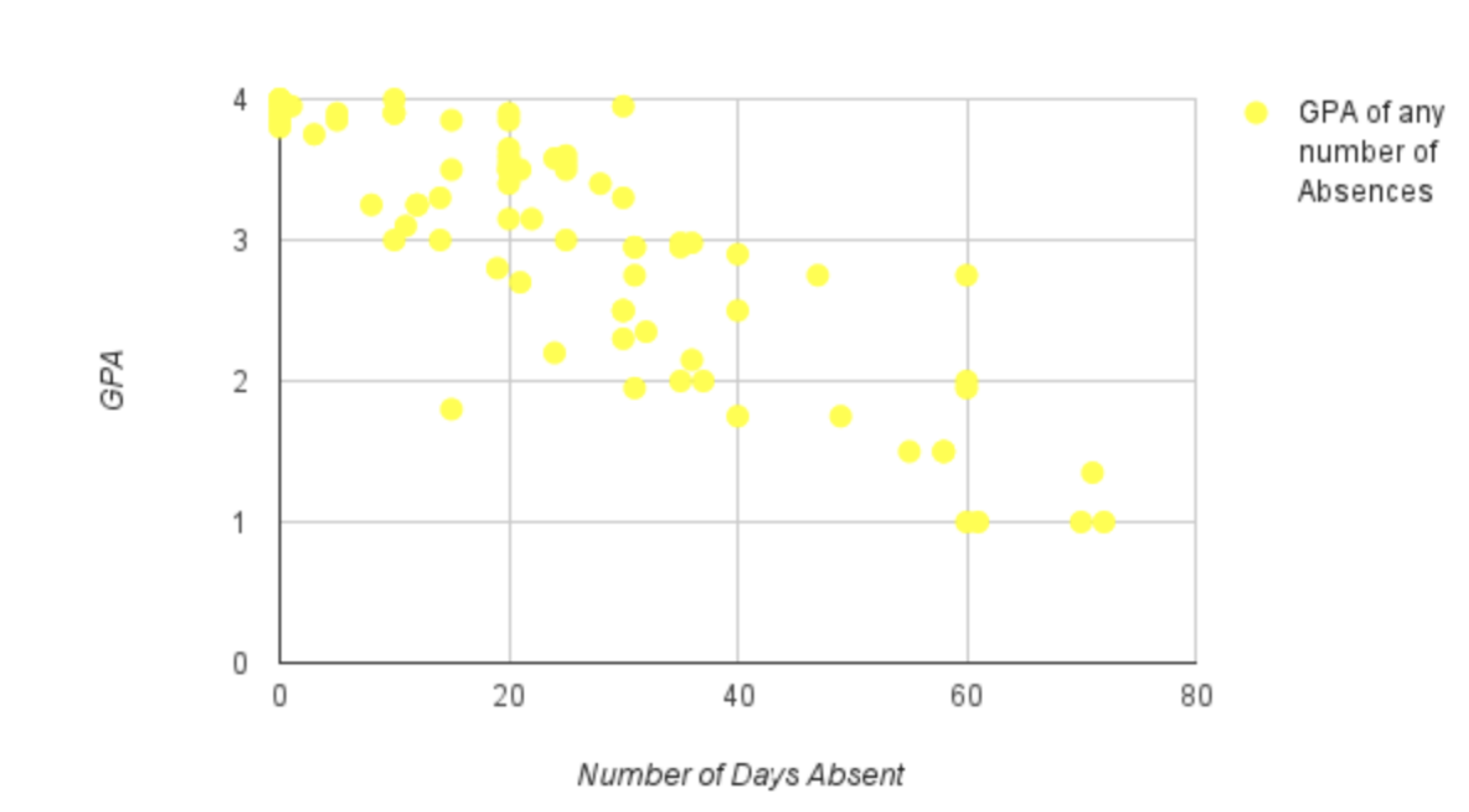
Regardless of causation, we can clearly see correlation. Here is a graph based on data of students in my university, courtesy of our Office of Academic Affairs.
Sure, there are outlier individuals who buck the trend. But overall, it’s not too hard to notice that the more classes you miss (Number of Days Absent), the lower your overall grade point average (GPA).
You can find all kinds of data and research on this important issue, including the ones listed here.
Hands down, this show is the coolest cartoon right now – on TV (Disney Channel), streaming (Disney+), OR online (full episodes available free on YouTube). The animation can get busy at times, with quick cuts, Easter eggs, and side jokes galore. But it’s a fun show, full of positive messages about family, diversity, learning and growing up, as well as at least one groovy musical number in each episode.
In addition to plenty of teachable STEM-related topics, my favorite bit is Coach Hrbek filling in as substitute teacher. Coach compensates for his lack of content knowledge by throwing out as many sports analogies that come to mind. The results are mixed (check out the 26:40 mark from the first episode HERE).
Teachers should learn from Coach Hrbek’s example: Metaphors, analogies, and illustrations can often help teach a concept. But they cannot replace authentic understanding, and can even get out of hand and create further student confusion.
(Fun Fact #1: Fred Tatasciore, who voices Coach Hrbek, is also the “voice” for Devil Dinosaur.)
(Fun Fact #2: My elementary gym teacher was also named Coach Hrbek, but we had to call him “Mister Hrbek.” Good guy.)
There’s plenty of STEM stuff in the third Ant-Man film, which takes place mostly in the subatomic Quantum Realm. More than just namedropping science-y terms, the film’s creators provide extra resources that explore science fact and science fiction. One example is this video with actor Paul Rudd and a quantum physicist, which teachers can use for a quick science primer:
The movie also features a great scene about teaching itself, during which Scott Lang tries to show his daughter Cassie how to fight with shrinking powers. Take a look:
Notice how Ant-Man attempts to teach by modeling, which is tricky when his example is too small and too fast to observe. Teachers, where do you teach by example? And what visual aids or illustrations do you need to enlarge (or slow down) to increase impact?
The connections to teaching (and science) are a bit more of a stretch for this film, but both are still there for teachers to consider. Science-wise, the main antagonist High Evolutionary does all kinds of wonky experiments that conjure conversations about genetics, “natural” selection, and bioethics.
Teaching-wise, the best lesson from GOTG3 is to remember the “little things” amid the bigger backdrop. Shortly after the movie’s release, Amelia Emberwing of IGN wrote an essay titled, “Guardians of the Galaxy Vol 3 Understands That Without the Small, the Big Doesn’t Matter.” I recommend teachers read it (Spoiler Alert, of course), and consider educational parallels.
Take this quote from the essay, for instance: “[T]he real trick to these stories — the secret sauce that has made the Guardians of the Galaxy films stand out over the years — is [writer/director] James Gunn’s understanding that without the small moments, the big ones don’t matter.”
The same sentiment goes for schools. Sure, teachers have standards, assessment data, “scopes and sequences” to plan and track over multiple semesters. But more important than these “big” things are the small moments occurring on a daily basis in the classroom, cafeteria, playground, and hallways.
Lessons from mentors, family, and loved ones? Loads of that.
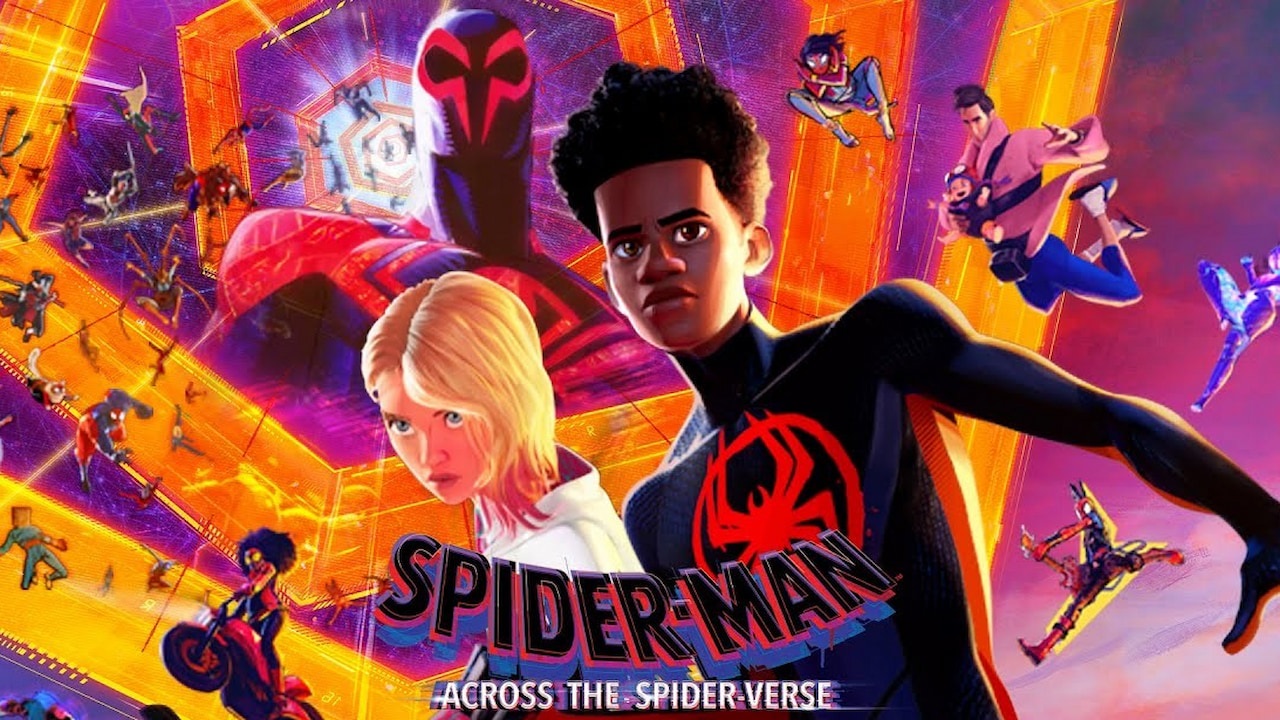
That last checked box is the one teachers can apply to learning and teaching. If you haven’t seen the film yet (you should), there are several special “small moments” between main character Miles and his parents and other teacher-like figures.
No spoilers here, of course, but watch the trailer below for one such instance. Across this preview’s assorted clips, listen to the dialogue coming from a scene between Miles and his mom:
Part of effective teaching (and parenting) is letting go. Let our students go off to the wider world, try things out, apply their learning, learn from mistakes, make their own decisions (and friends), make new discoveries.
Is it hard? Of course, as are ALL worthwhile endeavors.
But we can trust in our teaching. And trust in these future heroes. Start today.
It wasn’t that long ago that we talked about Wolverine actor Hugh Jackman (and how teachers also need a “Hugh”).
Now we’re back with another teacher tip from everyone’s favorite Australian nice guy actor playing everyone’s favorite Canadian grumpy mutant hero.
(Quite the difference in personality there. I guess that’s why they call it “acting.”)
Let’s talk about one more difference between Hugh Jackman and Wolverine.
In the comics, Wolverine is stocky and short, with a height of 5′ 3″. In reality, Hugh Jackman is 6′ 2”.
It doesn’t take a math teacher to quickly figure out that’s a difference of 11 inches–almost one whole foot in length. (Or 27.94 centimeters for those of you using the metric system–Canadians and Australians alike.)
So how did a tall actor first win the part of Wolverine?
(Remember, before Hugh Jackman got this role for the first X-Men movie, he was a relatively unknown actor. Check out this neat time capsule web announcement announcing–and decrying–the official casting waaaaaaaaaaay back in 1999.)
Recently, CNN’s Chris Wallace asked the actor this same question (or very similar, at least). Zip ahead to the 0:45 mark for the question and answer:
In his explanation, Hugh Jackman also gives an example of his behavior. It may look goofy to “stoop,” but it got him the part! (His thespian skills probably helped, too.)
A while back, I read the following sentence in a reflection paper by one of my future science teachers:
“As an educator, I need to remember that my first priority is to the student. I need to STOOP and listen.”
There was a typo. She meant “STOP and listen.”
Still, my first reaction was to write a snarky response like, “If you teach elementary kids, you certainly will need to stoop!” 🙂
(I didn’t.)
The more I think of it, though, sometimes teachers DO need to STOOP. Not only when they stop and listen, but often when they interact with students. And not just with younger kids, but with all ages and grade levels.
There’s a whole bunch of research on “nonverbal behaviors,” those unspoken actions and mannerisms that occur during human interactions. Teachers can gain a lot of insight and application when they focus on such behaviors in the classroom.
But stop and think about what you actually look like when you teach. How is your eye contact? Your facial expressions? Hand gestures? Mannerisms and more?
And where are you compared to your students? The fancy name for this is “PROXIMITY.”
Wolverine (Mr. Logan) demonstrating why teachers should NOT stay at the front of classrooms, especially with their back turned to students.
Proximity is not just the front of the classroom versus the back, or in between student desks (although such movement is important for many reasons).
Proximity also includes the posture and level at which you interact with students. Check out this quote from Sean Neill and Chris Caswell, authors of the book, Body Language for Competent Teachers:
“Leaning towards another person, whether sitting or standing, is an ‘intention movement;’ your intention, if you actually moved, would be to get closer to them . . . . Leaning away sends the opposite signal. Leaning over someone, or being higher than them, is dominant and potentially threatening because if you actually wanted to attack someone you could launch your attack better from above. Sitting or kneeling down to someone, at or below their level, is correspondingly non-threatening” (p. 11)
So I guess we now know why Wolverine is always hunched over, ready to strike.
And we also know why it’s important for teachers to STOOP. Not always, but definitely when working with students in small groups or one-on-one. Leaning and learning–literally at “their level”–conveys a collaborative spirit. We’re in this together to grow and get better!
And who knows? Maybe all this learning will help us become “the best there is at what we do.”
Unlike Wolverine, however, what teachers do–learning and teaching–is VERY nice!
Find more SUPER-teaching resources and strategies HERE or HERE!
At the end of every year, you’ll find a smattering of “Top Ten” or “Best of . . .” lists. Do a quick web search and you’ll discover all kinds of countdowns for 2022.
Better yet, we’ve done some reading ourselves and provided a few hyperlinks, including Comic Book rankings by people at Polygon, Den of Geek, and Entertainment Weekly.
My favorite of 2022 was the new “Batman/Superman: World’s Finest” series by Mark Waid, Dan Mora, and Tamra Bonvillain. It’s a fresh take on the old-fashioned DC team-up title. The art is dynamic and colorful, with big action mixing up characters both well-known and unknown.
Comics aren’t just full of superheroes, of course, as you’ll notice many different kinds of tales in these “Best” Comic Books.
For more capes and cowls, you can also find “Top” lists ranking favorite superhero television series, such as one by the folks at IGN.
Again, my two-cents’ worth is that Ms. Marvel was the best choice in a very robust slate of superhero TV in 2022.
I’ve already talked about Ms. Marvel in a previous post. Simply put, it’s another fun teen title in the tone of Spider-Man.
Like Spidey, Ms. Marvel begins with our hero learning about their powers and living among family and friends. But “trial-and-error” adventures at the street level soon explode into a globe-hopping (and time-traveling) quest. Good stuff!
In addition to TV and Comics, there are even “Top” lists for Teachers!
Places like Education Weekand Education Next highlight the most-read blog posts and articles in 2022. A lot of these deal with policy and trends in curriculum, as opposed to direct classroom practice. Still, it’s good to stay up to date with the latest. Keeping current is even more vital with RESEARCH in teaching and learning, as featured in Edutopia’s “10 Most Significant Education Studies of 2022.”
Here are a few of my favorite takeaways from their Top Ten:
#1 THERE’S NO CONFLICT BETWEEN RELATIONSHIPS AND RIGOR
“The researchers found that the most effective teachers build their classrooms by getting to know their students, being approachable, and showing that they enjoy the work—and then deftly translate emotional capital into academic capital.”
#10. AN AUTHORITATIVE STUDY OF TWO HIGH-IMPACT LEARNING STRATEGIES
“In the review, researchers explain that students who prefer techniques like reading and rereading material in intense cram sessions are bound to fail. Instead, students should think of learning as a kind of ‘fitness routine’ during which they practice recalling the material from memory and space out their learning sessions over time.”
Similar to “Top” rankings for the previous year, you’ll also find “Most Anticipated” lists previewing upcoming movies, comic books, and more.
Just as teachers can gain insight from reviewing the “best” of the past, they can also find inspiration in previewing the future.
What are you anticipating most in the next year? (Maybe a new book?)
Better yet, how can you help your students look forward to the future?
The BIG reveal comes at the END of this short announcement.
Not only is Deadpool joining to the “Marvel Cinematic Universe.” Appearing with him is Wolverine, played by long-time Logan, Hugh Jackman (when he’s done brushing his teeth).
Fans were so excited by the news, the two actors quickly posted a second video (“Part Hugh”) to share more details (?). Mostly, they acknowledge potential snags due to prior storylines (spoiler alerts). And they stir up more speculation, obscured by the best ’80s pop song ever:
With Deadpool 3 not scheduled to arrive until September 2024, we all have plenty of time to predict how everything will work out. (My bet is any mix-ups get an easy pass thanks to the blooming “Multiverse.”)
Until then, TEACHERS should take a moment to consider the following question:
“Who is YOUR Hugh?”
We’ve talked before about sidekicks in schools, in particular, finding fellow teachers to mentor and lead. Who is your “Robin?”
Likewise, every teacher should also find a colleague that can mentor them. Such mentorships can function through structured programs or professional development. Or, they may occur in a more organic, or informal manner. Who is your “Batman?”
In addition to mentors and mentees, teachers can form powerful relationships with colleagues they regard as “equals.” These pairings don’t have to be the same rank or expertise, or have identical job descriptions. In fact, such partnerships are most beneficial when each party brings different strengths and personalities.
Sort of like Wolverine and Deadpool.
Over decades of comics (and lore), these two anti-heroes haven’t always gotten along. In fact, they try to kill each other quite often. You can read an interesting history of their “prickly relationship,” summarized by the folks at Den of Geek.
Teachers, do you have a “prickly relationship” with any of your colleagues? Don’t dismiss them due to a handful of disagreements. Instead, consider how you can work together–or at least work off of each other–to both become better.
Every teacher needs a Robin to mentor. And every teacher needs a Batman to mentor them.
We also need a Hugh to keep us sharp. Who’s yours?


































 Teach Like a Superhero!