Marvel at the Future . . . AND Past

Standard

Apologies for using the “Marvelous” pun twice in a row, but in this case it’s doubly appropriate.

Not only are we talking about another Marvel superhero; we’re talking about the superhero, Ms. Marvel.

Yes, the Disney+ series has been out for a while, and we’re already in the middle of the new She-Hulk series. We’ll get to that one someday.

Still, we have our reasons for playing “catch-up.” (Busy with an EXCITING project. More on that . . . soon . . .) Plus, what better time to explore themes from the Ms. Marvel show than our current “back-to-school” season?

Specifically, let’s talk about the past, present, and future. All three are key elements in the show, especially in how they pertain to our teenage heroine and her friends.

The very first trailer for Ms. Marvel features a scene in which Kamala meets with her high school guidance counselor. Check out their conference in the first 45 seconds or so:

“Conference” is probably not the correct word. Kamala doesn’t listen to Mr. Wilson as much as she daydreams and can’t wait to escape.

Don’t blame Mr. Wilson. It’s his job to not only be the hip GC, but also help students plan for their future. He does the same with Kamala’s friend Bruno later in the series, sharing news of Bruno’s acceptance into Caltech.

In both cases, Kamala and Bruno are initially ambivalent about looking ahead to tomorrow. That’s because they each have a lot going on in the present – hobbies, jobs, social lives, superpowers, etc.

As teachers, we have to consider the current ups and downs of our students at all times. And we must help them connect their present choices and actions to future dreams, as well as the past.

In the book Teaching as Decision Making (Sparks-Langer et al., 2004), the authors share an analogy that teaching is like building bridges. We start with students on one end, and connect them to content comprehension on the other.

Courtesy of Sparks-Langer et al. (2004), who borrowed it from Starko et al. (2003). It’s a bridge!

It’s a lot more complicated, of course, involving unique characteristics and circumstances, personal beliefs and pedagogy, and relationships. I’d argue this last element – relationships – is the most important, since teaching and learning involves interpersonal connections, communication, and collaboration. These relationships play out among all sorts of individuals, not just those in the classroom.

One of the strongest parts of the Ms. Marvel Disney+ series is attention to Kamala’s family and cultural background. It’s something the show has in common with the original comic book, along with a memorable cast.
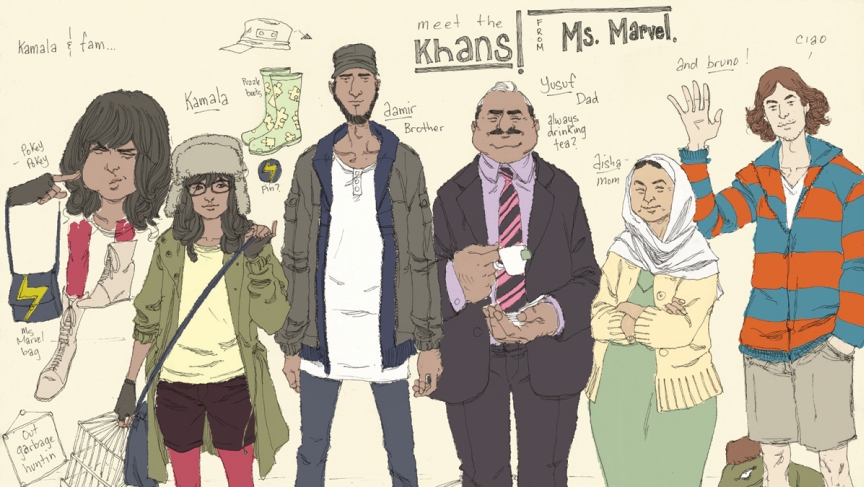
The Ms. Marvel television show even takes us on a literal trip across time and space to explore Kamala’s past. Viewers learn about real historical events, and the repercussions still felt today.

As an added bonus, the very end of the show teases a potential connection to even MORE superheroes, when Bruno drops the term “mutation” in explaining Kamala’s powers. Will we see more mutants in the future?

“X” marks the spot . . . sometime soon?

Whether it be a massive geopolitical movement or an individual personal change, everybody has previous experiences and perspectives that shape their lives.

Teachers can truly help students plan their future steps when we seek to understand their history. That’s how we build bridges that last.

Let’s start right now.

Further Reading and Resources:

Sparks-Langer, G.M., Starko, A.J., Pasch, M., Burke, W., Moody, C.D., & Gardner, T.G. (2004). Teaching as Decision Making: Successful Practices for the Secondary Teacher (2nd ed.). Upper Saddle River, NJ: Pearson/Merril/Prentice Hall.

Starko, A.J., Sparks-Langer, G.M., Pasch, M., Frankes, L., Gardner, T.G., & Moody, C.D. (2003). Teaching as Decision Making: Successful Practices for the Elementary Teacher (2nd ed.). Upper Saddle River, NJ: Pearson/Merril/Prentice Hall.

Wilson, G.W., Alphona, A., Wyatt, J., & Pichelli, S. (2014/2019). Ms. Marvel, Vol. 1: No Normal. New York: Marvel Comics.

________ Forever

Standard

Earlier in 2020, I had planned to celebrate the release of a book featuring a chapter I wrote. I even shared a sneak peek HERE and took some pictures with a little “help” from a fuzzy friend:

Then . . .

a lot of things happened this year.

A LOT of things that made any celebration feel trite or tone deaf.

In a tough year, things got worse with the death of Black Panther actor Chadwick Boseman.

However, even in tragedy, hope can shine in celebrating a “super heroic” life.

Many have shared powerful stories of Mr. Boseman’s impact and example. Words to describe him are “tender,” “hard working,” “artist,” “quick-witted,” and “deeply introspective.” You can read more in this essay from The Daily Beast–“Chadwick Boseman Became a Superhero While Battling Cancer“–among many other tributes.

All of us – teachers, learners, and more – can learn from this life of extraordinary accomplishments.

Another essay on CNN shares lessons from the actor: “What Chadwick Boseman taught us about humanity–and how we can honor his legacy.” Here is a summary of the example we can follow:

  • Perseverance.
  • Humility.
  • Passion.
  • Love.

I would argue these traits are especially important for teachers to model for our students, colleagues, and community.

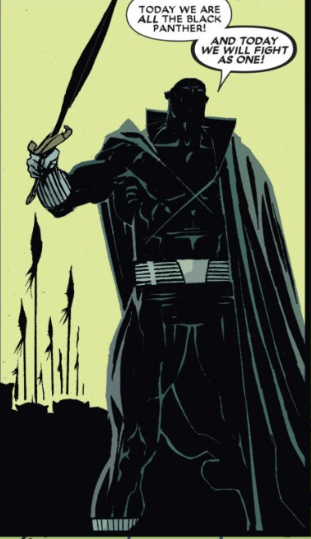
In my book chapter, I examine traits displayed by the character Black Panther in a powerful three-issue comic book series by Jason Aaron and Jefte Palo.

In this story, King T’Challa leads his fellow Wakandans in defending their nation from invading alien Skrulls. (Sentences like the previous one are all thanks to comic books.)

My chapter describes four “21st Century Skills” the Black Panther demonstrates that all of us can aspire to develop and demonstrate on a daily basis:

  • Critical Thinking.
  • Collaboration.
  • Communication.
  • Creativity.

These “skills” are timeless traits to internalize and apply, much like those listed previously.

In a season when times are uncertain–and none of us ever know the exact number of our days–there is still hope for the future.

Perhaps this peace comes from focusing on those ideals that last forever.

School-topia*

Standard

houseofxpowersofx


Recently, Marvel’s X-Men have shot back into the spotlight both in publishing and super- heroics.

This resurgence started off with the House of X/Powers of X mini-series in Summer 2019, and continues into 2020 with numerous X-titles and storylines.

One of the key elements of this new “Dawn of X” relaunch is that Professor X has created a paradise island nation for all mutantkind.

krakoa


The idea of a mutant utopia is NOT new in X-Men comics. In fact, there have been multiple “Mutopia” worlds in alternative universes, including House of M and Battleworld. One look at these stories shows that people’s ideas of a perfect world can be VERY different.


One of the most famous X-Men Utopias was an island in San Francisco Bay. Actually, before it was an island, this particular utopia was an asteroid controlled by Magneto. But it’s not that strange when you consider the recent Dawn of X utopia is the living mutant island Krakoa. (Hooray for comic books!)

House-of-X-03-720x741

Here’s the problem with utopias: They almost always end in catastrophe.

Think of any fantasy or sci-fi story featuring a utopian society. Typically, these worlds go crumbling down just in time for the thrilling climax, if they haven’t already collapsed to kick off the adventure.


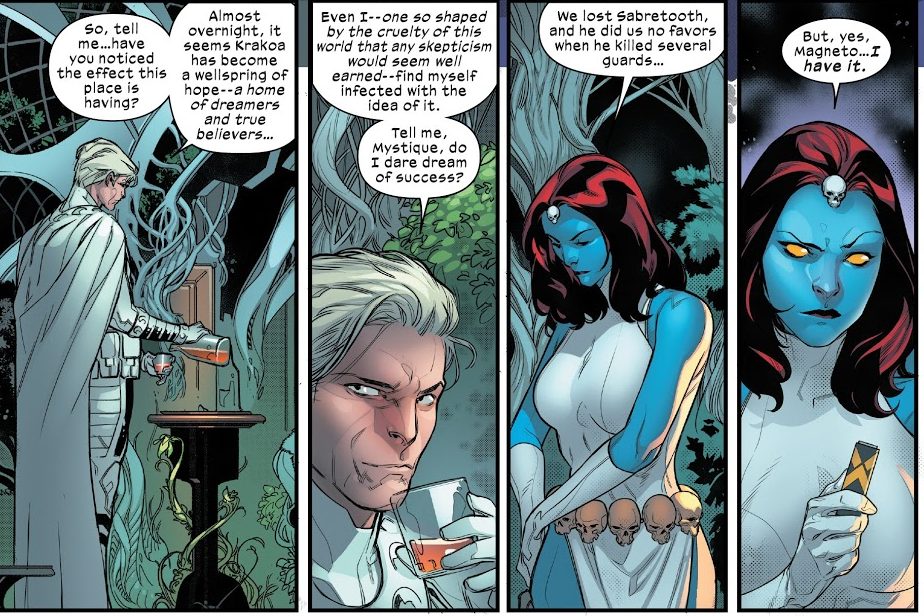
Also, many utopias hide a dark secret that becomes their undoing. It looks like this sort of thing may happen soon for the X-Men’s Krakoan utopia, thanks to shapeshifter Mystique (and Professor X? Magneto?).

magneto_mystique

Something is fishy here.

What about schools and classrooms? Is it possible for such a place to be utopian?

I once heard a principal at a large school speak about the “Perfect Day.” He said that a perfect day is NOT when nothing wrong happens. Rather, a perfect day is when issues come up, and the school teachers and staff handle them the right way.
I like this attitude. It’s not optimistic or pessimistic, but just plain pragmatic.

We are all human, teachers and students alike. None of us are perfect. So why would a school full of kids and adults ever be perfect?

kids-in-classroom

Something is fishy here, too.

In fact, teachers must be careful whenever we think we have reached perfection. No teacher is perfect, no matter their experience or awards. We all struggle and succeed in different areas, and we can all get better at something. The same is true for every day of school.

There is a short essay by Tim Slater in The Physics Teacher warning teachers about utopian school days. It’s called “When is a good day teaching a bad thing?” and you can find it HERE.

And here’s a teaser:

Screen Shot 2020-02-14 at 5.06.20 PM


Read the entire article and consider what sort of “Hidden Contract” you may be establishing with your students and colleagues. It’s not that well-behaved, on-task students are a bad thing. Far from it. But pause and consider why and how these expectations arise.

Do your students follow directions and contribute to class because they WANT TO or because the HAVE TO? (An easy way to find out is by leaving the room, or checking with the substitute teacher after an absence.)

Naturally, there are times when students (and all of us) do things because we have to, whether we like it or not. Exercise. Healthy diet. Pay taxes. Change diapers.

If we’re honest with ourselves, we can admit there is a positive payoff from these efforts, even if they are not easy. In many cases, practicing good habits in such endeavors will also increase the ease and even enjoyment.

A “perfect” classroom is impossible (and potentially dangerous). But hopefully teachers can instill solid skills and dispositions in students. One sign of maturity is doing things we don’t feel like doing. Another is doing the right thing even when no one is watching. (I’ve also heard this is the definition of integrity.)

So we may never reach school wide utopia. But maturity and integrity make for a good start!


*Admittedly, a much better pun than “School-topia” is “Edutopia.” But George Lucas already has the rights to that one. Take a look at this resource for educators, starting with https://www.edutopia.org .


Higher Faster Further

Standard

Captain Marvel is the latest superhero box office smash, and it’s a must-see for fans of the 1990s and/or cats.

captain-marvel-poster-1134459

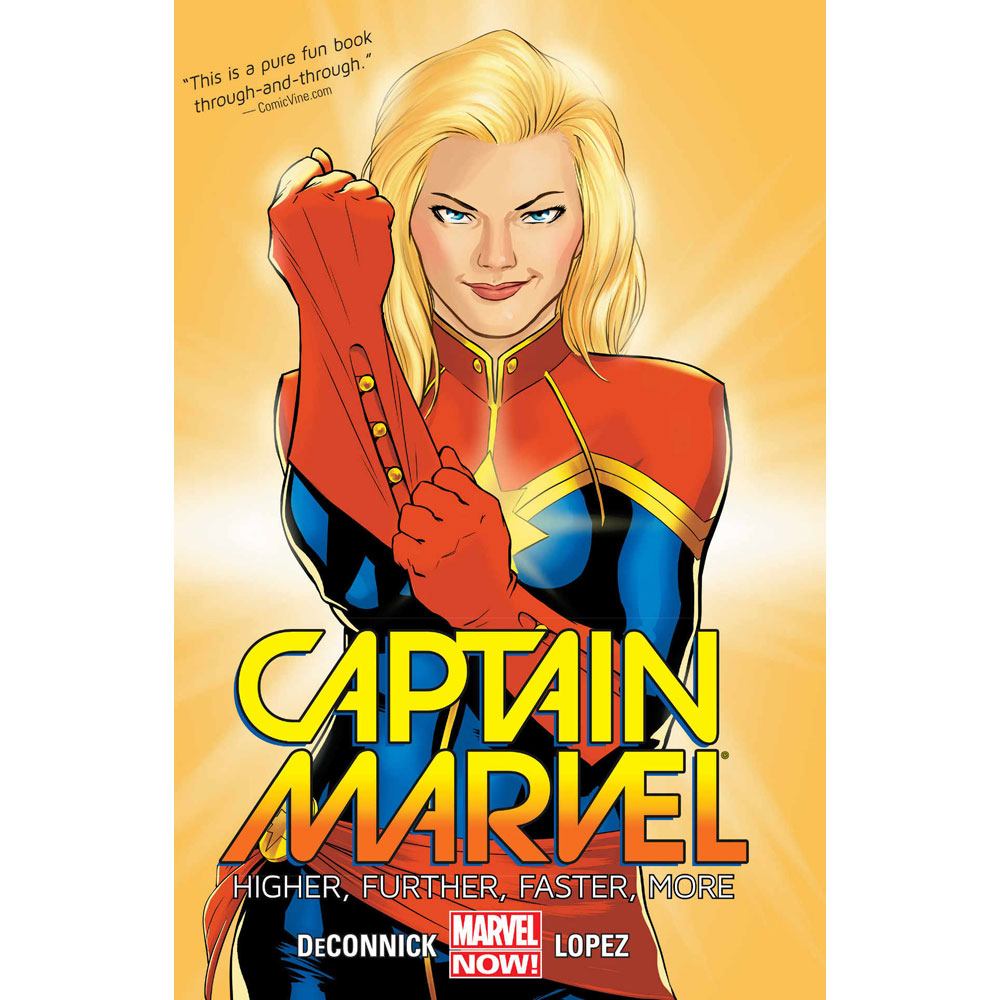
I’m particularly fond of the movie’s motto: “Higher Further Faster,” which comes from a well-regarded comic book storyline by Kelly Sue DeConnick and David Lopez.

CaptMarvel_HFFS_trade

The first thing that came to my mind was the single “Harder Better Faster Stronger,” mixed and remixed by French masters Daft Punk, which you can watch and listen to HERE(Readers prone to seizures – be wary.) 

Hbfs_single

Added geek bonus: There’s an anime music video based on the entire Daft Punk album “Discovery.”


The other reason I like Captain Marvel’s catchphrase is its application to teachers. In fact, I have a couple of related slogans I like to use with educators:

The first line is wholly original:

The best teachers keep getting better.

The second one updates a well-worn teacher maxim about getting lesson ideas:

Beg, borrow, steal . . . and make it BETTER.*

*We could talk a lot more about “making it better,” but for now here are two articles with some ideas. (Even though both are science-focused, all teachers can apply some of these strategies to their respective subjects.) 


These two sayings deal with “lifelong learning.” We teachers must practice an attitude of ongoing learning and actions toward improvement, especially if we expect our students to do the same.

Here’s a neat blog article about lifelong learning, which also provides a nifty-keen visual aid.

lifelonglearning

Although the above blog’s target audience is business owners and managers, teachers can still learn something for themselves and their students.


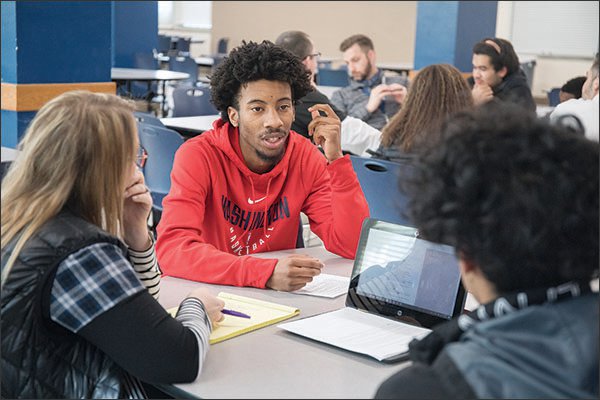
Speaking of students, a recent article at Education Week tells of a Des Moines high school’s professional development approach to include both teachers AND students.

You can read more at https://www.edweek.org/ew/articles/2019/03/13/these-students-are-doing-pd-with-their.html, and here is a noteworthy quote from the article:

Students may not use the technical language teachers employ when commenting on lesson plans, but “you’ll hear patterns of what’s considered best practices for engaging students.”

25-desmoines-ramaun-ford-discussion-article

Teachers, what are you doing to get better?

Maybe you don’t have a formal joint student-teacher professional development program. But hopefully you listen to your students and pay attention to their ideas, gaining insight into your own instruction.

There are plenty of other ways to get better – professional conferences, publications, workshops, graduate classes, and other traditional methods. Or seek out improvement through personal endeavors like a hobby, travel, and relationships with your family and friends.

The summer season is soon approaching, which is a terrific time to recharge and refresh. It’s also a time to review your performance and refocus efforts on getting better.

What workshop or class or trip will YOU take to improve over this summer?

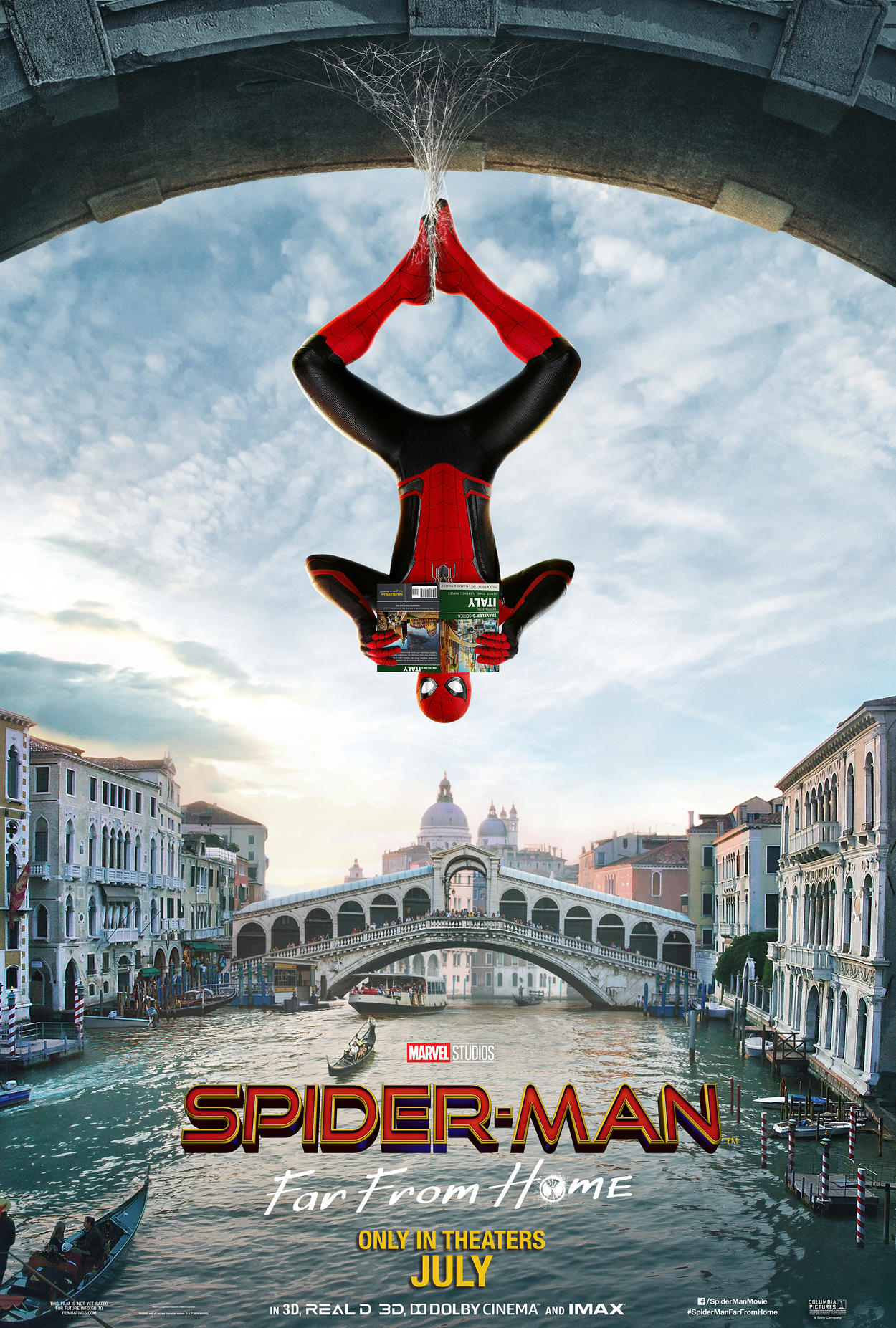
I’m sure you’ll find time between superhero blockbusters to get better, higher, further, faster, stronger . . .

sffh_venice-high-res


Leave a Legacy

Standard

alex-ross-Generations-embed


Marvel Comics recently announced their next company-wide comic book event(s), a back-to-back blockbuster starting with “Generations” this summer and then “Legacy” this fall.

There aren’t too many details yet, but “Generations” features stories teaming up heroes with shared names or titles.  For example, the original Thor (a.k.a. “Unworthy Thor” or Odinson) fights alongside with the current Thor (a.k.a. “Mighty Thor” or Jane Foster).  Or Wolverine (Logan) with his cloned successor All-New Wolverine (X-23, Laura).

A little confusing, yes, especially for anyone who hasn’t read a Marvel comic book the last few years.  During this time, several classic characters have stepped down from their costumes (for various reasons) to be replaced by different individuals–other heroes, a supporting cast member, or brand new characters.

With “Legacy,” some readers speculate many classic characters will return to prominence, donning their masked identify once again.  We don’t know much for now, except that long-running titles are resuming their original issue numbering (e.g. back in the 100s, 200s, 500s, or more, instead of resetting to issue #1 every year or so), and other classic elements are coming back–cover box art, tiny mugshots in the corner, Marvel Value Stamps, etc.

marvel-legacy-1 mugshots

The focus seems to be the “legacy” of these identities–icons that expand beyond one single person.

Here’s a quote from Marvel Editor-in-Chief Axel Alonso: “We are looking to honor the legacy of the entire universe, so we are taking the iconic legacy heroes and pairing them with the new class.”

And another quote, this time from Marvel Chief Creative Officer Joe Quesada: “The Marvel Legacy initiative is a celebration of everything that makes Marvel the best in fiction, and it’s a signifier of a new era for Marvel Comics.”  (Look for Quesada’s artwork on the cover of Marvel Legacy #1.)

Marvel-Legacy-Cover-by-Joe-Quesada


Interestingly, DC Comics is more well-known for its roster of “legacy heroes.”  Again, these are identities that have passed from various individuals.  Sometimes the mantle goes back and forth, and sometimes the mask and costume are handed off permanently–or at least for a decade or more, an entire generation of comic book readers.

Here are some of DC’s more famous “legacy heroes” and some (not all) noteworthy characters who have held the title.

The Flash: Jay Garrick, Barry Allen, Wally West, Bart Allen

flash-companion-focus

Green Lantern: Alan Scott, Hal Jordan, Guy Gardner, John Stewart, Kyle Rayner,

GLs


What makes the DC legacy heroes unique is their extensive history and long-lasting impact.  Instead of switching a character for just a short story, event, or gimmick, these replacements truly add to the legacy of the hero.  In some cases, the successor is more famous than the original character, with more accomplishments and greater impact.

Teachers, do you see the connection to our profession?

Contemplate the following statement (and pretty photo, courtesy of Brainy Quote) by American historian and writer Henry Adams:

henry adams teacher eternity


Some of my current research deals with the question, “What makes an influential teacher?”

In one study (#10004), I asked nearly a hundred future science educators to share information about their most influential teacher.  Here are the SEVEN most common traits found in their responses describing an influential teacher (along with examples from answers given):

1) Passion  

  • “[He] brought his love of science and teaching with him every day.”
  • “She was unfailing in her positivity.”

2) Rapport 

  • “She cared about us and how much we learned.”
  • “He personally acknowledged each student.”

3) Pedagogy 

  • “She knew how to break down the material so it was easy to understand.”
  • “[K]new when students have problems and what to say to each student, if it is different words to different students.”

4) Time 

  • “[T]ook the time out to explain stuff.”
  • “He gave lots of time to students after class. As much as they needed to get it.”

5) High Expectations 

  • “She pushed me to be a leader in school.”
  • “The way she never gave up on you and made you believe in yourself more than you could imagine. She always had high standards for us.”

6) Fun 

  • “She always made teaching look fun.”
  • “[He] showed me that chemistry is fun.”

7) Helpful 

  • “She was always very helpful and kind.”
  • “His door was always open to his students and he was willing to help any student with whatever problems they had.”


These responses came from future science teachers, so the sample size is limited, of course.  But ask yourself which of these traits align with YOUR most influential teacher. What other characteristics did he or she display?

More than one of these seven traits appeared in 80% of participants’ “influential teacher” descriptions.  That means that these characteristics are not isolated, but rather intertwined with one another, even synergistic.

Also consider that almost two thirds (63.8%) of the influential teachers described by these future science teachers did NOT teach science.  There is more to influential teaching than the subject you teach. Or in other words, to quote Muppets creator Jim Henson . . .

jim henson


Take a moment to remember the most influential teachers you’ve had, and what made them so influential?  Then ask yourself what sort of influence you want to have on YOUR students.  How can you make a lasting, positive difference in the lives of your students, starting right now?

In many ways, every teacher is a “legacy hero.”  The privilege is not receiving personal fame for our profession, but in inspiring and impacting the generations to come.


Teacher Evolution

Standard

Don’t get riled up by this blog post’s title.

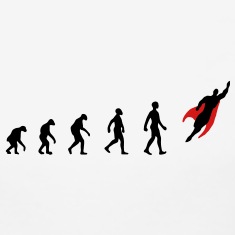
We’re not talking about Charles Darwin and biological evolution.  Although if you’re into that stuff, you can find all kinds of humorous imagery like this:

TrEvolMug

And if you like teacher accessories, you can snag this image on a mug, t-shirt, apron, mouse pad, and more HERE.

The type of evolution this post deals with is that of teachers (inspired by superheroes, of course).


YouTube user (and movie fan) Burger Fiction has put together some nifty videos highlighting every film and television appearance of various superheroes.

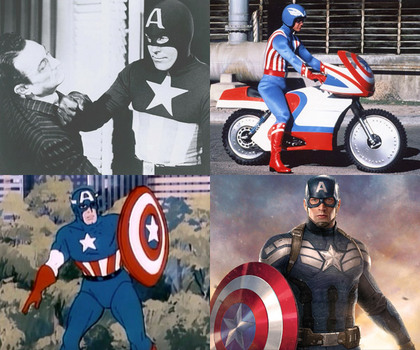
The most recent hero featured in these videos is Marvel’s Captain America, which you can watch here:


You can find similar “Evolution of . . .” clip collections celebrating heroes Iron Man, Superman, and Batman.  Each video includes vintage footage and obscure appearances alongside iconic sequences (live action and animation alike).

What I find most significant in these highlight reels, though, is the ongoing development and expansion of each character over time.  Like these heroes, effective teachers undergo change and growth through the years.

This is where the term “evolution” truly applies, going back to the word’s original meaning in the mid-1600s.  Thanks to the Online Etymology Dictionary, we know that evolution’s English origins arose from Latin “evolvere,” meaning “to unfold, open out, or expand.”

This same evolution process occurs for both teachers and superheroes.  And the parallels don’t end there.

cap am images

Like Captain America above, many teachers would rather forget some of the earliest footage of their work.  Everyone looks back at their initial efforts and cringes at what they see:

  • Sluggish transitions.
  • Awkward pacing.
  • Stilted dialogue.
  • Clumsy execution.
  • Poor methods.
  • Novice mistakes.
  • Cheesy humor.
  • And outdated fashion and technology, of course.


But observe what happens when the years go by.  As time advances, so do your abilities and confidence.  In fact, the most recent footage is downright awesome and exhilarating.

Am I talking about superheroes or teachers here?  It doesn’t matter.

Be brave and dig up old footage of your teaching.  Take a quick look and notice how your teaching has unfolded, opened up, and expanded.

Watch a more recent video of your teaching and be encouraged by your growth.  And if you find you still exhibit cringe-worthy tendencies, challenge yourself to fix those bad habits.

If you need inspiration or ideas on “teacher evolution,” here are a couple of useful articles: one dealing with National Board Certification, and another focusing on a teacher’s journey of “personal transformation” that includes burnout, pink slips, and awards.

Evolve your teaching.  You don’t need a multi-million dollar Hollywood budget, either.  Just the guts to get better.

superhero evolution

Super-Souvenirs

Standard

Last time we talked about lessons learned from conventions, whether the audience is teachers or cosplayers.


I nearly forgot one of the best rewards of attending conferences and meetings . . . the STUFF!

The swag . . . the loot . . . the prizes . . . the souvenirs.

This past weekend I participated in a state teacher conference, and I got a few of the usual convention freebies — posters, books, pens, highlighters, candy, a shirt, and more.  Someone I know even won a free corn snake!

corn snake

Take me home!


The best convention prize I ever got was a children’s book about Buzz Aldrin, signed by the astronaut himself!

buzz book


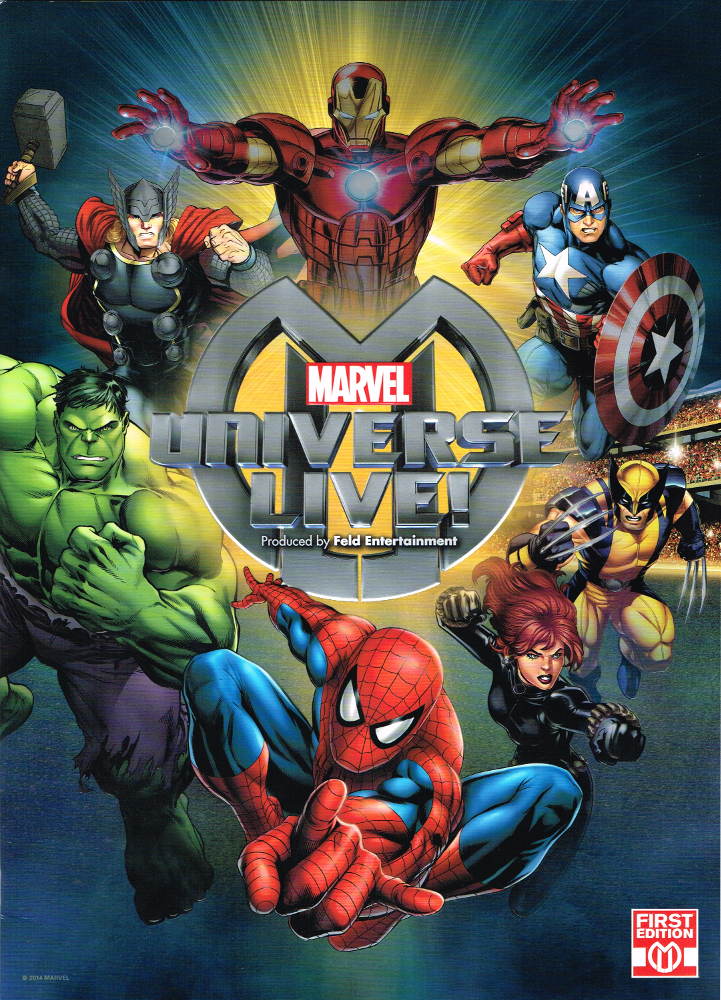
This very same weekend I came home and took my family to Marvel Universe Live!  (Think “Disney on Ice” with superheroes on motorcycles and high-wire acts.)

MUL_05_web bikes.png


The show was full of explosions, stuntmen (and stuntwomen), along with cheesy comic book dialogue. Best of all, it’s the only way (so far) you can see live-action Avengers fight alongside live-action X-Men and Spider-Man.

mc-review-marvel-universe-live-at-ppl-center-has-flaws-but-is-big-and-fun-20151016.jpg


My kids loved the show (me and the wife, too), and they also loved the souvenirs.  Just like conferences and conventions, this event had gobs of stuff to take home.  Such trinkets cost money, though.

But where else are you going to get an exclusive Marvel Universe Live! Prelude Comic Book?

prelude comic


Or giant-sized Program Book (with embossed cover)?

mu_live_program book


Or Captain America Boomerang?  (It works, too . . . in theory.)

boomerang


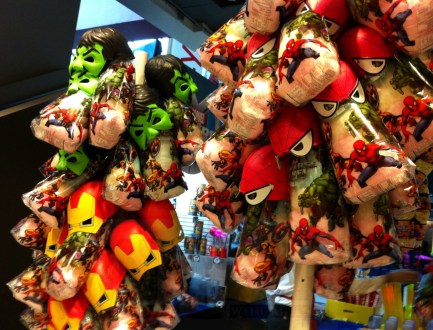
Or official Marvel Universe Live! cotton candy (with superhero mask)?

cotton candy.jpg

My family bought all of these beauties – BONUS!


Another lesson learned from this weekend is that teachers give their students an array of souvenirs over the course of a school year.  And I’m not just talking about content knowledge.

Every year, I ask my pre-service teachers to imagine their students at the end of the year.  In an ideal world, what will those kids be like?  What skills will they possess?  What traits, habits, and feelings do they have?

Elementary school pupils running outside


I’ve written about this before in a more scholarly setting. To be brief, the new teachers end up with a short list of about ten items.  The same types of traits and skills always emerge.

Teachers want students who are . . .

  • Critical Thinkers
  • Creative
  • Problem Solvers
  • Caring and Kind
  • Hard Workers
  • Curious
  • Lifelong Learners
  • Collaborative
  • Effective Communicators

And students who possess solid content understanding, of course.

School routine


Souvenirs are an important part of comic book conventions, education conferences, superhero stunt shows, and even school classrooms.

Some are free.  Others are pricy.  Cost does not always correlate with value.

What are your classroom’s best souvenirs?

Consider what “souvenirs” you provide for students over the course of the year.  Make sure they are treasures that last a lifetime.


marvel souvenirs

Con Season

Standard

This blog post is unique because I’m writing it from San Diego, where I’m attending a convention.

sdcc

No, not THAT convention – San Diego Comic-Con International – although the Convention Center is just across the street.

sandiegoconventionctr

The above photo is what the Center looks like this week.  During Comic-Con, it appears more like the photo below:

san-diego-the-first-ever-comic-con-got-seriously-weird

Or this one:

sdcc-cosplayers-25697

Or this one, if you’re lucky:

Avengers_Age_of_Ultron_SDCC_2014_panel


Like I said, I’m not lucky enough to be in town the same time as Comic-Con.  But I am lucky enough to be at a convention with hundreds of other educators.

caep-con-2016-logo-w-theme

This particular “con” is focused on accreditation of teacher preparation programs.

The topic may sound dryer than San Diego heat, but it’s not too bad.  Most sessions are led by educators, who know a thing or two about engaging a crowd of semi-disinterested individuals.

Here are three take-home lessons I’ll share with you (and take home from California):

empty school room

No excitement here.

1. A convention center without fans, celebrities, and cosplayers is like a school building without students, teachers, and staff.  A brilliant building with fancy facilities is a wonderful thing to behold; but it only makes a difference when it hosts a crowd of excitable and exciting characters.


2. What convention are you attending next?   I’m not talking about a district-required in-service necessary for churning out continuing education credits.

Seek out a teacher-focused conference or convention that expands your network of colleagues, refines your thinking, and builds on your repertoire of strategies.  Better yet, sign up to SHARE a session or workshop with your professional peers.  


3. Someday I hope to visit San Diego again and attend Comic-Con.  Until then, here are some conferences I’ve attended (or will attend) recently.  Check one out, if you’re interested.  Or find something else that more closely matches your field of expertise.

-Kappa Delta Pi International Educational Honor Society Biennial Convocation

-National Science Teachers Association Regional Conference

International Meeting of the Association for Science Teacher Education

-Kansas Association of Science Teachers “KATS Kamp” Conference

-Council for the Accreditation of Educator Preparation Spring Conference


Where are you going?

You don’t have to attend a “con” somewhere far away or expensive.  Most of those I go to are within driving distance, and many times you can pay a discounted fee to attend only part of the convention.  In most cases you get what you pay for, though, and it’s healthy to expand your horizons beyond your home district or state.


Find a super group of teachers to encourage and educate you – and you can do the same for them.  They’re waiting for you!

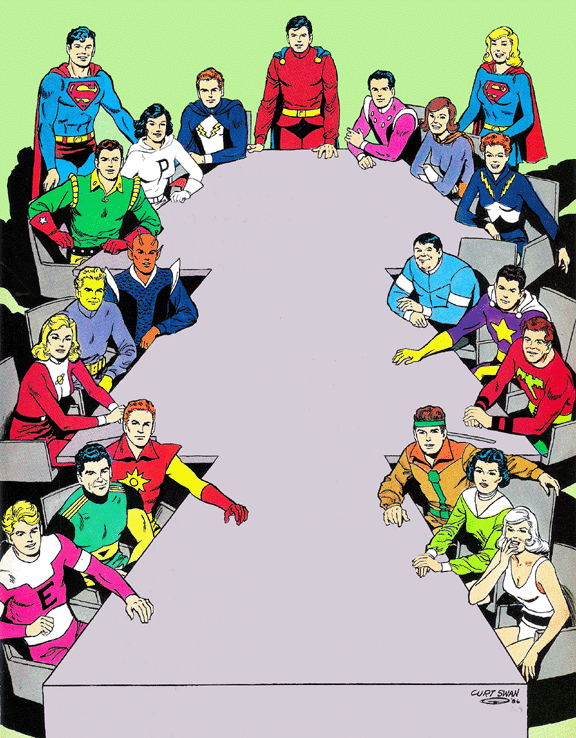
legion at table


Silent Issues

Standard

nevergetawaywiththisballoons

Last time we examined the topic of “Word Balloons,” with the focusing on how teachers sound when they speak in classrooms.

dp failed me brain

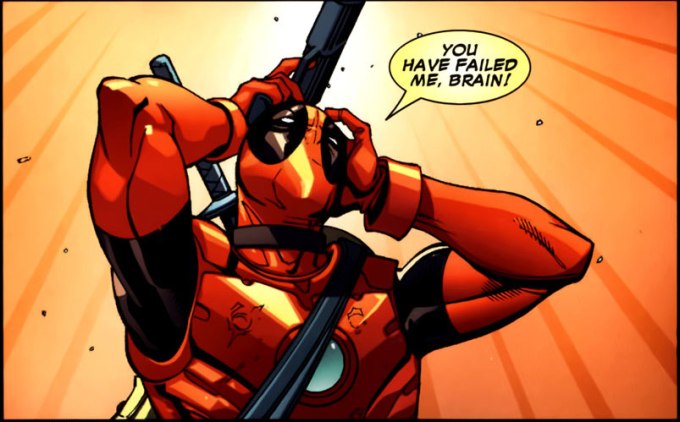
Spoken in a classroom somewhere.


This time let’s go further by considering how teachers look during their interactions.  I’m not talking about how teachers dress, although that is an important issue and one we’ve already addressed (summary: keep it functional, simple, conservative, and non-CGI).

Teacher appearance, in the present case, refers to the outward actions and mannerisms displayed during classroom instruction.  These non-verbal behaviors include facial expressions and body language–the unspoken communication that accounts for up to 93% of all human interactions (Mehrabian, 1968).


Ray-Park-GI-Joe-2-Snake-Eyes

With the topic of voice tone (word balloons), our inspiration was Marvel’s mouthy antihero Deadpool.  It’s only fitting that our model hero for unspoken behaviors is the mute commando Snake-Eyes of G.I.Joe fame (Hasbro’s toy-line featuring military super-heroes).

Despite being on opposite sides of the dialogue scale, Deadpool and Snake-Eyes share similar skills and accessories. Interestingly enough, G.I.Joe artist Robert Atkins recently shared a mock-up image depicting these two fan-favorite characters.

deadpool-snake-eyes-cover


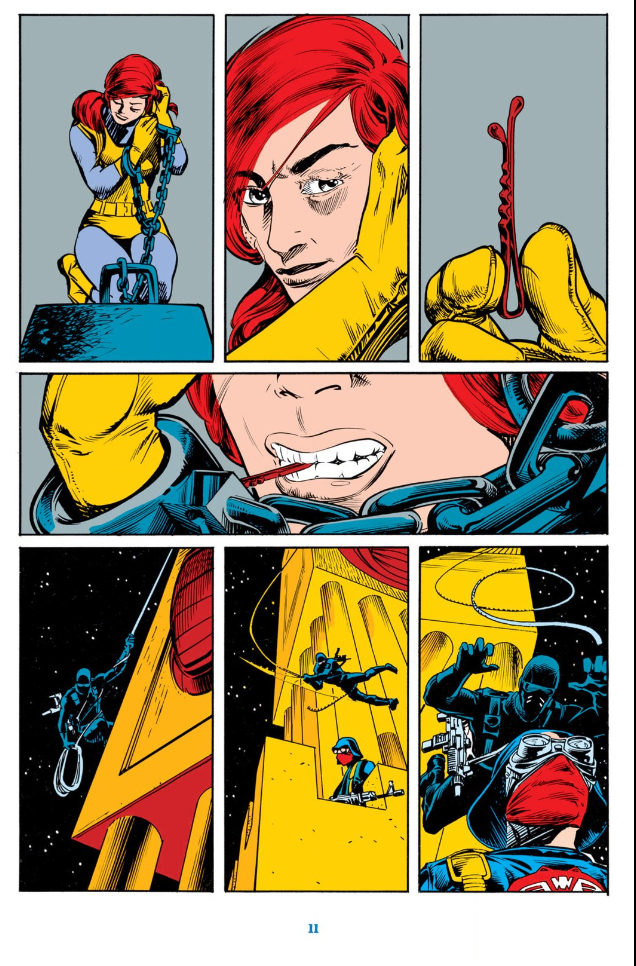
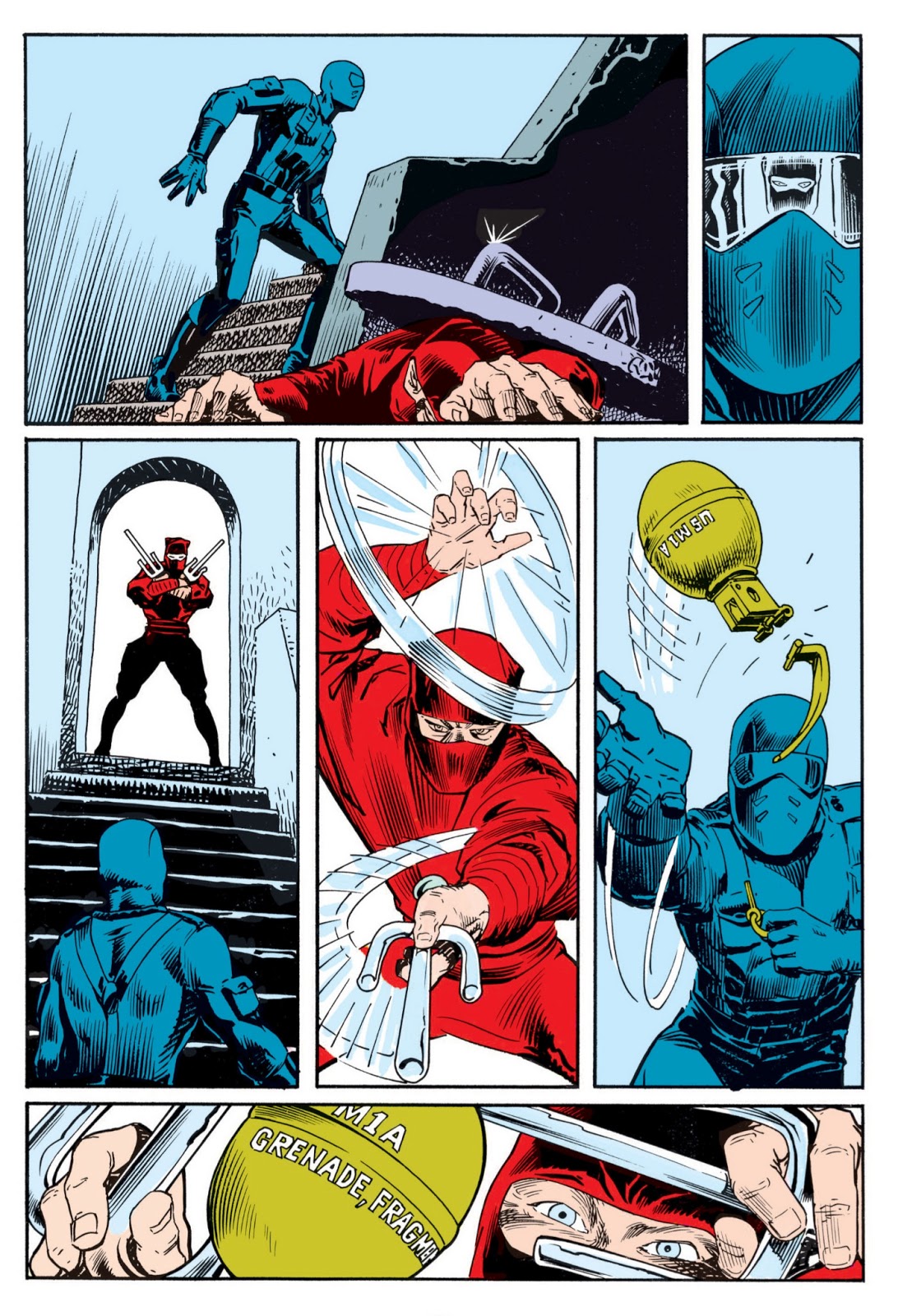
One of the most celebrated G.I.Joe stories is from Marvel’s original comic book series, issue #21: “Silent Interlude.” This tale is famous because it features absolutely zero dialogue or sound effects.

The adventure follows Snake-Eyes on a rescue mission to save Scarlett from Cobra and a castle of ninjas, including Storm Shadow.  (If that previous sentence doesn’t excite you, you’re not a child of the ’80s.  And you missed two major characters’ backstory revelation in the issue’s last few panels.)  

gijoe 21 cover


Below are a few sample pages. Notice how writer/artist Larry Hama conveys a range of motions AND emotions with expressions and movement.

Take a long, close look and enjoy the silence.

interlude 3.png

interlude 4

G.I. Joe Classics vol 03p021


interlude3


This “silent issue” is not just a gimmick.  It became so legendary, in fact, that the format has been repeated a few times in the G.I.Joe comic series as well as other titles, including a Deadpool parody and even an entire month called “‘Nuff Said,” where all Marvel comic book titles featured silent issues with no dialogue or captions.

This slideshow requires JavaScript.


Teachers typically don’t fight off ninjas hordes in silence, but we can foster powerful connections and teachable moments with unspoken behaviors.

What do these look like?  Here are some example “non-verbals:”

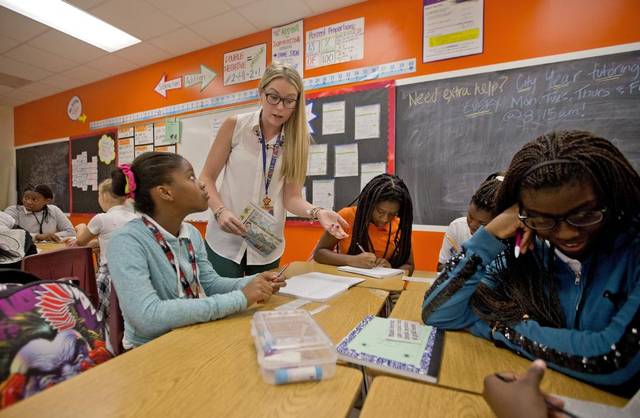
  • Moving back and forth among students.  Avoid prolonged, stagnate standing in one spot (especially the front).  Closer proximity garners more attentive students and decreases likelihood of off-task behaviors.

teacher at a student table


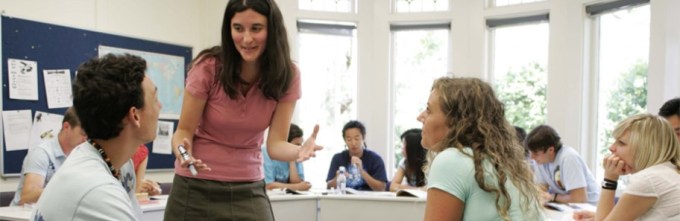
  • Open arms and hands inviting student input (as opposed to crossed arms, which convey defiance or disinterest).

open arms teacher 2


  • Counting on your fingers to show you expect answers and ideas from multiple students.

teacher counting on fingers.jpg


  • Nodding your head to acknowledge student contributions without using excessive praise.
  • Leaning toward students to express curiosity, but not looming over them in a dominating or threatening way.
  • Lowering your chin or cocking your head to one side to communicate concern and interest.

teacher eye contact


  • Sitting or kneeling down at the students’ level to show cooperation.

teacher at st level.jpg


  • Using appropriate lengths of eye contact with students, while avoiding prolonged and awkward stare downs.

teacher looking at student.jpg


  • Smiling!  If you enjoy teaching, show it.  (Again, avoid prolonged and awkward grins.)

teacher leaning smiling


For any teachers doubting the power of unspoken behaviors, posture, and expressions, I present the following challenge:  Watch a video of yourself teaching with the volume muted.  

Ask yourself what unspoken, but clearly presented messages you convey to your class.  How do you come across?  Are you respectful?  Are you confident and caring?  Are you happy to be there?

Look closer at your students and study their non-verbal behaviors too.  How much do they engage in the lesson?  How do they treat each other?  What can you learn from them?

students bored

How many students are engaged in learning?


Better yet, don’t wait for a video to notice these things.  As you teach, pause and survey the classroom to pick up on students’ mannerisms, posture, and expressions.  Take a moment and consider what you are communicating through these same behaviors.

Here are a few resources for further reading and ideas:

1. “Good body language improves classroom management” article by Teal Ruland, National Education Association

2. “Using effective body language to establish relationships with students” video by the Teaching Channel


Need more practice?  Try out your expressions and mannerisms in front of the mirror.

practice-in-front-of-mirror

Keep practicing, buddy.


Whatever you do, work to express warm, welcoming messages through your body language.  Your students will soon respond in kind.  Whether spoken or unspoken, every interaction counts.


Word Balloons

Standard

The latest superhero flick is Deadpool, which is making news for its “hard” R-rating for humor and violence.

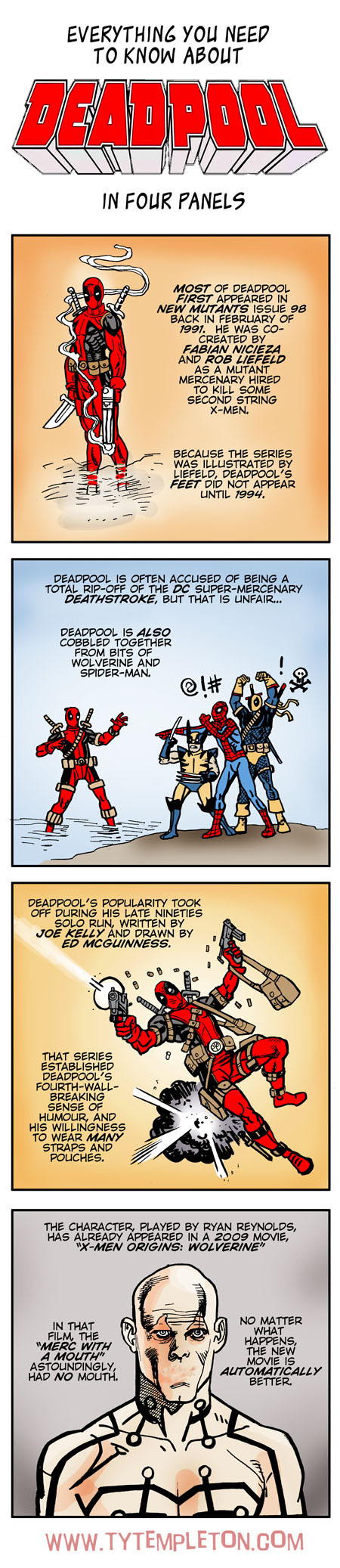
If you don’t know much about Marvel’s “Merc with a Mouth,” here is a fun tutorial courtesy of artist Ty Templeton.

deadpool-four-panels-websize

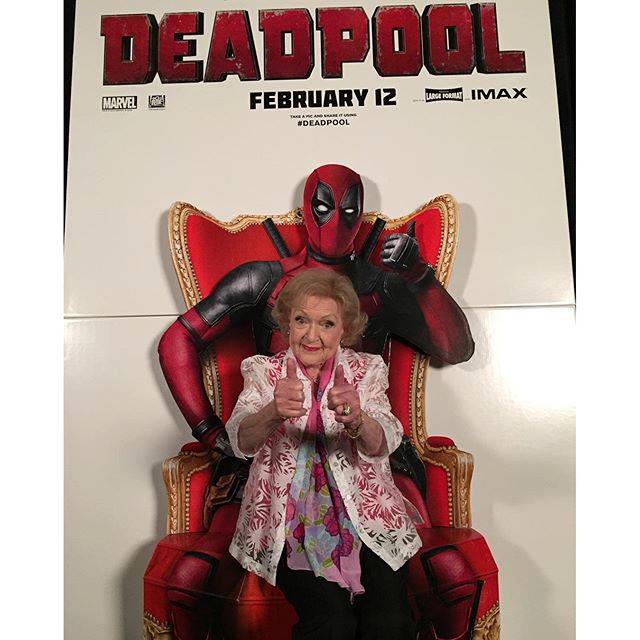
The movie itself is doing great commercially and critically, even getting approval from Betty White herself.

bettywhitedeadpool


I’ll bypass seeing the film in theaters, waiting for a toned down, broadcast-friendly version on TV.  (But from the sound of things, a cleaned-up edited version would last about 15 minutes.)

The “sound of things” is actually the topic of this blog post.  Specifically,

What is the sound of your voice?

We’ve talked before about the importance of what teachers say in the classroom (namely questions).  But it’s also important to consider how you say it.

What’s your tone of voice when you talk in class?  How loud?  How fast?  How much variety?

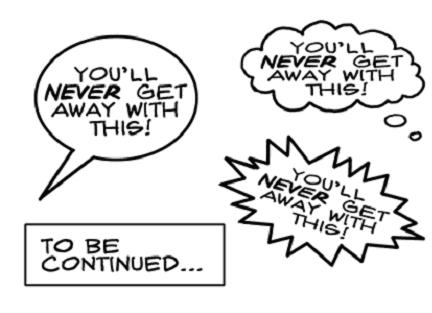
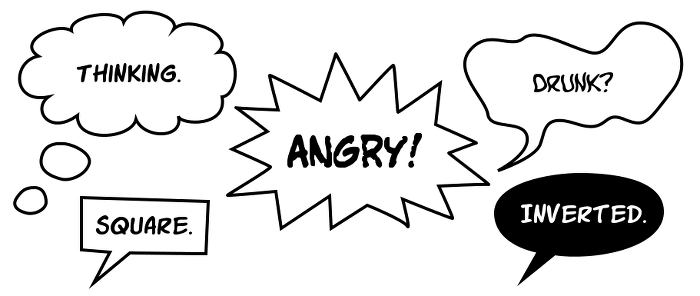
In comic books, characters speak in “word balloons” (or “speech bubbles”), and it’s fascinating to notice the unique techniques creators use to convey dialogue on the page.

variety-of-speech-bubbles


Just like people, comic book heroes have unique voices, and letterers (the folks who draw word balloons) often use specific styles for particular characters.

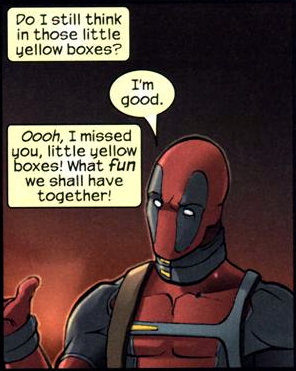
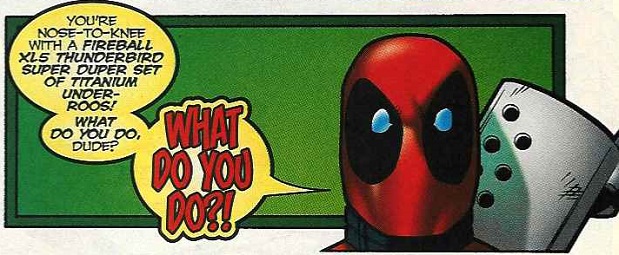
For instance, Deadpool always speaks (and thinks) in yellow word balloons.  No one is sure what it’s supposed to sound like, aside from a mix of sarcasm and crazy.

deadpool-yellow-boxes


Take a moment and consider what your words would look like if someone drew balloons around them.

Are you snarky to the point of annoying?  (Do you need to tone it down?)

deadpoolyellowdisplay


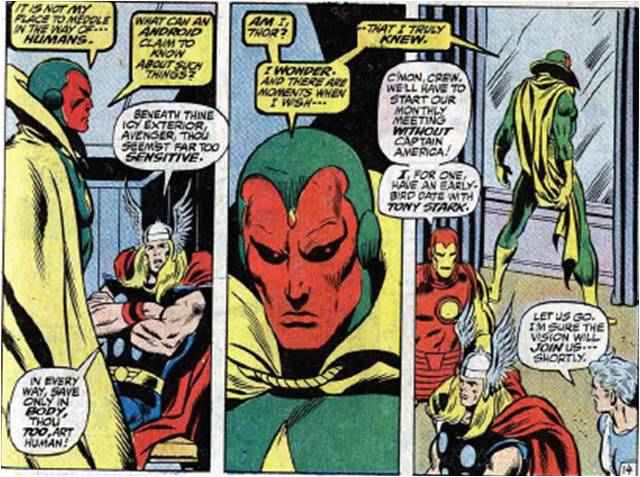
Or maybe you’re more robotic, like the android Vision.  (Should you add more emotion?)

VisionBuckler1972 2


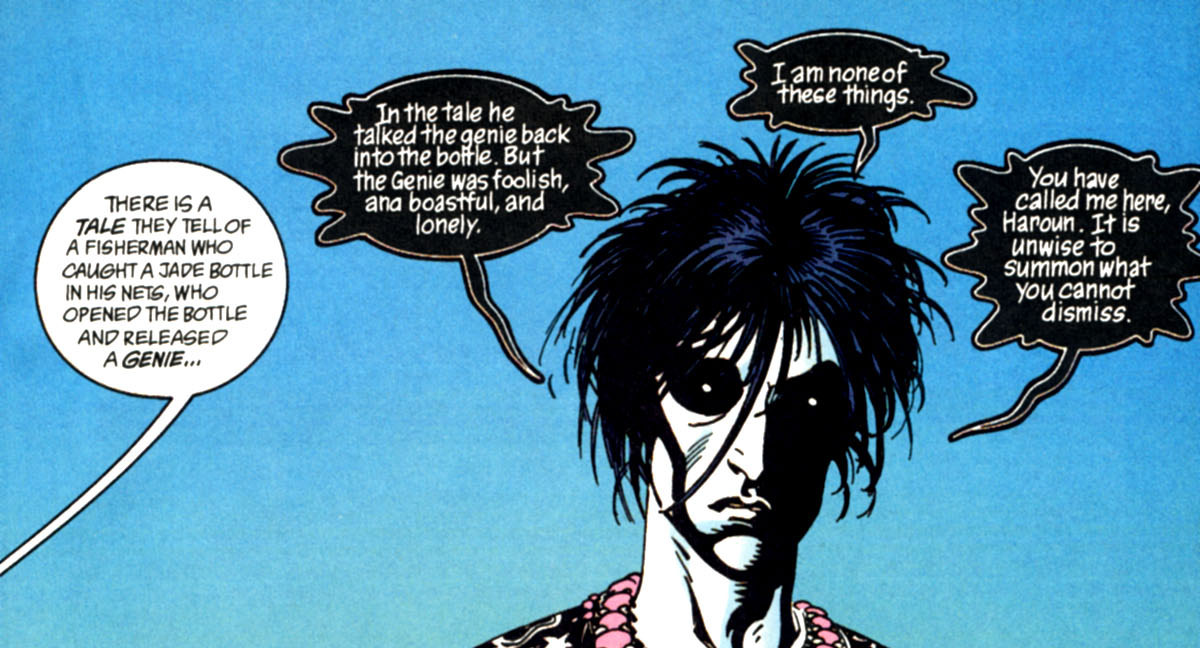
DC/Vertigo’s Sandman hero Dream (a.k.a. Morpheus) talks in wavy inverted speech bubbles.  (Are you putting your students to sleep?)

Sandman1


Or does your voice reflect the tenor of Ghost Rider, Marvel’s Spirit of Vengeance?  (To quote Educator Harry Wong, remember to stay “calm, real calm.”)

ghost rider balloon


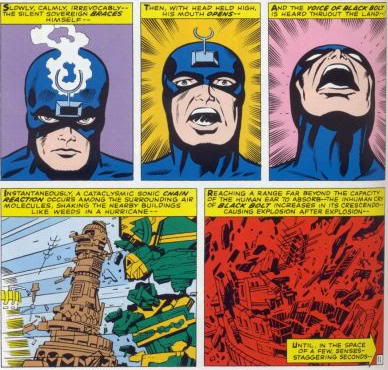
Some teachers start quiet and docile, not maintaining healthy classroom boundaries.  And then when students get too far out of control, these teachers release a verbal attack like Marvel’s Inhumans hero Black Bolt.  (Deal with the small things sooner, so you don’t have to explode.)

bolt 1


Eric Wong at the Sequart Organization wrote a nifty article about the different ways comic books communicate sound.   As you examine these examples, think about the sounds in your classroom.  What is helpful?  What is hurtful or distracting?

Teachers should record their classroom instruction and interactions from time to time.  You don’t have to sit down and watch an entire lesson.  Just listen to a few minutes and notice what your students actually hear.

Acknowledge the fact that nobody likes the sound of their own voice.  (Blame science.)  But who cares?  Either out loud or in your head, ask yourself,

“What can I do to sound better?”  

Here are some ideas:

1. If your voice is monotone and flat, study television news anchors to learn about adding variety in pitch. (And drink more coffee.)

2. If you have a tendency of erupting, take a deep breath and stay calm (but firm).  (And eat more chocolate.)

3. If you have a snarky streak, save it for open mic night at the comedy club.  Students respect teachers who show them respect first.

solid word balloon


So whatever kind of “word balloons” you use in the classroom, make sure they fit the space and focus on learning.

word balloons