Discover where I’ll be speaking next (and request me as guest speaker), along with FREE online materials related to Teaching, Superheroes, Science Education, and other super-geeky fun!
At the end of every year, you’ll find a smattering of “Top Ten” or “Best of . . .” lists. Do a quick web search and you’ll discover all kinds of countdowns for 2022.
Better yet, we’ve done some reading ourselves and provided a few hyperlinks, including Comic Book rankings by people at Polygon, Den of Geek, and Entertainment Weekly.
My favorite of 2022 was the new “Batman/Superman: World’s Finest” series by Mark Waid, Dan Mora, and Tamra Bonvillain. It’s a fresh take on the old-fashioned DC team-up title. The art is dynamic and colorful, with big action mixing up characters both well-known and unknown.
Comics aren’t just full of superheroes, of course, as you’ll notice many different kinds of tales in these “Best” Comic Books.
For more capes and cowls, you can also find “Top” lists ranking favorite superhero television series, such as one by the folks at IGN.
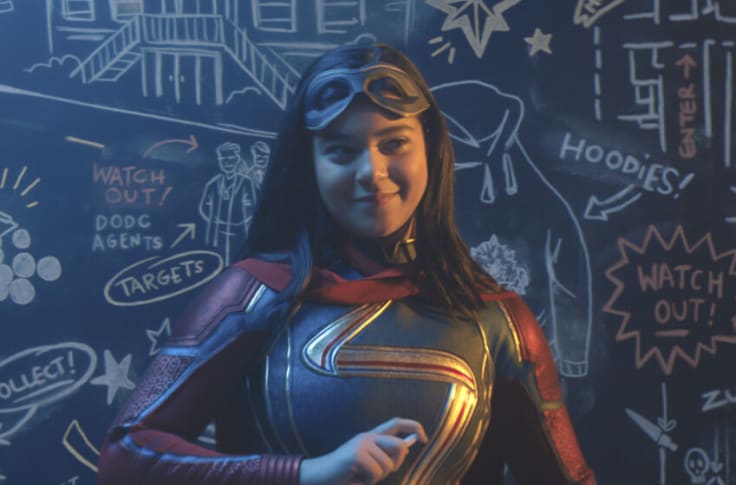
Again, my two-cents’ worth is that Ms. Marvel was the best choice in a very robust slate of superhero TV in 2022.
I’ve already talked about Ms. Marvel in a previous post. Simply put, it’s another fun teen title in the tone of Spider-Man.
Like Spidey, Ms. Marvel begins with our hero learning about their powers and living among family and friends. But “trial-and-error” adventures at the street level soon explode into a globe-hopping (and time-traveling) quest. Good stuff!
In addition to TV and Comics, there are even “Top” lists for Teachers!
Places like Education Weekand Education Next highlight the most-read blog posts and articles in 2022. A lot of these deal with policy and trends in curriculum, as opposed to direct classroom practice. Still, it’s good to stay up to date with the latest. Keeping current is even more vital with RESEARCH in teaching and learning, as featured in Edutopia’s “10 Most Significant Education Studies of 2022.”
Here are a few of my favorite takeaways from their Top Ten:
#1 THERE’S NO CONFLICT BETWEEN RELATIONSHIPS AND RIGOR
“The researchers found that the most effective teachers build their classrooms by getting to know their students, being approachable, and showing that they enjoy the work—and then deftly translate emotional capital into academic capital.”
#10. AN AUTHORITATIVE STUDY OF TWO HIGH-IMPACT LEARNING STRATEGIES
“In the review, researchers explain that students who prefer techniques like reading and rereading material in intense cram sessions are bound to fail. Instead, students should think of learning as a kind of ‘fitness routine’ during which they practice recalling the material from memory and space out their learning sessions over time.”
Similar to “Top” rankings for the previous year, you’ll also find “Most Anticipated” lists previewing upcoming movies, comic books, and more.
Just as teachers can gain insight from reviewing the “best” of the past, they can also find inspiration in previewing the future.
What are you anticipating most in the next year? (Maybe a new book?)
Better yet, how can you help your students look forward to the future?
DC’s Black Adam movie has been out for a while, but I finally sat down to watch it. If you like LOUD explosions and slooooow-motion action sequences, this movie is for you!
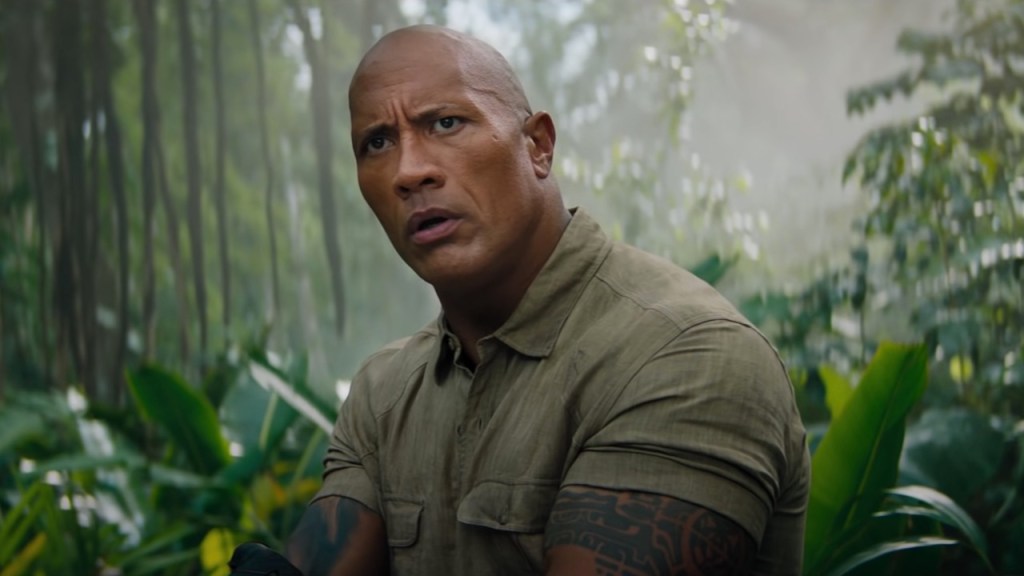
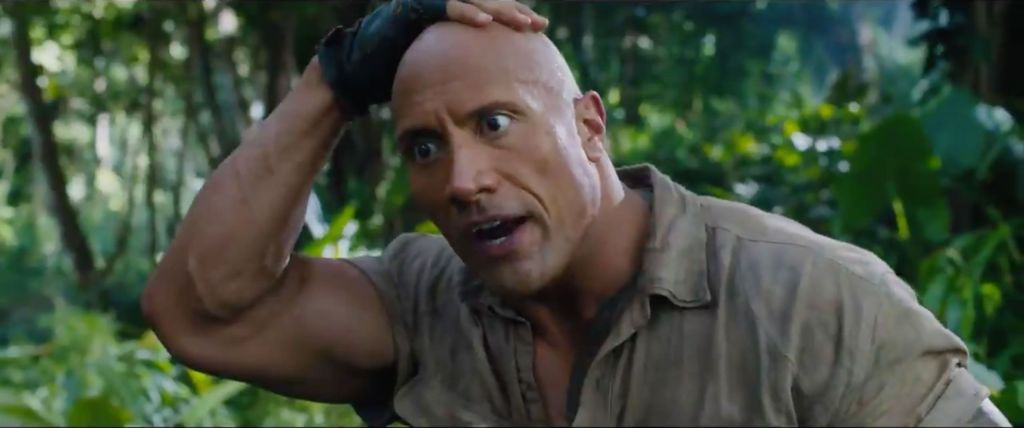
Personally, I prefer Dwayne “The Rock” Johnson less self-indulgent . . .
And more self-deprecating, like in the newer Jumanji films.
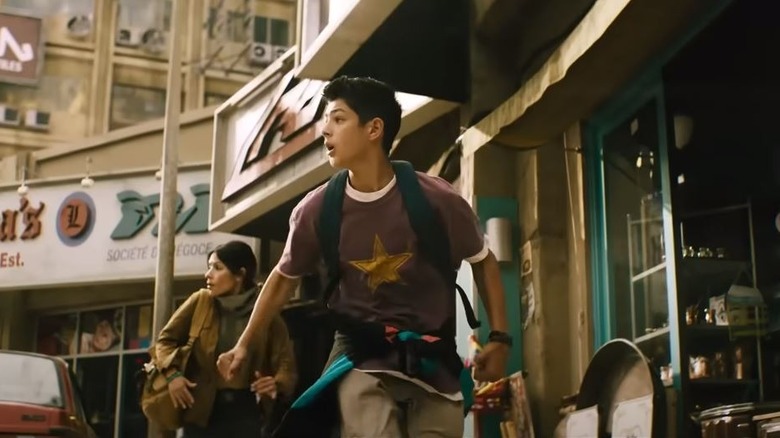
The neatest take-away I got from Black Adam is the “student-teacher” relationship between Adam and the teenager Amon. In particular, there’s a Terminator 2-type juxtaposition of the younger Amon trying to teach the elder Black Adam how to be a hero.
Specifically, the film focuses on superhero tropes like wearing a cape and using a well-timed catchphrase.
Black Adam eventually gets both lessons right (sort of). Still, he struggles with more serious, ethical principles like “Heroes don’t kill.”
Oh well. Two out of three ain’t half-bad.
There’s a problematic parallel in schools today. A lot of students (and non-teachers) have plenty of experience in classrooms. This familiarity can create an assumed expertise about “good teaching.”
In the same way that teenage Amon figures he knows all about heroes (he doesn’t), some students–current and former–might presume to be pedagogical experts (they aren’t).
Heck, I’ve worked in the education field my entire professional life, and I KNOW there’s LOTS I don’t know. (Proper grammar, anyone?) With every year that passes, I’m learning more and more.
Problems arise when students turn into teachers without transforming their understanding, attitudes, and application of effective instruction. Sadly, some remain fixed in latent beliefs and paltry practice. They incorrectly conclude there’s nothing for them to learn, since they’ve been in schools ever since they can remember.
She’s coming for your job!
Education historian Larry Cuban puts it this way: “Recruits to the occupation lean toward continuity because of their prior school experiences. As public school students for twelve years, future teachers unwittingly served an apprenticeship as they watched their teachers teach” (1993, p. 19).
This dilemma is not new. As a result, some of the underlying issues schools face – uninspired classrooms, fill-in-the-blank rote memorization, “teach to the test” – are the same ones they’ve been dealing with for years.
Back in 1969, Neil Postman and Charles Weingartner described this narrow student-to-teacher transition as follows: “most of them simply move from one side of the desk (as students) to the other side (as ‘teachers’) and they have not had much contact with the way things are outside of school rooms” (p. 139).
Early (grainy) footage of me as a college student. I’m teaching “to the board” as opposed to my students. (Evidence that I had a lot more to learn about teaching.)
I’ll admit, I made a similar “change” when I first began as a teacher. In fact, before I even started my pre-service teacher program, I doubted the value for going through formal preparation. Like some teachers before me, I thought I knew enough about my subject to teach it. And more troubling, I thought I knew enough about teaching.
Clearly, I did NOT know enough about either.
Like young Amon in Black Adam, I know my share of superhero lore. But I’ve never been a superhero. And I wouldn’t deign to tell somebody how to be one. Especially Dwayne “The Rock” Johnson.
First Lesson of Hero Club: Don’t touch the shiny helmet.
I know a bit more about teaching. A little knowledge came from my time as a student. More importantly, I learned from mentors who provided purposeful instruction and practice as a teacher. And I’m still learning.
Like the best students, the best teachers are eager to learn more. What are you learning?
Never too old to learn. (Or sport a new backpack.)
The BIG reveal comes at the END of this short announcement.
Not only is Deadpool joining to the “Marvel Cinematic Universe.” Appearing with him is Wolverine, played by long-time Logan, Hugh Jackman (when he’s done brushing his teeth).
Fans were so excited by the news, the two actors quickly posted a second video (“Part Hugh”) to share more details (?). Mostly, they acknowledge potential snags due to prior storylines (spoiler alerts). And they stir up more speculation, obscured by the best ’80s pop song ever:
With Deadpool 3 not scheduled to arrive until September 2024, we all have plenty of time to predict how everything will work out. (My bet is any mix-ups get an easy pass thanks to the blooming “Multiverse.”)
Until then, TEACHERS should take a moment to consider the following question:
“Who is YOUR Hugh?”
We’ve talked before about sidekicks in schools, in particular, finding fellow teachers to mentor and lead. Who is your “Robin?”
Likewise, every teacher should also find a colleague that can mentor them. Such mentorships can function through structured programs or professional development. Or, they may occur in a more organic, or informal manner. Who is your “Batman?”
In addition to mentors and mentees, teachers can form powerful relationships with colleagues they regard as “equals.” These pairings don’t have to be the same rank or expertise, or have identical job descriptions. In fact, such partnerships are most beneficial when each party brings different strengths and personalities.
Sort of like Wolverine and Deadpool.
Over decades of comics (and lore), these two anti-heroes haven’t always gotten along. In fact, they try to kill each other quite often. You can read an interesting history of their “prickly relationship,” summarized by the folks at Den of Geek.
Teachers, do you have a “prickly relationship” with any of your colleagues? Don’t dismiss them due to a handful of disagreements. Instead, consider how you can work together–or at least work off of each other–to both become better.
Every teacher needs a Robin to mentor. And every teacher needs a Batman to mentor them.
We also need a Hugh to keep us sharp. Who’s yours?
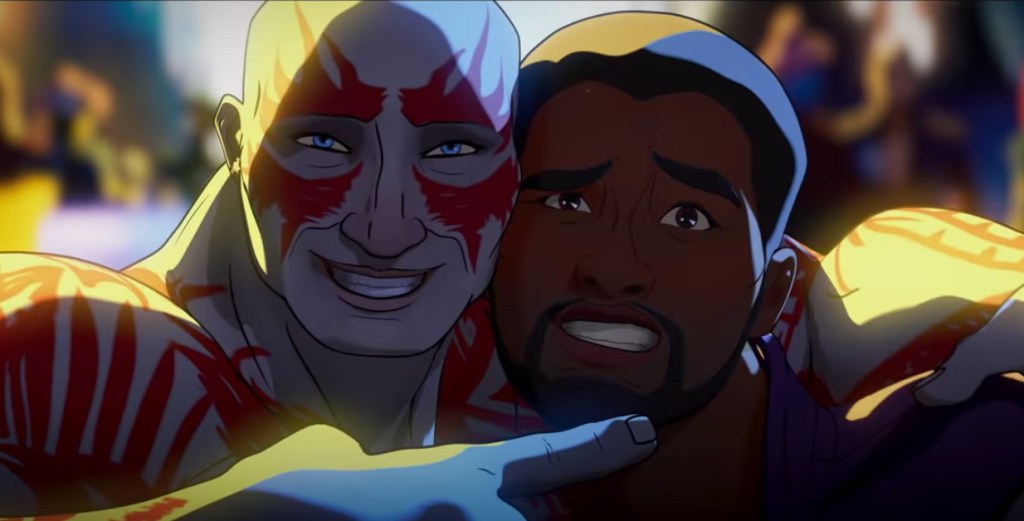
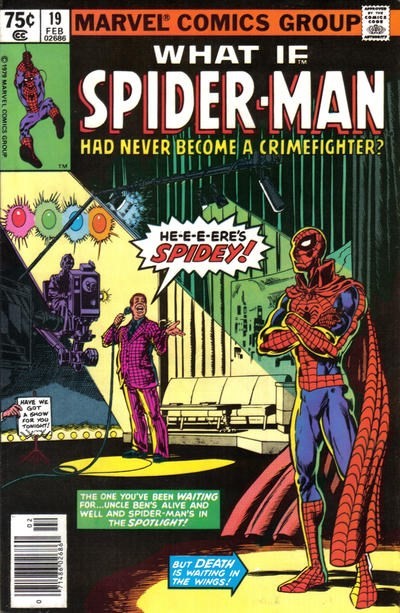
The latest Disney+ Marvel series is new in a multitude (multiverse?) of ways.
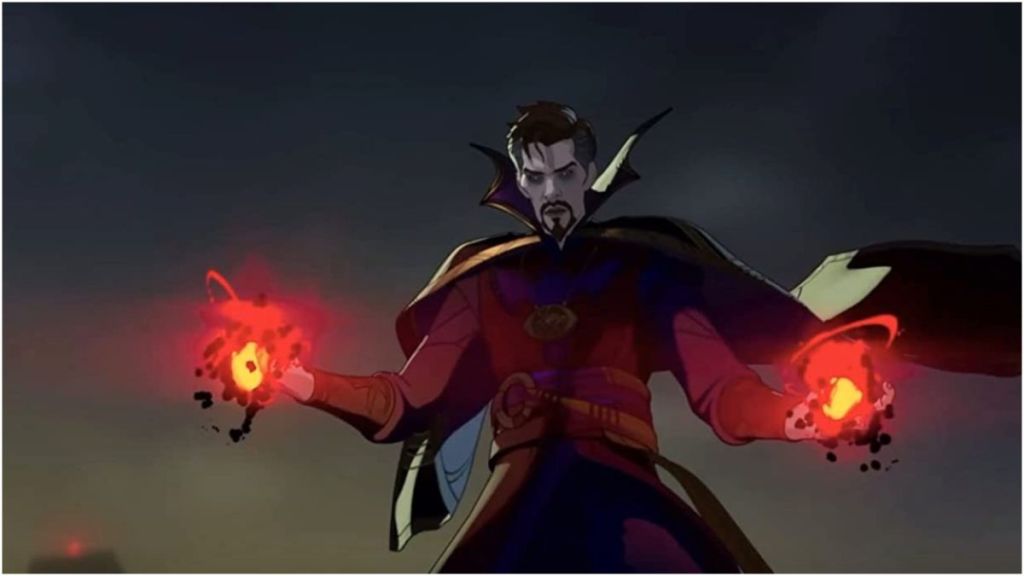
First, What if . . . ? is noteworthy as the first animated show in the Marvel Cinematic Universe, or MCU. (Spider-Man: Into the Spider-Verse doesn’t count . . . not yet, at least.)
Second, What if . . . ? is significant since it explores all kinds of hypothetical storylines in the MCU. The series takes well-known characters and contexts of the films and follows different routes. (Remember when the first Avengers movie combining multiple film heroes was considered a risky idea? Look how far we have come!)
So far, we’ve seen different characters taking the mantle of significant heroes (Captain America, Star-Lord), as well as heroic characters doing unheroic things. In addition to the allure of endless possibilities, the What if . . . ? series is enjoyable because these alternative tales come in bite-sized episodes. Even so, some of these scenarios have potential for all kinds of fun adventures and far-reaching ramifications.
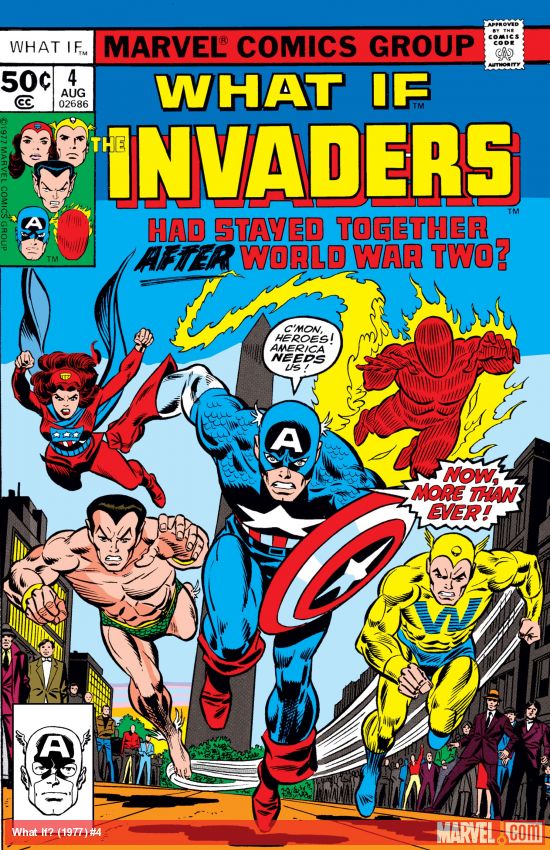
As a testimony to the power of “What if . . . ?” consider how there are 200+ issues of this comic series, begun nearly 50 years ago. As creators publish stories in “regular” comics continuity, other writers can explore branching paths and possibilities.
The question “What if . . . ?” can foster similar results in the classroom. Past blogs have written about the power of questioning, which you can check out HERE and HERE.
It’s important to remember not all questions are equal. Some are more effective in cultivating engaged and reflective students. Below is a list of potential questions teachers can ask to facilitate, encourage, and assess students’ learning.
“What if . . . ?”
“For what reasons . . . ?”
“What do you think could happen if . . . ?”
“How might that compare with . . . ?”
“Why might . . . ?”
“Where else could we . . . ?”
These are just some examples, and I’ve shared more in a recently published article available HERE. Note that NONE of these questions can be answered with a simple “Yes” or “No” or similar dichotomous response.
In other words, students have to go further and THINK about the topic in a more robust manner. Moreover, there’s less chance they can “fake it” or just guess an answer. Often, such work promotes collaboration and communication.
Such open-ended questions may not catalyze a zany tale about alternative Avengers, but they can produce meaningful learning.
One caution is to beware of counter-productive conversation. When dealing with open-ended questions like “What if . . . ?” there is potential for students to go down pathways the teacher did not intend. While this may add to creativity and application, it could also veer into darker territories. Just consider some of sadder episodes of What if . . . ? we’ve already seen, in which [Spoiler Alert] a hero becomes the villain, or ultimately destroys their world.
Hopefully your classroom won’t pivot to such hopelessness. Still, be mindful of keeping students on-task and oriented toward learning goals. Even when using open-ended prompts, teachers can guide student thinking toward intended outcomes. Such parameters could be as simple as time limits or brainstorm boundaries. For example, a science teacher might pose a challenge that prompts investigation, but requires students to use only certain materials or technology. Sometimes this is called a “testable question” in science classrooms.
No matter the subject, teachers can be purposeful in using “What if . . . ?”-type questions to get the full effect. For inspiration, consider how masterminds behind the MCU have carefully scheduled and set up movies, television shows, specials, etc. Each production features minute details and allusions that result in monumental meaning in subsequent films. (For example, it’s no coincidence that What if . . . ? has come out between the Loki television series and the upcoming Spider-Man: No Way Homefilm.)
Teachers don’t have the multi-million dollar movie machine like the MCU, but they can still be intentional and inspirational by providing creative, challenging, and coordinated questions for their students.
People throw around the word “unprecedented” way too often, but it’s safe to say our society is truly experiencing an unprecedented time in history.
With the current coronavirus pandemic (a.k.a. COVID-19), everyone in education is working to figure out how to operate in this “new normal.”
A big change for many teachers has been teaching class sessions and interacting with students via Zoom or similar videoconference tools.
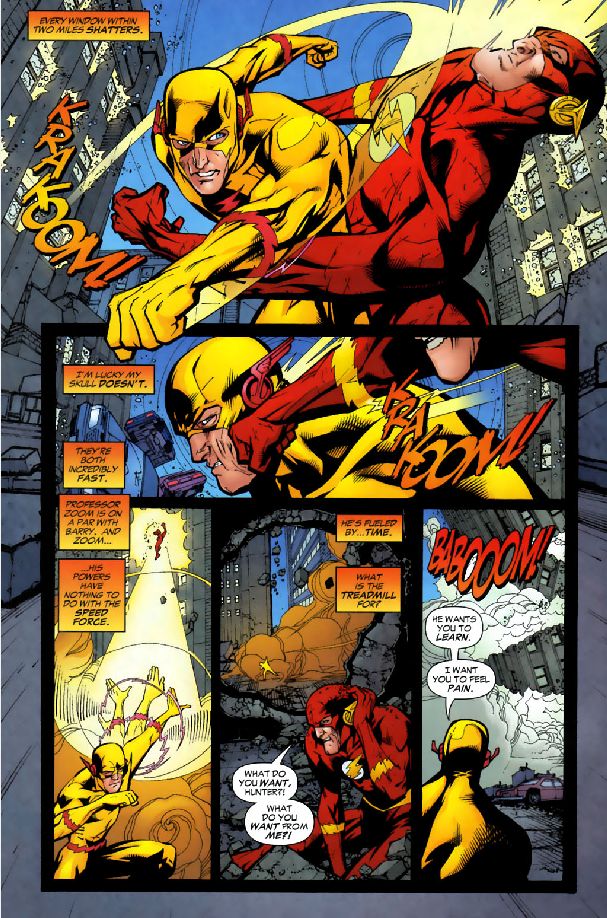
In a way, many teachers have become “Professor Zoom.” But in a good way.
(For those a little rusty on the Flash’s rogues gallery, Professor Zoom is an arch-villain who also has super-speed. And he loves the color yellow.)
Recently, I wrote a brief article for the “Ed Prep Matters” blog of the American Association of Colleges for Teacher Education (AACTE). In it, I share how using Zoom has helped me sharpen my overall teaching, focusing on three particular areas.
These critical components apply to both online and face-to-face teaching:
And as an added bonus, here is a FOURTH area where Zoom can help teachers reflect and improve their practice:
4. Group Work
An old joke among educators is group work is what the teacher plans for when they haven’t planned an actual lesson. In truth, effective group work requires purposeful preparation by the teacher—worthwhile tasks, intentional grouping, necessary materials, detailed procedures, and more.
Teaching through Zoom has increased my awareness of collaborative tasks, both in aim and execution, providing the option of using “breakout rooms” during a videoconference.
Teachers can assign groups randomly or manually in Zoom, either ahead of time or during the live session, or both. As host instructor, I can drop into any group I like to listen or assist, although I prefer acting as silent observer to encourage student leadership.
Recently, Marvel’s X-Men have shot back into the spotlight both in publishing and super- heroics.
This resurgence started off with the House of X/Powers of X mini-series in Summer 2019, and continues into 2020 with numerous X-titles and storylines.
One of the key elements of this new “Dawn of X” relaunch is that Professor X has created a paradise island nation for all mutantkind.
The idea of a mutant utopia is NOT new in X-Men comics. In fact, there have been multiple “Mutopia” worlds in alternative universes, including House of M and Battleworld. One look at these stories shows that people’s ideas of a perfect world can be VERY different.
One of the most famous X-Men Utopias was an island in San Francisco Bay. Actually, before it was an island, this particular utopia was an asteroid controlled by Magneto. But it’s not that strange when you consider the recent Dawn of X utopia is the living mutant island Krakoa. (Hooray for comic books!)
Here’s the problem with utopias: They almost always end in catastrophe.
Think of any fantasy or sci-fi story featuring a utopian society. Typically, these worlds go crumbling down just in time for the thrilling climax, if they haven’t already collapsed to kick off the adventure.
Utopia (before)
Utopia (after)
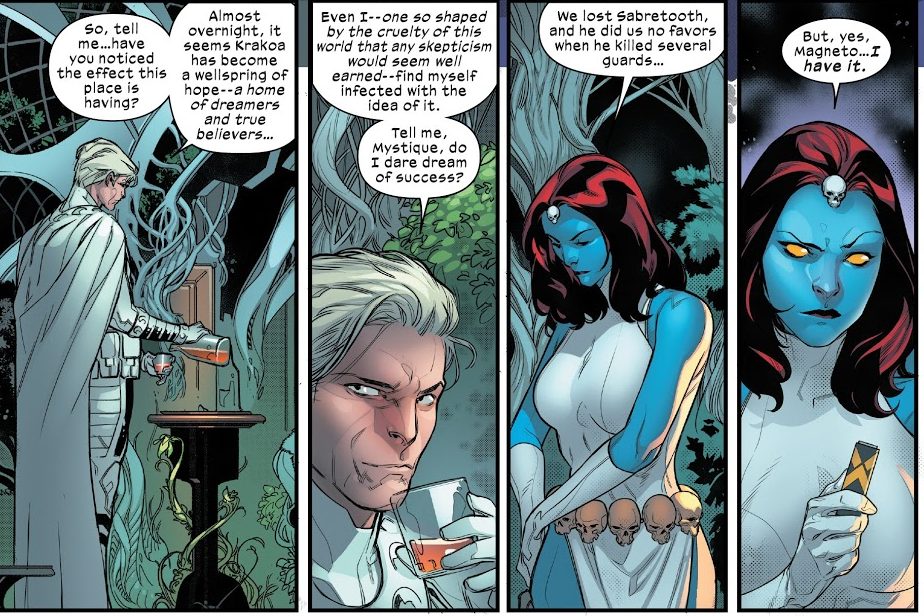
Also, many utopias hide a dark secret that becomes their undoing. It looks like this sort of thing may happen soon for the X-Men’s Krakoan utopia, thanks to shapeshifter Mystique (and Professor X? Magneto?).
Something is fishy here.
What about schools and classrooms? Is it possible for such a place to be utopian?
I once heard a principal at a large school speak about the “Perfect Day.” He said that a perfect day is NOT when nothing wrong happens. Rather, a perfect day is when issues come up, and the school teachers and staff handle them the right way.
I like this attitude. It’s not optimistic or pessimistic, but just plain pragmatic.
We are all human, teachers and students alike. None of us are perfect. So why would a school full of kids and adults ever be perfect?
Something is fishy here, too.
In fact, teachers must be careful whenever we think we have reached perfection. No teacher is perfect, no matter their experience or awards. We all struggle and succeed in different areas, and we can all get better at something. The same is true for every day of school.
There is a short essay by Tim Slater in The Physics Teacher warning teachers about utopian school days. It’s called “When is a good day teaching a bad thing?” and you can find it HERE.
And here’s a teaser:
Read the entire article and consider what sort of “Hidden Contract” you may be establishing with your students and colleagues. It’s not that well-behaved, on-task students are a bad thing. Far from it. But pause and consider why and how these expectations arise.
Do your students follow directions and contribute to class because they WANT TO or because the HAVE TO? (An easy way to find out is by leaving the room, or checking with the substitute teacher after an absence.)
Naturally, there are times when students (and all of us) do things because we have to, whether we like it or not. Exercise. Healthy diet. Pay taxes. Change diapers.
If we’re honest with ourselves, we can admit there is a positive payoff from these efforts, even if they are not easy. In many cases, practicing good habits in such endeavors will also increase the ease and even enjoyment.
A “perfect” classroom is impossible (and potentially dangerous). But hopefully teachers can instill solid skills and dispositions in students. One sign of maturity is doing things we don’t feel like doing. Another is doing the right thing even when no one is watching. (I’ve also heard this is the definition of integrity.)
So we may never reach school wide utopia. But maturity and integrity make for a good start!
*Admittedly, a much better pun than “School-topia” is “Edutopia.” But George Lucas already has the rights to that one. Take a look at this resource for educators, starting with https://www.edutopia.org .























 Teach Like a Superhero!