Super-Rich

Standard

i am batman

When it comes to superheroes, a lot of people claim they relate the most to BATMAN.

It’s not the tragic orphan story or fascination with flying mammals that builds the bond.  Rather, it’s the fact that Bruce Wayne is a “normal guy” like the rest of us.  He’s no alien, mutant, or mystical being with special powers.  Instead, Batman saves the day using sly sleuthing skills, martial arts, and handy homemade gadgets.

I don’t know about you, but my detective prowess and hand-to-hand combat skills are so-so, at best.  My weakest link to Batman, however, is in my lack of gadgetry.  (I don’t even have a smartphone.  Guess I’m more like Captain Caveman.)

capt caveman

Bat-Rich

Recently, “comic historian” Thaddeus Howze did some detective work of his own and estimated the cost of Batman’s crime-fighting technology.  It’s a nifty little article with a breakdown of every gadget used by the Caped Crusader, including his cape made of memory cloth polymer.

cost of being batman

What’s the final bill?  Totaling up every batarang, bat-vehicle, bat-cave amenity, and bat-salary (Alfred don’t work cheap), Howze estimated the cost of being Batman at around $682,450,750.

So for anyone making over half a billion dollars, your dream of donning the Dark Knight’s identity is within grasp. The rest of us “regular folks” will have to live vicariously through our Batman toys or video games.  Or both.

LBatmanTVG

Teacher-Rich

Teachers need gizmos, too, which we give fancy names like “instructional technology,” “curriculum materials,” “educational manipulatives,” and the like.  Unlike Bruce Wayne, we don’t spend from billion-dollar bank accounts.  One year a biology teacher told me her entire department’s annual budget was $600.  (That buys you about twenty frog dissection kits, which by their very definition are perishable goods.)

For a lot of teachers, we purchase classroom supplies using our own money.  A 2015 Horace Mann Educator Survey found that 57% of teachers spend at least $200 of their own money on classroom materials every year (14% spend $600 or more).

Furthermore, 80% of responding teachers said they have abandoned projects because of a lack of funds.  (“Abandoned” is a strong word, like Batman would give up on nights he ran out of smoke bombs.)  I suspect many teachers found cheaper, alternative projects.  Of course, there are many ways to seek additional financial support at local levels (fundraisers, community drives, etc.) as well as through worldwide services like DonorsChoose.org.

DonorsChoose_org_logo

Money, while helpful, is far from the most important element in cultivating successful classrooms and making a lasting impact.  To elaborate on this point, let’s look at an example from the world of sports.  (See?  I’m not completely nerdy.  Or maybe just a sports nerd, too.)

Sports-Rich

sports-label-2003

The front sports page of a recent USA Today newspaper highlighted two stories side-by-side, convenient for comparisons.

The first was an editorial about football player Kam Chancellor finally agreeing to resume playing for his Seattle Seahawks team.  The Pro Bowl safety had been holding out–missing the first two games of the season–with hopes of getting a better contract.  Interestingly, Chancellor still had three years left on his current four-year contract, worth about $7 million a year.

The second sports story was much more prominent, accompanied by multiple color photos, nearly a full page of text, and a second full page photograph tribute.  The subject receiving this recognition?  The late Yogi Berra.  Headlines and highlights included phrases like “one-of-a-kind,” “true national treasure,” “American icon,” and “the sweetest man you ever met.”
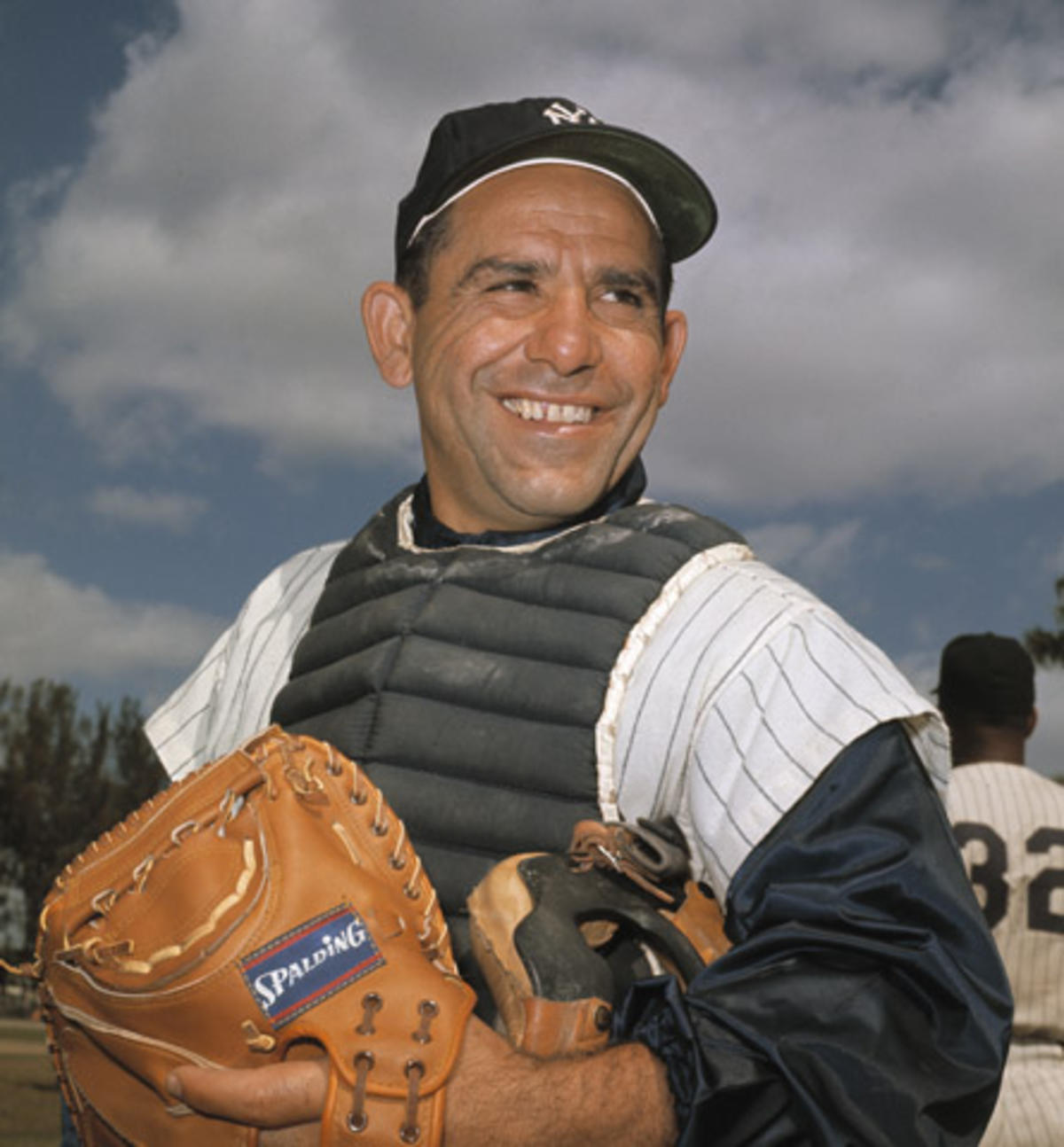
yogi_berrap14

Fun fact:  The highest annual salary Yogi Berra ever received for playing baseball was $65,000 in 1957.  Compare that pay with Kam Chancellor’s, and then consider whose name we’ll remember in a hundred years.

I’m not making any claims about the value of an individual’s contribution to sport or society.  And I admit there are significant differences–different sports, different teams, different centuries.  Nevertheless, I did some calculations myself (inspired by comic historian Thaddeus Howze) and here’s what I found:

The average American median household income in 1957 was $5,000, compared to $52,250 in 2015.  Considering the salaries given above, Yogi Berra made about 13 times more than the average household in 1957; Kam Chancellor earns about 134 times more than today’s average household.

HungerGamesHeader

At this rate, we’ll be living in a Hunger Games world by the end of the century.  Tempting as it is, let’s not dwell on the excessive amounts of money given to today’s professional athletes.

Let’s focus instead on building toward a better future by investing in children:  their learning, their growing, and their getting along with others–famous or nameless, poor or rich, every man and every woman.  This is the work that’s truly worthwhile.  Heroic, even.

Super-Rich

Spider-Man and Superman

Instead Batman or Iron Man or other affluent heroes, teachers can probably relate better to middle-class champions like Spider-Man or Superman.

Peter Parker started out as a teenager just scraping by, trying to earn a few bucks by taking photos of himself in costume.

spidey photos

                Peter Parker–Inventor of the Selfie!

Superman may be a super-strong flying alien, but his day job is an office gig with bustling desk areas, broken copier machines, and bland coffee.  Not far from a teacher’s workplace, eh?

1146356-daily_planet_staff

And like Clark Kent, teachers can rely on a mostly steady paycheck.  But that’s not what makes us rich.  Remember the favorite phrase quoted by many educators:

“Teaching–We’re not in it for the income; we’re in it for the outcome.”

What’s in a Name?

Standard

Keen-eyed readers will notice that this blog has recently changed its official name from Teaching is for Superheroes! to Teach Like a Superhero!  (The exclamation point remains!)

Not that big of a change, really, except that the new name rolls off the tongue a little more easily.  Another change is the primary web address:  http://www.teachlikeasuperheroblog.com.  This new URL is not very short, but it gets to the point.

(I tried a shorter address, but “www.tlash.com” sounds like an eyeliner product.  And a good of an excuse as any to share this meme inspired by Captain America: The Winter Soldier)

eyeliner

If all of this http://www.mumbo.jumbo stresses you out, don’t worry.  The old web address, http://www.teachingsupeherheroes.wordpress.com, still works and will lead you right back here.

This post is not just an announcement about blog name changes.

Let’s talk about names of superheroes and names of teachers.

Spider-Man_The_X-Men_1_Preview_3

I remember two things from my very first teacher back-to-school in-service meeting.  The first memory is a litany of details regarding health insurance and employee benefits.  The second memory is our assistant principal reminding us all that we are “Mr. Smith,” not “Smith” or “Mr. S.”

His point was to start the school year establishing a professional identify and requiring our students to address us as such.  It may seem like no big deal for a student to abbreviate your name (“Mr. B.”) or leave off your honorific (“Bergman”).  Some teachers may even welcome such nicknames to foster a more relaxed classroom environment.

But we must always be careful to not get too comfortable with our students.  Stop and consider the range of impacts this lackadaisical habit could impart.

I’m sure I’ve allowed my students to call me all sorts of things and get away with it.  But it does help to maintain a level of respect among everyone – teacher to student, student to teacher, teacher to teacher, student to student, and more.

Proper names matter among superheroes, too, and not just with maintaining secret identities.  Personally, I cringe whenever I read superheroes calling each other playful nicknames.

hawkeye-your-way-small-captain-america-2-deleted-scene-meant-cap-fighting-who-jpeg-127715

They’re heroes, not BFFs!

Superhero nicknames have long been a staple in comics.  Witty banter and clever monikers keep the “funny” in funny books, after all.  And it helps convey some characters’ personalities.

Wolverine, for example, with Colossus:

wolverine colossus

And here (off-panel) with Professor Xavier:

Chuck

The best name-caller, of course, was Stan “The Man” Lee, who was so proficient he even came up with nicknames for his real-life co-workers (e.g. Jack “The King” Kirby, “Jazzy” Johnny Romita, “Merry” Gerry Conway, and many MANY more right here).

Like any good joke, though, overuse of superhero sobriquets can get tiresome.  Especially among champions who should focus their attention on more important things – like fighting bad guys and saving the world!

Avengers1-144

What’s worse, many of these affectionate nicknames can actually undermine the job of life-risking heroics.

Spider-Man-Joins-Marvel-Cinematic-Universe

“Spidey” for Spider-Man works fine for his hip quippy character;  but take a look at other heroes and their less-dignified labels:

Batman = “Bats”

Superman = “Supes”

Green Lantern = “GL”

Ugh.  Apparently, characters in the DC Universe have a thing for abridging names.  Marvel nicknames, though more colorful, can still cheapen a heroic legacy.

The Mighty Thor = “Goldilocks”

The Hulk = “Ol’ Greenskin”

Iron Man = “Shellhead”

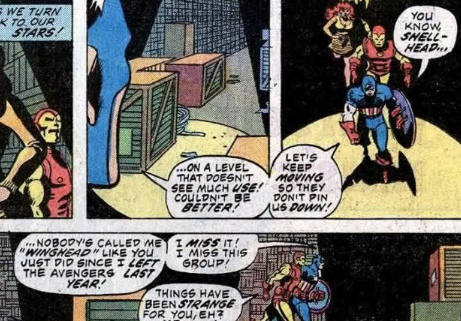
Captain America = “Cap,” “Winghead,” “Star-Spangled Avenger”

We come back to Captain America because it’s maybe the clearest example of a noble hero who’s legendary status is downgraded by casual familiarity.  And it’s not just by fellow heroes, but even by us regular citizens.

captain-america-kooky-quartet-107425

Call me a Stick-in-the-Mud (“Bromidic Bergman”), but superheroes deserve a little more formality.  The same goes for teachers.  Although it may seem cool for kids to use teacher nicknames, be careful with letting things get too capricious or contemptuous.

So whenever you hear a student or colleague refer to you as  “Mrs. T” or “Thompson” or “Yo, Teach,” gently remind them how they can address you more properly.

Just remember, it’s not “Mr. F.” It’s Mr. Fantastic.

Wieringo_reedrichards

And it’s not “Incredible;” it’s Mr. Incredible.

mr incredible

And it’s not “Marvel;” it’s Ms. Marvel.

Ms.-Marvel

Actually, the original Ms. Marvel goes by Captain Marvel now.

But never “Cap.”

Dress for Success

Standard

Back to school time is here, which means families are filling department stores to find the best bargains. But it’s not just students. Teachers are also looking to stock up on supplies and spruce up their wardrobes.

Take a look at a typical “Back To School” advertisement or website and you’ll see gobs of superhero clothing and accessories. Superheroes are famous for how they look just as much as they are for what they do.

IronMan

The good folks at Newsarama recently listed their “10 Best Live-Acton Superhero Costumes” and “10 Worst Live-Action Superhero Costumes.”

Here are some helpful lessons teachers can learn from these lists:

#1 – Maintain Functionality

Many of the “Best” costumes work because they look like something you could actually see in real life.  Rather than adhering too closely to garish comic book colors or styles, the designers keep things grounded and user-friendly.

TheDarkKnight Teachers should consider their daily tasks and possible actions, then dress appropriately.  Fabric that breathes, stretches, and covers is a must, along with some comfortable footwear.

Comfortable shoes, yes, but NO SNEAKERS (unless you teach gym).  Strapping on a pair of Asics Gel Virage 4 shoes is the quickest way to ruin an otherwise perfect teacher outfit.

Asics-Gel-Virage-4-Green-orange-White-Grey-Black-Silver-Red-Blue-Fluorescent-JYLRM

(It’s called “business casual,” NOT “business triathlon.”)

If you need super-supportive shoes that are also subtle, take a look at this list provided by We Are Teachers (although I squirm at the sight of #10).  This focus on footwear leads us to another lesson from live-action superheroes.

#2 – Focus on Simplicity

A quick comparison of the “Best” and “Worst” film costumes reveals a glaring difference in details.  In many cases, the outfits in the “Worst” category are just TOO MUCH.

BatmanAndRobin Resisting the impulse to add another buckle here or kneepad there, the “best” outfits keep it simple.  By doing so, these film versions highlight key elements that evoke iconic imagery.  In some cases, this means ditching the costume and favoring functional garb (see #1 above) with hints of style and symbolism.

Wolverine Teachers are iconic, and their choice of clothing should reflect their critical role in society.  Instead of chasing the latest fashion (floral vs. geometric print, fat tie vs. skinny tie, boot-cut vs. skinny jeans), focus on conveying an image that is classy and timeless–just like good teaching.

In case you think it’s passé to stick with the basics, take a look at two USA Today articles about teacher attire.  One is from 2003, the other from 2012.

Despite being nearly a decade apart, both articles list some of the same “Should’s” and “Should Not’s” for teacher apparel and appearance.  Neat and clean are always “in.”  Spaghetti straps, tight tops, short bottoms, excessive piercings and tattoos should stay out of the classroom.

#3 – Lean toward Conservative

We’re talking clothing here, not politics.  (Vote your conscience.)  In discussing attire, teachers should consider how to keep the focus on learning as opposed to fashion.

Whenever you struggle with what to wear, here are several mottos you can remember:  “Dress older.” “Dress like your boss.” “Dress for the job you want.”

HalleBerryCatwoman

“Teacher” is not the first profession that comes to mind.

These sayings will help with decisions as you stand in front of your closet.   Skewing conservative also works as you stand in front of the bathroom mirror.  Just like excessive makeup on movie superheroes, teachers with too much mascara will likely turn off their students.

#4 – Tone down the CGI

GreenLantern ‘Nuff said.

Hopefully these Hollywood examples will help teachers consider their choice of classroom attire.  For anyone wanting more ideas, check out this Education World article discussing jeans and flip-flops, or this About Education blog with useful guidelines, especially for younger teachers.

And remember:  Save the cosplay for your pets. Batman Dog

Heroic Integration

Standard

It’s been a while since our last blog post and we have all kinds of critically important issues to talk about, starting with . . . OH YEAH!  AVENGERS: AGE OF ULTRON super-duper blockbuster opens THIS WEEKEND!  

ageofultron

The latest greatest superhero movie can provide a useful springboard for exploring the dangers of relying too much on technology (e.g. resulting in an evil sentient robot that tries to kill all humankind). Forget a vengeful Ultron or iPad; beware of students plugged in but tuned out to meaningful learning.

We’ll table that discussion for another time, however, given recent chatter about another famous Marvel character who may possibly join Earth’s Mightiest Heroes on the big screen:  Spider-Man.

avengersassembled-the-future-of-the-avengers-marvel-s-plans-robert-downey-jr-spider-man

Thanks to Photoshop, we already have a poster!

Like Captain America and company, Spider-Man is a mainstay Marvel Comics character. But up until now, everyone’s favorite web-slinger has appeared in his separate series of movies due to film rights owned by Sony Pictures.

spidey and avengers panel

Confused? Don’t worry, because bigwig producers have signed important papers and the stars have aligned and now Spidey can swing along with the Avengers in the official “Marvel Cinematic Universe,” or MCU.

Fan reaction has been understandably joyous, given the potential team-up between Marvel’s flagship hero and Marvel’s flagship hero team. Heck, the good folks at IGN have already imagined what Age of Ultron would look like with Spider-Man in the mix.  Take a look at their trailer here, if you’re curious.

Enthusiasm has erupted for integrating even more heroes in the movies. Speculation abounds if Marvel’s other movie heroes – the X-Men, the Fantastic Four – could ever merge into the MCU.  Even Wolverine’s Hugh Jackman wants to join in the mix.

00c

Coming to a movie theater near you?

Such integration of superheroes (a.k.a. worlds colliding) may appear as a bounty of riches; but there could be a downside.

Ever heard of too much of a good thing?

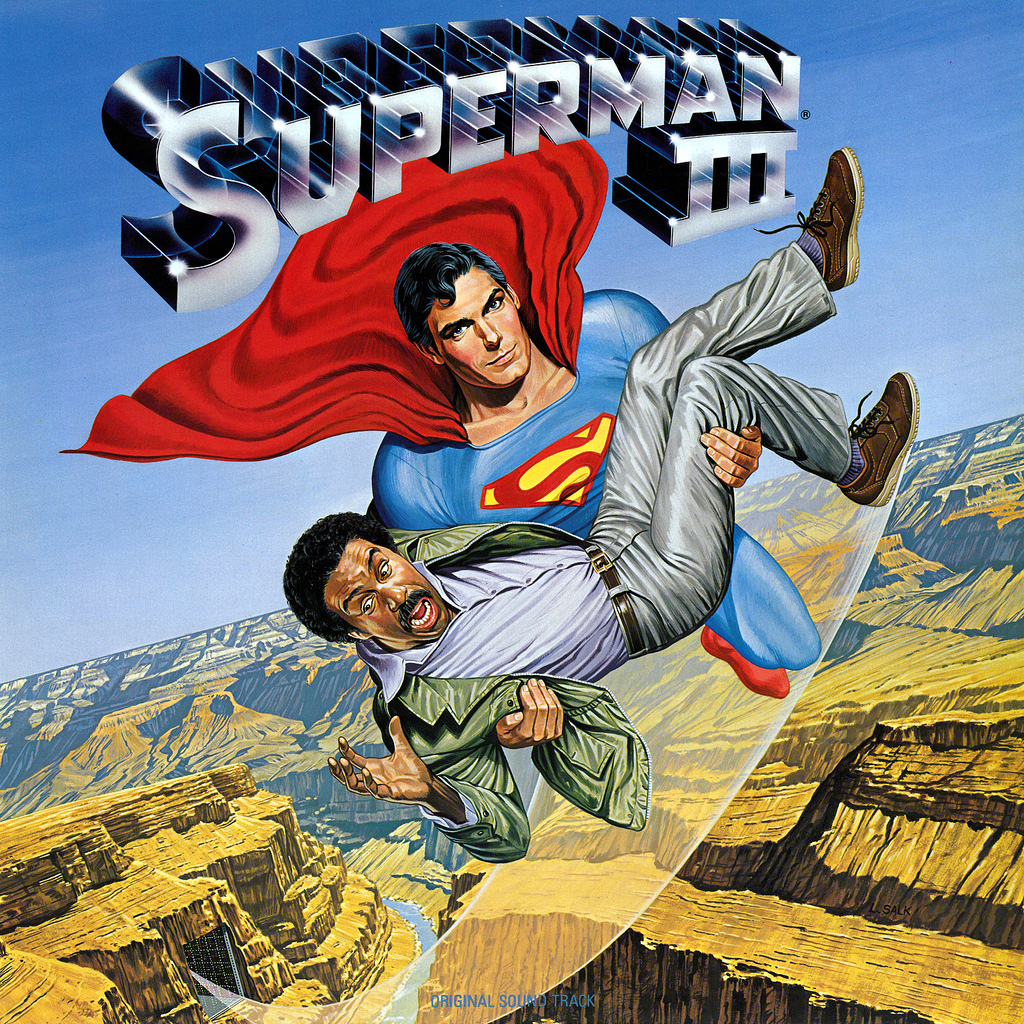
A common feature of disappointing superhero movies is a glut of characters in the script. Spider-Man 3 had Sandman and Venom and the Green Goblins clogging the villain faucet. Batman & Robin was actually Batman and Robin and Batgirl and Poison Ivy and Bane and Mr. Freeze. Superman III had Richard Pryor.

Superman3

Proving that “Two’s a Crowd.”

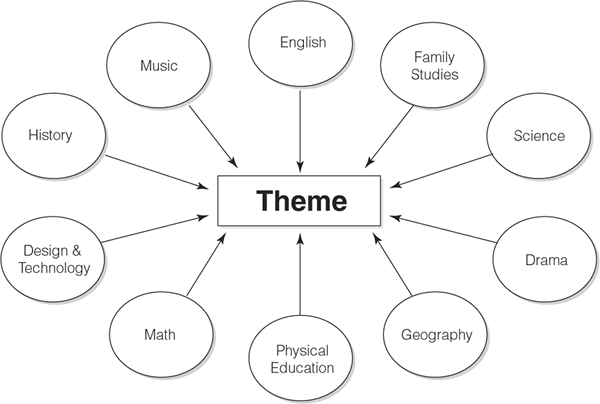
Curriculum Integration in schools is another appealing mash-up that may have a hidden downside or two.

Curriculum Integration image

Basically, integrating curriculum is what teachers do when they teach lessons combining two or more major subjects or disciplines. Examples are as obvious as teaching algebra and graphing with a science experiment, and as unique as an instructor’s imagination. I know of a middle school that features a building-wide interdisciplinary unit all about the Greek Olympics. Every class studies some aspect of the ancient athletes – math, history, language arts, visual arts, science, P.E., and more.

Olympic_Rings

Sounds neat, right? And perhaps a little daunting to pull off, given the coordination of teachers, resources, and activities. But that’s just a challenge, not the downside. The upside is collaborative educators and students energized by explicit and relevant connections among various scholarly endeavors (subjects).

The danger of curriculum integration in classrooms is similar to those in superhero movies. Cramming in too much can end up in confusion and misconceptions. Content may be watered down, spread thin, or lost in the shuffle.

Take a minute to look at this article, “A Caveat: Curriculum Integration Isn’t Always a Good Idea,” by Jere Brophy and Janet Alleman for a more robust examination of this strategy. Better yet, print it out and read it while you wait in line for your Avengers movie tickets. Or download it on your portable digital device.

Technology can be great. So can curriculum integration. Just be careful.

Flex Plan

Standard

Where will you be in five years?

If you like superheroes, a good bet is you’ll be sitting in a theater watching the latest Marvel or DC movie.  And chances are you’ll have seen multiple superhero movies between now and then.

A recent Warner Bros. shareholder meeting featured the announcement of several tentpole movie projects into the year 2020.  This list includes TEN films starring DC Comics superheroes (and antiheroes).

upcoming-dc-films1

Not to be outdone, Marvel Studios held a special shindig where they announced NINE movies set in their “Marvel Cinematic Universe,” involving the Avengers, Guardians of the Galaxy, Black Panther, Dr. Strange, and more.

Avengers-Infinity-War-logo

“Infinity” sounds about right.

If you add in movies based on other Marvel Comics heroes (X-Men, Spider-Man, Fantastic Four, etc.), that makes OVER 40 FILMS currently planned for Marvel or DC comic book characters.

And that’s not even counting additional comic book and superhero projects.  So we’re headed either into the Double Platinum Age of Comic Book Movies or Major Market Saturation.

Of course, many of these projects may get derailed or delayed along the way.  (Don’t hold your breath for “Unannounced Female Character Spider-Man Movie” in 2017.)

Plans change, and no one knows that better than teachers.

Adventures with Scope & Sequence

Those of us in the field of education know about something called “Scope and Sequence.”  Not only does “Scope and Sequence” sound like a terrific crime-fighting duo, S&S is a general phrase given to long-term planning in the school year.

Here is an example Scope and Sequence from an elementary art teacher, courtesy of the smARTteacher website.

Art ScopeSequence BIG

I think of scope as the overall main ideas and concepts students should learn in a class, and sequence is the general order in which they could learn, connect, and practice these main ideas.

Notice the language used here:  “overall”  “general”  “could.”

It’s important to remember that long-term planning should be flexible, like the Ever-Elastic Mr. Fantastic! 

mr fan in action

Sometimes adjusting to curriculum guides can feel like deflecting bullets.

All kinds of variables arise during a school year that require adjustment and revisions:  prior knowledge, curriculum mandates, assessment schedules, special events, weather cancellations, and–MOST IMPORTANTLY–student learning.

Districts often have a Pacing Guide that indicates the key content, units, and even activities teachers should use in their specific courses.  Here are some pacing guides for science teachers in Mobile County Public Schools (AL), if you’re curious.

The key word here is “guide.”  Classroom teachers know their students best, and therefore the best methods and schedules for helping students learn.

To coin a scientific-sounding mantra:  Student learning should be the constant, with time as the dependent variable.

If students require more time to master a topic, give them more time.  Don’t plow through a chapter just because you think you need to stay “on track” to finish a certain textbook.  (Who said you had to finish the textbook in the first place?)  Conversely, don’t slog through something the kids already know or don’t need to know.

A Super Biology Teacher

I met a science teacher who was just one of six teachers who taught Biology 1 in his school building.   The basic requirement was all Biology 1 teachers had to get through Chapter 10 by the end of December.  The reason was students could switch teachers at the semester break, so everyone needed to be at “the same spot” beginning in January.

Sounds logical, but not every teacher (or student) will work at the same rate or want to focus on the same content.  Some concepts and skills are more important than others.  So what do you do if you don’t agree with a prescribed schedule?

I love what this science teacher did.  He made sure he was done with Chapter 10 by the end of December, but he shuffled chapters to create the most meaningful sequence for his students.  Moreover, this teacher spent more time on some chapters and less time on others that weren’t as necessary for learning fundamental biology concepts.

Sound out of order?  That’s nothing new to readers of comic books, where odd numbering systems abound (see multiple #1 issues, #0 issues, #-1 issues, backwards releases, flipped issues, etc.).  Heck, there’s even a blog totally committed to the convoluted topic of Comic Book Numbering.

The bottom line in comic books is finding strategies and gimmicks to sell the most issues.  The bottom line for teaching is arranging lessons and units to encourage the most learning.

So whether you’re talking about billion-dollar film franchises or the infinite potential of today’s students, do take time to plan ahead.  But always keep your plans open to change.

And always leave the door open for a dynamite sequel.

superman2

What is Success?

Standard

Image

It’s not even mid-May and we’ve already got two superhero movies out in theaters, with more to come.  While Captain America: The Winter Soldier made record-breaking April box office numbers, The Amazing Spider-Man 2 recently opened and also topped the $90 million mark for its weekend debut.  Not too shabby.

Or is it?

Such an astronomical income may look, well, amazing.  But some entertainment pundits are asking, “Is it a success?

Such a question is not so strange when comparing ticket sales among similar movies, including prequels and sequels.  Another item to consider is how much money it takes to make the movie (salaries, special effects, marketing, insurance, craft services, etc.).  Making 90 million bucks over a single weekend may not seem so spectacular when it reportedly cost triple that amount to make the film.

All this talk about multimillions may have you thinking about teacher paychecks, but that’s not the real purpose of this post.

Actually, the big question “What is success?” should be asked frequently in our schools and classrooms.


Report Card Time

Recent results from the National Assessment of Educational Progress (NAEP)–also known as “the nation’s report card“–show that American students haven’t really increased their success rate in the past five years.  We’ve talked previously about how it’s important for teachers to closely review assessment data and speak out when and where they can (shameless plug).  But it’s also important to examine results and consider what is success.

The NAEP report finds that for U.S. high school seniors, less than 40% are proficient (or higher) in reading, and only one fourth (26%) are proficient or better in math.  Results also indicate that gaps in achievement among races/minorities are as wide as ever.

Ouch.  That doesn’t sound like success to me.

So many factors contribute to assessment results, more than we have time or space (or attention span) to discuss here.  But it is important to stop and determine our definition of success in schools.


Image

First off, it’s essential we not equate 100% with success.  Major League Baseball players are potential All-Stars if they get a hit one out of every three times at bats.  Babe Ruth’s career batting average was .342.  On the current list of active MLB players, the batting average leader is some guy named Joe Mauer, sitting at .322 (my apologies, Minnesota Twins fans).

I remember band directors telling us that we had to hit 100% of our musical notes during every performance, comparing our task with those slacker multimillionaires in ball caps.  Full disclosure: I never played every note perfectly during every concert.  Didn’t stop the audience from clapping.  And it didn’t stop me from playing.

Winning Percentages

Even Spider-Man himself didn’t win every comic book battle.  (It’d be boring if he did, wouldn’t it?)  According to Marvel’s own statistics, the webbed hero was victorious less than 60% of the time, just below villain Nightmare (59.4%) and above Iron Man (57.8%).  Check out the interactive and informative (and awesome) “Battle Breakdown” of Marvel Comics characters, courtesy of Wired magazine and author/designer Tim Leong.

(You should also check out Tim Leong’s website and Tumblr, along with his award-winning book Super Graphic: A Visual Guide to the Comic Book Universe, for some super-nifty graphical analyses of superhero stats.  Here’s a sample, this one a breakdown of primary colors among hero costumes:

ff_supergraphics_goodevil_2f primary colors  )


Interestingly, anti-hero The Punisher (as in “The Ohio State University”) has the highest winning percentage (86.9%, and only 2 ties) above all the other Marvel heroes.  This roster includes Captain America, Mr. Fantastic, the Hulk, Thor, Wolverine, and Daredevil.

Image

Winning Tip #1: Bring a bazooka to a gun fight.

Still, I think I’d rather be rescued by many other heroes before seeking The Punisher’s help.  It’s “Punisher” with a capital P, after all.  In his quest for vigilante justice, Frank Castle puts a permanent end to bad guys (i.e. dead), as opposed to more noble champions who abide to a higher moral code.  As teachers, we know that a little bit of mercy can go a long way.

Maybe winning isn’t everything.  Maybe success depends on context.

In baseball, 33% hitting is great.  In music, you aim for 100% (unless it’s jazz).  In civil engineering, I hope it’s also close to 100%.  I don’t want a bridge built by someone who earned an 80% in geometry.

So what is success in education?

According to the No Child Left Behind Act of 2001, the goal was for EVERY child to perform at grade level in reading and math by the year 2014.

Have we reached that level yet?  We only have half a year to go!

In one of my graduate classes, our instructor (a high school principal whose last name was Mann, so he was literally “Principal Mann!”) once told us the following with respect to student achievement:  “You can feed a donkey the best oats, give it the best trainer and exercise regimen, and hire the best jockey.  But when you race that animal in the Kentucky Derby, it’s still a donkey.”

Not every kid will be a straight-A student.  If they were, what’s so special about straight-As?  Success is different for each individual.

I remember sitting in one of my undergraduate science classes (astrophysics), and another professor had just posted grade results outside in the hall.  A mob of students clumped in front of the list, eager to learn the results.  Among the mumble and grumble, one jovial dude thunder clapped his hands and cheered, “D-plus!!!”


Success is relative, maybe.

But that doesn’t mean we can’t push each other (and ourselves) to get better.

Hopefully, you aren’t aiming for the plus side of below average.  Hopefully, you aren’t hoping for 80%.  I want all of my students to perform at a 100% level.  I know that probably won’t happen.  But it doesn’t mean I won’t try for it.

Another mentor of mine–Dr. Clough (rhymes with rough ‘n’ tough!)–used to say, “Aim for perfection, and you will reach excellence.”  

Is that optimism?  Or realism?  Optirealism?

Let’s put aside our pessimism that some kids will just “never get it” and focus instead on what they can do.  The results may amaze you.

I’m optimistic that another Amazing Spider-Man sequel will show up in the coming years.  I’m optirealistic that it’ll be good.


Secret Origins

Standard

ImageThis month sees the release of Secret Origins #1 by DC Comics, and you can read more about it here and see what people have to say about it here.

DC has published versions of Secret Origins before, and the purpose is to explore and explain the beginnings of superheroes and villains. Featured characters range from iconic to obscure. So if you want to know how Ambush Bug got his start, here’s your chance!

Image


Origins typically contain two essential ingredients: 1) How you get your powers, and 2) What is your motivation?


Just like superheroes, every teacher has an origin. We all come from somewhere, contrary to what my 8th Grade Earth Science teacher Mr. Musson used to say: “Teachers aren’t born; they just . . . appear.”

The same two pieces of an origin story apply to teachers, as well.


1) How did you get your powers?


Maybe you weren’t bitten by a radioactive spider or trained in the mystical martial arts of K’un-Lun, but I bet you’ve got something that makes you special.


Most of us licensed teachers have received professional preparation of some sort. Many earned our teaching credentials after completing a bachelor’s degree in education, often with a specific subject endorsement. Other non-traditional routes include “fifth year” programs as well as an assortment of alternative licensure options for college graduates who already have degrees in something other than education. In the latter case, individuals often complete formal teacher education coursework while at the same time teaching full-time in schools.


No matter what your route, the bottom line is that you studied, practiced, collaborated, reflected, and applied important concepts and skills necessary for becoming an effective educator. (The scary thing is, some people think teaching requires no formal preparation at all, and are willing to dump anyone into the classroom just to fill a need. We could talk about this important issue at another time, and I already have HERE in a newspaper editorial, if you’re curious.)


Outside of formal preparation, many of you also learned about teaching through other means. Maybe you have a teacher as a close family member or friend, or perhaps you’ve experienced teaching through various activities like sports, church, hobbies, and more. You got the bug, so to speak, and you wanted more.


That leads us to the second part of origin stories . . .


2) What’s your motivation?


Getting powers is not enough. A lot of people have skills but waste them or use them in selfish ways, just like a lot of super-powered characters.


Every good teacher needs not only special abilities, but also a special heart and passion for the classroom and beyond.


Many of us got into teaching because we love learning and want to share that joy with others. We want to make a difference in the lives of kids and their families.


Hopefully you didn’t go into teaching because of a so-called “summer vacation” or because you thought your workday would be 8:30 to 3:30.   If either of these were reasons you entered the profession, you probably learned that teachers put more total hours in the school year than most people do in 12-month jobs. You can learn some other important statistics about the teaching career here.


Unfortunately, origin stories sometimes reveal an individual’s weaknesses as well as their strengths. For example, Superman’s not a fan of green kryptonite, which came from the blown up bits of his home planet. And Iron Man sometimes likes to hit the bottle, thanks to the fast life of his alter ego Tony Stark.


I hope you do not falter to kryptonite or alcohol, but you should still be wary of potential flaws. I’ll use my “origin story” as an example:


Secret Origin . . . Revealed!


I’ve always liked school. I like to learn. I’ve had some great teachers in my family and in my schools, so it’s probably no surprise I pursued teaching as a profession.


Here’s a rare mug shot of my first year teaching way back in 1999. It’s black and white and grainy because I had to scan it from the school yearbook. It’s wrinkly and weary because it was my first year as a teacher. (To determine if I’ve aged well, compare this portrait with a more recent one on the editorial link above.)


Image
Vintage Mr. Bergman #1

The first year was tough—it always is—but I got better. Teaching is hard work, but it is worthwhile and can be a joy, even on the tough days. You stick with it and each year usually gets easier.


How else did I improve?


I learned the intricacies of my subject matter (science) to know how concepts were connected, what analogies illustrated tough ideas, and what activities gave the best opportunities to clearly master content. I also learned about my students: what motivates them, what strengths and weaknesses they possess, and how to strike a healthy balance between firm and easy when it comes to classroom management—something that can never be overestimated.


But here’s where my “secret origin” reveals some of my weaknesses.


I like school. Many students don’t. For the most part, I was a “goody-two-shoes” throughout school. Some of my students actually thrive on creating classroom chaos. So I have to overcome my nice guy tendencies and be ready and willing to draw the line when it comes to discipline. It’s not easy, but it has to be done.


Here’s another strength that can become a flaw:


I enjoy science. Some students fear it.   When I was a kid, I found satisfaction in filling out worksheets and completing exams. I was weird. A lot of students greet homework with hostility and suffer test anxiety.


So as a teacher, I have to reduce resistance in my students before I can open the doors to learning. And it starts with me. I can’t assume my students are just as eager to come to class and learn about electron configuration. I have to find out what motivates them and how I can connect concepts to their lives and interests. In a way, I have to learn the secret origins of every student.


I hope this post has helped you reflect on your past and consider how it can impact your future. Do you have special training? Hidden talents? A passion that can only be served by teaching? How did it all begin?


In other words . . .


What is YOUR origin story?


Please post a comment and share why and how you became a teacher. Your story doesn’t have to involve radioactivity.

But it’d be cool if it did.