Charge Up, Mon Chere

Standard

Newgambit bachalo

Add X-Man Gambit to the list of superheroes getting a new movie, starring hunky actor Channing Tatum. Here is Screen Rant’s review of the news and a brief bio of Remy LeBeau.

Gambit was a Marvel ‘90s superstar known for his Cajun accent and scheming ways as much as his mutant ability to charge objects with energy. (The trendy trench coat and headgear also helped enhance his popularity.)

Character issues aside, Gambit can inspire teachers with his superpowers. Instead of charging up playing cards, teachers should strive to charge up their lessons.   (Minus the headgear and explosions.)

Take a look at your most recent lessons. What question, prompt, activity, application, media, or more could you add to energize students?

gambit charge card

Non-Mutant Teachers

Standard

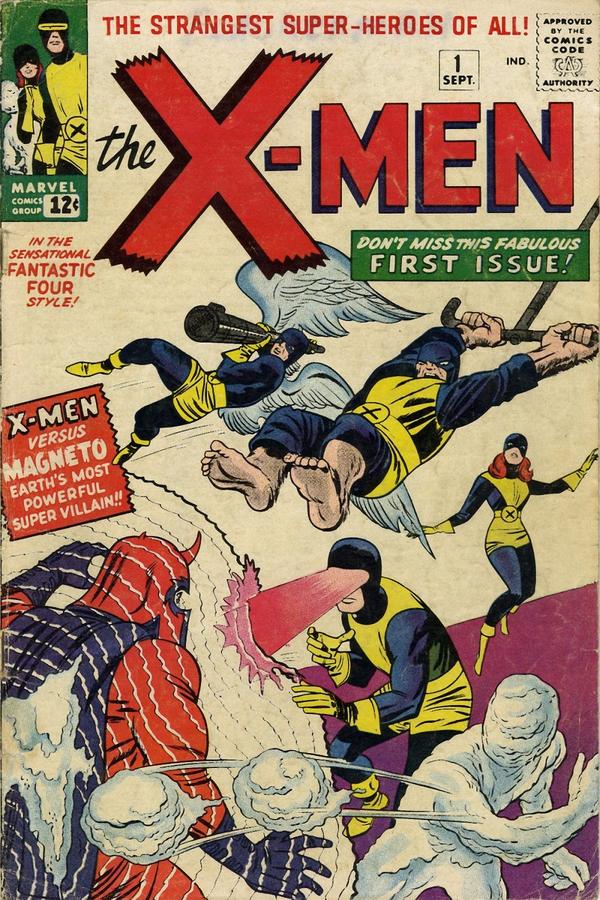
My favorite superhero team has always been the X-Men.  I’ll admit, these mutant heroes first caught my eye with their nifty matching uniforms.  Plus, “X” is the absolute coolest letter in the alphabet by far.  (Uncanny Y-Men . . . just doesn’t cut it.)

X-Men_Vol_1_1

The main reason I like the X-Men, however, is because this superhero team’s origin starts at a school.  “Gifted youngsters” have gathered together not because they’re family or friends or famous heroes, but instead to learn and understand their powers and identities.  And ultimately, these students strive to “protect a world that hates and fears them.”

A new generation of students has taken up the cause of Professor X, as featured in the series Wolverine and the X-Men.  Unfortunately, headmaster Wolverine has recently died in the Marvel Comics world, leaving a void in the faculty at the Jean Grey School for Higher Learning.

I bet Wolverine’s health will improve soon, but in the meantime another hero has joined the staff of mutant educators:  your friendly neighborhood Spider-Man.
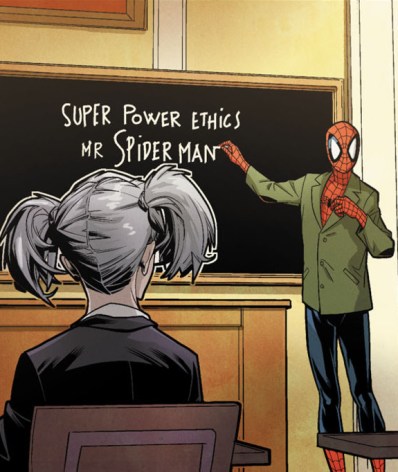
Spider-Man_The_X-Men_1_Preview_3

That’s Mr. Spider-Man to You

One potential problem, though:  Spider-Man is NOT a mutant.  In other words, he was not born with his extra-human abilities.  Peter Parker needed a radioactive spider bite to get his superpowers.  Remember this iconic scene?

1567552-parker_spider_bite_super

Pre-Spider Bite Peter Parker = Lame-o

Differences in genetic background and superhero lifestyle could become a source of conflict not only between Mr. Spider-Man and his students, but also with the mutant teachers and staff at the school.

Such educational discrepancies do not occur in comic books only.  They can also arise in real life.

Real World Research

Research studies have found a “racial/ethnic gap between students of color and their teachers,” something that has increased over the years (Villegas, Strom, & Lucas, 2012).  With a growing population of minority students, teachers from similar racial/ethnic backgrounds are in high demand (Bireda & Chait, 2011).

Why is it important to match teacher and student demographics?

One may assume that students react more positively to teachers who share common characteristics.  Likewise, minority teachers can serve as positive role models to minority students.  However, clear empirical evidence of these assumptions is hard to find, understandable given the complexities of schooling and learning.

Some research studies have found learning gains when teachers and students share similar ethnicity (Dee, 2004; Klein, Le, & Hamilton, 2001).  Nevertheless, these reports note an underlying factor that could have the greatest impact on student success:  the actual quality of the teacher.
peter_parker_spiderman

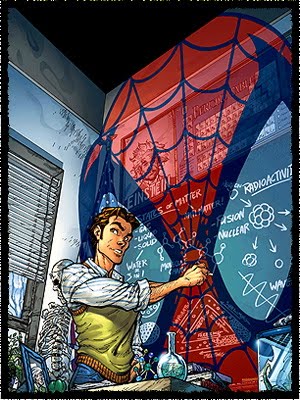
Mr. Parker

Spider-Man does have previous teaching experience.  While plainclothes Peter Parker during the day, he did a stint as science teacher for his alma mater, Midtown High School, in Queens, New York.

250px-Midtown_High_School_from_Spider-Man_Season_One_Vol_1_1

Home of the Fightin’ Living Brains!

Mr. Parker’s public school teaching experience reflects real world trends.  Typically, teachers like to teach close to where they grew up as students (Reininger, 2011).  Or if not the same or nearby location, teachers may teach in a similar type of district or community.

That was me.  I grew up in a small Nebraska town of ~4,000 people.  I graduated from a public high school with a class of ~70 students.  My first teaching job was in a small Nebraska town of ~4,000 people (about 130 miles from my hometown).  Each graduating class at this public school had ~70 students.

What about you?  Where did you go to school?  Where do you teach?  

One of the biggest advantages about the teaching profession is that it can take you anywhere in the world.  Once I had a student encourage me to apply for a teaching job in Dubai.  (Maybe he had selfish motives for introducing me to this opportunity.)

But one of the biggest challenges about teaching is that it requires extraordinary effort to assimilate the context and culture of the school when you first start.  Even teachers who teach in their hometown must navigate through this transitional period.  Moreover, imagine the degree of difficulty for teachers new to a community, culture, and/or country.

It makes sense that teacher recruitment initiatives focus on fostering “pipelines” to increase quality teachers from high-need urban and rural settings (CTEP, 2014Darling-Hammond, 2011).

Mutant or Non-Mutant?

As much as I’d like, I can’t turn myself into a mutant, or even a super-powered human.  (I’ve been bitten by spiders before.  No wall-crawling abilities yet.)  Still, I can be the best teacher I can be, no matter where or whom I teach.

Regardless of our ethnic, cultural, genetic, or other demographic descriptors, we can all work to cultivate meaningful relationships, creating memorable learning experiences for our students.  Part of this work includes finding ways to connect with the kids and their community.

Don’t try to fake it, however.  Students have a special (mutant?) ability to see through disingenuous teachers, even those with good intentions.  Admit your differences, if need be, and authentically work to find common ground.  A universal purpose in all schools is to expand understanding and appreciate learning.

Who knows how long Spider-Man will stay on staff at the Jean Grey School for Higher Learning?  You can read more about the creators’ plans for Spider-Man and the X-Men herehere, and here, if you’re interested.  I hope Mr. Spider-Man makes a positive difference during his tenure, long or short.

Spidey may not be a mutant, but he does know a little about struggling to make it in the world (of both heroes and humans).  Additionally, he has firsthand experience learning the importance of “great powers” and “great responsibility.”

And like the best teachers, Spider-Man should learn from his students as much as they learn from him.

Spider-Man__The_X-Men_Bengal_Variant-720x1093

Flex Plan

Standard

Where will you be in five years?

If you like superheroes, a good bet is you’ll be sitting in a theater watching the latest Marvel or DC movie.  And chances are you’ll have seen multiple superhero movies between now and then.

A recent Warner Bros. shareholder meeting featured the announcement of several tentpole movie projects into the year 2020.  This list includes TEN films starring DC Comics superheroes (and antiheroes).

upcoming-dc-films1

Not to be outdone, Marvel Studios held a special shindig where they announced NINE movies set in their “Marvel Cinematic Universe,” involving the Avengers, Guardians of the Galaxy, Black Panther, Dr. Strange, and more.

Avengers-Infinity-War-logo

“Infinity” sounds about right.

If you add in movies based on other Marvel Comics heroes (X-Men, Spider-Man, Fantastic Four, etc.), that makes OVER 40 FILMS currently planned for Marvel or DC comic book characters.

And that’s not even counting additional comic book and superhero projects.  So we’re headed either into the Double Platinum Age of Comic Book Movies or Major Market Saturation.

Of course, many of these projects may get derailed or delayed along the way.  (Don’t hold your breath for “Unannounced Female Character Spider-Man Movie” in 2017.)

Plans change, and no one knows that better than teachers.

Adventures with Scope & Sequence

Those of us in the field of education know about something called “Scope and Sequence.”  Not only does “Scope and Sequence” sound like a terrific crime-fighting duo, S&S is a general phrase given to long-term planning in the school year.

Here is an example Scope and Sequence from an elementary art teacher, courtesy of the smARTteacher website.

Art ScopeSequence BIG

I think of scope as the overall main ideas and concepts students should learn in a class, and sequence is the general order in which they could learn, connect, and practice these main ideas.

Notice the language used here:  “overall”  “general”  “could.”

It’s important to remember that long-term planning should be flexible, like the Ever-Elastic Mr. Fantastic! 

mr fan in action

Sometimes adjusting to curriculum guides can feel like deflecting bullets.

All kinds of variables arise during a school year that require adjustment and revisions:  prior knowledge, curriculum mandates, assessment schedules, special events, weather cancellations, and–MOST IMPORTANTLY–student learning.

Districts often have a Pacing Guide that indicates the key content, units, and even activities teachers should use in their specific courses.  Here are some pacing guides for science teachers in Mobile County Public Schools (AL), if you’re curious.

The key word here is “guide.”  Classroom teachers know their students best, and therefore the best methods and schedules for helping students learn.

To coin a scientific-sounding mantra:  Student learning should be the constant, with time as the dependent variable.

If students require more time to master a topic, give them more time.  Don’t plow through a chapter just because you think you need to stay “on track” to finish a certain textbook.  (Who said you had to finish the textbook in the first place?)  Conversely, don’t slog through something the kids already know or don’t need to know.

A Super Biology Teacher

I met a science teacher who was just one of six teachers who taught Biology 1 in his school building.   The basic requirement was all Biology 1 teachers had to get through Chapter 10 by the end of December.  The reason was students could switch teachers at the semester break, so everyone needed to be at “the same spot” beginning in January.

Sounds logical, but not every teacher (or student) will work at the same rate or want to focus on the same content.  Some concepts and skills are more important than others.  So what do you do if you don’t agree with a prescribed schedule?

I love what this science teacher did.  He made sure he was done with Chapter 10 by the end of December, but he shuffled chapters to create the most meaningful sequence for his students.  Moreover, this teacher spent more time on some chapters and less time on others that weren’t as necessary for learning fundamental biology concepts.

Sound out of order?  That’s nothing new to readers of comic books, where odd numbering systems abound (see multiple #1 issues, #0 issues, #-1 issues, backwards releases, flipped issues, etc.).  Heck, there’s even a blog totally committed to the convoluted topic of Comic Book Numbering.

The bottom line in comic books is finding strategies and gimmicks to sell the most issues.  The bottom line for teaching is arranging lessons and units to encourage the most learning.

So whether you’re talking about billion-dollar film franchises or the infinite potential of today’s students, do take time to plan ahead.  But always keep your plans open to change.

And always leave the door open for a dynamite sequel.

superman2

Summer Break

Standard

It’s summer!  

Time to hit the beach, hit the books, hit the links, and whatever else you find relaxing and refreshing this season.

ULTRA-XMEN-SPING-BREAK-ICEMAN

Just chillin’

Same for this blog.  Teaching is for Superheroes! (a.k.a. T4SH!) is taking a break until that other lovely time of year – back to school!


Use this “vacation” to rest and renew your mind, body, and spirit for a recharged start with students this fall.  If you need some inspiration, take a look at some archived T4SH! posts:

Most Powerful Weapon

Favorite Superhero Teacher (Poll)

Advocating the Profession

Extreme Makeover

Secret Origins

What is Success?


Keep on learning – EDUCATUS!

Future and Past

Standard

Yes, this post will discuss yet ANOTHER super-hero movie that recently blasted into theaters across the globe.  It’s the golden age for super-hero movies, so we might as well bask in it.

The latest super-flick selling popcorn and semi-satisfying critics/fans is X-Men: Days of Future Past.  Bonus points (i.e. “geek cred”) if you can name every character in the following poster:

XDOFP-poster-995c8

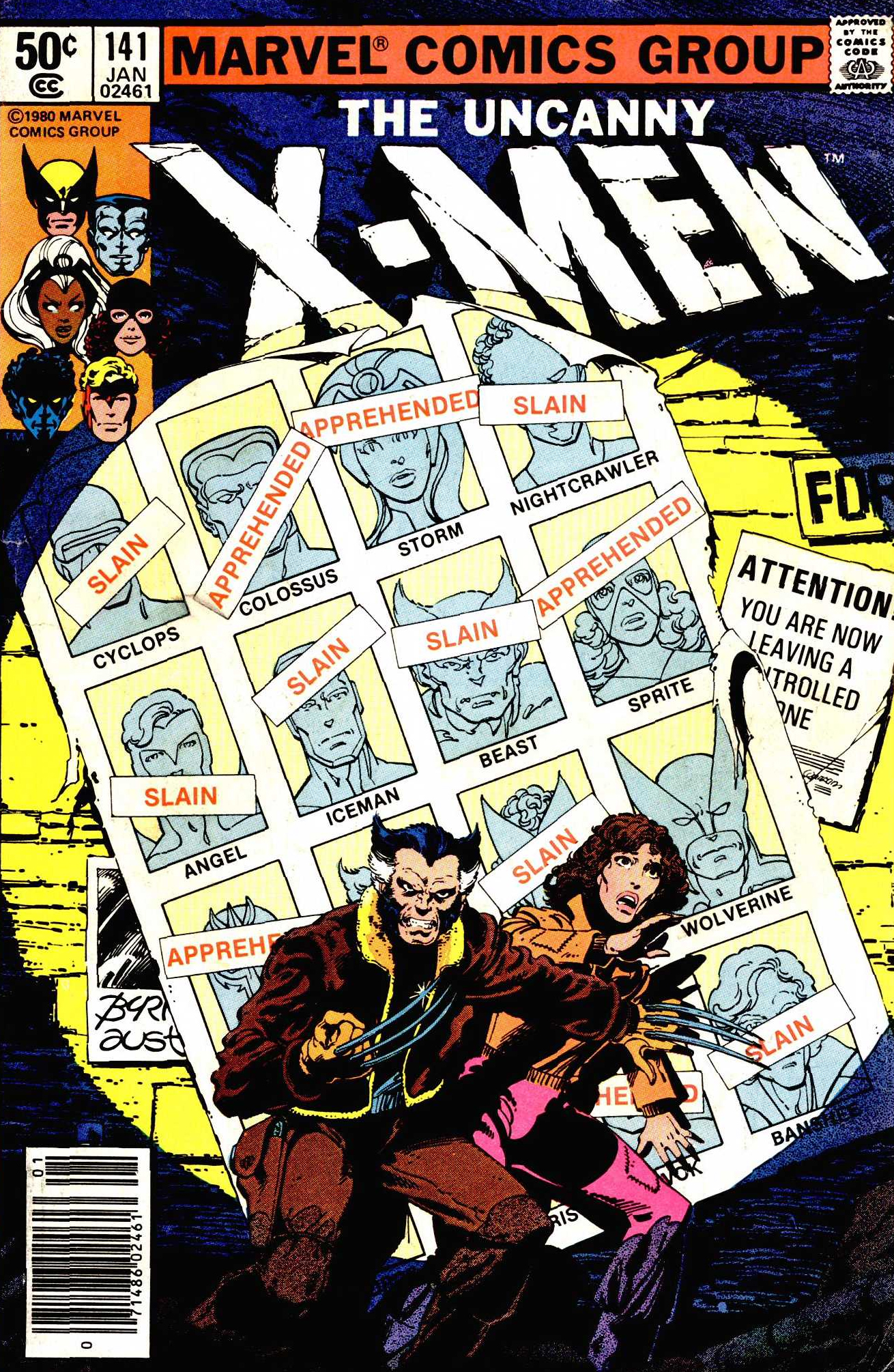
The basic premise of the film (and the classic comic book story it’s loosely based on) is that the future ends up being a mostly dismal place for mutants and humans alike.  Those grizzled heroes that are still alive decide their only hope lies in sending someone back in time (or at least their mind) to stop events that ultimately cause social dystopia.  Basically, they want to “reset” the world to make a better future.

X-Men-Days-of-Future-Past-comic-cover


It’s a story that is equally depressing AND hopeful, even if the title makes no grammatical sense at all (and created a wad of continuity problems in the X-Men cinematic universe).


Even if you have no interest in time travel or mutant oppression, I do encourage you to stop and think how teachers can learn a lesson from this story.

How many of us wish we could go back in time (the start of the school year) and try again to establish a positive, productive classroom environment?


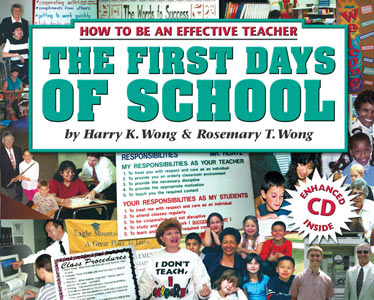
The truth is, the “first days of school” are critical to creating a climate that will endure throughout the academic calendar.  What you teach, practice, and reinforce (and what you let slide) will eventually shape the classroom setting.  It’s so important, in fact, that the best-selling teacher book of all time deals with this issue.

the_first_days_of_school book

My copy is a little more “used.”

Even though early classroom moments are so critical in establishing classroom expectations and habits, there is still hope for teachers who think they may have “lost their way” and lost their classroom to disorder and disrespect, confusion and chaos.

In fact, one of the biggest champions of this “reset” method is Harry Wong, co-author of The First Days of School.  During one of his “Effective Teacher” videos (Vol. 4), Dr. Wong describes how at the end of each day, teachers erase the classroom board in preparation for the next day’s learning.  This action should illustrate how we as teachers should view our work.

OLYMPUS DIGITAL CAMERA

Every new day is a new opportunity to “start over,” so to speak.  Even though it may be the middle of the school year, teachers can still erase past mistakes and memories and work to create a new classroom culture.  This “reset” will most likely require more than one day’s work, but we can still purposefully cultivate the type of environment we know is best for teaching and reaching our kids.  This endeavor also takes serious reflection, intentional planning, practice, reinforcement, and redirection–all in order to reestablish the classroom our kids (and we teachers) deserve.

On a larger scale, consider how the current “summer break” season is another a chance to reset your teaching expectations and actions.  Don’t stop at reorganizing your desk drawers and replacing tattered posters with shiny new bulletin board materials.  Revitalize your classroom procedures, routines, and attitudes to foster a refreshing learning environment.

The advantage to summer rejuvenation is that most of your students won’t know anything changed.  They’ll assume you’ve always been a model educator who demands excellence and champions the cause of learning.

At times, such work may seem just as challenging as mutant time travel.  But it’s definitely worth it.


Superhero Therapy

Standard

The title of this blog entry may have you thinking that superheroes need therapy.  And, in fact, most probably do.

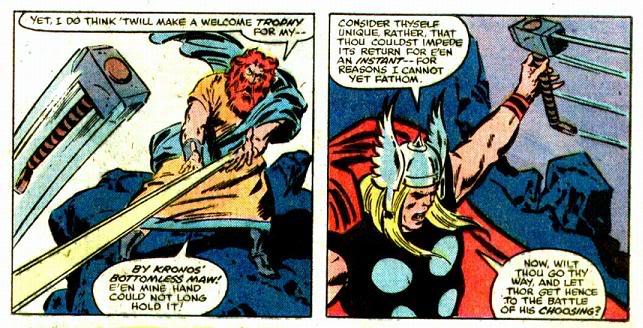
Who else dresses in a mask, tights, armor, and/or a cape and dives into danger at the drop of a hammer*?

ThorMjolnir100-SummoningAnnual08

*Or in Thor’s case, the drop of Mjolnir—which can magically zip back into his hand à la Harry Potter’s Accio summoning charm. (Handy!)

Therapy for superheroes is something in definite need of attention.  And a clinical psychologist actually has done some work on this, which you can read about here.

Check it out and then return here.


Back yet?  Good.

The news story that inspired THIS entry is actually about how therapists have been using superheroes (and other geeky things) to help kids and adults.  You can read the original story at The Daily Beast’s website.


Done?  Okay, let’s talk about teaching.

But first let’s talk about Doc Samson, who’s both a superhero AND a therapistHow cool is that?

DocSavage

Crackin’ skulls . . . Freudian style.

The good doctor is a “gamma-irradiated friend, rival, and psychiatrist of Bruce Banner.”  Dr. Bruce Banner is, of course, better known as the Incredible Hulk.

Doc Samson therapy

Doc Samson first appeared in The Incredible Hulk #141 back in 1971, and does most of his adventuring alongside (or against) Marvel’s Green Goliath.

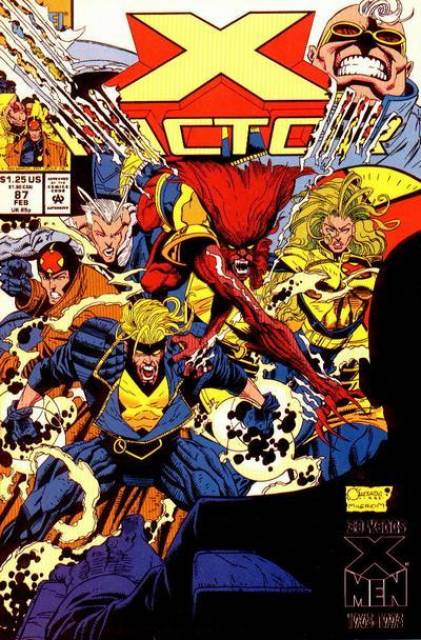
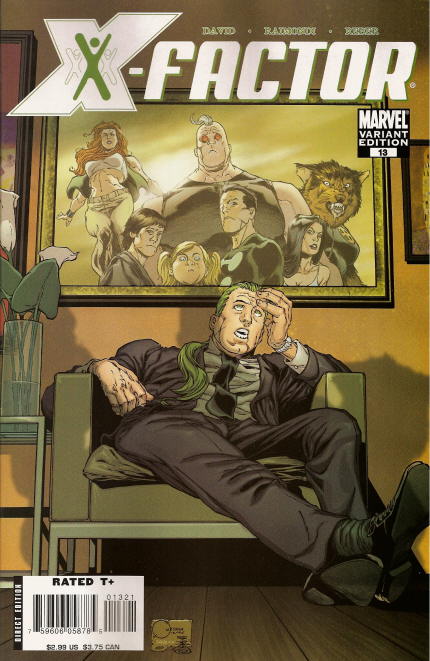
The most memorable Doc Samson stories, however, feature him sitting in his psychiatrist chair.  Such therapy sessions include two of the best issues of X-Factor.

x-factor 87                      X-Factor_Vol_3_13_Variant

Take a gander here and here to glimpse into the inner lives of B-level mutants.


NOW let’s talk about teaching.

Where does superhero-themed therapy fit into the classroom?

Consider why kids (and adults) respond so well to superheroes for therapeutic treatment.  These icons of hope and heroism provide an outlet through which individuals can express their own doubts, decisions, and conflict in life.

And it’s not just comic book characters, either. The Daily Beast feature puts it this way:

“We’re all aware of the basic transformative properties of popular culture——namely, its ability to cheer you up, to make you laugh, and to make you cry.”

If therapists can use such elements to connect with their patients, imagine the power of linking popular culture with learning.


Teachers don’t have to cater to every student’s craze or hobby.  And we shouldn’t dilute or distort the content in a lame attempt to appear “cool.”

But we can pay attention to our students’ lives and watch for ways to relate our subject to their interests.  This is especially helpful with challenging and abstract topics.

(Do your students struggle with primary/secondary light colors and pigments?  Try using examples from the Green Lantern and the rest of the Emotional Spectrum heroes.)

GL emotional spectrum

Colorful and Educational!

These examples don’t have to be from superheroes, geek culture, or popular media.  Students are diverse, as are their interests–sports, music, literature, the visual arts, traditions, and more.


There are times when teachers feel like we must be our students’ therapists.  And there are times when we need some therapy of our own.

But at all times, we can make learning memorable and meaningful.  One way to do that is by using illustrations and stories from pop culture.  Superheroes are prime candidates for this job.

(As soon as they get out of therapy.)

Teaser Teachers

Standard

One of my Super Bowl highlights is the glut of new movie trailers during the commercials.  Never mind that the 20 seconds or so may or may not actually wind up in the actual film.

Nowadays, most of these trailers go straight to the internet before the Super Bowl.  And now we don’t just have trailers, but also teasers, which are basically trailers for the trailers.

Here are a couple of teasers and/or trailers that caught my eye this year.  (Don’t blink.)

http://www.youtube.com/watch?v=MSzAfgULwUE

Cool, huh?  Even a few seconds can get the adrenaline pumping.

So how about us teachers?  How can we take some Hollywood magic and use it to “tease” our students?

A common practice is the use of bell work (or bell ringer), which helps with classroom management and should engage students in thinking.  Many teachers use bell work to review something from a past lesson or preview something  for the immediate next lesson.

Bell work helps create a useful routine in which students start the class (not the bell or the teacher) and the teacher can use these few minutes for taking attendance, addressing specific students’ needs, or other important tasks.

There are several resources out there for using “puzzlers” or trivia for bell work.  These are good in a pinch, and some can even foster meaningful discussions about students’ personal views and experiences.  Here is a variety of bell ringers from Kentucky (home state of mutant siblings Sam Guthrie a.k.a. Cannonball and Paige Guthrie a.k.a. Husk).

cannonball_and_husk_color_by_graconius-d5p11rs

Thanks, Kentucky and Graconius.  We owe ya both.

This is a start, and such resources are good for some days.  But let’s go beyond student/time management and really get students excited (or at least interested).

What sort of question or prompt can you pose on a given day that will not only get the students to work, but get them to think more deeply about the content you want them to learn?  How can you “tease” them?

Here are a few paired examples.  One bland, one better.  Reflect on these ideas to create or modify your own bell work prompts for upcoming classes.

BLAND: Please open your book to page 16.

BETTER: Please open your book to page 16.  Examine the two photos and write down as many similarities you can find.

BLAND: Please get out yesterday’s homework.

BETTER: Please review your homework with a neighbor and discuss any discrepancies in your answers.  Who is correct?  How do you know?

BLAND: Please copy the vocabulary words on the board.

BETTER: Pick out your favorite vocabulary word and draw a picture related to that term.  Share your sketch with a partner and see if they can guess the word.

See?  Not that hard to take a basic task and make it better (i.e. increase the students’ interest).

In addition to bell work at the start of class, teachers should tease their students at the end of class.

End-of-class activities often focus on a “wrap-up” or recap in which the class reviews what they learned that day.  If you do such activities, be sure to have the students tell YOU what they’ve learned, instead of you just telling them what they should have learned.

Strategies such as the Exit Slip or Ticket-out-the-Door provide other opportunities for students to share what they have (or have not) learned.  Teachers can prompt students to apply the content to a new situation.

Don’t make it a simple task.  Tease the students with a challenge or question that gets them wondering and thinking between the end of class and the next time they return to you.  It’s okay to leave students in suspense sometimes!

So here’s a challenge:

What’s your best “end of day” or “start of day” strategy?  Post a comment and share below!

Advocating the Profession

Video

Here’s a video by the American Federation of Teachers (or AFT, which sounds like a superhero team).

The video takes a closer look at data from the latest PISA report (or Programme for International Student Assessment, which also sounds like it came from a comic book).

If there’s anything this video teaches, it’s that sometimes educators need to be their own advocates.

Heck, even the oft-hated and much-feared X-Men had their own publicist for a while.  Click on the image below to see how Ms. Kildare helps X-Villain (ex-villain?) Magneto improve his image.

katekildarexmen

If you’re a teacher, maybe you don’t have extensive training in media relations.  But you DO know how to inspire and engage mobs of students, and I bet some of those skills would help when standing up for your profession.

Celebrate the work of your school and the accomplishments of your students.  Highlight successes, even while tackling the tough challenges head-on.  Avoid excuses, but acknowledge the complex nature of teaching and learning.  Be a positive voice among peers and parents.

You don’t need a magnetic personality to speak up.

And you probably won’t even have to wear a helmet.


Favorite Superhero Teacher?

Standard

Wolverine is staying with the whole “teacher thing” for another semester at the Jean Grey School for Higher Learning.  You can read more here and click on the image below to review Mr. Logan’s pedagogical methods:

WolvTr

(Don’t even ask about detention.)

So who’s your favorite superhero teacher?  Chime in!