No, the “Superhero Shuffle” is not the latest dance craze (yet).
But I’ll still use any excuse to share this fabulous comic book page of Clark Kent dancing. Shake that Super Bootie!
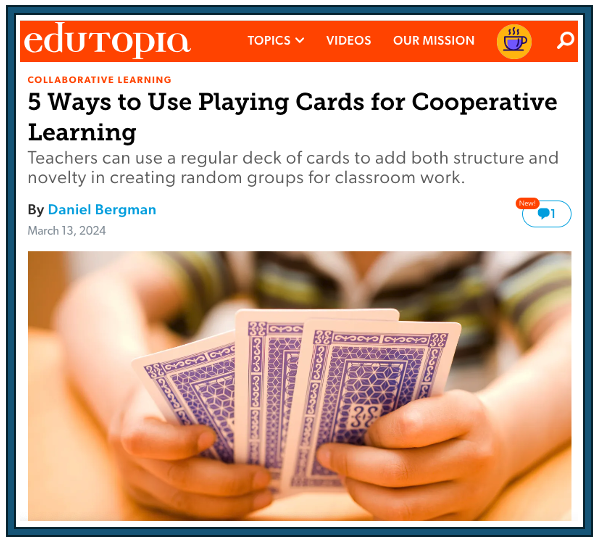
Instead, this blog is about shuffling CARDS — namely playing cards that teachers can use for different cooperative strategies in the classroom. Ante up!
Check out this NEW article I wrote for the great folks over at Edutopia, and try out one of these strategies with your students.
Just be sure to let your students–and colleagues–know that no one is gambling.
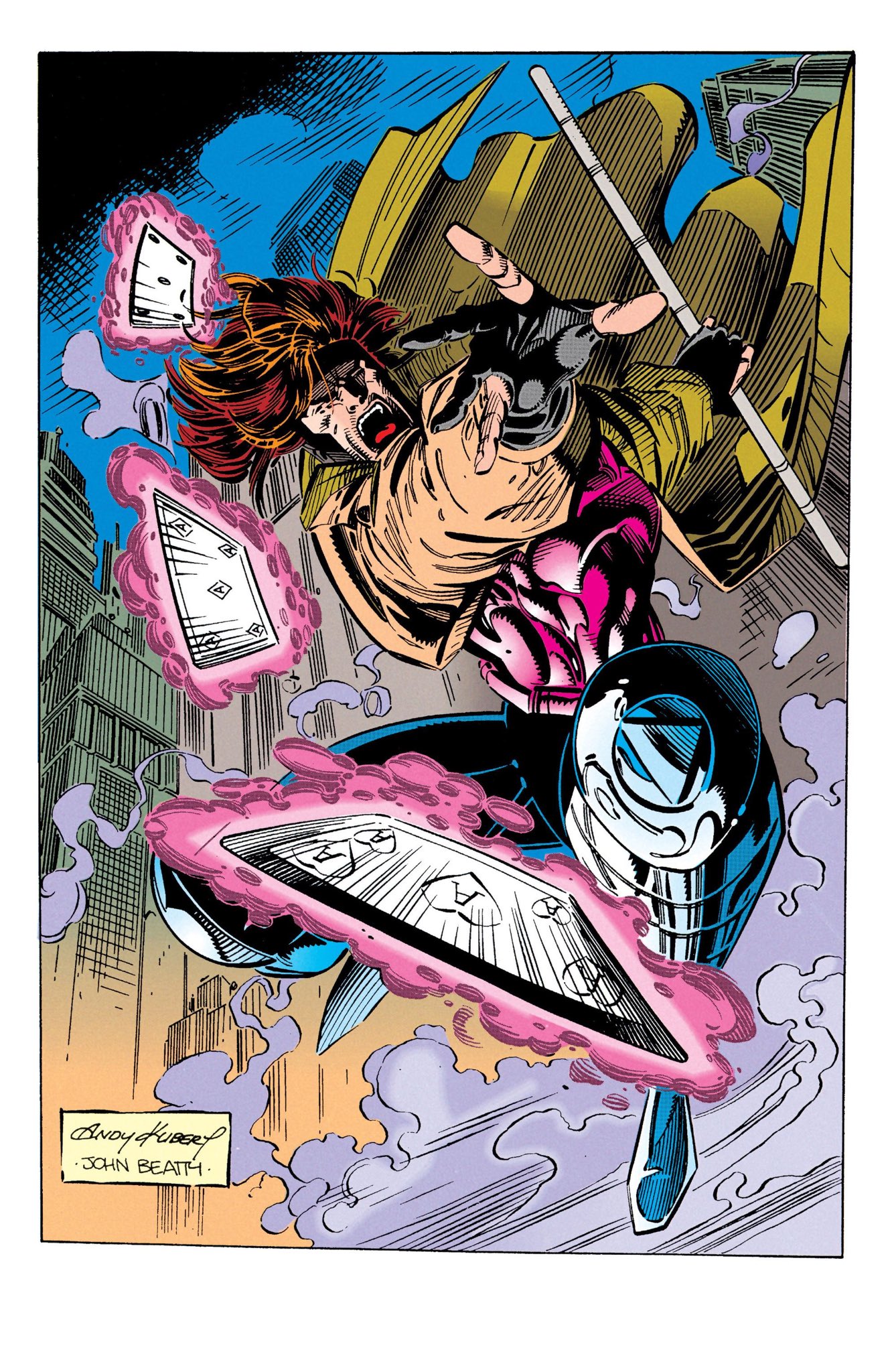
And to get back to superheroes, here are some heroes (and villains) famous for their card-themed connections. Deal me in!
If your answer is “NO,” you’re not alone. The Marvels had the worst box office opening ever for a movie in the MCU franchise.
Considering the Marvel Cinematic Universe has earned a worldwide gross income of nearly THIRTY BILLION DOLLARS* from its combined movies, I’m sure they’ll be fine.
*That’s “Billion” with a B-b-b-b-b-b . . . .
I’m even more confident in Marvel’s well-being given recent comments by one of their up-and-coming stars.
In an interview with Yahoo Entertainment, actress Iman Vellani (Ms. Marvel herself) shared her honest feelings about the film’s performance and audience perceptions.
“I’m happy with the finished product, and the people that I care about enjoyed the film. It’s genuinely a good time watching this movie, and that’s all we can ask for with these films. It has superheroes, it takes place in space, it’s not that deep and it’s about teamwork and sisterhood. It’s a fun movie, and I’m just so happy that I can share it with people.”
Whether you like The Marvels or not–heck, whether you even go see the movie or not–you have to respect the Ms. Vellani’s positive outlook. Enjoy the creativity and enthusiasm, and share that enjoyment with those who are important to you.
I bolded that previous statement because thesame approach applies to TEACHERS.
Like movies, schools may find themselves in the headlines due to lackluster performance. Often, the stumbles and setbacks get more scrutiny than the successes.
Or maybe we don’t have thick sin, but a magical bracelet that combines with our mutant powers to create a shield of hard light energy. That’d be nice . . .
Here’s another excerpt from the interview with Iman Vellani:
“I had a lot of experience in high school alone when I would share my excitement with someone, and then they’d immediately shut me down for being so excited . . . . If people are excited about something, let them be excited about it. And if you have constructive criticism, voice it — but never be the wet blanket on someone else’s excitement.”
Wise words from a 21-year-old.
And not only sage advice, but also a practical strategy for teachers working with students.
We all encounter kids who have grand ideas, but maybe not the best plans. Effective teachers are those who can encourage and cultivate enthusiasm in the classroom.
Marvelous teachers harness that energy for productive outcomes inside school and beyond.
We–AND our students–should cherish such experiences.
You may think this blog’s title refers to the relative lack of new posts in recent months.
I wouldn’t blame you. Hopefully we’ll get back to a semi-regular schedule soon.
But I’ve had my reasons for such blog-paucity. It’s been a busy fall semester. Exhibits A-J . . .
Actually, the topic of “Excused Absences” comes from a social media post by Marvel Studios.
Check out this “Permission Slip” fans can use to skip school or work (or both if you’re a teacher).
What’s your reaction to this note?
Ha! That’s funny.
Hey, that’s not a bad idea.
Gasp! How dare they make light of skipping school and/or work, especially in light of data on chronic student absenteeism and the detrimental effects on learning and retention?
If you responded closest to #3 above, chances are you’ve had some prior experience with students that miss or skip classes.
(Still, I’d hope you can take it as a clever joke. And maybe sympathize with those of us excited to witness two landmark events in the wider Marvel Cinematic Universe.)
But since the issue is on the table, let’s look at students who miss school. And if it’s any encouragement, superheroes go missing all the time . . . .
Focusing on STUDENTS, the causes and effects of missing school are diverse and interdependent. For example, is a student not doing well because they are missing class, or are they missing class because they are not doing well?
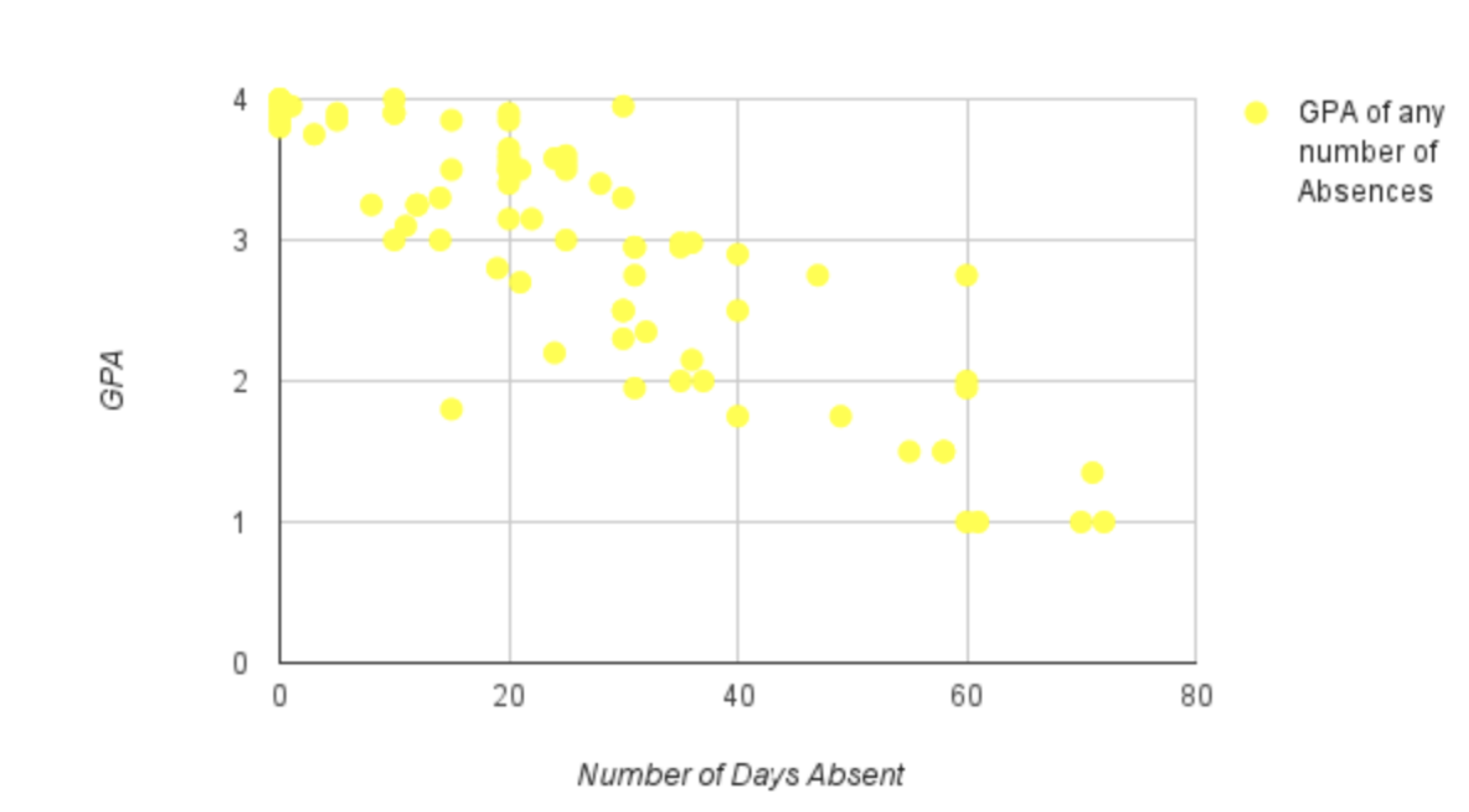
Regardless of causation, we can clearly see correlation. Here is a graph based on data of students in my university, courtesy of our Office of Academic Affairs.
Sure, there are outlier individuals who buck the trend. But overall, it’s not too hard to notice that the more classes you miss (Number of Days Absent), the lower your overall grade point average (GPA).
You can find all kinds of data and research on this important issue, including the ones listed here.
Although the upcoming Deadpool 3 movie is a loooong way from its release in theaters, fans are still excited for any news.
The BIGGEST reveal came recently with a sneak peek photo of the film’s two stars, Ryan Reynolds (Deadpool) and Hugh Jackman (Wolverine). Check it out!
Understandably, the BIG DEAL is that for the first time in two decades of movies, Hugh Jackman’s attire finally bears close resemblance Wolverine’s comic book costume. Nice!
Before, many fans believed it impossible to pull off a nearly all-yellow, non-ugly outfit in live-action cinema. But I admit, Hugh’s golden duds look pretty good. Chalk it up to movie magic!
This is not the first time we’ve used Hugh Jackman as a launching point to discuss teachers and teaching. Now in Part Three of our “Hughology” (trademark, 2023) we’ll use the charming Wolverine actor to reflect on teaching wardrobes.
Is yellow part of your school colors? Do you root for the the “Yellowjackets,” or “Golden Lions” or “Wheat Shockers?” If yes, then by all means, go for it. Especially on game days. Who cares if yellow is a bad match for your complexion? Show your team spirit!
All teachers can still wear yellow, no matter their school’s mascot. In fact, yellow is a common color recommendation for first day outfits. Both style and teaching websites give their approval (and examples, such as below).
Beyond trendy styles, there’s actual research to support adding a ray of sunshine via your threads. Fashion psychologists note how the color yellow conveys optimism, brightness, and energy. These are all great things to share in the classroom, on the first day of school and beyond.
A little bit of yellow goes a long way, however. A teacher with too much brightness and energy can overwhelm a class, whether by what they wear or how they act. Be purposeful and judicious in your appearance and behavior.
For further superhero inspiration, consider how many of the following heroes brandish yellow–sometimes a bit, sometimes a bunch–on their costumes. Instead of insignias or capes, teachers can add their own bright splashes with a necktie, scarf, jewelry, and more.
If you want to learn more about fashion psychology and superhero costumes, there’s a super-neat four-part feature at Comics Alliance about different color combinations, including those shared above.
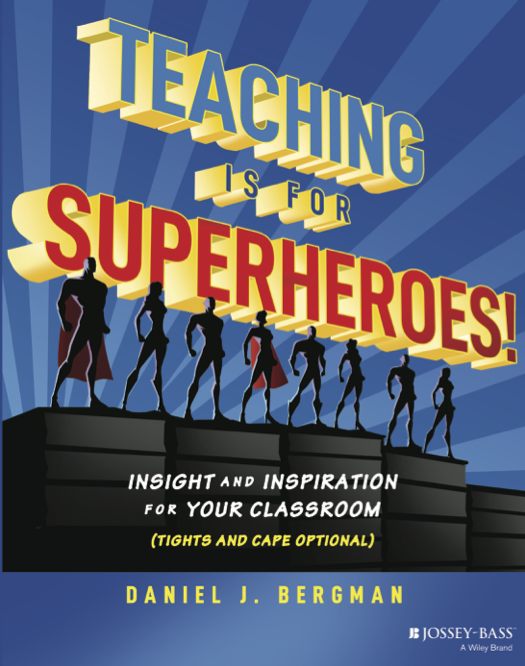
And read more about teacher attire AND teacher actions in my new book, Teaching Is for Superheroes! – NOW available anywhere online where you find GOOD BOOKS! Find out the latest at www.TeachingIsForSuperheroes.com!
(Note the savvy use of yellow on the cover – just enough to catch your attention!)
Hands down, this show is the coolest cartoon right now – on TV (Disney Channel), streaming (Disney+), OR online (full episodes available free on YouTube). The animation can get busy at times, with quick cuts, Easter eggs, and side jokes galore. But it’s a fun show, full of positive messages about family, diversity, learning and growing up, as well as at least one groovy musical number in each episode.
In addition to plenty of teachable STEM-related topics, my favorite bit is Coach Hrbek filling in as substitute teacher. Coach compensates for his lack of content knowledge by throwing out as many sports analogies that come to mind. The results are mixed (check out the 26:40 mark from the first episode HERE).
Teachers should learn from Coach Hrbek’s example: Metaphors, analogies, and illustrations can often help teach a concept. But they cannot replace authentic understanding, and can even get out of hand and create further student confusion.
(Fun Fact #1: Fred Tatasciore, who voices Coach Hrbek, is also the “voice” for Devil Dinosaur.)
(Fun Fact #2: My elementary gym teacher was also named Coach Hrbek, but we had to call him “Mister Hrbek.” Good guy.)
There’s plenty of STEM stuff in the third Ant-Man film, which takes place mostly in the subatomic Quantum Realm. More than just namedropping science-y terms, the film’s creators provide extra resources that explore science fact and science fiction. One example is this video with actor Paul Rudd and a quantum physicist, which teachers can use for a quick science primer:
The movie also features a great scene about teaching itself, during which Scott Lang tries to show his daughter Cassie how to fight with shrinking powers. Take a look:
Notice how Ant-Man attempts to teach by modeling, which is tricky when his example is too small and too fast to observe. Teachers, where do you teach by example? And what visual aids or illustrations do you need to enlarge (or slow down) to increase impact?
The connections to teaching (and science) are a bit more of a stretch for this film, but both are still there for teachers to consider. Science-wise, the main antagonist High Evolutionary does all kinds of wonky experiments that conjure conversations about genetics, “natural” selection, and bioethics.
Teaching-wise, the best lesson from GOTG3 is to remember the “little things” amid the bigger backdrop. Shortly after the movie’s release, Amelia Emberwing of IGN wrote an essay titled, “Guardians of the Galaxy Vol 3 Understands That Without the Small, the Big Doesn’t Matter.” I recommend teachers read it (Spoiler Alert, of course), and consider educational parallels.
Take this quote from the essay, for instance: “[T]he real trick to these stories — the secret sauce that has made the Guardians of the Galaxy films stand out over the years — is [writer/director] James Gunn’s understanding that without the small moments, the big ones don’t matter.”
The same sentiment goes for schools. Sure, teachers have standards, assessment data, “scopes and sequences” to plan and track over multiple semesters. But more important than these “big” things are the small moments occurring on a daily basis in the classroom, cafeteria, playground, and hallways.
Lessons from mentors, family, and loved ones? Loads of that.
That last checked box is the one teachers can apply to learning and teaching. If you haven’t seen the film yet (you should), there are several special “small moments” between main character Miles and his parents and other teacher-like figures.
No spoilers here, of course, but watch the trailer below for one such instance. Across this preview’s assorted clips, listen to the dialogue coming from a scene between Miles and his mom:
Part of effective teaching (and parenting) is letting go. Let our students go off to the wider world, try things out, apply their learning, learn from mistakes, make their own decisions (and friends), make new discoveries.
Is it hard? Of course, as are ALL worthwhile endeavors.
But we can trust in our teaching. And trust in these future heroes. Start today.
On this blog, we’ve talked many times about using classroom TEASERS (notSpoilers) as a way to ENGAGE and MOTIVATE students. Travel back in time to read more about this strategy HERE and HERE.
The official release for Teaching Is for Superheroes! is still a few weeks away. But until then, you can take a SNEAK PEEK INSIDE the book!
Look for AMAZING things like Additional Praise! Table of Contents! Copyright Protections! And a preview of completely original (and creative, I might add)interior artwork melding superheroes and teachers, courtesy of Kevin Yancey himself.
We’ve talked before (HERE and HERE) about using classroom TEASERS (notSpoilers) as a way to ENGAGE and MOTIVATE students. These approaches can fit a range of instructional settings.
No matter where they fall, such strategies often include a preview, or “sneak peak,” fostering further learning ahead. They work much in the same way as Amazon’s “Look Inside” feature.
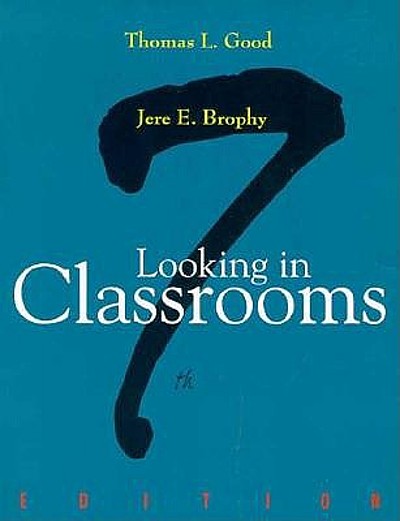
Speaking of “Looking Inside,” one of the BEST educational books out there (11 editions and counting!) is Looking in Classrooms. You can find older editions for pretty cheap, and the newest is available here on Amazon (of course), with its own “Look Inside” (of course).
Check out this book, and you’ll see chapters full of Important School Stuff like Motivation, Assessment, Management (two parts, natch), and my favorite, “Classrooms are Complex.”
Of course, if you are more of a “bottom line” sort of person, you can just skip ahead to the end of this preview and skim the Index.
You can do that for either book. And if you check out MY book’s index, you’ll see everything from “The ABCs of Classroom Management (Kovarik), 80″ (one of the first items) all the way to the very last item, “Zipper, checking, 42.”
If THAT doesn’t get you motivated to read more, I don’t know what will.