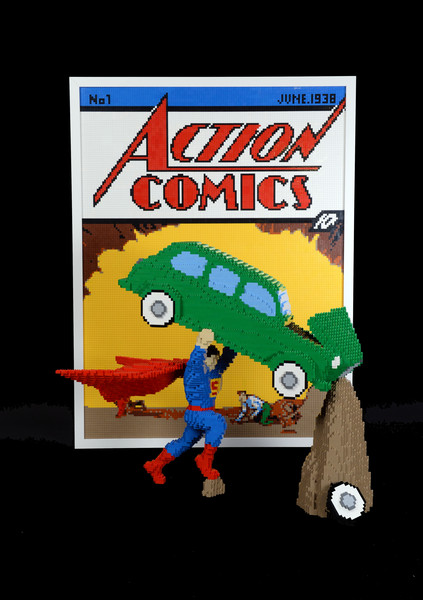
Ms. Pronunciation

Standard

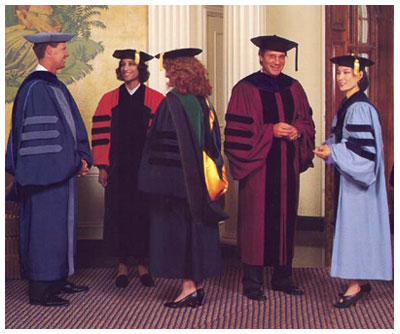
It’s graduation season, that wonderful time of year to commemorate scholarly success.

As an added perk, I get to dress up like a superhero.  (One of my students even said I looked like a Hogwarts professor – Wingardium Leviosa!)

phd gowns

Power Professors . . . Unite!

Besides Halloween, when else can someone strut their stuff in a color-coordinated, velveteen-trimmed billowy costume (i.e. regalia) without receiving strange looks?  It’s like academic Mardi Gras.

That’s Mardi Gras, pronounced “ˈmär-dē-ˌgrä.”  In New Orleans, pronounced “awr-lee-uhnz,” or “awr-leenz,” or “aw-linz,” depending on your demographics.

Pronunciations are important. How important?

With comic books being a visual medium, readers may have seen a superhero’s unique name for years but never heard it spoken out loud.  When we hear the audible title, the correct pronunciation can be surprising.


darkseidTake DC villain Darkseid, for instance.  First introduced in 1970, this big baddie predates  the Star Wars movies by several years.  But his name is pronounced “Dark Side.”  (For the longest time, I thought his name sounded like “dark seed,” which is more menacing in my opinion.)


Namor-Sub-Mariner

Or Namor the Sub-Mariner.  When I see his name, I still hear it as “submarine-r,” sounding like the underwater vessel with an “r” at the end.  (Like a trucker who drives a truck.)  Actually, the name of Marvel’s first mutant got its inspiration from the Coleridge poem, “The Rime of the Ancient Mariner,” and the emphasis is on “mariner” like a sailor or Seattle baseball player.


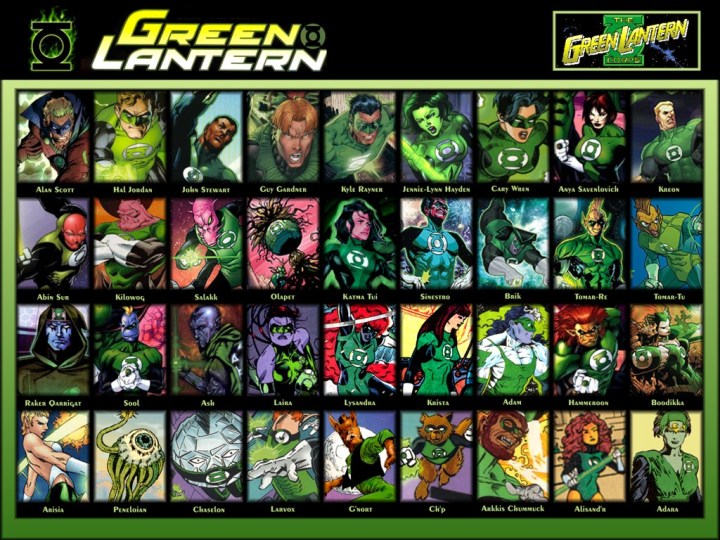
Here is an article about commonly mispronounced superhero names.  And we haven’t even talked about folks like Ra’s al Ghul, Ka-Zar, and half the Green Lantern Corps.


green_lantern_corps

Next year’s classroom portraits


Let’s not forget about all kinds of odd-sounding objects, too, like the Crimson Gem of Cytorrak, the Eye of Agamotto, or Thor’s mystical hammer Mjolnir.


Mispronunciations are not a problem exclusive to fictional characters.  All kinds of comic book creators have hard-to-pronounce names (Quesada, Nicieza, Madureira, DiDio, Lee).

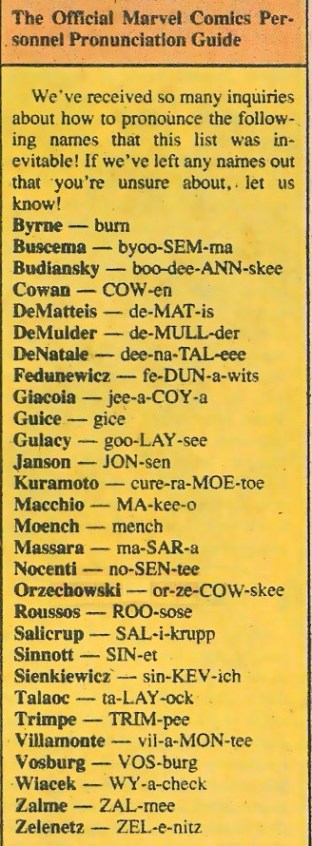
In fact, during the ’90s Marvel produced an official pronunciation guide for many of their writers and artists:

Marvel pronunciation


Most of this tongue-twisting is light-hearted.  But think of more serious repercussions in education.

graduate-student-woman-think-graduating-look-empty-area-isolated-white-background-asian-beauty-53035960


Witness the blushes and giggles (or worse, the cringes and frowns) at a graduation ceremony.  What should be the triumphant celebration of a student’s academic career becomes an uncomfortable, clumsy moment.


Consider the same unfortunate effects in the classroom.  How many students shudder at the sound of a teacher messing up their name during roll call?  This occurrence is not limited to back-to-school season, either.  Some botched names continue unnecessarily for months.

Here’s an interesting article by Ed Week about students and educators raising awareness and appreciation for diverse and difficult names.  Titled “Mispronouncing Students’ Names: A Slight That Can Cut Deep,” it tackles a lot of issues you may not even consider when reviewing your classroom roster.

What’s the worst way someone has mispronounced your name?  How do you handle it as a teacher?

Hopefully not like this:


Here’s one strategy I learned to use in my teaching:

During the first days of school, I have my students complete a handout sharing different bits of information.  One line on the form asks students to write their names as they are phonetically pronounced, as well as what the student would like to be called.

This may seem like overkill, but it comes in handy and reduces one more hurdle in promoting positive student-teacher relationships.

For instance, is Cara pronounced “Care-uh” or “Car-ah?”  Since I read her information sheet, I already know. I’ve also had students that go by middle names, initials, or something different than what’s written in their official records.

I’ll be ready when I have Mr. Mxyzptlk in class.  Will you?

mxyzpltk


Teacher Evolution

Standard

Don’t get riled up by this blog post’s title.

We’re not talking about Charles Darwin and biological evolution.  Although if you’re into that stuff, you can find all kinds of humorous imagery like this:

TrEvolMug

And if you like teacher accessories, you can snag this image on a mug, t-shirt, apron, mouse pad, and more HERE.

The type of evolution this post deals with is that of teachers (inspired by superheroes, of course).


YouTube user (and movie fan) Burger Fiction has put together some nifty videos highlighting every film and television appearance of various superheroes.

The most recent hero featured in these videos is Marvel’s Captain America, which you can watch here:


You can find similar “Evolution of . . .” clip collections celebrating heroes Iron Man, Superman, and Batman.  Each video includes vintage footage and obscure appearances alongside iconic sequences (live action and animation alike).

What I find most significant in these highlight reels, though, is the ongoing development and expansion of each character over time.  Like these heroes, effective teachers undergo change and growth through the years.

This is where the term “evolution” truly applies, going back to the word’s original meaning in the mid-1600s.  Thanks to the Online Etymology Dictionary, we know that evolution’s English origins arose from Latin “evolvere,” meaning “to unfold, open out, or expand.”

This same evolution process occurs for both teachers and superheroes.  And the parallels don’t end there.

cap am images

Like Captain America above, many teachers would rather forget some of the earliest footage of their work.  Everyone looks back at their initial efforts and cringes at what they see:

  • Sluggish transitions.
  • Awkward pacing.
  • Stilted dialogue.
  • Clumsy execution.
  • Poor methods.
  • Novice mistakes.
  • Cheesy humor.
  • And outdated fashion and technology, of course.


But observe what happens when the years go by.  As time advances, so do your abilities and confidence.  In fact, the most recent footage is downright awesome and exhilarating.

Am I talking about superheroes or teachers here?  It doesn’t matter.

Be brave and dig up old footage of your teaching.  Take a quick look and notice how your teaching has unfolded, opened up, and expanded.

Watch a more recent video of your teaching and be encouraged by your growth.  And if you find you still exhibit cringe-worthy tendencies, challenge yourself to fix those bad habits.

If you need inspiration or ideas on “teacher evolution,” here are a couple of useful articles: one dealing with National Board Certification, and another focusing on a teacher’s journey of “personal transformation” that includes burnout, pink slips, and awards.

Evolve your teaching.  You don’t need a multi-million dollar Hollywood budget, either.  Just the guts to get better.

superhero evolution

Super-Souvenirs

Standard

Last time we talked about lessons learned from conventions, whether the audience is teachers or cosplayers.


I nearly forgot one of the best rewards of attending conferences and meetings . . . the STUFF!

The swag . . . the loot . . . the prizes . . . the souvenirs.

This past weekend I participated in a state teacher conference, and I got a few of the usual convention freebies — posters, books, pens, highlighters, candy, a shirt, and more.  Someone I know even won a free corn snake!

corn snake

Take me home!


The best convention prize I ever got was a children’s book about Buzz Aldrin, signed by the astronaut himself!

buzz book


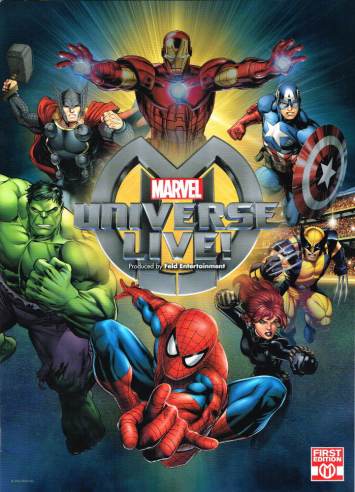
This very same weekend I came home and took my family to Marvel Universe Live!  (Think “Disney on Ice” with superheroes on motorcycles and high-wire acts.)

MUL_05_web bikes.png


The show was full of explosions, stuntmen (and stuntwomen), along with cheesy comic book dialogue. Best of all, it’s the only way (so far) you can see live-action Avengers fight alongside live-action X-Men and Spider-Man.

mc-review-marvel-universe-live-at-ppl-center-has-flaws-but-is-big-and-fun-20151016.jpg


My kids loved the show (me and the wife, too), and they also loved the souvenirs.  Just like conferences and conventions, this event had gobs of stuff to take home.  Such trinkets cost money, though.

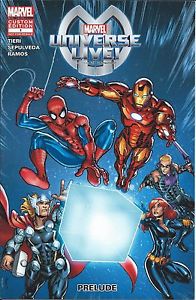
But where else are you going to get an exclusive Marvel Universe Live! Prelude Comic Book?

prelude comic


Or giant-sized Program Book (with embossed cover)?

mu_live_program book


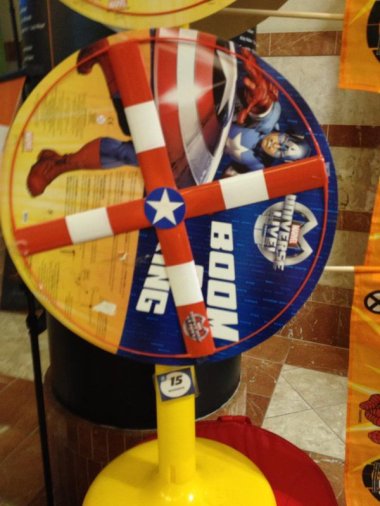
Or Captain America Boomerang?  (It works, too . . . in theory.)

boomerang


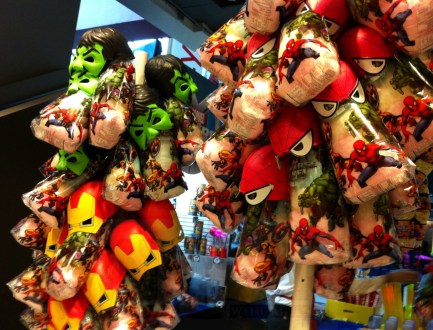
Or official Marvel Universe Live! cotton candy (with superhero mask)?

cotton candy.jpg

My family bought all of these beauties – BONUS!


Another lesson learned from this weekend is that teachers give their students an array of souvenirs over the course of a school year.  And I’m not just talking about content knowledge.

Every year, I ask my pre-service teachers to imagine their students at the end of the year.  In an ideal world, what will those kids be like?  What skills will they possess?  What traits, habits, and feelings do they have?

Elementary school pupils running outside


I’ve written about this before in a more scholarly setting. To be brief, the new teachers end up with a short list of about ten items.  The same types of traits and skills always emerge.

Teachers want students who are . . .

  • Critical Thinkers
  • Creative
  • Problem Solvers
  • Caring and Kind
  • Hard Workers
  • Curious
  • Lifelong Learners
  • Collaborative
  • Effective Communicators

And students who possess solid content understanding, of course.

School routine


Souvenirs are an important part of comic book conventions, education conferences, superhero stunt shows, and even school classrooms.

Some are free.  Others are pricy.  Cost does not always correlate with value.

What are your classroom’s best souvenirs?

Consider what “souvenirs” you provide for students over the course of the year.  Make sure they are treasures that last a lifetime.


marvel souvenirs

Con Season

Standard

This blog post is unique because I’m writing it from San Diego, where I’m attending a convention.

sdcc

No, not THAT convention – San Diego Comic-Con International – although the Convention Center is just across the street.

sandiegoconventionctr

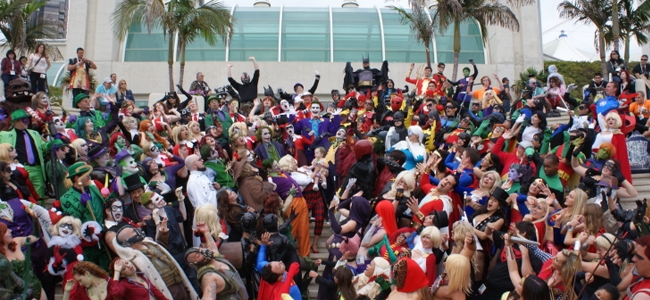
The above photo is what the Center looks like this week.  During Comic-Con, it appears more like the photo below:

san-diego-the-first-ever-comic-con-got-seriously-weird

Or this one:

sdcc-cosplayers-25697

Or this one, if you’re lucky:

Avengers_Age_of_Ultron_SDCC_2014_panel


Like I said, I’m not lucky enough to be in town the same time as Comic-Con.  But I am lucky enough to be at a convention with hundreds of other educators.

caep-con-2016-logo-w-theme

This particular “con” is focused on accreditation of teacher preparation programs.

The topic may sound dryer than San Diego heat, but it’s not too bad.  Most sessions are led by educators, who know a thing or two about engaging a crowd of semi-disinterested individuals.

Here are three take-home lessons I’ll share with you (and take home from California):

empty school room

No excitement here.

1. A convention center without fans, celebrities, and cosplayers is like a school building without students, teachers, and staff.  A brilliant building with fancy facilities is a wonderful thing to behold; but it only makes a difference when it hosts a crowd of excitable and exciting characters.


2. What convention are you attending next?   I’m not talking about a district-required in-service necessary for churning out continuing education credits.

Seek out a teacher-focused conference or convention that expands your network of colleagues, refines your thinking, and builds on your repertoire of strategies.  Better yet, sign up to SHARE a session or workshop with your professional peers.  


3. Someday I hope to visit San Diego again and attend Comic-Con.  Until then, here are some conferences I’ve attended (or will attend) recently.  Check one out, if you’re interested.  Or find something else that more closely matches your field of expertise.

-Kappa Delta Pi International Educational Honor Society Biennial Convocation

-National Science Teachers Association Regional Conference

International Meeting of the Association for Science Teacher Education

-Kansas Association of Science Teachers “KATS Kamp” Conference

-Council for the Accreditation of Educator Preparation Spring Conference


Where are you going?

You don’t have to attend a “con” somewhere far away or expensive.  Most of those I go to are within driving distance, and many times you can pay a discounted fee to attend only part of the convention.  In most cases you get what you pay for, though, and it’s healthy to expand your horizons beyond your home district or state.


Find a super group of teachers to encourage and educate you – and you can do the same for them.  They’re waiting for you!

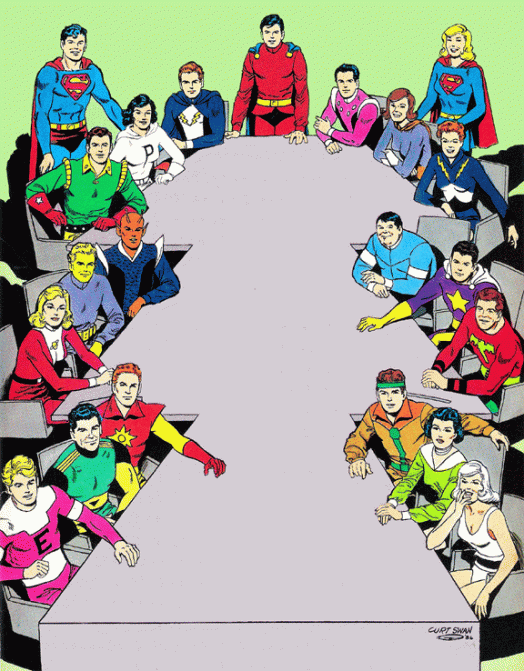
legion at table


Silent Issues

Standard

nevergetawaywiththisballoons

Last time we examined the topic of “Word Balloons,” with the focusing on how teachers sound when they speak in classrooms.

dp failed me brain

Spoken in a classroom somewhere.


This time let’s go further by considering how teachers look during their interactions.  I’m not talking about how teachers dress, although that is an important issue and one we’ve already addressed (summary: keep it functional, simple, conservative, and non-CGI).

Teacher appearance, in the present case, refers to the outward actions and mannerisms displayed during classroom instruction.  These non-verbal behaviors include facial expressions and body language–the unspoken communication that accounts for up to 93% of all human interactions (Mehrabian, 1968).


Ray-Park-GI-Joe-2-Snake-Eyes

With the topic of voice tone (word balloons), our inspiration was Marvel’s mouthy antihero Deadpool.  It’s only fitting that our model hero for unspoken behaviors is the mute commando Snake-Eyes of G.I.Joe fame (Hasbro’s toy-line featuring military super-heroes).

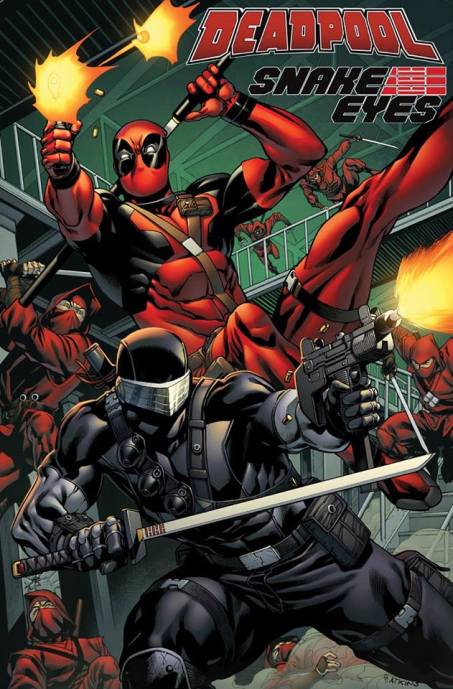
Despite being on opposite sides of the dialogue scale, Deadpool and Snake-Eyes share similar skills and accessories. Interestingly enough, G.I.Joe artist Robert Atkins recently shared a mock-up image depicting these two fan-favorite characters.

deadpool-snake-eyes-cover


One of the most celebrated G.I.Joe stories is from Marvel’s original comic book series, issue #21: “Silent Interlude.” This tale is famous because it features absolutely zero dialogue or sound effects.

The adventure follows Snake-Eyes on a rescue mission to save Scarlett from Cobra and a castle of ninjas, including Storm Shadow.  (If that previous sentence doesn’t excite you, you’re not a child of the ’80s.  And you missed two major characters’ backstory revelation in the issue’s last few panels.)  

gijoe 21 cover


Below are a few sample pages. Notice how writer/artist Larry Hama conveys a range of motions AND emotions with expressions and movement.

Take a long, close look and enjoy the silence.

interlude 3.png

interlude 4

G.I. Joe Classics vol 03p021


interlude3


This “silent issue” is not just a gimmick.  It became so legendary, in fact, that the format has been repeated a few times in the G.I.Joe comic series as well as other titles, including a Deadpool parody and even an entire month called “‘Nuff Said,” where all Marvel comic book titles featured silent issues with no dialogue or captions.

This slideshow requires JavaScript.


Teachers typically don’t fight off ninjas hordes in silence, but we can foster powerful connections and teachable moments with unspoken behaviors.

What do these look like?  Here are some example “non-verbals:”

  • Moving back and forth among students.  Avoid prolonged, stagnate standing in one spot (especially the front).  Closer proximity garners more attentive students and decreases likelihood of off-task behaviors.

teacher at a student table


  • Open arms and hands inviting student input (as opposed to crossed arms, which convey defiance or disinterest).

open arms teacher 2


  • Counting on your fingers to show you expect answers and ideas from multiple students.

teacher counting on fingers.jpg


  • Nodding your head to acknowledge student contributions without using excessive praise.
  • Leaning toward students to express curiosity, but not looming over them in a dominating or threatening way.
  • Lowering your chin or cocking your head to one side to communicate concern and interest.

teacher eye contact


  • Sitting or kneeling down at the students’ level to show cooperation.

teacher at st level.jpg


  • Using appropriate lengths of eye contact with students, while avoiding prolonged and awkward stare downs.

teacher looking at student.jpg


  • Smiling!  If you enjoy teaching, show it.  (Again, avoid prolonged and awkward grins.)

teacher leaning smiling


For any teachers doubting the power of unspoken behaviors, posture, and expressions, I present the following challenge:  Watch a video of yourself teaching with the volume muted.  

Ask yourself what unspoken, but clearly presented messages you convey to your class.  How do you come across?  Are you respectful?  Are you confident and caring?  Are you happy to be there?

Look closer at your students and study their non-verbal behaviors too.  How much do they engage in the lesson?  How do they treat each other?  What can you learn from them?

students bored

How many students are engaged in learning?


Better yet, don’t wait for a video to notice these things.  As you teach, pause and survey the classroom to pick up on students’ mannerisms, posture, and expressions.  Take a moment and consider what you are communicating through these same behaviors.

Here are a few resources for further reading and ideas:

1. “Good body language improves classroom management” article by Teal Ruland, National Education Association

2. “Using effective body language to establish relationships with students” video by the Teaching Channel


Need more practice?  Try out your expressions and mannerisms in front of the mirror.

practice-in-front-of-mirror

Keep practicing, buddy.


Whatever you do, work to express warm, welcoming messages through your body language.  Your students will soon respond in kind.  Whether spoken or unspoken, every interaction counts.


Word Balloons

Standard

The latest superhero flick is Deadpool, which is making news for its “hard” R-rating for humor and violence.

If you don’t know much about Marvel’s “Merc with a Mouth,” here is a fun tutorial courtesy of artist Ty Templeton.

deadpool-four-panels-websize

The movie itself is doing great commercially and critically, even getting approval from Betty White herself.

bettywhitedeadpool


I’ll bypass seeing the film in theaters, waiting for a toned down, broadcast-friendly version on TV.  (But from the sound of things, a cleaned-up edited version would last about 15 minutes.)

The “sound of things” is actually the topic of this blog post.  Specifically,

What is the sound of your voice?

We’ve talked before about the importance of what teachers say in the classroom (namely questions).  But it’s also important to consider how you say it.

What’s your tone of voice when you talk in class?  How loud?  How fast?  How much variety?

In comic books, characters speak in “word balloons” (or “speech bubbles”), and it’s fascinating to notice the unique techniques creators use to convey dialogue on the page.

variety-of-speech-bubbles


Just like people, comic book heroes have unique voices, and letterers (the folks who draw word balloons) often use specific styles for particular characters.

For instance, Deadpool always speaks (and thinks) in yellow word balloons.  No one is sure what it’s supposed to sound like, aside from a mix of sarcasm and crazy.

deadpool-yellow-boxes


Take a moment and consider what your words would look like if someone drew balloons around them.

Are you snarky to the point of annoying?  (Do you need to tone it down?)

deadpoolyellowdisplay


Or maybe you’re more robotic, like the android Vision.  (Should you add more emotion?)

VisionBuckler1972 2


DC/Vertigo’s Sandman hero Dream (a.k.a. Morpheus) talks in wavy inverted speech bubbles.  (Are you putting your students to sleep?)

Sandman1


Or does your voice reflect the tenor of Ghost Rider, Marvel’s Spirit of Vengeance?  (To quote Educator Harry Wong, remember to stay “calm, real calm.”)

ghost rider balloon


Some teachers start quiet and docile, not maintaining healthy classroom boundaries.  And then when students get too far out of control, these teachers release a verbal attack like Marvel’s Inhumans hero Black Bolt.  (Deal with the small things sooner, so you don’t have to explode.)

bolt 1


Eric Wong at the Sequart Organization wrote a nifty article about the different ways comic books communicate sound.   As you examine these examples, think about the sounds in your classroom.  What is helpful?  What is hurtful or distracting?

Teachers should record their classroom instruction and interactions from time to time.  You don’t have to sit down and watch an entire lesson.  Just listen to a few minutes and notice what your students actually hear.

Acknowledge the fact that nobody likes the sound of their own voice.  (Blame science.)  But who cares?  Either out loud or in your head, ask yourself,

“What can I do to sound better?”  

Here are some ideas:

1. If your voice is monotone and flat, study television news anchors to learn about adding variety in pitch. (And drink more coffee.)

2. If you have a tendency of erupting, take a deep breath and stay calm (but firm).  (And eat more chocolate.)

3. If you have a snarky streak, save it for open mic night at the comedy club.  Students respect teachers who show them respect first.

solid word balloon


So whatever kind of “word balloons” you use in the classroom, make sure they fit the space and focus on learning.

word balloons


Secret Hideouts

Standard

In our previous post, we talked about getting along with your fellow teachers.

On some occasions, the best method to maintain positive relationships is giving yourself some space.  “Lying low” is one way to think of it.  In order to lie low, you need a secret hideout.

Recently, images of hero hideouts have appeared in previews of upcoming movies.

batman-v-superman-batcave-2

First, we have news from Entertainment Weekly about the new Batcave appearing in Batman v Superman: Dawn of Justice (BvS:DoJ).  Jacob Hall at SlashFilm.com describes this hideout as “swanky” and “full of flashy technology and design choices that a proper billionaire would make.”  He also provides a nifty comparison with Batcaves from the 1989 Batman film (Tim Burton, Michael Keaton) and 2005’s Batman Begins (Christopher Nolan, Christian Bale).

Next, Marvel provided concept art of the Sanctum Sanctorum, appearing in the movie Doctor Strange.  Though not as well-known as the Dark Knight’s Batcave, Doctor Strange’s hideout includes just as many gizmos and trinkets–albeit on the magical side.

Strange Sanctorum.jpg


Whether you’re a teacher or a superhero (or both), a good secret hideout serves two main purposes.

First, it’s a place to keep all your stuff.  Teachers are known as perpetual pack-rats.  Those fortunate enough to have their own classroom can keep a regular supply of tools and resources within immediate reach.

Of course, be sure you keep items organized and secure, especially when it comes to valuable and hazardous materials.  When I taught chemistry, I always kept my chemical closet locked, opening it only when I had to retrieve something.  Students were NEVER allowed to enter, or even stand in the doorway.

Call me a little overprotective or OCD, but I never had a student lose a finger (or thumb).

MSC1401A


Unfortunately, the teacher maxim to “beg, borrow, and steal” often results in bulging file cabinets and saturated bookshelves.   For most teachers, the classroom is not their second home, but their second storage unit.

If you don’t want to rent a third storage unit, take time to thin out your collection.  What materials and equipment do you truly use?  Gather all non-essentials and dust-collectors and give them to new teachers hungry to fill their room and repertoire.

classroomclutter1

That chapter test is in here somewhere . . .

Don’t delay your purging until Spring Break or Winter Break or Summer Break.  (Honestly, those breaks fill up with other essential tasks.)

Take a few minutes every week or so to stroll past a shelf or peek into a closet.  If you see something you haven’t used in over a year, pluck it out.  Find a better use in someone else’s hands — another teacher, student, Goodwill-collector, garbage-collector, etc.  (Maybe check with your boss first.)
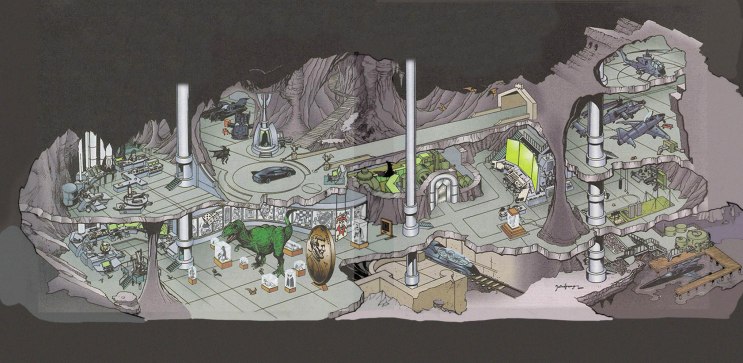
Batcave_1999

If Batman ever decides to donate his dinosaur, I’ll take it!


In addition to improving safety and equipping others, cleaning out clutter results in a more tranquil classroom.  This is a bonus for students and the teacher. Less junk means fewer distractions during learning time, planning time, and quiet time.

empty classroom

Ahhh . . . Paradise!


Primary purpose #2 for secret hideouts is providing a space to relax and unwind.  Doctor Strange’s Sanctum Sanctorum is described as his place to “escape from this reality.” Sounds nice, doesn’t it?

sanctum


Maybe you can’t escape reality, but every teacher needs daily moments to himself or herself.  These slivers of quiet time don’t have to be lengthy.  Plan periods typically fill up with trips to the copier, chasing down students and staff, catching up on emails, and more.  You may have a few minutes, but don’t plan on it (especially if you’re relatively new).

I mentioned lying low from time-to-time (again, especially if you’re new), and one of the best ways I found to do this was eating lunch in my empty classroom — door locked, lights off, maybe some soothing music playing in the background.

dark classroom

Ahhh . . .  Peace and quiet!


I didn’t always do this.  In fact, at my first school I typically spent my lunch hour (i.e. 20  minutes) shoveling food down my gullet in the teachers’ lounge.  The lounge was closer to the cafeteria — when you’re a bachelor, cafeteria food is tasty, easy, and cheap — so I found a spot among my colleagues and ate while they gabbed.

I was so busy eating, I didn’t have time to talk.  All that quiet listening gave me tremendous insight about students, staff, school history, and more.

But every once in a while, a dismal mood would hover over the staff lounge.  That’s when I hoofed it back to my classroom for silent dining.  For fifteen minutes, I had entered my personal Fortress of Solitude.

fortress-of-solitude-superman


Not all teachers have a classroom to call home, however.  In such cases, it’s vital to understand that a secret hideout doesn’t have to be a permanent area.  Maybe you can find a closet or hallway nook for a temporary respite.  (Schools are full of interesting little spaces.)

Superhero hideouts come in all shapes and sizes, spaces and places.  Take a look at Newsarama‘s list of the Greatest Superhero Hideouts and Headquarters.  You’ll see everything from skyscrapers to satellites, mansions to alleyways.
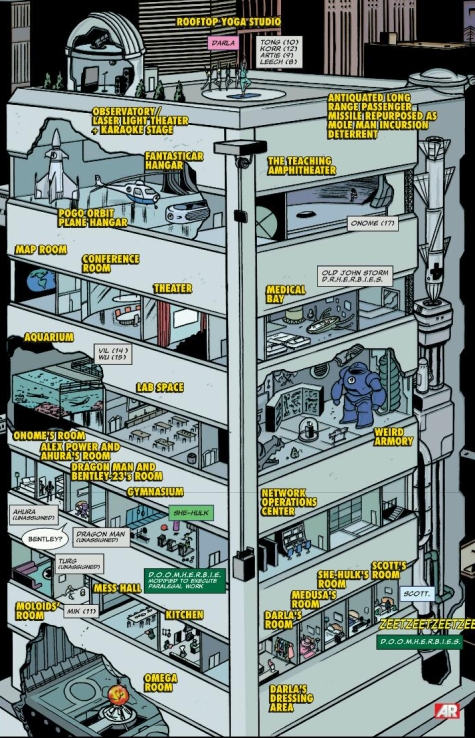
 

BaxterBuilding.jpg


Perhaps it’s more accurate to think of a secret hideout as a state of mind.

When I began teaching, I lived two blocks from school and walked everyday to work.  My students repeatedly questioned why I didn’t take my car.  I usually answered that driving isn’t all that new and cool after you turn 20.

Honestly though, the brief, brisk morning walk energized me.  And the journey back and forth was always time well spent, giving me precious moments to preview and review my day.  So I guess my first secret hideout was a two-block stretch of sidewalk.

s_mpls_sidewalk.jpg

Some days it felt as cold as the Fortress of Solitude.


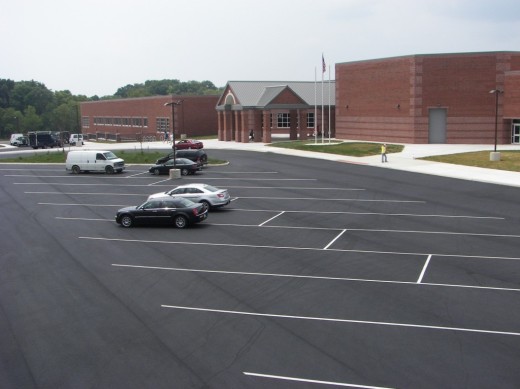
I know another teacher who drives to school, but always parks in the spot farthest from the building entrance.  His colleagues joke that he picks this spot to avoid any car dings and scratches — whether unintentional or intentional.

The real reason, he says, is so he can spend the lengthy walk thinking about an individual, and how he can make a positive difference in that person’s life that day.  He told me if there’s ever a morning he can’t come up with someone’s name, he’ll quit teaching.  That was a few years ago, but the last I heard, he’s still teaching.
school parking lot


So whatever you have for a secret hideout (and wherever it is), consider how you maintain that special space to keep it user-friendly.  And use that space to reflect, retool, and recharge in your efforts to be a better teacher.  

No Danger Room required.

xmansion.jpg


Teacher versus Teacher

Standard

The holiday season is upon us, which means it’s time to watch the latest trailers for next year’s big superhero movies.

First up is Batman v Superman: Dawn of Justice, opening in theaters March 25, 2016.

Soon after comes Captain America: Civil War, hitting the big screens May 6, 2016.

Notice any trends?  Take a look again at these images:


That’s right folks, 2016 is the year of the superhero stare-down.

Oh yeah.  It’s also the year of superhero versus superhero.  Sounds fun, yes?  (Almost as fun as a stare-down contest.  Hulk make puny human blink!)

Heroes fighting heroes is nothing new.  They’ve been doing it in comic books for decades.  That’s how Wolverine and the Hulk first met, back in The Incredible Hulk #181, published November 1974.

hulk wolverine first meet

Fighting is how Wolverine and the Hulk meet a lot of folks.

Marvel and DC Comics have occasionally joined forces to have their heroes fight it out, most memorably in 2003-2004’s JLA/Avengers mini-series.

JusticeLeagueVsAvengers1


Some of the previous films have already included minor skirmishes, too, such as Iron Man and War Machine in Iron Man 2 (life lesson: don’t drink and don an Iron Man suit).


Marvel’s “big three” heroes–Iron Man, Thor, and Captain America–first share the screen after a fracas in the first Avengers movie:


Then we also have Iron Man vs. Hulk in the second Avengers movie (Age of Ultron), which kicks things up a notch.


There’s no mystery why these fights occur.  Heroes duking it out with each other is loads of fun to watch.  And most of the time, they eventually work out their differences to defeat the REAL bad guys.

Heroes versus heroes is dangerous and entertaining, and the same is true for teachers versus teachers–but not in a good way.

Given the pressures involved with teaching, disagreements are bound to arise from time to time.  We don’t always see eye-to-eye when it comes to assessments, curriculum, scheduling, resources, management and discipline, and more.  Heck, there may even be some colleagues in your building or department that rub you the wrong way.

As teachers we must not allow friction to fester.  Ongoing bickering is noticeable and results in classroom snickering. Dampen combustible situations with grace and good-natured humor.  “Lie low” when you need to.

Resist the urge to blow off steam in front of your students. Avoid any gossip or rumor-mongering by students and staff alike.  Speak highly of your colleagues in front of others, pointing out strengths and past successes.

teacher_colleagues_getting_along

Here are some other resources for fostering positive relationships with your co-workers:

The website We Are Teachers has an eye-catching blogpost entitled “How to Get Along with ANY Teaching Colleague (From the Whiners to the Kiss Ups!)”  Of course, it’s important to consider what kind of colleague you become on your not-so-good days.  Personally, I’ve been known to be the “negative Nancy” (Ned) during grouchy times.

The Association of Teachers and Lecturers (of the United Kingdom) has a helpful guide for new and beginning teachers.  Some useful advice includes “staffroom etiquette” and what to do if you have concerns about colleagues.

The National Education Association (NEA) provides ideas for building collaboration in your classroom via co-teaching.  Instead of negative energy, co-teaching harnesses positive teacher relationships and teamwork for successful student learning.

For a more in-depth examination, take a look at the book Teachers Working Together by Mario Martinez.  For a quick view, You can find excerpts here courtesy of Google Books.

4113_martinez_TWT


Hopefully these resources will provide you with inspiration and information on getting along with your fellow educators.

And if it’s just inspiration you need, remember the current holiday season and do your part to bring . . .

Chalk_Peace_on_Earth


Building Blocks

Standard

If you’re near Sydney, Australia, and enjoy LEGOs and superheroes (who doesn’t?), then check out The Art of the Brick: DC Comics exhibit at the Powerhouse Museum.

theartofthebrickdccomics logo

Here is a Powerhouse blurb with more details:

Created by legendary LEGO® artist Nathan Sawaya, this contemporary art exhibition uses hundreds of thousands of bricks to create large-scale sculptures of the most enduring Super Heroes and Super-Villains: from Batman, Superman and Wonder Woman, to The Joker and Harley Quinn. It will be the world’s largest collection of DC Comics-inspired LEGO artwork, ever!

If that doesn’t excite you, here are some nifty samples of this “contemporary art,” useful examples for art teachers to show their students:


Here is more information from Newsarama, and here is a cool-tastic video clip with even more sculptures:

All of this heroic brick building reminded me about an activity I use in one of my teacher education courses.  It’s called “Classroom Jenga,” and I got it from a graduate school colleague (VandeHaar, 2006).

The basic premise is that a classroom is just like Jenga, “the classic block-stacking, stack-crashing game” where you take turns pulling out wooden blocks from a tower until the entire structure comes tumbling down.

jengablocks

For the classroom illustration, each block is an ingredient needed for a successful lesson.  In the version I use, example blocks are labeled with different classroom components:  “cooperative groups,” effective questioning,” “eye contact,” “appropriate materials,” “student management,” “time management,” “enthusiasm,” “a good night’s sleep,” and such.

As blocks are removed, the classroom lesson tower can remain standing for a while.  But every missing block makes the lesson a little weaker.  Finally, the tower (lesson) becomes so unstable that it falls with an item’s removal.

The analogy is that when teaching, you can have a few “holes” and missing parts.  Maybe you aren’t asking enough thought-provoking questions.  If the topic or activity is engaging enough, the students can probably still find meaning from the experience.

But if you aren’t asking good questions, and you have off-putting non-verbal behaviors, AND you aren’t managing the students to keep them on-task . . . that’s when your lesson falls apart with disastrous consequences.

jenga-falls

That last block was “a good night’s sleep.”

Of course a simple Jenga game doesn’t exactly match the actual complexities of a classroom.  But it does make you stop and think about all of the components needed for successful lessons.  If a lesson isn’t working, maybe it’s because you have too many holes.

WB Wonder Woman Cubed Art of the Brick_6BC2BA70-29C8-11E5-B09906EE95C51C2D

The challenge is discovering which holes exist in our classrooms.  It could be a simple fix like adding more illustrations or examples for a specific concept.

Or it could be a gaping cavity present throughout one’s teaching.  Something like pleasant facial expressions to convey kindness and warmth.  Or a metaphorical backbone to address misbehavior immediately and respectfully.

Whatever the case, work to fill your classroom holes and keep all the pieces connected.  With careful construction, your lessons can truly become beautiful works of art.

art_brick_action_comics


Reference:

VandeHaar, A. (2006). Let’s Jenga! Presentation at the Annual Meeting of

the North Central Association of Science Teacher Education. Eau Claire,

WI: October 5-7.

Super-Rich

Standard

i am batman

When it comes to superheroes, a lot of people claim they relate the most to BATMAN.

It’s not the tragic orphan story or fascination with flying mammals that builds the bond.  Rather, it’s the fact that Bruce Wayne is a “normal guy” like the rest of us.  He’s no alien, mutant, or mystical being with special powers.  Instead, Batman saves the day using sly sleuthing skills, martial arts, and handy homemade gadgets.

I don’t know about you, but my detective prowess and hand-to-hand combat skills are so-so, at best.  My weakest link to Batman, however, is in my lack of gadgetry.  (I don’t even have a smartphone.  Guess I’m more like Captain Caveman.)

capt caveman

Bat-Rich

Recently, “comic historian” Thaddeus Howze did some detective work of his own and estimated the cost of Batman’s crime-fighting technology.  It’s a nifty little article with a breakdown of every gadget used by the Caped Crusader, including his cape made of memory cloth polymer.

cost of being batman

What’s the final bill?  Totaling up every batarang, bat-vehicle, bat-cave amenity, and bat-salary (Alfred don’t work cheap), Howze estimated the cost of being Batman at around $682,450,750.

So for anyone making over half a billion dollars, your dream of donning the Dark Knight’s identity is within grasp. The rest of us “regular folks” will have to live vicariously through our Batman toys or video games.  Or both.

LBatmanTVG

Teacher-Rich

Teachers need gizmos, too, which we give fancy names like “instructional technology,” “curriculum materials,” “educational manipulatives,” and the like.  Unlike Bruce Wayne, we don’t spend from billion-dollar bank accounts.  One year a biology teacher told me her entire department’s annual budget was $600.  (That buys you about twenty frog dissection kits, which by their very definition are perishable goods.)

For a lot of teachers, we purchase classroom supplies using our own money.  A 2015 Horace Mann Educator Survey found that 57% of teachers spend at least $200 of their own money on classroom materials every year (14% spend $600 or more).

Furthermore, 80% of responding teachers said they have abandoned projects because of a lack of funds.  (“Abandoned” is a strong word, like Batman would give up on nights he ran out of smoke bombs.)  I suspect many teachers found cheaper, alternative projects.  Of course, there are many ways to seek additional financial support at local levels (fundraisers, community drives, etc.) as well as through worldwide services like DonorsChoose.org.

DonorsChoose_org_logo

Money, while helpful, is far from the most important element in cultivating successful classrooms and making a lasting impact.  To elaborate on this point, let’s look at an example from the world of sports.  (See?  I’m not completely nerdy.  Or maybe just a sports nerd, too.)

Sports-Rich

sports-label-2003

The front sports page of a recent USA Today newspaper highlighted two stories side-by-side, convenient for comparisons.

The first was an editorial about football player Kam Chancellor finally agreeing to resume playing for his Seattle Seahawks team.  The Pro Bowl safety had been holding out–missing the first two games of the season–with hopes of getting a better contract.  Interestingly, Chancellor still had three years left on his current four-year contract, worth about $7 million a year.

The second sports story was much more prominent, accompanied by multiple color photos, nearly a full page of text, and a second full page photograph tribute.  The subject receiving this recognition?  The late Yogi Berra.  Headlines and highlights included phrases like “one-of-a-kind,” “true national treasure,” “American icon,” and “the sweetest man you ever met.”

yogi_berrap14

Fun fact:  The highest annual salary Yogi Berra ever received for playing baseball was $65,000 in 1957.  Compare that pay with Kam Chancellor’s, and then consider whose name we’ll remember in a hundred years.

I’m not making any claims about the value of an individual’s contribution to sport or society.  And I admit there are significant differences–different sports, different teams, different centuries.  Nevertheless, I did some calculations myself (inspired by comic historian Thaddeus Howze) and here’s what I found:

The average American median household income in 1957 was $5,000, compared to $52,250 in 2015.  Considering the salaries given above, Yogi Berra made about 13 times more than the average household in 1957; Kam Chancellor earns about 134 times more than today’s average household.

HungerGamesHeader

At this rate, we’ll be living in a Hunger Games world by the end of the century.  Tempting as it is, let’s not dwell on the excessive amounts of money given to today’s professional athletes.

Let’s focus instead on building toward a better future by investing in children:  their learning, their growing, and their getting along with others–famous or nameless, poor or rich, every man and every woman.  This is the work that’s truly worthwhile.  Heroic, even.

Super-Rich

Spider-Man and Superman

Instead Batman or Iron Man or other affluent heroes, teachers can probably relate better to middle-class champions like Spider-Man or Superman.

Peter Parker started out as a teenager just scraping by, trying to earn a few bucks by taking photos of himself in costume.

spidey photos

                Peter Parker–Inventor of the Selfie!

Superman may be a super-strong flying alien, but his day job is an office gig with bustling desk areas, broken copier machines, and bland coffee.  Not far from a teacher’s workplace, eh?

1146356-daily_planet_staff

And like Clark Kent, teachers can rely on a mostly steady paycheck.  But that’s not what makes us rich.  Remember the favorite phrase quoted by many educators:

“Teaching–We’re not in it for the income; we’re in it for the outcome.”