Future and Past

Standard

Yes, this post will discuss yet ANOTHER super-hero movie that recently blasted into theaters across the globe.  It’s the golden age for super-hero movies, so we might as well bask in it.

The latest super-flick selling popcorn and semi-satisfying critics/fans is X-Men: Days of Future Past.  Bonus points (i.e. “geek cred”) if you can name every character in the following poster:

XDOFP-poster-995c8

The basic premise of the film (and the classic comic book story it’s loosely based on) is that the future ends up being a mostly dismal place for mutants and humans alike.  Those grizzled heroes that are still alive decide their only hope lies in sending someone back in time (or at least their mind) to stop events that ultimately cause social dystopia.  Basically, they want to “reset” the world to make a better future.
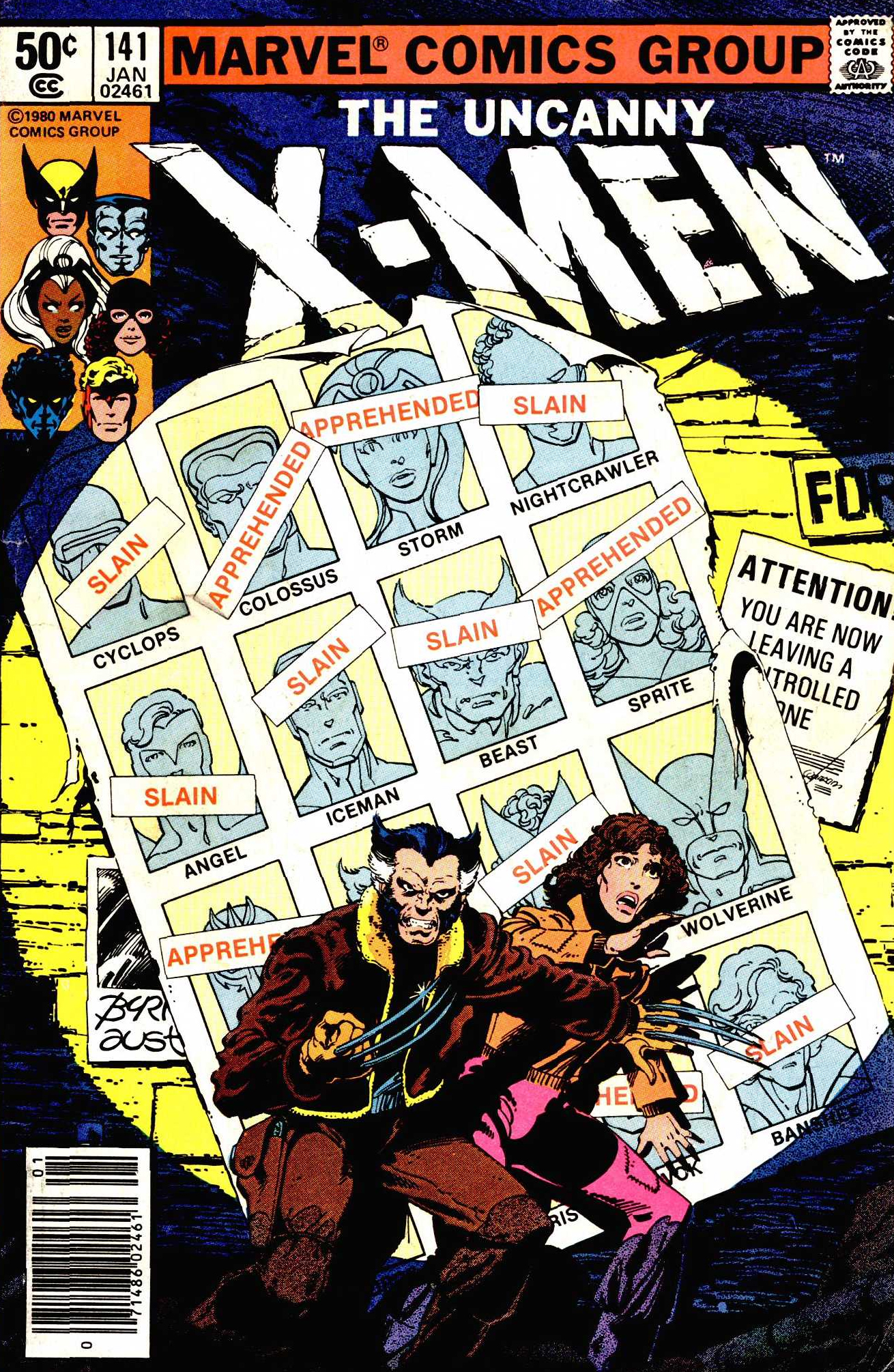
X-Men-Days-of-Future-Past-comic-cover


It’s a story that is equally depressing AND hopeful, even if the title makes no grammatical sense at all (and created a wad of continuity problems in the X-Men cinematic universe).


Even if you have no interest in time travel or mutant oppression, I do encourage you to stop and think how teachers can learn a lesson from this story.

How many of us wish we could go back in time (the start of the school year) and try again to establish a positive, productive classroom environment?


The truth is, the “first days of school” are critical to creating a climate that will endure throughout the academic calendar.  What you teach, practice, and reinforce (and what you let slide) will eventually shape the classroom setting.  It’s so important, in fact, that the best-selling teacher book of all time deals with this issue.

the_first_days_of_school book

My copy is a little more “used.”

Even though early classroom moments are so critical in establishing classroom expectations and habits, there is still hope for teachers who think they may have “lost their way” and lost their classroom to disorder and disrespect, confusion and chaos.

In fact, one of the biggest champions of this “reset” method is Harry Wong, co-author of The First Days of School.  During one of his “Effective Teacher” videos (Vol. 4), Dr. Wong describes how at the end of each day, teachers erase the classroom board in preparation for the next day’s learning.  This action should illustrate how we as teachers should view our work.

OLYMPUS DIGITAL CAMERA

Every new day is a new opportunity to “start over,” so to speak.  Even though it may be the middle of the school year, teachers can still erase past mistakes and memories and work to create a new classroom culture.  This “reset” will most likely require more than one day’s work, but we can still purposefully cultivate the type of environment we know is best for teaching and reaching our kids.  This endeavor also takes serious reflection, intentional planning, practice, reinforcement, and redirection–all in order to reestablish the classroom our kids (and we teachers) deserve.

On a larger scale, consider how the current “summer break” season is another a chance to reset your teaching expectations and actions.  Don’t stop at reorganizing your desk drawers and replacing tattered posters with shiny new bulletin board materials.  Revitalize your classroom procedures, routines, and attitudes to foster a refreshing learning environment.

The advantage to summer rejuvenation is that most of your students won’t know anything changed.  They’ll assume you’ve always been a model educator who demands excellence and champions the cause of learning.

At times, such work may seem just as challenging as mutant time travel.  But it’s definitely worth it.
 

What is Success?

Standard

Image

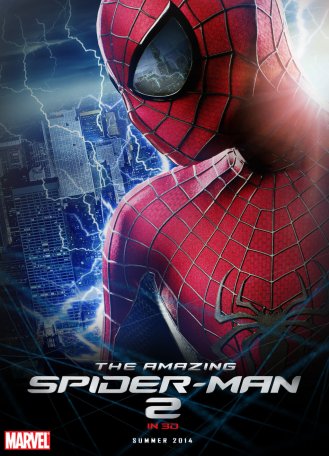
It’s not even mid-May and we’ve already got two superhero movies out in theaters, with more to come.  While Captain America: The Winter Soldier made record-breaking April box office numbers, The Amazing Spider-Man 2 recently opened and also topped the $90 million mark for its weekend debut.  Not too shabby.

Or is it?

Such an astronomical income may look, well, amazing.  But some entertainment pundits are asking, “Is it a success?

Such a question is not so strange when comparing ticket sales among similar movies, including prequels and sequels.  Another item to consider is how much money it takes to make the movie (salaries, special effects, marketing, insurance, craft services, etc.).  Making 90 million bucks over a single weekend may not seem so spectacular when it reportedly cost triple that amount to make the film.

All this talk about multimillions may have you thinking about teacher paychecks, but that’s not the real purpose of this post.

Actually, the big question “What is success?” should be asked frequently in our schools and classrooms.


Report Card Time

Recent results from the National Assessment of Educational Progress (NAEP)–also known as “the nation’s report card“–show that American students haven’t really increased their success rate in the past five years.  We’ve talked previously about how it’s important for teachers to closely review assessment data and speak out when and where they can (shameless plug).  But it’s also important to examine results and consider what is success.

The NAEP report finds that for U.S. high school seniors, less than 40% are proficient (or higher) in reading, and only one fourth (26%) are proficient or better in math.  Results also indicate that gaps in achievement among races/minorities are as wide as ever.

Ouch.  That doesn’t sound like success to me.

So many factors contribute to assessment results, more than we have time or space (or attention span) to discuss here.  But it is important to stop and determine our definition of success in schools.


Image

First off, it’s essential we not equate 100% with success.  Major League Baseball players are potential All-Stars if they get a hit one out of every three times at bats.  Babe Ruth’s career batting average was .342.  On the current list of active MLB players, the batting average leader is some guy named Joe Mauer, sitting at .322 (my apologies, Minnesota Twins fans).

I remember band directors telling us that we had to hit 100% of our musical notes during every performance, comparing our task with those slacker multimillionaires in ball caps.  Full disclosure: I never played every note perfectly during every concert.  Didn’t stop the audience from clapping.  And it didn’t stop me from playing.

Winning Percentages

Even Spider-Man himself didn’t win every comic book battle.  (It’d be boring if he did, wouldn’t it?)  According to Marvel’s own statistics, the webbed hero was victorious less than 60% of the time, just below villain Nightmare (59.4%) and above Iron Man (57.8%).  Check out the interactive and informative (and awesome) “Battle Breakdown” of Marvel Comics characters, courtesy of Wired magazine and author/designer Tim Leong.

(You should also check out Tim Leong’s website and Tumblr, along with his award-winning book Super Graphic: A Visual Guide to the Comic Book Universe, for some super-nifty graphical analyses of superhero stats.  Here’s a sample, this one a breakdown of primary colors among hero costumes:

ff_supergraphics_goodevil_2f primary colors  )


Interestingly, anti-hero The Punisher (as in “The Ohio State University”) has the highest winning percentage (86.9%, and only 2 ties) above all the other Marvel heroes.  This roster includes Captain America, Mr. Fantastic, the Hulk, Thor, Wolverine, and Daredevil.

Image

Winning Tip #1: Bring a bazooka to a gun fight.

Still, I think I’d rather be rescued by many other heroes before seeking The Punisher’s help.  It’s “Punisher” with a capital P, after all.  In his quest for vigilante justice, Frank Castle puts a permanent end to bad guys (i.e. dead), as opposed to more noble champions who abide to a higher moral code.  As teachers, we know that a little bit of mercy can go a long way.

Maybe winning isn’t everything.  Maybe success depends on context.

In baseball, 33% hitting is great.  In music, you aim for 100% (unless it’s jazz).  In civil engineering, I hope it’s also close to 100%.  I don’t want a bridge built by someone who earned an 80% in geometry.

So what is success in education?

According to the No Child Left Behind Act of 2001, the goal was for EVERY child to perform at grade level in reading and math by the year 2014.

Have we reached that level yet?  We only have half a year to go!

In one of my graduate classes, our instructor (a high school principal whose last name was Mann, so he was literally “Principal Mann!”) once told us the following with respect to student achievement:  “You can feed a donkey the best oats, give it the best trainer and exercise regimen, and hire the best jockey.  But when you race that animal in the Kentucky Derby, it’s still a donkey.”

Not every kid will be a straight-A student.  If they were, what’s so special about straight-As?  Success is different for each individual.

I remember sitting in one of my undergraduate science classes (astrophysics), and another professor had just posted grade results outside in the hall.  A mob of students clumped in front of the list, eager to learn the results.  Among the mumble and grumble, one jovial dude thunder clapped his hands and cheered, “D-plus!!!”


Success is relative, maybe.

But that doesn’t mean we can’t push each other (and ourselves) to get better.

Hopefully, you aren’t aiming for the plus side of below average.  Hopefully, you aren’t hoping for 80%.  I want all of my students to perform at a 100% level.  I know that probably won’t happen.  But it doesn’t mean I won’t try for it.

Another mentor of mine–Dr. Clough (rhymes with rough ‘n’ tough!)–used to say, “Aim for perfection, and you will reach excellence.”  

Is that optimism?  Or realism?  Optirealism?

Let’s put aside our pessimism that some kids will just “never get it” and focus instead on what they can do.  The results may amaze you.

I’m optimistic that another Amazing Spider-Man sequel will show up in the coming years.  I’m optirealistic that it’ll be good.


What is free?

Standard

Image

In honor of Free Comic Book Day on Saturday, May 3, 2014, consider the following:

“Only the educated are free.”

This nugget of wisdom comes from the philosopher Epictetus.

Image

“Epictetus” would make for a cool superhero name.  And the guy did have some heroic life experiences, if you’re curious.


You may find free comics one day of the year, but learning is free EVERY day!


UPDATE:

Free Comic Book Day occurs the weekend before Teacher Appreciation Week.  Coincidence?

You can learn more about the celebration and how/why to appreciate teachers (if you need the help) in some of the links below:

National PTA

National Education Association

Edutopia (which includes a useful essay on helping non-teachers understand what teachers do, encapsulated by the image below)

edu-shiva-teacher-multitask-2-460x345


Secret Origins

Standard

ImageThis month sees the release of Secret Origins #1 by DC Comics, and you can read more about it here and see what people have to say about it here.

DC has published versions of Secret Origins before, and the purpose is to explore and explain the beginnings of superheroes and villains. Featured characters range from iconic to obscure. So if you want to know how Ambush Bug got his start, here’s your chance!

Image


Origins typically contain two essential ingredients: 1) How you get your powers, and 2) What is your motivation?


Just like superheroes, every teacher has an origin. We all come from somewhere, contrary to what my 8th Grade Earth Science teacher Mr. Musson used to say: “Teachers aren’t born; they just . . . appear.”

The same two pieces of an origin story apply to teachers, as well.


1) How did you get your powers?


Maybe you weren’t bitten by a radioactive spider or trained in the mystical martial arts of K’un-Lun, but I bet you’ve got something that makes you special.


Most of us licensed teachers have received professional preparation of some sort. Many earned our teaching credentials after completing a bachelor’s degree in education, often with a specific subject endorsement. Other non-traditional routes include “fifth year” programs as well as an assortment of alternative licensure options for college graduates who already have degrees in something other than education. In the latter case, individuals often complete formal teacher education coursework while at the same time teaching full-time in schools.


No matter what your route, the bottom line is that you studied, practiced, collaborated, reflected, and applied important concepts and skills necessary for becoming an effective educator. (The scary thing is, some people think teaching requires no formal preparation at all, and are willing to dump anyone into the classroom just to fill a need. We could talk about this important issue at another time, and I already have HERE in a newspaper editorial, if you’re curious.)


Outside of formal preparation, many of you also learned about teaching through other means. Maybe you have a teacher as a close family member or friend, or perhaps you’ve experienced teaching through various activities like sports, church, hobbies, and more. You got the bug, so to speak, and you wanted more.


That leads us to the second part of origin stories . . .


2) What’s your motivation?


Getting powers is not enough. A lot of people have skills but waste them or use them in selfish ways, just like a lot of super-powered characters.


Every good teacher needs not only special abilities, but also a special heart and passion for the classroom and beyond.


Many of us got into teaching because we love learning and want to share that joy with others. We want to make a difference in the lives of kids and their families.


Hopefully you didn’t go into teaching because of a so-called “summer vacation” or because you thought your workday would be 8:30 to 3:30.   If either of these were reasons you entered the profession, you probably learned that teachers put more total hours in the school year than most people do in 12-month jobs. You can learn some other important statistics about the teaching career here.


Unfortunately, origin stories sometimes reveal an individual’s weaknesses as well as their strengths. For example, Superman’s not a fan of green kryptonite, which came from the blown up bits of his home planet. And Iron Man sometimes likes to hit the bottle, thanks to the fast life of his alter ego Tony Stark.


I hope you do not falter to kryptonite or alcohol, but you should still be wary of potential flaws. I’ll use my “origin story” as an example:


Secret Origin . . . Revealed!


I’ve always liked school. I like to learn. I’ve had some great teachers in my family and in my schools, so it’s probably no surprise I pursued teaching as a profession.


Here’s a rare mug shot of my first year teaching way back in 1999. It’s black and white and grainy because I had to scan it from the school yearbook. It’s wrinkly and weary because it was my first year as a teacher. (To determine if I’ve aged well, compare this portrait with a more recent one on the editorial link above.)


Image
Vintage Mr. Bergman #1

The first year was tough—it always is—but I got better. Teaching is hard work, but it is worthwhile and can be a joy, even on the tough days. You stick with it and each year usually gets easier.


How else did I improve?


I learned the intricacies of my subject matter (science) to know how concepts were connected, what analogies illustrated tough ideas, and what activities gave the best opportunities to clearly master content. I also learned about my students: what motivates them, what strengths and weaknesses they possess, and how to strike a healthy balance between firm and easy when it comes to classroom management—something that can never be overestimated.


But here’s where my “secret origin” reveals some of my weaknesses.


I like school. Many students don’t. For the most part, I was a “goody-two-shoes” throughout school. Some of my students actually thrive on creating classroom chaos. So I have to overcome my nice guy tendencies and be ready and willing to draw the line when it comes to discipline. It’s not easy, but it has to be done.


Here’s another strength that can become a flaw:


I enjoy science. Some students fear it.   When I was a kid, I found satisfaction in filling out worksheets and completing exams. I was weird. A lot of students greet homework with hostility and suffer test anxiety.
 

So as a teacher, I have to reduce resistance in my students before I can open the doors to learning. And it starts with me. I can’t assume my students are just as eager to come to class and learn about electron configuration. I have to find out what motivates them and how I can connect concepts to their lives and interests. In a way, I have to learn the secret origins of every student.


I hope this post has helped you reflect on your past and consider how it can impact your future. Do you have special training? Hidden talents? A passion that can only be served by teaching? How did it all begin?


In other words . . .


What is YOUR origin story?


Please post a comment and share why and how you became a teacher. Your story doesn’t have to involve radioactivity.

But it’d be cool if it did.


High Flying Falcon

Standard

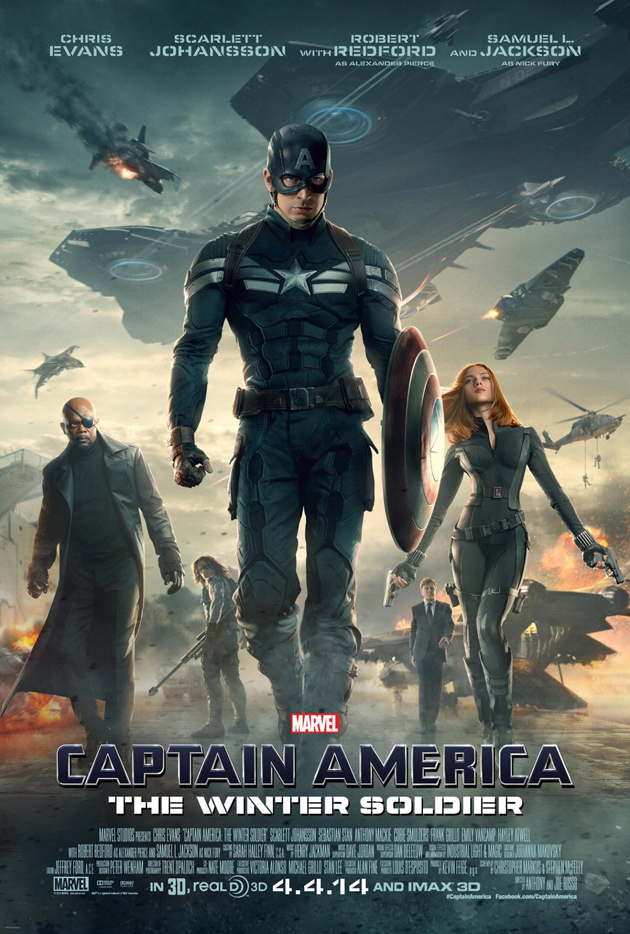
captain-america-2-poster-us-full

So Captain America: The Winter Solider celebrated a record-breaking $96.2 million opening for the month of April.  (Haven’t seen it, so don’t spoil it for me!)

But what I have seen is co-star Anthony Mackie (a.k.a. The Falcon a.k.a. A Younger Will Smith) making his memorable appearance on The Tonight Show with Jimmy Fallon a few days ago.

TheFalcon marvel-falcon_large

All teachers should see this clip, too, and take away some of the actor’s enthusiasm.

Watch Anthony Mackie egg on Bill O’Reilly at the 1:00-minute mark, and then look for the main event around 3:25, in which the actor explodes with energetic commentary of his own movie clip.

Try something like this the next time you show a video in your classroom.

Maybe tone it down a notch, so your students can actually hear important information.  And don’t curse.

But don’t lose that sky-high excitement!

(Sorry. Couldn’t resist.)

Iconic Images

Standard


A nifty cool comic book blog everyone should check out is “Comics Should Be Good” via the Comic Book Resources website.


Every once in a while, the folks at CSBG post a new entry in their “Top Five Most Iconic Covers” collection, in which they list the five most iconic covers of a particular superhero (or villain).  Neat stuff!


CSBG’s latest hero getting Iconic Covers treatment is Captain America, probably because of the upcoming release of a little film called Captain America: The Winter Soldier (coming to a theater near YOU on April 4th, 2014!).


If you’re curious, here are the top five iconic Captain America comic book covers, according to Comics Should Be Good.


If you’re doubly curious, here are MY top five covers of the StarSpangled Avenger, in chronological order:

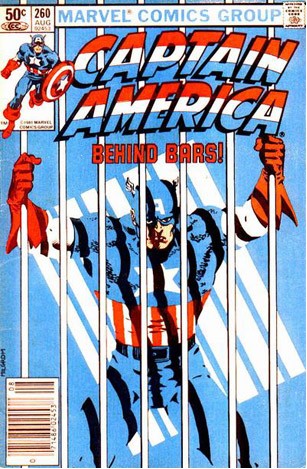
Captain America, Vol. 1, #260; cover by Al Milgrom; August 1981

Image


Captain America, Vol. 1, #332; cover by Mike Zeck and Klaus Janson; August 1987

 Image

These first two images may be downers, but they’re still iconic.

How about more heroic images?  Okay.

Captain America, Vol. 1, #450; cover by Ron Garney; April 1996

Image

Captain America, Vol. 4, #1; cover by John Cassaday; June 2002

Image


Captain America, Vol. 5, #1; cover by Steve Epting; January 2005

Image

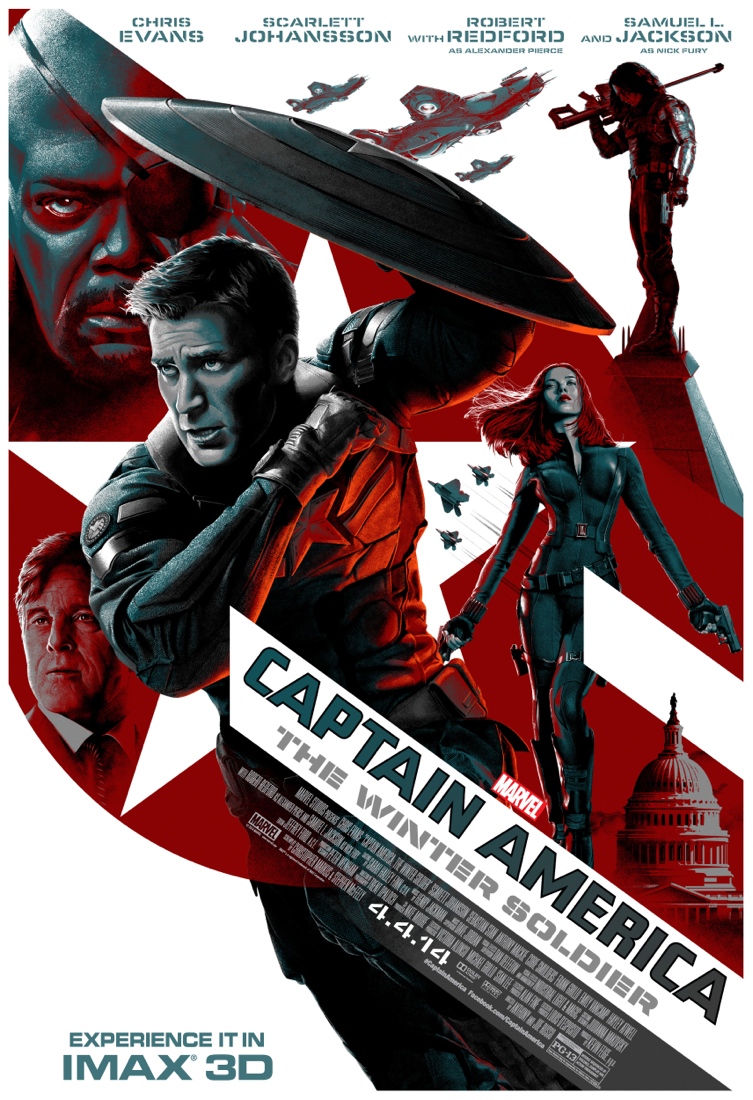
This last cover by Steve Epting encapsulates the recent multi-year run by writer Ed Brubaker, with its Jack Ryan/Jason Bourne super-spy vibe, which the new movie seems to be following. Have you seen the latest posters?

Here’s a sample, and since the poster is celebrating the IMAX release, it’s HUGE:

Image


We could talk all day about iconic movie posters, but not this day.


Let’s talk about teaching.  Namely, what is your iconic image of a teacher? 


I’ve done some research* into popular teacher portrayals in the Google Images search engine.  Since my background is in science (yes, I’m that much of a geek), I did a specific analysis of science teachers.

Here’s a sampling of what I found:

Image  Image  Image


That’s right.  According to Google, science teachers are white dudes with bad hair, poor eyesight, and lame taste in fashion–until hipsters start wearing lab coats, but then that would just be ironic fashion, not iconic.


Putting aside any ethnographic analysis of cultural imagery and stereotypical classroom depictions, here are the questions I want to ask:


What is your iconic teacher image?  What is your “look?”


Are you this kind of teacher?

Image


Or maybe this one?

Image


Or something else?

Image


I hope you’re not this last one.


Images often depend on one’s perspective, as revealed by this stunning photo collection of famous landmarks.


Consider how your students perceive you. What is your “iconic image” in their eyes?


One terrific way to gain perspective is video recording your teaching.  Recording technology is nearly ubiquitous these days, so use your favorite gadget.


No one needs to watch your recording except you. That alleviates any concerns about privacy, and more importantly, you can take an honest look at yourself.  If you don’t have time to record or review an entire class period, just focus on five minutes of a lesson. I guarantee you’ll learn something about your teaching and your students, giving you ideas for enhancing instruction.


Make it habit to record and watch yourself from time to time.  It’s one of the best ways you can get better.


Who knows?  Maybe your teaching will even reach “iconic status” (in a good way).


*Bergman, D.J. (2013). The portrayal of science teachers found in Google Images and implications  for science teacher education. Paper presentation at the International Meeting of the Association for Science Teacher Education. Charleston, SC: January 9-12.

You are not alone

Standard

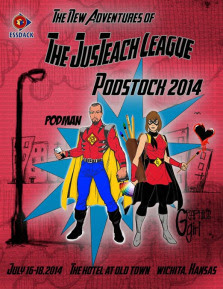
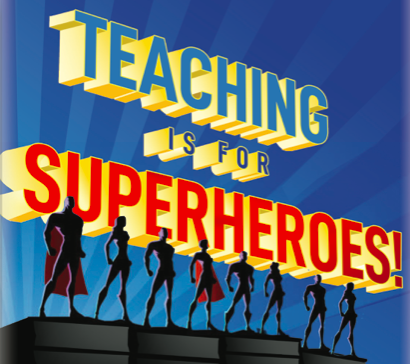
An encouraging reminder that there are many other super-teachers fighting the good fight.

Take a look:

justeach

JusTeach League

Love it!

This gem comes from the folks behind Podstock, a “tech integration conference” for educators in Kansas, the adoptive home state of Superman.  (Not bad!)

Learn more about Podstock here.  Go for it!

Superhero Therapy

Standard

The title of this blog entry may have you thinking that superheroes need therapy.  And, in fact, most probably do.

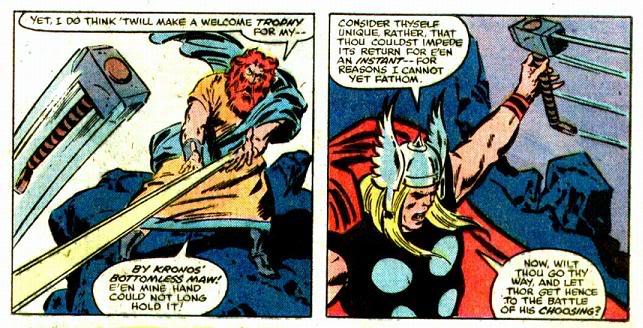
Who else dresses in a mask, tights, armor, and/or a cape and dives into danger at the drop of a hammer*?

ThorMjolnir100-SummoningAnnual08

*Or in Thor’s case, the drop of Mjolnir—which can magically zip back into his hand à la Harry Potter’s Accio summoning charm. (Handy!)

Therapy for superheroes is something in definite need of attention.  And a clinical psychologist actually has done some work on this, which you can read about here.

Check it out and then return here.


Back yet?  Good.

The news story that inspired THIS entry is actually about how therapists have been using superheroes (and other geeky things) to help kids and adults.  You can read the original story at The Daily Beast’s website.


Done?  Okay, let’s talk about teaching.

But first let’s talk about Doc Samson, who’s both a superhero AND a therapistHow cool is that?

DocSavage

Crackin’ skulls . . . Freudian style.

The good doctor is a “gamma-irradiated friend, rival, and psychiatrist of Bruce Banner.”  Dr. Bruce Banner is, of course, better known as the Incredible Hulk.

Doc Samson therapy

Doc Samson first appeared in The Incredible Hulk #141 back in 1971, and does most of his adventuring alongside (or against) Marvel’s Green Goliath.

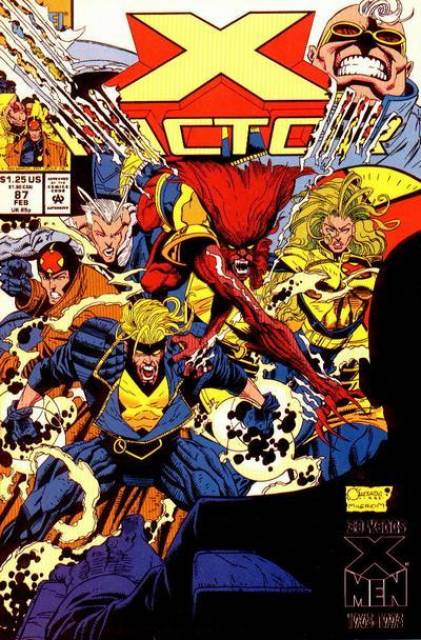
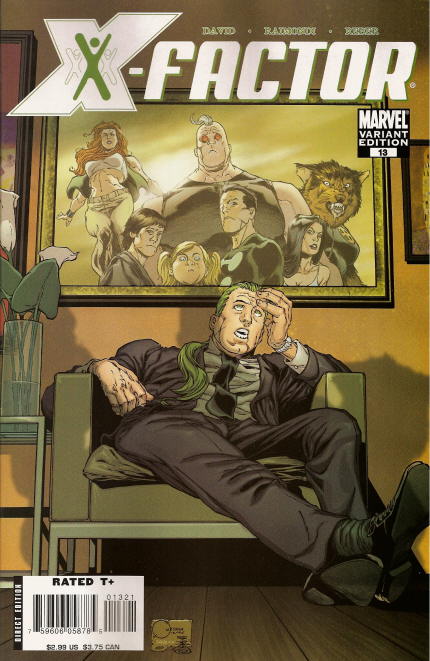
The most memorable Doc Samson stories, however, feature him sitting in his psychiatrist chair.  Such therapy sessions include two of the best issues of X-Factor.

x-factor 87                      X-Factor_Vol_3_13_Variant

Take a gander here and here to glimpse into the inner lives of B-level mutants.


NOW let’s talk about teaching.

Where does superhero-themed therapy fit into the classroom?

Consider why kids (and adults) respond so well to superheroes for therapeutic treatment.  These icons of hope and heroism provide an outlet through which individuals can express their own doubts, decisions, and conflict in life.

And it’s not just comic book characters, either. The Daily Beast feature puts it this way:

“We’re all aware of the basic transformative properties of popular culture——namely, its ability to cheer you up, to make you laugh, and to make you cry.”

If therapists can use such elements to connect with their patients, imagine the power of linking popular culture with learning.


Teachers don’t have to cater to every student’s craze or hobby.  And we shouldn’t dilute or distort the content in a lame attempt to appear “cool.”

But we can pay attention to our students’ lives and watch for ways to relate our subject to their interests.  This is especially helpful with challenging and abstract topics.

(Do your students struggle with primary/secondary light colors and pigments?  Try using examples from the Green Lantern and the rest of the Emotional Spectrum heroes.)

GL emotional spectrum

Colorful and Educational!

These examples don’t have to be from superheroes, geek culture, or popular media.  Students are diverse, as are their interests–sports, music, literature, the visual arts, traditions, and more.


There are times when teachers feel like we must be our students’ therapists.  And there are times when we need some therapy of our own.

But at all times, we can make learning memorable and meaningful.  One way to do that is by using illustrations and stories from pop culture.  Superheroes are prime candidates for this job.

(As soon as they get out of therapy.)

Extreme Makeovers

Standard

new gr with car

Marvel Comics is redesigning Ghost Rider for an upcoming series, which you can read about here (courtesy of http://www.newsarama.com).

Personally, I think the new digs look like the Japanese manga/anime series Bleach more than any American comic book hero/anti-hero.   See the resemblance?

Bleach_125 Raw 051    GR_FinalBustShot_TraddMoore

I see that both Bleach’s “Soul Reaper” and the Ghost Rider’s “Spirit of Vengeance” may need some ointment.  Or maybe some Maybelline.

This latest superhero redesign has inspired Newsarama writers to revisit their list of Top 10 Superhero Extreme Makeovers–The Good, the Bad, and the Super Ugly.

Superhero makeovers typically last less than a year before the hero/heroine returns to his/her iconic design.  Usually, the change coincides with a slight bump in sales and fan interest (or outrage) before things return to normal (i.e. Electro-Superman, Beard-n-Hook-Aquaman).

superman makeover                    aquaman makeover

Have you noticed any parallel with teaching yet?

Fads come and go, but quality teachers base their decisions on well-founded research and well-grounded application.

For those superheroes whose costume changes DO last for decades (and beyond), it’s typically because the original design was somehow incomplete or inconsistent with the true nature of the character (see Green Arrow, Daredevil).  Or maybe something didn’t click with the readers.  (When I see the original yellow/red DD, I don’t think hero.  I think hot dog.)

greenarrow makeover                      daredevil makeover

Unfortunately, some teachers are in dire need of an extreme makeover.  Perhaps they were insufficiently prepared, or they’ve developed some bad habits as the years go by.  Or maybe they just lost their passion.

How about you?

Do you need an extreme makeover?  (Move that bus!  Move that BUS!)

Not just change for change’s sake.  Don’t settle for a surface-level image update that will last  only a season.  Instead, challenge yourself to seriously reflect on your practice and its impact on students.  Search for any rough spots needing a revision.

The best teachers always GET BETTER.

And the best “change for the better” is the kind that remains for the years–and students–to come.