Secret Hideouts

Standard

In our previous post, we talked about getting along with your fellow teachers.

On some occasions, the best method to maintain positive relationships is giving yourself some space.  “Lying low” is one way to think of it.  In order to lie low, you need a secret hideout.

Recently, images of hero hideouts have appeared in previews of upcoming movies.

batman-v-superman-batcave-2

First, we have news from Entertainment Weekly about the new Batcave appearing in Batman v Superman: Dawn of Justice (BvS:DoJ).  Jacob Hall at SlashFilm.com describes this hideout as “swanky” and “full of flashy technology and design choices that a proper billionaire would make.”  He also provides a nifty comparison with Batcaves from the 1989 Batman film (Tim Burton, Michael Keaton) and 2005’s Batman Begins (Christopher Nolan, Christian Bale).

Next, Marvel provided concept art of the Sanctum Sanctorum, appearing in the movie Doctor Strange.  Though not as well-known as the Dark Knight’s Batcave, Doctor Strange’s hideout includes just as many gizmos and trinkets–albeit on the magical side.

Strange Sanctorum.jpg


Whether you’re a teacher or a superhero (or both), a good secret hideout serves two main purposes.

First, it’s a place to keep all your stuff.  Teachers are known as perpetual pack-rats.  Those fortunate enough to have their own classroom can keep a regular supply of tools and resources within immediate reach.

Of course, be sure you keep items organized and secure, especially when it comes to valuable and hazardous materials.  When I taught chemistry, I always kept my chemical closet locked, opening it only when I had to retrieve something.  Students were NEVER allowed to enter, or even stand in the doorway.

Call me a little overprotective or OCD, but I never had a student lose a finger (or thumb).

MSC1401A


Unfortunately, the teacher maxim to “beg, borrow, and steal” often results in bulging file cabinets and saturated bookshelves.   For most teachers, the classroom is not their second home, but their second storage unit.

If you don’t want to rent a third storage unit, take time to thin out your collection.  What materials and equipment do you truly use?  Gather all non-essentials and dust-collectors and give them to new teachers hungry to fill their room and repertoire.

classroomclutter1

That chapter test is in here somewhere . . .

Don’t delay your purging until Spring Break or Winter Break or Summer Break.  (Honestly, those breaks fill up with other essential tasks.)

Take a few minutes every week or so to stroll past a shelf or peek into a closet.  If you see something you haven’t used in over a year, pluck it out.  Find a better use in someone else’s hands — another teacher, student, Goodwill-collector, garbage-collector, etc.  (Maybe check with your boss first.)
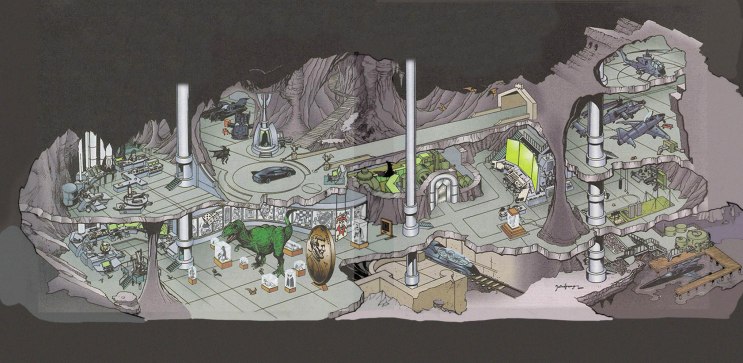
Batcave_1999

If Batman ever decides to donate his dinosaur, I’ll take it!


In addition to improving safety and equipping others, cleaning out clutter results in a more tranquil classroom.  This is a bonus for students and the teacher. Less junk means fewer distractions during learning time, planning time, and quiet time.

empty classroom

Ahhh . . . Paradise!


Primary purpose #2 for secret hideouts is providing a space to relax and unwind.  Doctor Strange’s Sanctum Sanctorum is described as his place to “escape from this reality.” Sounds nice, doesn’t it?

sanctum


Maybe you can’t escape reality, but every teacher needs daily moments to himself or herself.  These slivers of quiet time don’t have to be lengthy.  Plan periods typically fill up with trips to the copier, chasing down students and staff, catching up on emails, and more.  You may have a few minutes, but don’t plan on it (especially if you’re relatively new).

I mentioned lying low from time-to-time (again, especially if you’re new), and one of the best ways I found to do this was eating lunch in my empty classroom — door locked, lights off, maybe some soothing music playing in the background.

dark classroom

Ahhh . . .  Peace and quiet!


I didn’t always do this.  In fact, at my first school I typically spent my lunch hour (i.e. 20  minutes) shoveling food down my gullet in the teachers’ lounge.  The lounge was closer to the cafeteria — when you’re a bachelor, cafeteria food is tasty, easy, and cheap — so I found a spot among my colleagues and ate while they gabbed.

I was so busy eating, I didn’t have time to talk.  All that quiet listening gave me tremendous insight about students, staff, school history, and more.

But every once in a while, a dismal mood would hover over the staff lounge.  That’s when I hoofed it back to my classroom for silent dining.  For fifteen minutes, I had entered my personal Fortress of Solitude.

fortress-of-solitude-superman


Not all teachers have a classroom to call home, however.  In such cases, it’s vital to understand that a secret hideout doesn’t have to be a permanent area.  Maybe you can find a closet or hallway nook for a temporary respite.  (Schools are full of interesting little spaces.)

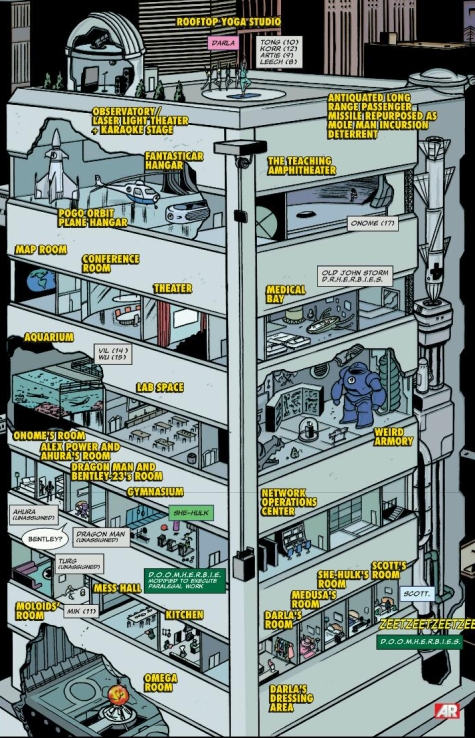
Superhero hideouts come in all shapes and sizes, spaces and places.  Take a look at Newsarama‘s list of the Greatest Superhero Hideouts and Headquarters.  You’ll see everything from skyscrapers to satellites, mansions to alleyways.
 

BaxterBuilding.jpg


Perhaps it’s more accurate to think of a secret hideout as a state of mind.

When I began teaching, I lived two blocks from school and walked everyday to work.  My students repeatedly questioned why I didn’t take my car.  I usually answered that driving isn’t all that new and cool after you turn 20.

Honestly though, the brief, brisk morning walk energized me.  And the journey back and forth was always time well spent, giving me precious moments to preview and review my day.  So I guess my first secret hideout was a two-block stretch of sidewalk.

s_mpls_sidewalk.jpg

Some days it felt as cold as the Fortress of Solitude.


I know another teacher who drives to school, but always parks in the spot farthest from the building entrance.  His colleagues joke that he picks this spot to avoid any car dings and scratches — whether unintentional or intentional.

The real reason, he says, is so he can spend the lengthy walk thinking about an individual, and how he can make a positive difference in that person’s life that day.  He told me if there’s ever a morning he can’t come up with someone’s name, he’ll quit teaching.  That was a few years ago, but the last I heard, he’s still teaching.

school parking lot


So whatever you have for a secret hideout (and wherever it is), consider how you maintain that special space to keep it user-friendly.  And use that space to reflect, retool, and recharge in your efforts to be a better teacher.  

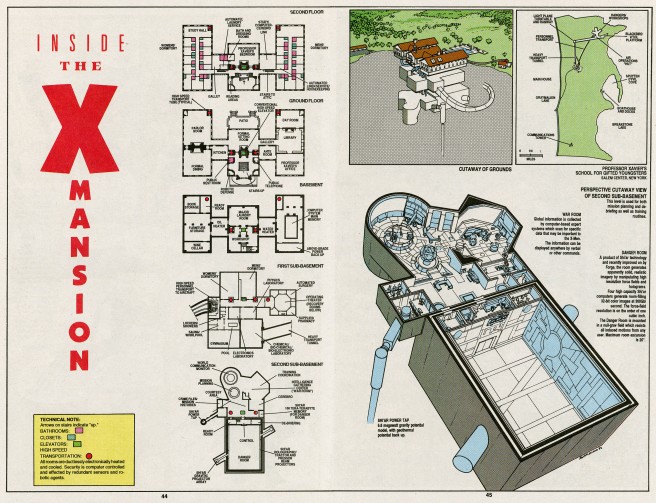
No Danger Room required.
xmansion.jpg


Teacher versus Teacher

Standard

The holiday season is upon us, which means it’s time to watch the latest trailers for next year’s big superhero movies.

First up is Batman v Superman: Dawn of Justice, opening in theaters March 25, 2016.

Soon after comes Captain America: Civil War, hitting the big screens May 6, 2016.

Notice any trends?  Take a look again at these images:


That’s right folks, 2016 is the year of the superhero stare-down.

Oh yeah.  It’s also the year of superhero versus superhero.  Sounds fun, yes?  (Almost as fun as a stare-down contest.  Hulk make puny human blink!)

Heroes fighting heroes is nothing new.  They’ve been doing it in comic books for decades.  That’s how Wolverine and the Hulk first met, back in The Incredible Hulk #181, published November 1974.

hulk wolverine first meet

Fighting is how Wolverine and the Hulk meet a lot of folks.

Marvel and DC Comics have occasionally joined forces to have their heroes fight it out, most memorably in 2003-2004’s JLA/Avengers mini-series.

JusticeLeagueVsAvengers1


Some of the previous films have already included minor skirmishes, too, such as Iron Man and War Machine in Iron Man 2 (life lesson: don’t drink and don an Iron Man suit).


Marvel’s “big three” heroes–Iron Man, Thor, and Captain America–first share the screen after a fracas in the first Avengers movie:


Then we also have Iron Man vs. Hulk in the second Avengers movie (Age of Ultron), which kicks things up a notch.


There’s no mystery why these fights occur.  Heroes duking it out with each other is loads of fun to watch.  And most of the time, they eventually work out their differences to defeat the REAL bad guys.

Heroes versus heroes is dangerous and entertaining, and the same is true for teachers versus teachers–but not in a good way.

Given the pressures involved with teaching, disagreements are bound to arise from time to time.  We don’t always see eye-to-eye when it comes to assessments, curriculum, scheduling, resources, management and discipline, and more.  Heck, there may even be some colleagues in your building or department that rub you the wrong way.

As teachers we must not allow friction to fester.  Ongoing bickering is noticeable and results in classroom snickering. Dampen combustible situations with grace and good-natured humor.  “Lie low” when you need to.

Resist the urge to blow off steam in front of your students. Avoid any gossip or rumor-mongering by students and staff alike.  Speak highly of your colleagues in front of others, pointing out strengths and past successes.

teacher_colleagues_getting_along

Here are some other resources for fostering positive relationships with your co-workers:

The website We Are Teachers has an eye-catching blogpost entitled “How to Get Along with ANY Teaching Colleague (From the Whiners to the Kiss Ups!)”  Of course, it’s important to consider what kind of colleague you become on your not-so-good days.  Personally, I’ve been known to be the “negative Nancy” (Ned) during grouchy times.

The Association of Teachers and Lecturers (of the United Kingdom) has a helpful guide for new and beginning teachers.  Some useful advice includes “staffroom etiquette” and what to do if you have concerns about colleagues.

The National Education Association (NEA) provides ideas for building collaboration in your classroom via co-teaching.  Instead of negative energy, co-teaching harnesses positive teacher relationships and teamwork for successful student learning.

For a more in-depth examination, take a look at the book Teachers Working Together by Mario Martinez.  For a quick view, You can find excerpts here courtesy of Google Books.

4113_martinez_TWT


Hopefully these resources will provide you with inspiration and information on getting along with your fellow educators.

And if it’s just inspiration you need, remember the current holiday season and do your part to bring . . .

Chalk_Peace_on_Earth


Spoiler Alert!

Standard

Spoiler Alert:  This blog post starts not by talking about superheroes or teachers, but Star Wars.

Yoda_SWSB

Star Wars isn’t too much of a stretch.  It’s basically superheroes in space.  And Yoda was a pretty good teacher.  (A pretty good teacher, Yoda was.)  Plus, you can find gobs of Star Wars comic books, including Marvel’s newest series (which has been flying off the shelves).

SW Comic Book 1

So why Star Wars?  The new movie won’t amaze audiences for another three months.  But this weekend saw the much-ballyhooed “Force Friday,” which is “Black Friday” for Jedi Knights.

Force FridayI have not scooped up any Star Wars merchandise yet, nor have I taken a look at any extensive previews or reviews.  You can bet your sweet bantha I’m interested. At this point, though, I’d rather not spoil anything about the movie, which is still a hundred days out.

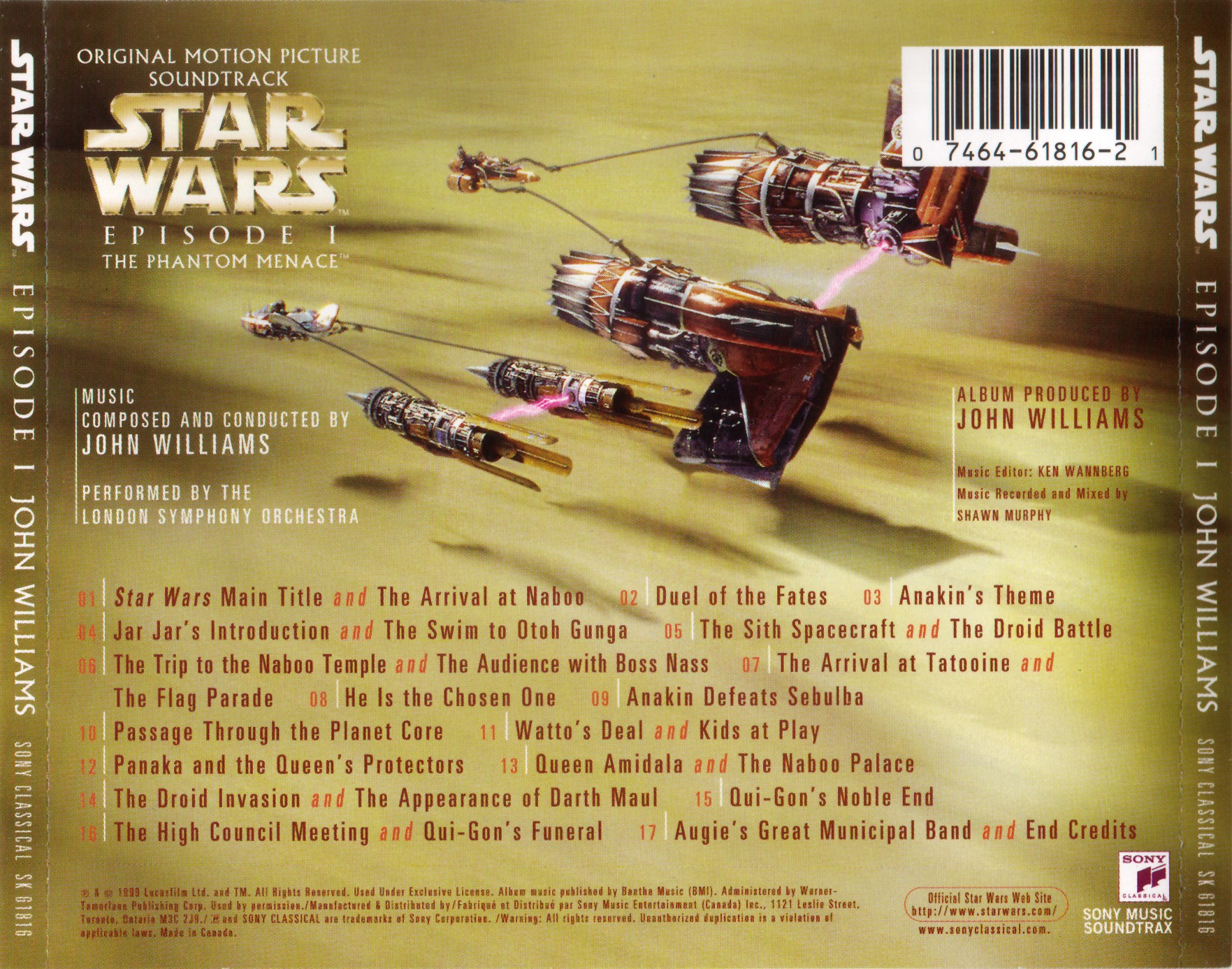
Think I’m crazy?  It’s happened before.  Back in 1999 during the weeks BEFORE the release of Star Wars Episode I: The Phantom Menace, anyone who scanned the back of the official soundtrack would have seen this:

John Williams - Star Wars - Episode 1 The Phantom Menace (Soundtrack) (Canada) - Back

Notice track number 16: “Qui-Gon’s Funeral.”

Oops.  Spoiler Alert.

I remember my very first spoiler–the granddaddy of them all.  It happened in the teacher’s lounge over lunch.  A colleague of mine was rambling about the movie The Sixth Sense, and finished her rant with “And the whole time he’s actually DEAD!”

Guess I don’t have to watch that movie now . . .

(Spoiler alert, by the way.)

Superheroes also struggle with spoilers.  Not the Spoiler, who’s actually a nifty heroine known to buddy up with Robin and Batgirl from time to time.

Spoiler_0001

We’re talking actual spoilers to big-time stories and events, like Marvel’s recent “Secret Wars” mini-series.  Earlier, this year, Marvel Comics Executive Editor Tom Brevoort walked the tightrope trying to tease readers without spoiling any major plot points of current or future stories.  Read his interview here, and examine his delicate choice of phrases.

Sith Lords.  Superheroes.  And TEACHERS.

Teachers must also balance their instruction to maximize student learning.

Teaching is NOT telling.  Research continually reveals that learning does not occur by merely absorbing information. Students must be mentally active:  examining phenomena, discussing with others, and wrestling with ideas.  

Teachers must cultivate cognitive change, but they shouldn’t spoil the process by burying students with trivia.  Resist the urge to reveal everything, even if students beg for answers.  A little help is okay, but too much assistance leads to dependency.

So how do you nurture learning without spoiling it?

One useful strategy is to replace your statements with questions. Instead of saying, “It’s like this,” or even “Look at it this way,” you can ask, “How else could you look at it?”  This approach works when responding to students’ comments, too.

Rather than answering a student with “That’s right” (or “That’s wrong”), respond with “How do you know?” or “What do the rest of you think?”  Consider the power of putting the onus of thinking on the students.  As a bonus, you increase conversation and opportunities to go further and find out what they truly understand.  

This habit of replacing statements with questions won’t fix everything.  But it’s a good start.  Of course, there are plenty of times when this strategy doesn’t work.  Take a look at the article, “We Still Want to See the Teacher,” by Baines and Stanley (2001).  I won’t spoil anything, but look for examples when lecturing can be effective.

Still need help in making your teaching spoiler-free?  Put this inspirational quote somewhere in your classroom and/or planner:

spoon feeding quote

If that visual cue doesn’t help, keep a spoon in your pocket at all times. You can probably find a Star Wars or superhero spoon online as easily as you can find spoilers about the next blockbuster movie.

star wars spoon

Now on Facebook!

Standard

No, this isn’t a lengthy post about how teachers can use Facebook and social media to reach students.

It’s not an even longer discussion of how teachers must maintain professionalism in their social media interactions.

Instead, just a quick announcement that Teaching is for Superheroes is now on Facebook!

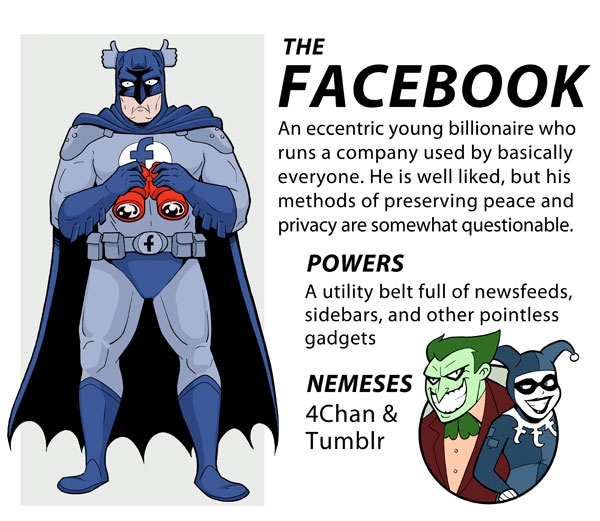
According to creator Caldwell Tanner, Facebook is actually a hero himself, along with the Internet League of Justice.

Facebook-Internet-Superheroes

Here is the official Facebook address for Teaching is for Superheroes:  https://www.facebook.com/teachingsuperheroes

In addition to blog post announcements, look for links to resources, comments, and collections.

Please “Follow” and “Share” with your social media friends and colleagues.  Thanks!

And “Like,” of course.  Below is some helpful inspiration, courtesy of Jaime Calderón:

sh facebook thumbs likes super-heros-facebook-21 thumbs 2