G.I. Joe (A Real American Hero) is back in the spotlight of the comic book world, with multiple ongoing series and a whole new interconnected universe.
For those NOT in the know[ing is half the battle], G.I. Joe is basically “army superheroes.” It’s got high-stakes sci-fi action, soap opera drama, and all a store rack full of colorful characters.
We’ve already featured G.I Joe here in the past, focusing on the milestone “silent issue” #21 that tells a complete comic book story with ZERO dialogue and sound effects.
Check out our original post HERE, which discusses all of the unspoken behaviors that impact classroom instruction, and strategies for teachers to improve their interactions with students.
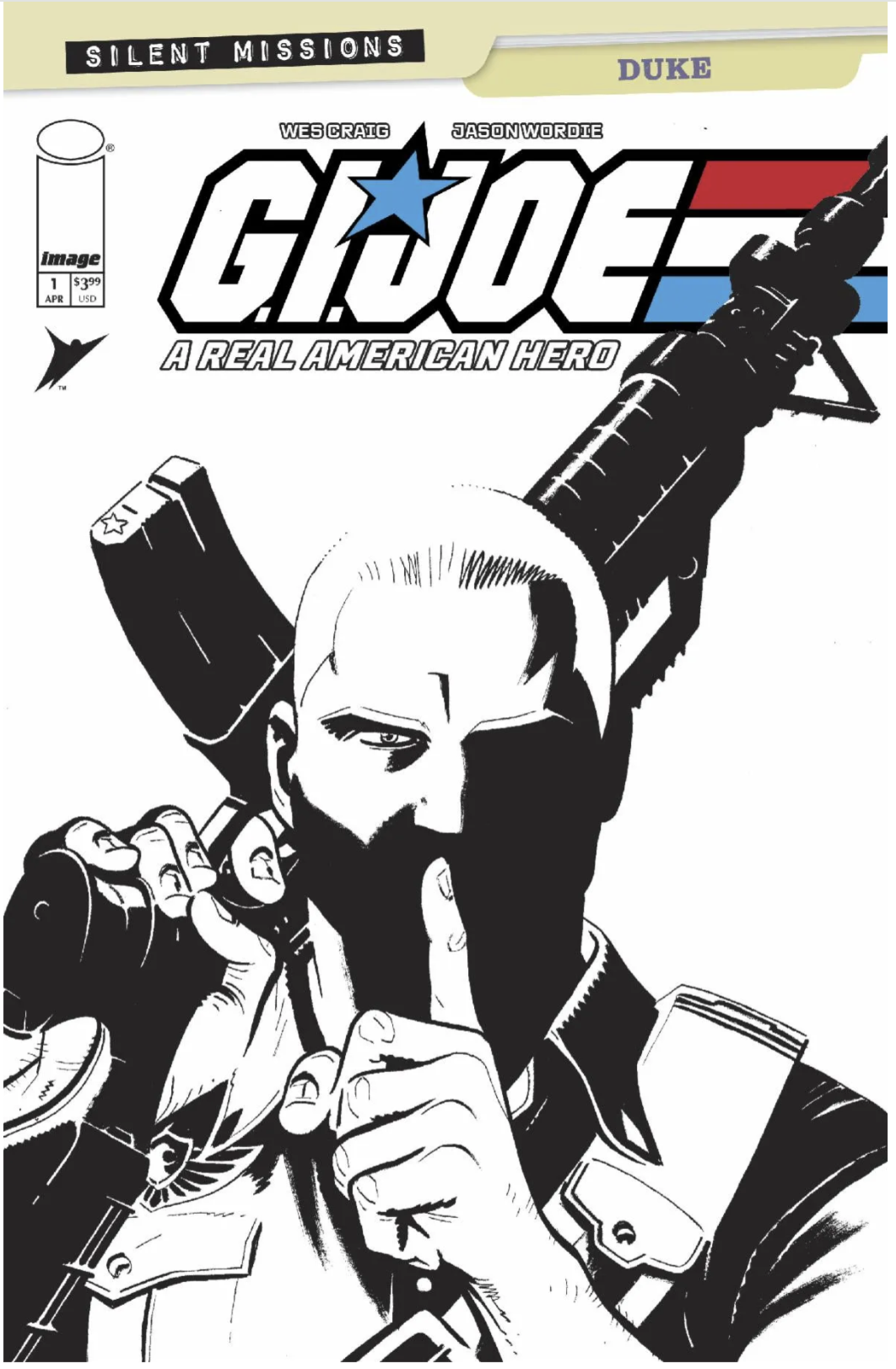
G.I. Joe #21 is so influential that many other comic books tried their own “silent” issues over the years. In fact, publisher Skybound has announced a special “Silent Missions Month” in April 2025. Five different Joes get their own story told in the same word-free style.
Silent stories with Beach Head, Jinx, and Spirit? Sign me up! Not sure about Roadblock, though, given his role as Heavy Machine Gunner and knack for bad rhymes (in the cartoon, at least).
Regardless of how “Silent Missions Month” goes, this news gives us another opportunity to look at nonverbal teaching actions in the classroom.
In an article for Edutopia, Todd Finley shares a helpful summary of research, specific strategies, and takeaways all focused on . . .
My favorite section of this article is “When should students use gestures?”, which also includes a discussion of when NOT to use gestures.
Nonverbal communication is important for a productive classroom, but it is not an exclusive tool. Similarly, comic books can’t rely on using silent issues all the time. Like all teaching strategies, anything overused soon becomes a gimmick and loses impact.
Teachers, what are your “go-to” gestures or unspoken mannerisms for effective instruction? Please share (or demonstrate) below!
It wasn’t that long ago that we talked about Wolverine actor Hugh Jackman (and how teachers also need a “Hugh”).
Now we’re back with another teacher tip from everyone’s favorite Australian nice guy actor playing everyone’s favorite Canadian grumpy mutant hero.
(Quite the difference in personality there. I guess that’s why they call it “acting.”)
Let’s talk about one more difference between Hugh Jackman and Wolverine.
In the comics, Wolverine is stocky and short, with a height of 5′ 3″. In reality, Hugh Jackman is 6′ 2”.
It doesn’t take a math teacher to quickly figure out that’s a difference of 11 inches–almost one whole foot in length. (Or 27.94 centimeters for those of you using the metric system–Canadians and Australians alike.)
So how did a tall actor first win the part of Wolverine?
(Remember, before Hugh Jackman got this role for the first X-Men movie, he was a relatively unknown actor. Check out this neat time capsule web announcement announcing–and decrying–the official casting waaaaaaaaaaay back in 1999.)
Recently, CNN’s Chris Wallace asked the actor this same question (or very similar, at least). Zip ahead to the 0:45 mark for the question and answer:
In his explanation, Hugh Jackman also gives an example of his behavior. It may look goofy to “stoop,” but it got him the part! (His thespian skills probably helped, too.)
A while back, I read the following sentence in a reflection paper by one of my future science teachers:
“As an educator, I need to remember that my first priority is to the student. I need to STOOP and listen.”
There was a typo. She meant “STOP and listen.”
Still, my first reaction was to write a snarky response like, “If you teach elementary kids, you certainly will need to stoop!” 🙂
(I didn’t.)
The more I think of it, though, sometimes teachers DO need to STOOP. Not only when they stop and listen, but often when they interact with students. And not just with younger kids, but with all ages and grade levels.
There’s a whole bunch of research on “nonverbal behaviors,” those unspoken actions and mannerisms that occur during human interactions. Teachers can gain a lot of insight and application when they focus on such behaviors in the classroom.
But stop and think about what you actually look like when you teach. How is your eye contact? Your facial expressions? Hand gestures? Mannerisms and more?
And where are you compared to your students? The fancy name for this is “PROXIMITY.”
Wolverine (Mr. Logan) demonstrating why teachers should NOT stay at the front of classrooms, especially with their back turned to students.
Proximity is not just the front of the classroom versus the back, or in between student desks (although such movement is important for many reasons).
Proximity also includes the posture and level at which you interact with students. Check out this quote from Sean Neill and Chris Caswell, authors of the book, Body Language for Competent Teachers:
“Leaning towards another person, whether sitting or standing, is an ‘intention movement;’ your intention, if you actually moved, would be to get closer to them . . . . Leaning away sends the opposite signal. Leaning over someone, or being higher than them, is dominant and potentially threatening because if you actually wanted to attack someone you could launch your attack better from above. Sitting or kneeling down to someone, at or below their level, is correspondingly non-threatening” (p. 11)
So I guess we now know why Wolverine is always hunched over, ready to strike.
And we also know why it’s important for teachers to STOOP. Not always, but definitely when working with students in small groups or one-on-one. Leaning and learning–literally at “their level”–conveys a collaborative spirit. We’re in this together to grow and get better!
And who knows? Maybe all this learning will help us become “the best there is at what we do.”
Unlike Wolverine, however, what teachers do–learning and teaching–is VERY nice!
Find more SUPER-teaching resources and strategies HERE or HERE!
“Grit” is a popular term in educational circles today, particularly with helping students succeed.
Grit is “passion and perseverance for very long-term goals,” “having stamina,” and “sticking with your future day-in day-out, not just for the week, not just for the month, but for years.”
I got those “gritty” quotes from the following TED Talk video with Angela Lee Duckworth, and you should watch the entire thing (about six minutes).
In the world of superheroes, “grit” has a much different meaning. During the late 1980s and early 1990s, “grim and gritty” superheroes nearly saturated the comic book market. If you’re interested, you can read a thorough analysis of this time period HERE.
“Grim and gritty” got so popular it seemed almost everyone got in on the act–Superman, Batman, Flash, Green Lantern, even Aquaman!
Coming to theaters near you!
Thankfully, most of these heroes’ gritty phases were short-lived and brighter days returned. For some heroes (or anti-heroes), however, it’s always been about grim and grit: The Punisher, Ghost Rider, Wolverine, and about 87% of Image Comics from the 1990s. Exhibits A-to-Xtreme below . . .
Given the above definition of “grit,” I would argue that thegrittiest superhero is Captain America.
Remember, Steve Rodgers stood up to evil and injustice while he was still a 98-pound weakling. His heart and passion did not change after he gained powers and a costume. At times, Steve has given up or lost the title of Captain America. But he continued his work behind the scenes and/or assuming another superhero identity.
We’ve already gotten a glimpse that Steve’s non-Captain America heroics will appear in upcoming Avengers movies:
(He’s even got a beard – extra grit!)
At the time of the TED Talk video, not much was known about teaching and cultivating grit in students. Nevertheless, you can find research summaries HERE and HERE, which also include resources and tools for student grittification*.
*Trademark 2017, Daniel J. Bergman
In the video, Duckworth refers to research of Carol Dweck on “growth mindset” as one potential factor in teaching grit. This is a good place to start.
For example, HERE is one of Dr. Dweck’s articles (“The Perils and Promises of Praise”) that discusses the impact of teacher praise on students’ motivation and self-concept. All teachers should read this article, since 1) it is short, and 2) it has direct application in the classroom. In other words, it won’t take a lot of grit. But you should stop and think about how you respond to students, and what other messages are conveyed in your words.
And this is just one step. As explained near the end of the TED Talk video, teachers who want gritty students must also be gritty themselves.
Don’t let grit become one more educational fad that passes away.
Last time we examined the topic of “Word Balloons,” with the focusing on how teachers sound when they speak in classrooms.
Spoken in a classroom somewhere.
This time let’s go further by considering how teachers look during their interactions. I’m not talking about how teachers dress, although that is an important issue and one we’ve already addressed (summary:keep it functional, simple, conservative, and non-CGI).
Teacher appearance, in the present case, refers to the outward actions and mannerisms displayed during classroom instruction. These non-verbal behaviors include facial expressions and body language–the unspoken communication that accounts for up to 93% of all human interactions (Mehrabian, 1968).
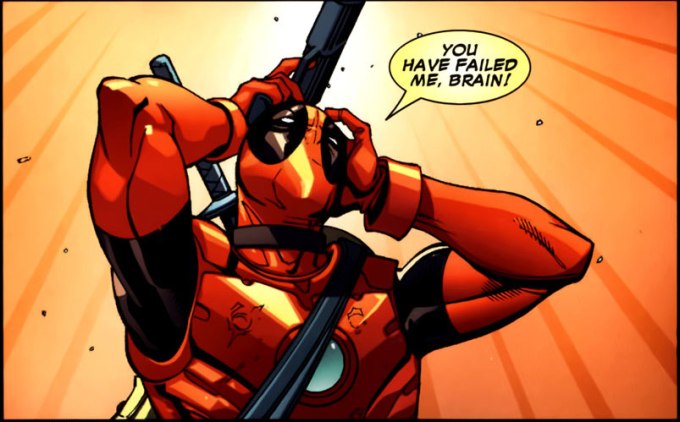
With the topic of voice tone (word balloons), our inspiration was Marvel’s mouthy antihero Deadpool. It’s only fitting that our model hero for unspoken behaviors is the mute commando Snake-Eyes of G.I.Joe fame (Hasbro’s toy-line featuring military super-heroes).
Despite being on opposite sides of the dialogue scale, Deadpool and Snake-Eyes share similar skills and accessories. Interestingly enough, G.I.Joe artist Robert Atkins recently shared a mock-up image depicting these two fan-favorite characters.
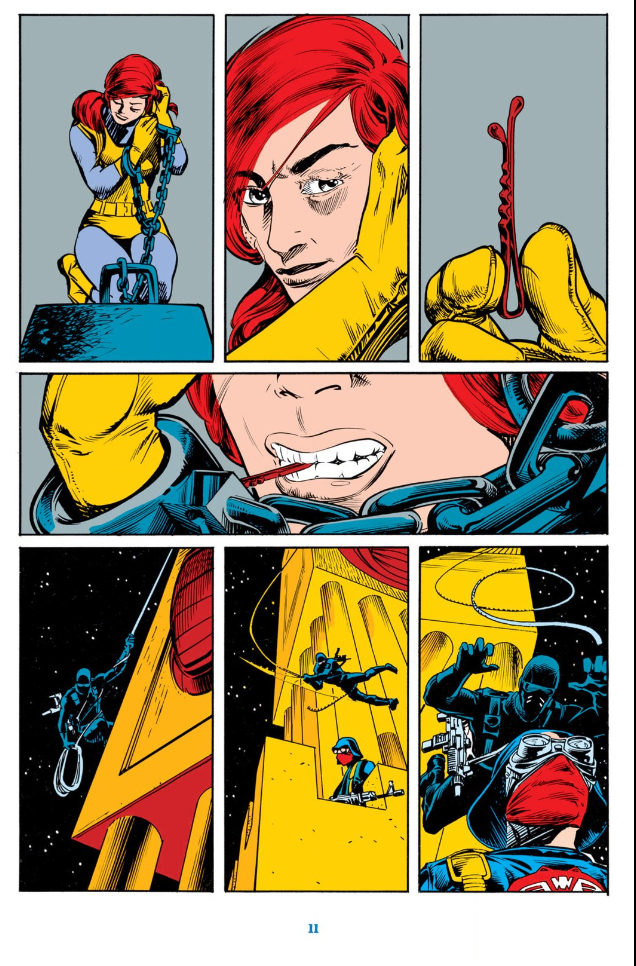
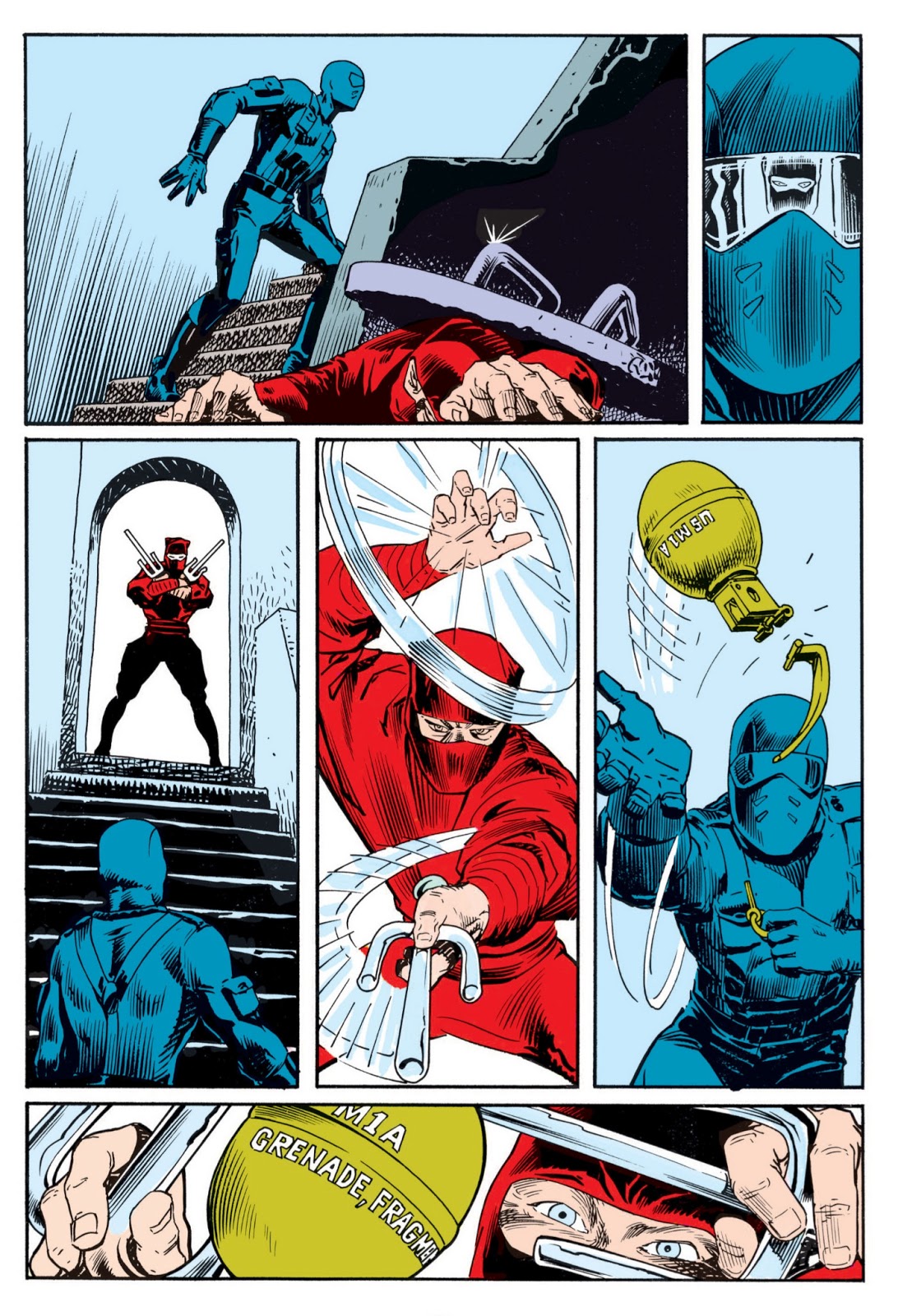
One of the most celebrated G.I.Joe stories is from Marvel’s original comic book series, issue #21: “Silent Interlude.” This tale is famous because it features absolutely zero dialogue or sound effects.
The adventure follows Snake-Eyes on a rescue mission to save Scarlett from Cobra and a castle of ninjas, including Storm Shadow. (If that previous sentence doesn’t excite you, you’re not a child of the ’80s. And you missed two major characters’ backstory revelation in the issue’s last few panels.)
Below are a few sample pages. Notice how writer/artist Larry Hama conveys a range of motions AND emotions with expressions and movement.
Take a long, close look and enjoy the silence.
This “silent issue” is not just a gimmick. It became so legendary, in fact, that the format has been repeated a few times in the G.I.Joe comic series as well as other titles, including a Deadpool parody and even an entire month called “‘Nuff Said,” where all Marvel comic book titles featured silent issues with no dialogue or captions.
This slideshow requires JavaScript.
Teachers typically don’t fight off ninjas hordes in silence, but we can foster powerful connections and teachable moments with unspoken behaviors.
What do these look like? Here are some example “non-verbals:”
Moving back and forth among students. Avoid prolonged, stagnate standing in one spot (especially the front). Closer proximity garners more attentive students and decreases likelihood of off-task behaviors.
Open arms and hands inviting student input (as opposed to crossed arms, which convey defiance or disinterest).
Counting on your fingers to show you expect answers and ideas from multiple students.
Nodding your head to acknowledge student contributions without using excessive praise.
Leaning toward students to express curiosity, but not looming over them in a dominating or threatening way.
Lowering your chin or cocking your head to one side to communicate concern and interest.
Sitting or kneeling downat the students’ level to show cooperation.
Using appropriate lengths of eye contact with students, while avoiding prolonged and awkward stare downs.
Smiling! If you enjoy teaching, show it. (Again, avoid prolonged and awkward grins.)
For any teachers doubting the power of unspoken behaviors, posture, and expressions, I present the following challenge: Watch a video of yourself teaching with the volume muted.
Ask yourself what unspoken, but clearly presented messages you convey to your class. How do you come across? Are you respectful? Are you confident and caring? Are you happy to be there?
Look closer at your students and study their non-verbal behaviors too. How much do they engage in the lesson? How do they treat each other? What can you learn from them?
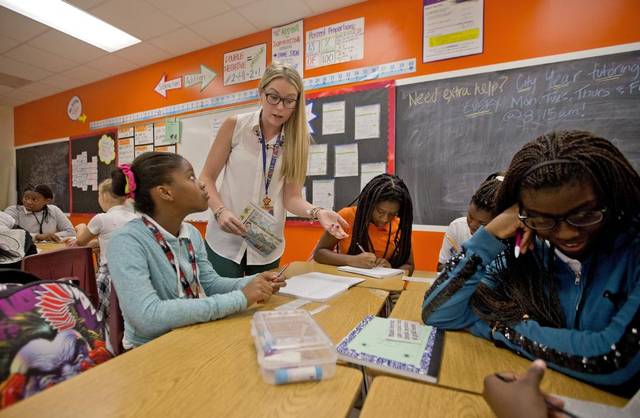
How many students are engaged in learning?
Better yet, don’t wait for a video to notice these things. As you teach, pause and survey the classroom to pick up on students’ mannerisms, posture, and expressions. Take a moment and consider what you are communicating through these same behaviors.
Here are a few resources for further reading and ideas:
Need more practice? Try out your expressions and mannerisms in front of the mirror.
Keep practicing, buddy.
Whatever you do, work to express warm, welcoming messages through your body language. Your students will soon respond in kind. Whether spoken or unspoken, every interaction counts.
























 Teach Like a Superhero!