Prime Time!

Standard

Fun Fact #1:

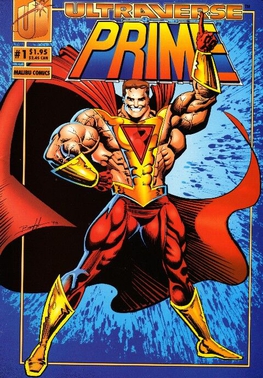
There’s actually a superhero known as Prime!

Way back in the 90s, the now-defunct Malibu Comics published PRIME, featuring a kid-turned-superhero sort of like SHAZAM (a.k.a. Fawcett/DC Comics’ Captain Marvel).

Fun Fact #2:

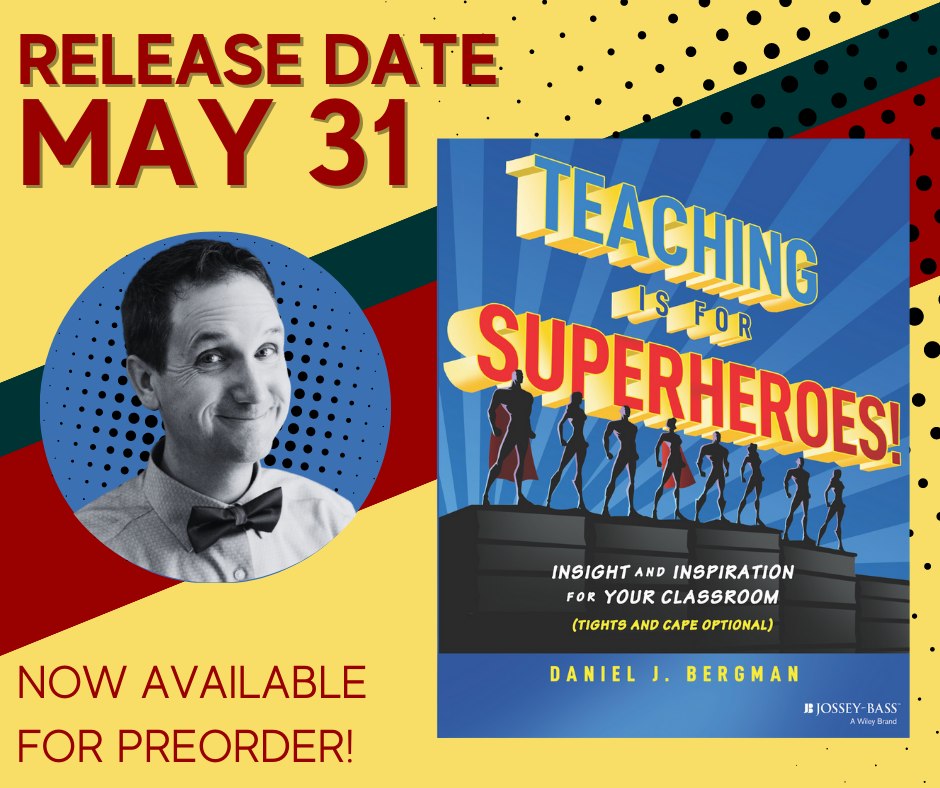
Amazon’s Prime Day is going on, and my book, Teaching Is for Superheroes! is listed 50% OFF!

Find the book HERE, and SHARE the news with your friends and fellow teachers and/or superheroes! (Stock up on your gifts TODAY!)

Views on Reviews

Standard

Even though the new year has barely begun, it’s always a good time to reflect and review.

Unfortunately, the previous year wasn’t kind to superhero shows. (Or maybe it’s the other way around: Superhero shows weren’t kind to 2023.) Here is a list of superhero movies from last year and their scores on the “Tomatometer” –

Notice that only two films reach the equivalent letter grade of an “A” (both animated, by the way). And seven of these ten movies average out to a “C” or worse – including three below 50%. (Ouch.)

Aside from critics’ reviews, a film’s success also depends on how much money it makes (and also how much it costs). The criteria for “hit” movie, then, is multifaceted.

In the same way, teachers must consider a variety of factors when reflecting on classroom success.

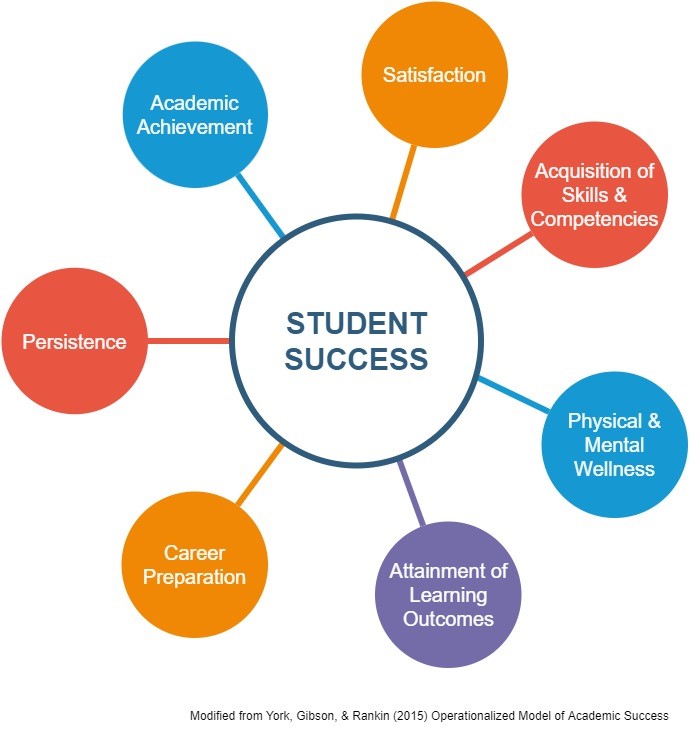
Beyond summative assessment scores, we should account for pre-assessments, school context, and external factors. And go beyond academic measures for “success,” acknowledging the power of social and affective factors.

Here’s a neat-o graphic inspired by work from York, Gibson, and Rankin on “Defining and Measuring Academic Success” (2015).

Again, I would argue these aspects (and more) influence all kinds of success, not merely “academic.”

We’ve talked before on this blog about defining success and evaluating outcomes. But for now, let’s focus on reviewing teachers. How do we measure teaching effectiveness? And who should do it?

Not long ago, Edutopia asked this latter question, and summarized research into various teacher evaluation methods. This is their headline and graphic, and you should click HERE to read more.

For now, here’s a quick summary (you’re welcome) on some useful elements to enhance teacher evaluation:

  • Teachers should review their teaching with a peer, including fellow experts in content and pedagogy.
  • Wellwritten rubrics (and well-trained evaluators) help provide structure and intentionality.
  • Video recordings afford flexibility and efficiency for review, as well as opportunities for self- and peer-reflection. (This one is a personal favorite, and helps you reach “iconic” status.)
  • Student feedback can be a powerful supplement to other evaluations, especially to gauge rapport, management, and relative rigor.

Teachers, what do you think? How do you use any or all of these in your self-evaluations and self-improvement?

That last one – student reviews – can be tricky. The researchers acknowledge this, noting that some students may evaluate their teachers too harshly. In the entertainment biz, it’s called “review bombing,” and teachers can be mindful of such pitfalls, however rare. (As one of my mentors used to remind her colleagues, “consider the source.”)

I’m encountering a new sort of review process now that my book, “Teaching Is for Superheroes!” is out and in the public. (Have you heard? Or seen? Or both?)

Writers are cautioned to avoid reading their own book reviews, as this habit can stunt, distort, or even paralyze the creative process.

I’ll admit, I’ve taken a peek at a few reviews of my book. They’re not too bad (yet). And hey, I’ve still been writing! (Exhibit A: This blog.)

Still, I don’t want to get bogged down in second-guessing, cringe-inducing, and/or back-patting obsessions.

Teachers must also be careful in focusing too much on reflection and review that they forget to actually teach. Use reviews purposefully and proactively, but not at the expense of your instruction.

Teachers, what else do you do to review, reflect, and improve your teaching?

Please share your ideas. (Sharing and supporting the profession is a great way to help others AND yourself.)

Here’s one more suggestion: Check out a book on teaching! (I have a recommendation.)

And when you do, please provide an honest review at your favorite online merchant (or two), Goodreads, social media, or your own personal blog or podcast. I promise not to look at it . . . more than twice.

Trailer Time!

Standard

Here it is!

The OFFICIAL full-length trailer for my book, Teaching Is for Superheroes!

Enjoy, Like, and Share with the teachers (and superheroes) in YOUR life!

(And watch for the superhero reveal near the end!)

My OWN Teaser!

Standard

On this blog, we’ve talked many times about using classroom TEASERS (not Spoilers) as a way to ENGAGE and MOTIVATE students.  Travel back in time to read more about this strategy HERE and HERE.

For the present, enjoy our very OWN teaser for the trailer to the upcoming book, Teaching Is for Superheroes!

(I did my own stunts.)

Appreciation Day? Week?

Standard

Tuesday, May 2, 2023 is Teacher Appreciation Day!

Teacher Appreciation WEEK is actually Monday, May 8, through Friday, May 12, 2023.

What’s up with that?

Start by thanking Eleanor Roosevelt.

Also the Gregorian calendar.

And read more about the history HERE, thanks to the “We Are Teachers” website.

Most importantly, check out the “Teaching Is for Superheroes!” Facebook page, where you can join a GIVEAWAY contest for a FREE copy of my new book!

Best of all, use this contest to SHARE and SHOW your appreciation for a favorite, fellow, or former teacher!

THANK YOU!

25% Redux!

Standard

Barnes & Noble is back at it – offering 25% off all online pre-order books, including Teaching Is for Superheroes!

Use the code “PREORDER25” – valid until April 29, 2023 at 2:29am ET (exclusions apply). Sorry Luddites, but this code can only be used on B&N’s website.

Here is a link to the book’s product page: https://www.barnesandnoble.com/w/teaching-is-for-superheroes-daniel-bergman/1142495826?ean=9781394153732

Please SHARE with your fellow fans of teaching and superheroes!

And don’t forget to sign up for FREE RESOURCES when you pre-order the book. Go to www.teachingisforsuperheroes.com and click on PRE-ORDERS to learn more!

When you get that done, come back here and check out three more comic books with awesome #25 issues!

Want MORE? Revisit Part One of this #25/25% mash-up celebration here!

25% off!

Standard

The number 25 is very important. All kinds of great things happen in the 25th issue of a comic book.

In Avengers #25, The Avengers fight Dr. Doom. In Iron Man #25, Iron Man fights Namor the Sub-Mariner. And in Action Comics #25, Superman fights . . . uh, “Amnesiac Robbers.”

And now 25 makes another grand appearance.

For a limited time, you can PRE-ORDER my new book, Teaching Is for Superheroes!, at Barnes & Noble with a 25% off discount!

Use the code PREORDER25 at B&N’s website. You can find my book at https://www.barnesandnoble.com/w/teaching-is-for-superheroes-daniel-bergman/1142495826?ean=9781394153732.

Keep in mind, this is a limited time discount, expiring January 28, 2023 at 2:29am (exclusions apply).

After that, this discount will be forgotten, like Superman’s Amnesiac Robbers.

New Year, New Website!

Standard

Behold! It’s my NEW author website – www.danieljbergman.com – jam-packed with resources and information about my upcoming book, Teaching Is for Superheroes!

Discover where I’ll be speaking next (and request me as guest speaker), along with FREE online materials related to Teaching, Superheroes, Science Education, and other super-geeky fun!

What is Success?

Standard

Image

It’s not even mid-May and we’ve already got two superhero movies out in theaters, with more to come.  While Captain America: The Winter Soldier made record-breaking April box office numbers, The Amazing Spider-Man 2 recently opened and also topped the $90 million mark for its weekend debut.  Not too shabby.

Or is it?

Such an astronomical income may look, well, amazing.  But some entertainment pundits are asking, “Is it a success?

Such a question is not so strange when comparing ticket sales among similar movies, including prequels and sequels.  Another item to consider is how much money it takes to make the movie (salaries, special effects, marketing, insurance, craft services, etc.).  Making 90 million bucks over a single weekend may not seem so spectacular when it reportedly cost triple that amount to make the film.

All this talk about multimillions may have you thinking about teacher paychecks, but that’s not the real purpose of this post.

Actually, the big question “What is success?” should be asked frequently in our schools and classrooms.


Report Card Time

Recent results from the National Assessment of Educational Progress (NAEP)–also known as “the nation’s report card“–show that American students haven’t really increased their success rate in the past five years.  We’ve talked previously about how it’s important for teachers to closely review assessment data and speak out when and where they can (shameless plug).  But it’s also important to examine results and consider what is success.

The NAEP report finds that for U.S. high school seniors, less than 40% are proficient (or higher) in reading, and only one fourth (26%) are proficient or better in math.  Results also indicate that gaps in achievement among races/minorities are as wide as ever.

Ouch.  That doesn’t sound like success to me.

So many factors contribute to assessment results, more than we have time or space (or attention span) to discuss here.  But it is important to stop and determine our definition of success in schools.


Image

First off, it’s essential we not equate 100% with success.  Major League Baseball players are potential All-Stars if they get a hit one out of every three times at bats.  Babe Ruth’s career batting average was .342.  On the current list of active MLB players, the batting average leader is some guy named Joe Mauer, sitting at .322 (my apologies, Minnesota Twins fans).

I remember band directors telling us that we had to hit 100% of our musical notes during every performance, comparing our task with those slacker multimillionaires in ball caps.  Full disclosure: I never played every note perfectly during every concert.  Didn’t stop the audience from clapping.  And it didn’t stop me from playing.

Winning Percentages

Even Spider-Man himself didn’t win every comic book battle.  (It’d be boring if he did, wouldn’t it?)  According to Marvel’s own statistics, the webbed hero was victorious less than 60% of the time, just below villain Nightmare (59.4%) and above Iron Man (57.8%).  Check out the interactive and informative (and awesome) “Battle Breakdown” of Marvel Comics characters, courtesy of Wired magazine and author/designer Tim Leong.

(You should also check out Tim Leong’s website and Tumblr, along with his award-winning book Super Graphic: A Visual Guide to the Comic Book Universe, for some super-nifty graphical analyses of superhero stats.  Here’s a sample, this one a breakdown of primary colors among hero costumes:

ff_supergraphics_goodevil_2f primary colors  )


Interestingly, anti-hero The Punisher (as in “The Ohio State University”) has the highest winning percentage (86.9%, and only 2 ties) above all the other Marvel heroes.  This roster includes Captain America, Mr. Fantastic, the Hulk, Thor, Wolverine, and Daredevil.

Image

Winning Tip #1: Bring a bazooka to a gun fight.

Still, I think I’d rather be rescued by many other heroes before seeking The Punisher’s help.  It’s “Punisher” with a capital P, after all.  In his quest for vigilante justice, Frank Castle puts a permanent end to bad guys (i.e. dead), as opposed to more noble champions who abide to a higher moral code.  As teachers, we know that a little bit of mercy can go a long way.

Maybe winning isn’t everything.  Maybe success depends on context.

In baseball, 33% hitting is great.  In music, you aim for 100% (unless it’s jazz).  In civil engineering, I hope it’s also close to 100%.  I don’t want a bridge built by someone who earned an 80% in geometry.

So what is success in education?

According to the No Child Left Behind Act of 2001, the goal was for EVERY child to perform at grade level in reading and math by the year 2014.

Have we reached that level yet?  We only have half a year to go!

In one of my graduate classes, our instructor (a high school principal whose last name was Mann, so he was literally “Principal Mann!”) once told us the following with respect to student achievement:  “You can feed a donkey the best oats, give it the best trainer and exercise regimen, and hire the best jockey.  But when you race that animal in the Kentucky Derby, it’s still a donkey.”

Not every kid will be a straight-A student.  If they were, what’s so special about straight-As?  Success is different for each individual.

I remember sitting in one of my undergraduate science classes (astrophysics), and another professor had just posted grade results outside in the hall.  A mob of students clumped in front of the list, eager to learn the results.  Among the mumble and grumble, one jovial dude thunder clapped his hands and cheered, “D-plus!!!”


Success is relative, maybe.

But that doesn’t mean we can’t push each other (and ourselves) to get better.

Hopefully, you aren’t aiming for the plus side of below average.  Hopefully, you aren’t hoping for 80%.  I want all of my students to perform at a 100% level.  I know that probably won’t happen.  But it doesn’t mean I won’t try for it.

Another mentor of mine–Dr. Clough (rhymes with rough ‘n’ tough!)–used to say, “Aim for perfection, and you will reach excellence.”  

Is that optimism?  Or realism?  Optirealism?

Let’s put aside our pessimism that some kids will just “never get it” and focus instead on what they can do.  The results may amaze you.

I’m optimistic that another Amazing Spider-Man sequel will show up in the coming years.  I’m optirealistic that it’ll be good.