Even though the new year has barely begun, it’s always a good time to reflect and review.

Unfortunately, the previous year wasn’t kind to superhero shows. (Or maybe it’s the other way around: Superhero shows weren’t kind to 2023.) Here is a list of superhero movies from last year and their scores on the “Tomatometer” –

Notice that only two films reach the equivalent letter grade of an “A” (both animated, by the way). And seven of these ten movies average out to a “C” or worse – including three below 50%. (Ouch.)
Aside from critics’ reviews, a film’s success also depends on how much money it makes (and also how much it costs). The criteria for “hit” movie, then, is multifaceted.
In the same way, teachers must consider a variety of factors when reflecting on classroom success.
Beyond summative assessment scores, we should account for pre-assessments, school context, and external factors. And go beyond academic measures for “success,” acknowledging the power of social and affective factors.
Here’s a neat-o graphic inspired by work from York, Gibson, and Rankin on “Defining and Measuring Academic Success” (2015).
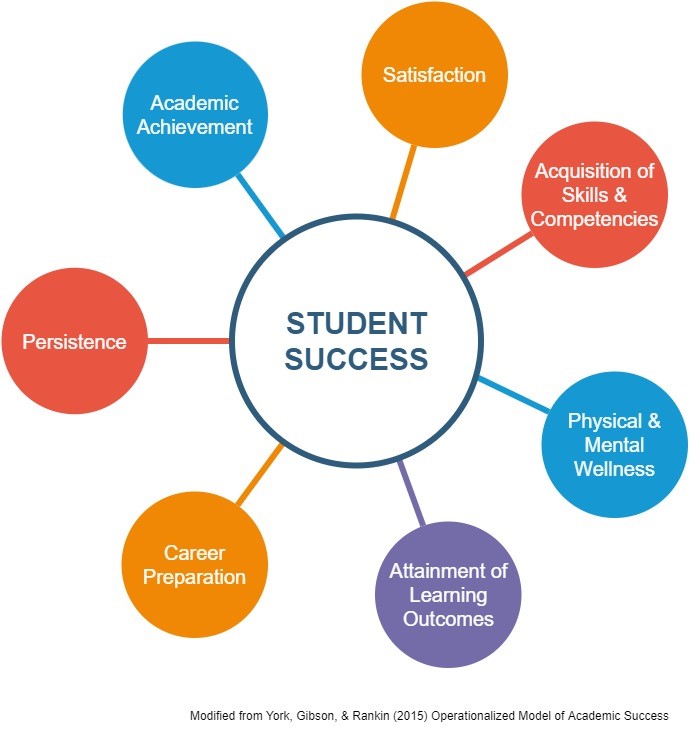
Again, I would argue these aspects (and more) influence all kinds of success, not merely “academic.”
We’ve talked before on this blog about defining success and evaluating outcomes. But for now, let’s focus on reviewing teachers. How do we measure teaching effectiveness? And who should do it?
Not long ago, Edutopia asked this latter question, and summarized research into various teacher evaluation methods. This is their headline and graphic, and you should click HERE to read more.

For now, here’s a quick summary (you’re welcome) on some useful elements to enhance teacher evaluation:
- Teachers should review their teaching with a peer, including fellow experts in content and pedagogy.
- Well–written rubrics (and well-trained evaluators) help provide structure and intentionality.
- Video recordings afford flexibility and efficiency for review, as well as opportunities for self- and peer-reflection. (This one is a personal favorite, and helps you reach “iconic” status.)
- Student feedback can be a powerful supplement to other evaluations, especially to gauge rapport, management, and relative rigor.
Teachers, what do you think? How do you use any or all of these in your self-evaluations and self-improvement?
That last one – student reviews – can be tricky. The researchers acknowledge this, noting that some students may evaluate their teachers too harshly. In the entertainment biz, it’s called “review bombing,” and teachers can be mindful of such pitfalls, however rare. (As one of my mentors used to remind her colleagues, “consider the source.”)
I’m encountering a new sort of review process now that my book, “Teaching Is for Superheroes!” is out and in the public. (Have you heard? Or seen? Or both?)

Writers are cautioned to avoid reading their own book reviews, as this habit can stunt, distort, or even paralyze the creative process.
I’ll admit, I’ve taken a peek at a few reviews of my book. They’re not too bad (yet). And hey, I’ve still been writing! (Exhibit A: This blog.)
Still, I don’t want to get bogged down in second-guessing, cringe-inducing, and/or back-patting obsessions.
Teachers must also be careful in focusing too much on reflection and review that they forget to actually teach. Use reviews purposefully and proactively, but not at the expense of your instruction.
Teachers, what else do you do to review, reflect, and improve your teaching?
Please share your ideas. (Sharing and supporting the profession is a great way to help others AND yourself.)
Here’s one more suggestion: Check out a book on teaching! (I have a recommendation.)
And when you do, please provide an honest review at your favorite online merchant (or two), Goodreads, social media, or your own personal blog or podcast. I promise not to look at it . . . more than twice.










 Teach Like a Superhero!