Stoop Like Hugh

Standard

It wasn’t that long ago that we talked about Wolverine actor Hugh Jackman (and how teachers also need a “Hugh”).

Now we’re back with another teacher tip from everyone’s favorite Australian nice guy actor playing everyone’s favorite Canadian grumpy mutant hero.

(Quite the difference in personality there. I guess that’s why they call it “acting.”)

Let’s talk about one more difference between Hugh Jackman and Wolverine.

In the comics, Wolverine is stocky and short, with a height of 5′ 3″. In reality, Hugh Jackman is 6′ 2”.

It doesn’t take a math teacher to quickly figure out that’s a difference of 11 inches–almost one whole foot in length. (Or 27.94 centimeters for those of you using the metric system–Canadians and Australians alike.)

So how did a tall actor first win the part of Wolverine?

(Remember, before Hugh Jackman got this role for the first X-Men movie, he was a relatively unknown actor. Check out this neat time capsule web announcement announcing–and decrying–the official casting waaaaaaaaaaay back in 1999.)

Recently, CNN’s Chris Wallace asked the actor this same question (or very similar, at least). Zip ahead to the 0:45 mark for the question and answer:

In his explanation, Hugh Jackman also gives an example of his behavior. It may look goofy to “stoop,” but it got him the part! (His thespian skills probably helped, too.)

A while back, I read the following sentence in a reflection paper by one of my future science teachers:

“As an educator, I need to remember that my first priority is to the student. I need to STOOP and listen.”

There was a typo. She meant “STOP and listen.”

Still, my first reaction was to write a snarky response like, “If you teach elementary kids, you certainly will need to stoop!” 🙂

(I didn’t.)

The more I think of it, though, sometimes teachers DO need to STOOP. Not only when they stop and listen, but often when they interact with students. And not just with younger kids, but with all ages and grade levels.


There’s a whole bunch of research on “nonverbal behaviors,” those unspoken actions and mannerisms that occur during human interactions. Teachers can gain a lot of insight and application when they focus on such behaviors in the classroom.

Sure, what teachers say during lessons is vital, such as engaging questions and responses that encourage further discussion and reflection.

But stop and think about what you actually look like when you teach. How is your eye contact? Your facial expressions? Hand gestures? Mannerisms and more?

And where are you compared to your students? The fancy name for this is “PROXIMITY.”

Wolverine (Mr. Logan) demonstrating why teachers should NOT stay at the front of classrooms, especially with their back turned to students.

Proximity is not just the front of the classroom versus the back, or in between student desks (although such movement is important for many reasons).

Proximity also includes the posture and level at which you interact with students. Check out this quote from Sean Neill and Chris Caswell, authors of the book, Body Language for Competent Teachers:

“Leaning towards another person, whether sitting or standing, is an ‘intention movement;’ your intention, if you actually moved, would be to get closer to them . . . . Leaning away sends the opposite signal. Leaning over someone, or being higher than them, is dominant and potentially threatening because if you actually wanted to attack someone you could launch your attack better from above. Sitting or kneeling down to someone, at or below their level, is correspondingly non-threatening” (p. 11)

So I guess we now know why Wolverine is always hunched over, ready to strike.

And we also know why it’s important for teachers to STOOP. Not always, but definitely when working with students in small groups or one-on-one. Leaning and learning–literally at “their level”–conveys a collaborative spirit. We’re in this together to grow and get better!

And who knows? Maybe all this learning will help us become “the best there is at what we do.”

Unlike Wolverine, however, what teachers do–learning and teaching–is VERY nice!

Find more SUPER-teaching resources and strategies HERE or HERE!

“What if . . . ?” and More Marvelous Questions

Standard

The latest Disney+ Marvel series is new in a multitude (multiverse?) of ways.

First, What if . . . ? is noteworthy as the first animated show in the Marvel Cinematic Universe, or MCU. (Spider-Man: Into the Spider-Verse doesn’t count . . . not yet, at least.)

Second, What if . . . ? is significant since it explores all kinds of hypothetical storylines in the MCU. The series takes well-known characters and contexts of the films and follows different routes. (Remember when the first Avengers movie combining multiple film heroes was considered a risky idea? Look how far we have come!)

So far, we’ve seen different characters taking the mantle of significant heroes (Captain America, Star-Lord), as well as heroic characters doing unheroic things. In addition to the allure of endless possibilities, the What if . . . ? series is enjoyable because these alternative tales come in bite-sized episodes. Even so, some of these scenarios have potential for all kinds of fun adventures and far-reaching ramifications.

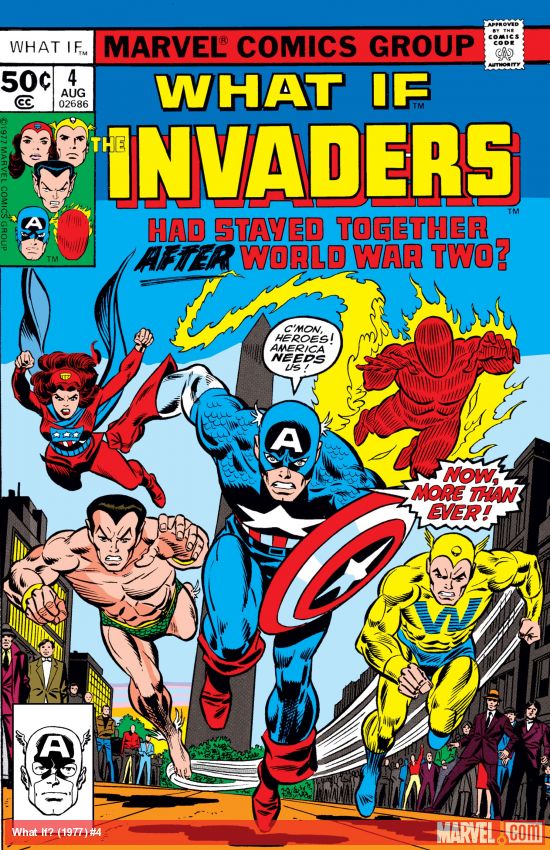
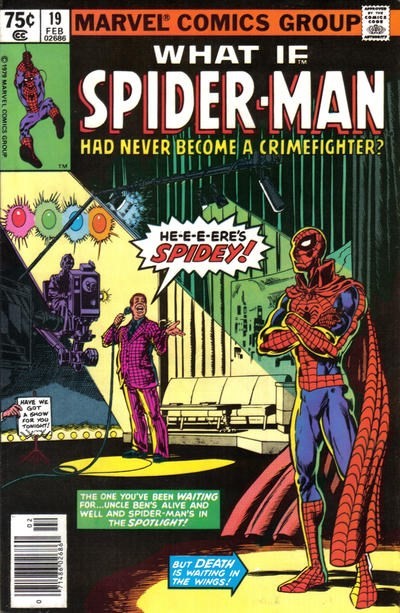
As a testimony to the power of “What if . . . ?” consider how there are 200+ issues of this comic series, begun nearly 50 years ago. As creators publish stories in “regular” comics continuity, other writers can explore branching paths and possibilities.

The question “What if . . . ?” can foster similar results in the classroom. Past blogs have written about the power of questioning, which you can check out HERE and HERE.

It’s important to remember not all questions are equal. Some are more effective in cultivating engaged and reflective students. Below is a list of potential questions teachers can ask to facilitate, encourage, and assess students’ learning.

  • “What if . . . ?”
  • “For what reasons . . . ?”
  • “What do you think could happen if . . . ?”
  • “How might that compare with . . . ?”
  • “Why might . . . ?”
  • “Where else could we . . . ?”

These are just some examples, and I’ve shared more in a recently published article available HERE. Note that NONE of these questions can be answered with a simple “Yes” or “No” or similar dichotomous response.

In other words, students have to go further and THINK about the topic in a more robust manner. Moreover, there’s less chance they can “fake it” or just guess an answer. Often, such work promotes collaboration and communication.

Such open-ended questions may not catalyze a zany tale about alternative Avengers, but they can produce meaningful learning.

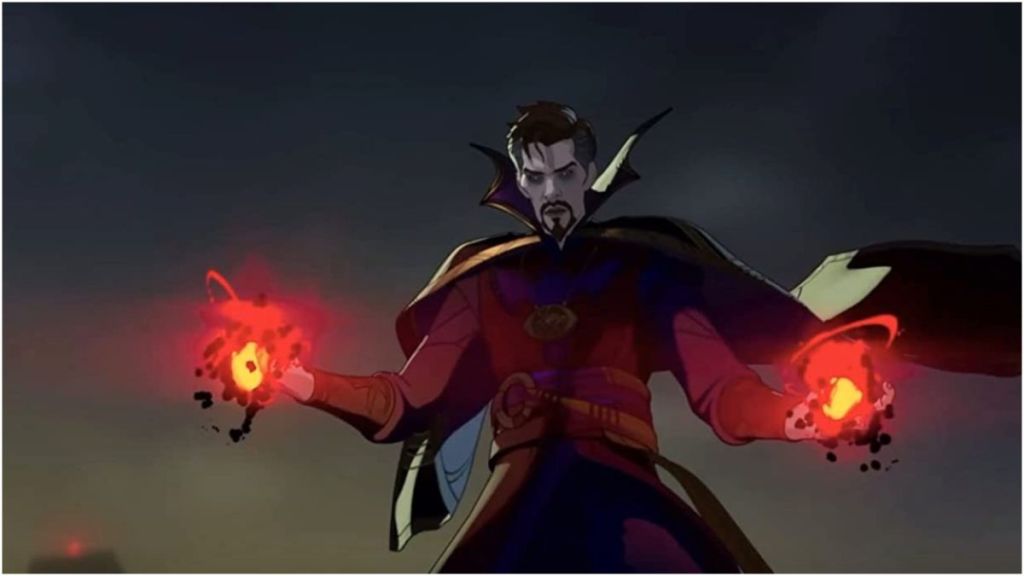
One caution is to beware of counter-productive conversation. When dealing with open-ended questions like “What if . . . ?” there is potential for students to go down pathways the teacher did not intend. While this may add to creativity and application, it could also veer into darker territories. Just consider some of sadder episodes of What if . . . ? we’ve already seen, in which [Spoiler Alert] a hero becomes the villain, or ultimately destroys their world.

Hopefully your classroom won’t pivot to such hopelessness. Still, be mindful of keeping students on-task and oriented toward learning goals. Even when using open-ended prompts, teachers can guide student thinking toward intended outcomes. Such parameters could be as simple as time limits or brainstorm boundaries. For example, a science teacher might pose a challenge that prompts investigation, but requires students to use only certain materials or technology. Sometimes this is called a “testable question” in science classrooms.

No matter the subject, teachers can be purposeful in using “What if . . . ?”-type questions to get the full effect. For inspiration, consider how masterminds behind the MCU have carefully scheduled and set up movies, television shows, specials, etc. Each production features minute details and allusions that result in monumental meaning in subsequent films. (For example, it’s no coincidence that What if . . . ? has come out between the Loki television series and the upcoming Spider-Man: No Way Home film.)

Teachers don’t have the multi-million dollar movie machine like the MCU, but they can still be intentional and inspirational by providing creative, challenging, and coordinated questions for their students.

Just imagine . . . What if . . . ?

Stark Talking

Standard

Nerds love to debate superhero superlatives. Who’s the strongest? Who’s the fastest? Who’s the most powerful?

Thanks to @reddit_user_1948, now we know which Avenger is the most talkative:

Iron Man a.k.a. Tony Stark.

Iron Man lines image


These results are based on comparing dialogue from the six original Avengers in the Marvel movies, summarized below:

spoken lines chart


Dialogue in the classroom is another topic of extensive study. In such research, teachers are like Tony Stark in that they dominate the spoken word.

One of the most well-known researchers in classroom interactions is Ned Flanders.

220px-Ned_Flanders

(No, not this Ned Flanders.)

Back in the 1960s and 70s, Flanders found that 70% of classroom time is talk, and 70% of this time is teacher talk (1970). He also reported that teachers of high-achieving students talked less (55% of the time) than teachers working with low-achieving students (80% of the time).

No mention of cause and/or effect here, but one could also consider the advice of Harry and Rosemary Wong (First Days of School), who note that those who are “doing” more are the ones who are learning more. In this case, it stands to reason that classrooms with higher rates of student talk (on task) would result in greater student learning.

Instead of Tony Stark/Iron Man, perhaps teachers should look to less vocal heroes like Hawkeye, the archer Avenger. Following Hawkeye’s example, teachers can use fewer words with more precision.

Jeremy-Renner-in-The-Avengers-1-600x339


Like well-aimed arrows, teachers could use purposeful questions and prompts to engage students, assess understanding, and guide discussion.

We’ve discussed questions before (such as here), and unfortunately, good questions don’t always come easily.

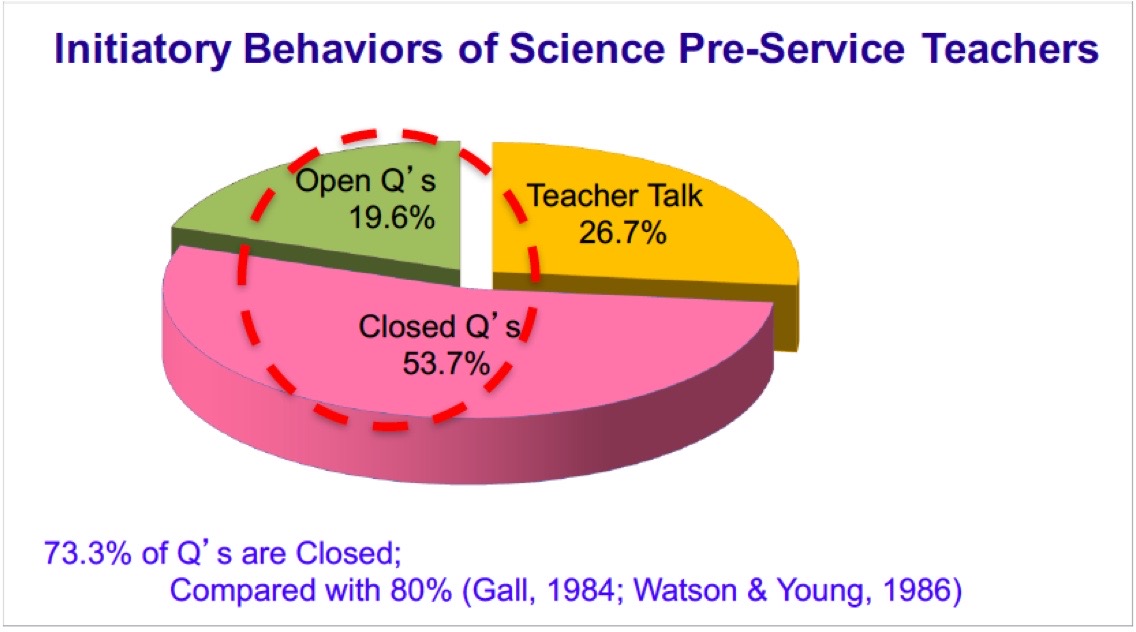
Additional research has found that of the 80,000 or so questions teachers ask annually, 80% of them are low level, requiring simple student responses without much thought (Gall, 1984; Watson and Young, 1986).

Like the Flanders research, some of these studies on teacher questioning are several decades old (“classic”). Effective teaching is timeless, however.

Likewise, several classroom habits still linger. For instance, I’ve studied pre-service teachers’ questioning (Bergman, 2013) and found classroom patterns similar to the past. Here’s a sample of those results:

SciPST_Talk


No matter how much you talk in the classroom, be sure to make it count. Be intentional in your speech with planned questions and responses to engage students in thoughtful learning.

At the same time, be thoughtful in your own teacher talk. Be flexible and nimble, too, ready to “ad lib” when necessary.

After all, one of Tony Stark’s most memorable movie lines was improvised. Maybe you remember this ending to the very first Iron Man film:


Here’s the “behind-the-scenes” story of this famous line, which was instrumental in shaping the entire Marvel Cinematic Universe. Consider how teachers’ words in the classroom can be equally impactful toward student learning and interest.

Adding some humor helps, too.


Summer Break 2015

Standard

It’s that time again when T4SH takes a short break during the summer months.

A break from lengthy blog posts, at least.  Look for resources, updates, and links via Facebook while you’re chilling out poolside, beachside, or inside.

bishop-front summer

Time-traveling X-Man Bishop proves that blue jean cutoffs NEVER go out of style. Just beware that nasty tan line.

BONUS!  Here are some blog highlights from the past academic year, if you need something to review and recharge your mutant teaching energy:

Teachers for Hire – Research and statistics on teachers’ time and money.

Question(s) and Answer – Resources and strategies for asking good questions in the classroom.

Flex Plan – Movie studios plan superhero movies YEARS in advance.  How far into the future should teachers plan lessons?

Fantastic Teaching – Timeless traits of effective teachers, inspired by Marvel’s First Family.

Weird Superpowers – Superman has some weird superpowers.  What’s YOUR weird teacher power?  (Hopefully it is not fake-super-flabby-arm.)

superman at beach

Take time this summer to work on your beach bod AND your classroom prowess.

Educatio!