New History?

Standard

This post comes on the FIRST day of the year, a perfect time to talk history. Specifically, what’s your favorite?

Does it sound strange to have a favorite history? It happens all the time with superhero stories.

What’s your favorite “age” in comics – Golden, Silver, Bronze, Modern?

Image courtesy of Lucky_Strike-85

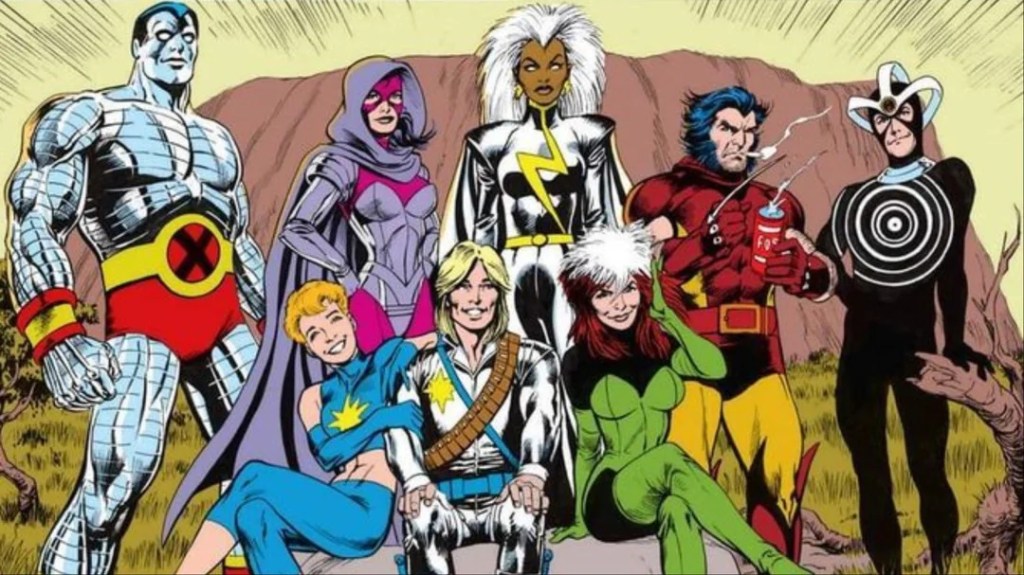
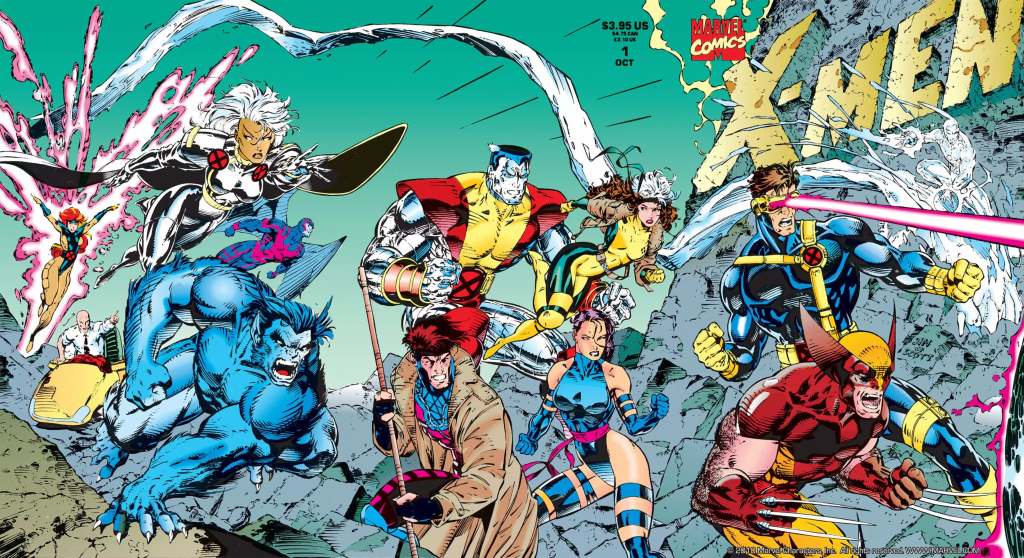
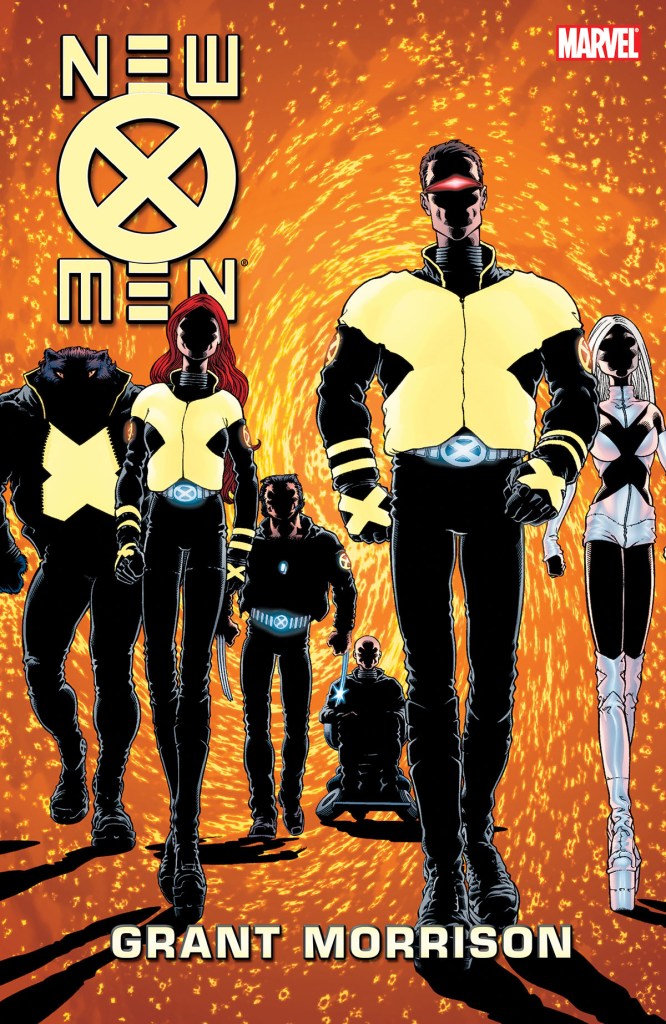
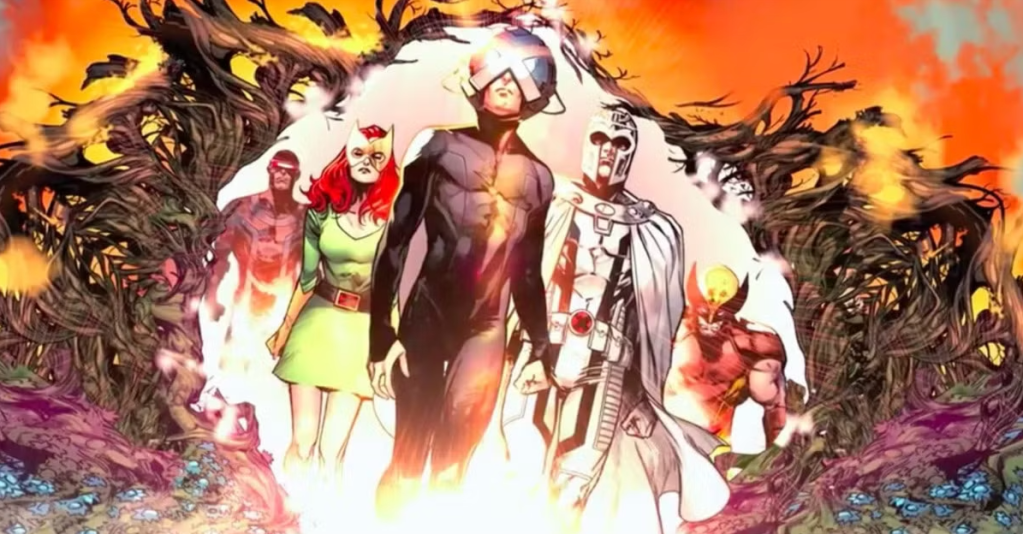
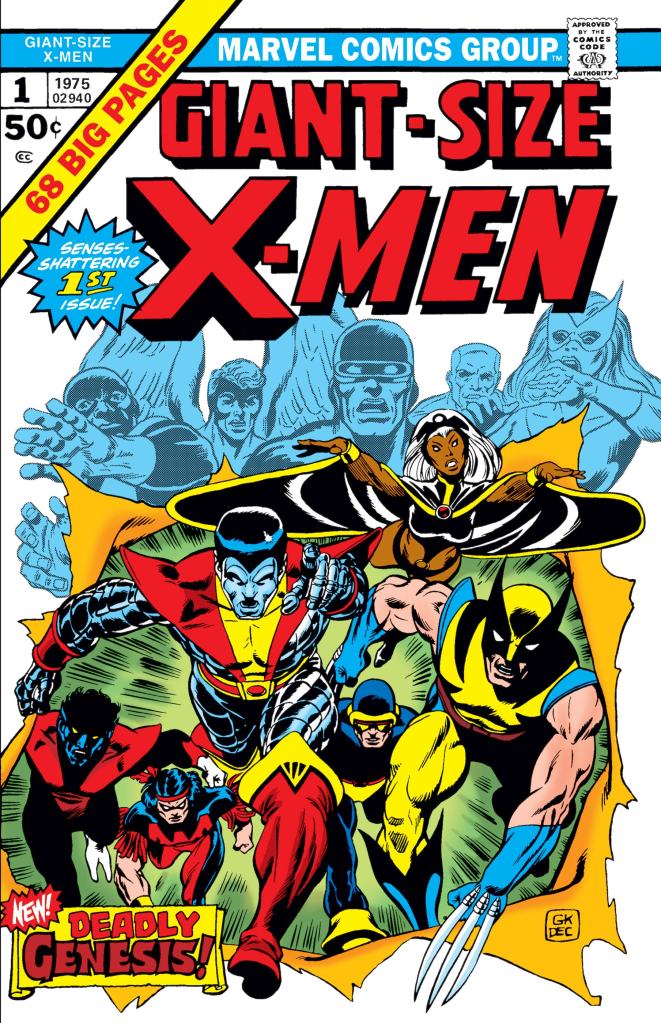
Or let’s talk about a specific cast of characters. What’s the best era in X-Men stories – Xavier’s School, Giant-Size, Australia, Blue/Gold, New X-Men, Krakoa, etc.?

In 2025, DC Comics published a “New History” mini-series celebrating 90+ years of milestones across its comic book universe (and multiverses).

In the words of writer Mark Waid: “It’s a chance to realign all of DC’s sprawling continuity into one master timeline . . . With new information for even longtime fans, plus Easter eggs galore, this series will be an essential read for DC fans.”

Not too many comic book readers have been around to enjoy a near century of DC heroics. Still, I bet most fans have a particular favorite era or version of these iconic characters, their origins, and adventures.

Every few years, it seems DC or Marvel (or both) publish a special event like this to A) celebrate their history and/or B) recalibrate convoluted timelines. These stories usually sell well and provide ample opportunity for debate and discussion.

Mark who? That name sounds familiar . . .

Real-world history is also a hot topic in education, or rather a hot-button topic. Depending on whom you ask, social studies curricula have become either too critical or too censored.

I’m sure each social studies teacher has their favorites when it comes to particular events, eras, or people in history.

Likewise, there may be a few topics teachers don’t enjoy teaching. They may not even personally agree or like some of the stuff they teach. But that does NOT mean they should skip it.
(Full disclosure: When I taught high school science, I was not a big fan of our unit on calorimetry and specific heat. The math was tricky, the labs could be messy or dangerous, and more. Even so, I taught those chapters the best I could, open flames and all.)
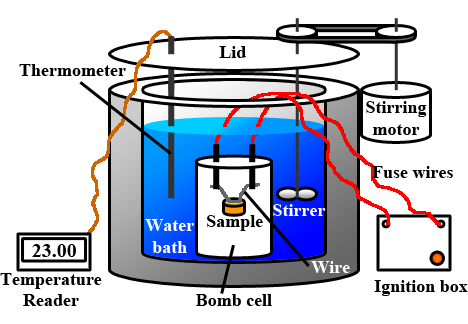
Put another way for social studies, a teacher shouldn’t ignore past or present problems. Doing so would be like a science teacher neglecting to share all the missteps and incorrect assumptions of previous scientists. Or consider the educational malpractice of a literature teacher who removes all context regarding authors and their creations.

Spoiler Alert:
Animal Farm is NOT about agriculture.

It’s okay to have favorite parts of history, just like it’s okay to have favorite superheroes and sagas. A robust understanding, however, explores limitations and acknowledges imperfections. Furthermore, authentic learning involves application and ongoing growth. How can we make things better? How can we promote a HEALING history?

For one more science connection, consider Sir Isaac Newton’s famous quote: “If I have seen further it is by standing on the shoulders of Giants.”

None of those giants were perfect. And some may have been downright jerks. But Newton still learned from their work and developed new ideas and amazing discoveries from them, warts and all. The same is true for teachers and students today.
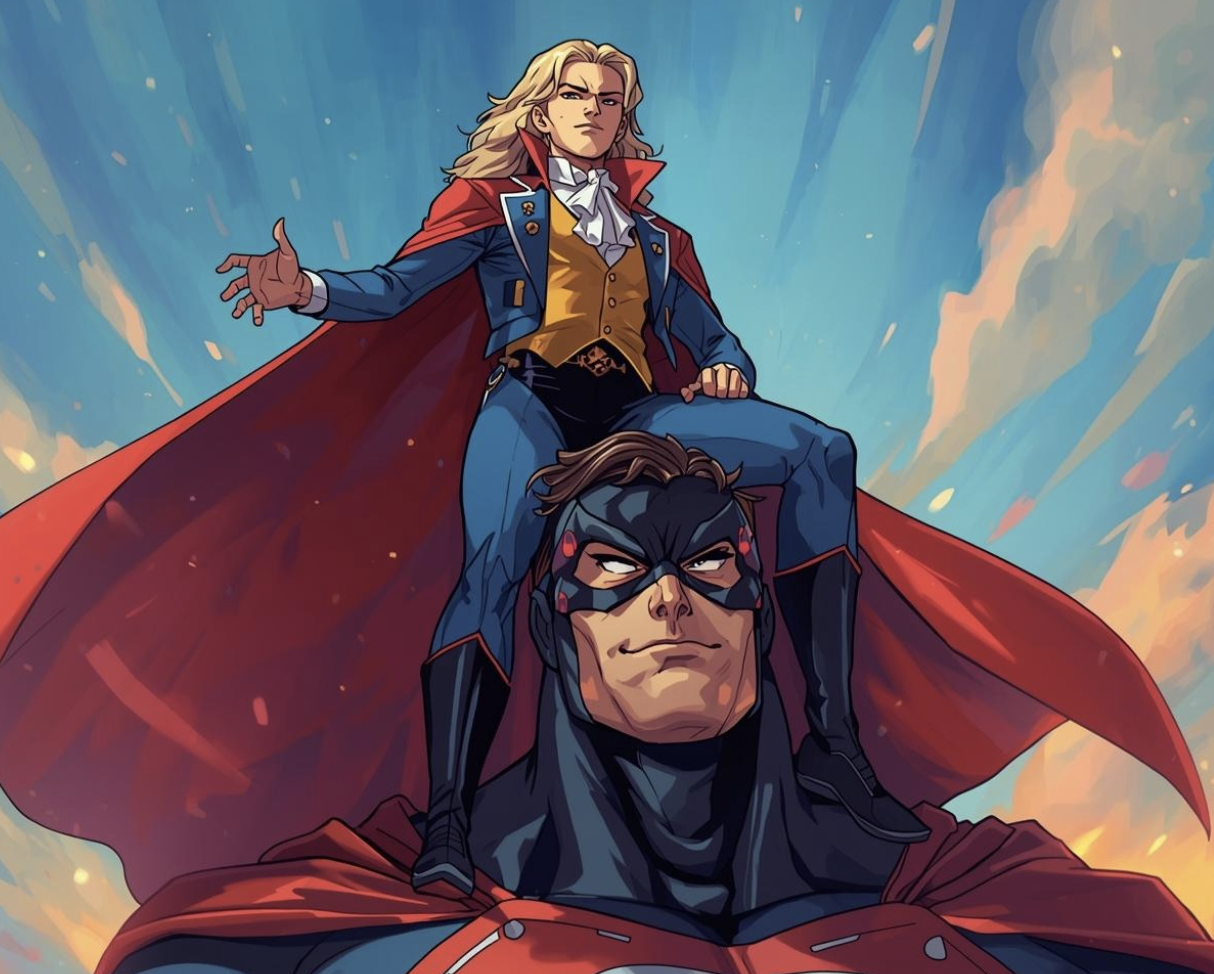
As an added bonus, I used Canva AI image generator to conjure a comic book styled Isaac Newton standing on a giant superhero. Huzzah! (We’ll examine ethical and educational AI issues in 2026, for sure.)

Top Lists

Standard

At the end of every year, you’ll find a smattering of “Top Ten” or “Best of . . .” lists. Do a quick web search and you’ll discover all kinds of countdowns for 2022.

Better yet, we’ve done some reading ourselves and provided a few hyperlinks, including Comic Book rankings by people at Polygon, Den of Geek, and Entertainment Weekly.

My favorite of 2022 was the new Batman/Superman: World’s Finest” series by Mark Waid, Dan Mora, and Tamra Bonvillain. It’s a fresh take on the old-fashioned DC team-up title. The art is dynamic and colorful, with big action mixing up characters both well-known and unknown.

Comics aren’t just full of superheroes, of course, as you’ll notice many different kinds of tales in these “Best” Comic Books.

For more capes and cowls, you can also find “Top” lists ranking favorite superhero television series, such as one by the folks at IGN.

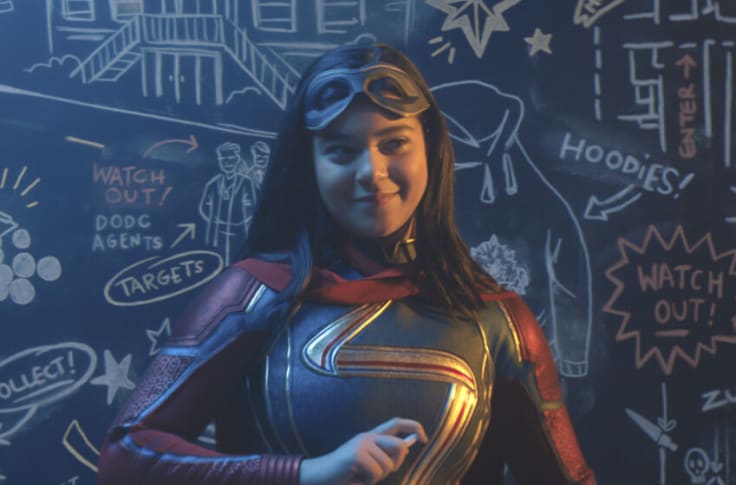
Again, my two-cents’ worth is that Ms. Marvel was the best choice in a very robust slate of superhero TV in 2022.

I’ve already talked about Ms. Marvel in a previous post. Simply put, it’s another fun teen title in the tone of Spider-Man.

Like Spidey, Ms. Marvel begins with our hero learning about their powers and living among family and friends. But “trial-and-error” adventures at the street level soon explode into a globe-hopping (and time-traveling) quest. Good stuff!

In addition to TV and Comics, there are even “Top” lists for Teachers!

Places like Education Week and Education Next highlight the most-read blog posts and articles in 2022. A lot of these deal with policy and trends in curriculum, as opposed to direct classroom practice. Still, it’s good to stay up to date with the latest. Keeping current is even more vital with RESEARCH in teaching and learning, as featured in Edutopia’s “10 Most Significant Education Studies of 2022.”

Here are a few of my favorite takeaways from their Top Ten:

#1 THERE’S NO CONFLICT BETWEEN RELATIONSHIPS AND RIGOR

“The researchers found that the most effective teachers build their classrooms by getting to know their students, being approachable, and showing that they enjoy the work—and then deftly translate emotional capital into academic capital.”

#10. AN AUTHORITATIVE STUDY OF TWO HIGH-IMPACT LEARNING STRATEGIES

“In the review, researchers explain that students who prefer techniques like reading and rereading material in intense cram sessions are bound to fail. Instead, students should think of learning as a kind of ‘fitness routine’ during which they practice recalling the material from memory and space out their learning sessions over time.”

Similar to “Top” rankings for the previous year, you’ll also find “Most Anticipated” lists previewing upcoming movies, comic books, and more.

Just as teachers can gain insight from reviewing the “best” of the past, they can also find inspiration in previewing the future.

What are you anticipating most in the next year? (Maybe a new book?)

Better yet, how can you help your students look forward to the future?

Flashy Teachers

Standard

We’ve been a little light on blog posts lately, but for good reasons!

Over the past year, I’ve been busy writing a few other projects. The first one is coming out in February 2019:

agesofflashcover

My contribution to this book is only one chapter – “Impulsive Students, Speedster Teachers, and Education in the 1990s” – and here’s a preview:

In 1994, DC Comics presented a potential poster child for 1990s adolescence: Bart Allen, a.k.a. Impulse—a time-displaced teen speedster from the future with a short attention span, entertainment-first obsession, disregard for adult instruction, and a habit of leaping-before-looking. This chapter focuses on mentors Impulse encounters along the way—namely Wally West and Max Mercury.

To frame my analysis of Bart’s teachers, I applied the 1998 text Approaches to Teaching by Fenstermacher and Soltis.  And, of course, I used content from over two dozen different comic books. Here are a few examples:

flash_newcurriculum

Wally West (The Flash) is similar to an “executive teacher,” hastening with curriculum, outcome-oriented lessons, and direct instruction for his student Bart.  Taken too far, this teaching can overwhelm the student, even one with super-speed. And the results can backfire . . .

flashvimpulse


In contrast to Wally, Max Mercury is more like a “therapist teacher,” also called a “fostering” or “facilitator” teacher by Fenstermacher and Soltis.  But I doubt the authors envisioned a “therapist teacher” doing things like these . . .

impulse_training_7

As a “therapist teacher,” Max focuses his attention not only on Bart’s skills, but also on the teenager’s personal development — making friends, making decisions, experiencing effects of relationships and choices. Cultivating personal development means not always giving students an answer, even when they beg for it at super-speed:

impulse_max_3

Other times, a therapist teacher simply tells the student the honest truth, helping them refocus on the important goals:

impulse-1-1995


What kind of teacher are you most like? Both approaches have strengths, some more advantageous in one situation or another.

Learn more when the book comes out February 2019.  You can find it HERE and HERE.

In the meantime, we’ll revisit some of these topics here on this blog – hopefully sooner rather than later!


Changing Tools

Standard

captain-america-700-header-preview-1

Long-time readers of this blog will know that Captain America is one of my favorite heroes. (Just take a look at these posts about Iconic Images, Teacher Evolution, and Grit-ty Heroes.)

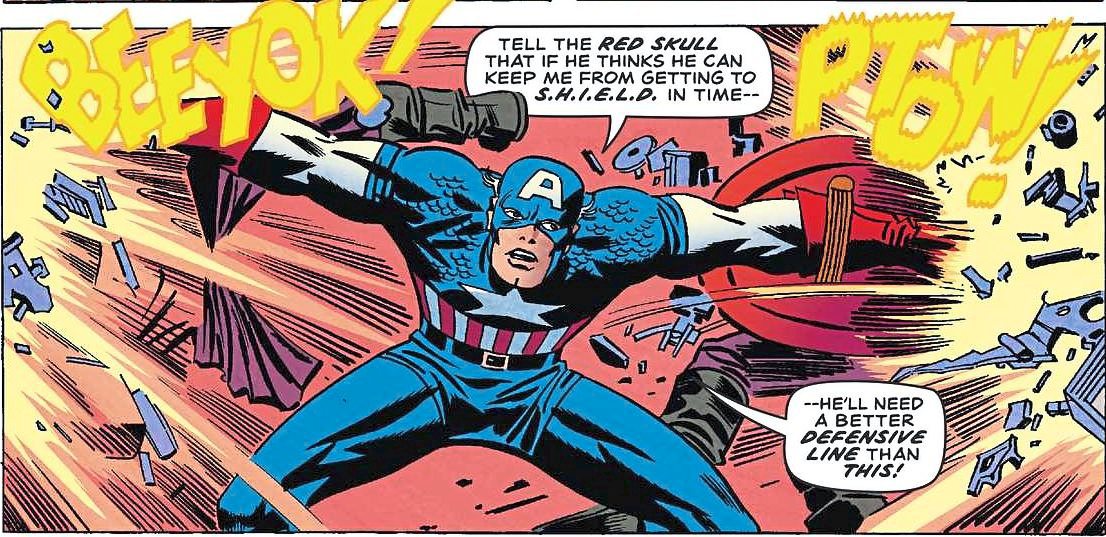
Recently, Marvel Comics released the landmark issue Captain America #700, which includes a special back-up story using unpublished pages drawn by the late, great co-creator Jack Kirby with a new script by current writer Mark Waid.

Check out this classic artwork brought to life:

doc6zohpy799l056rhpgm8


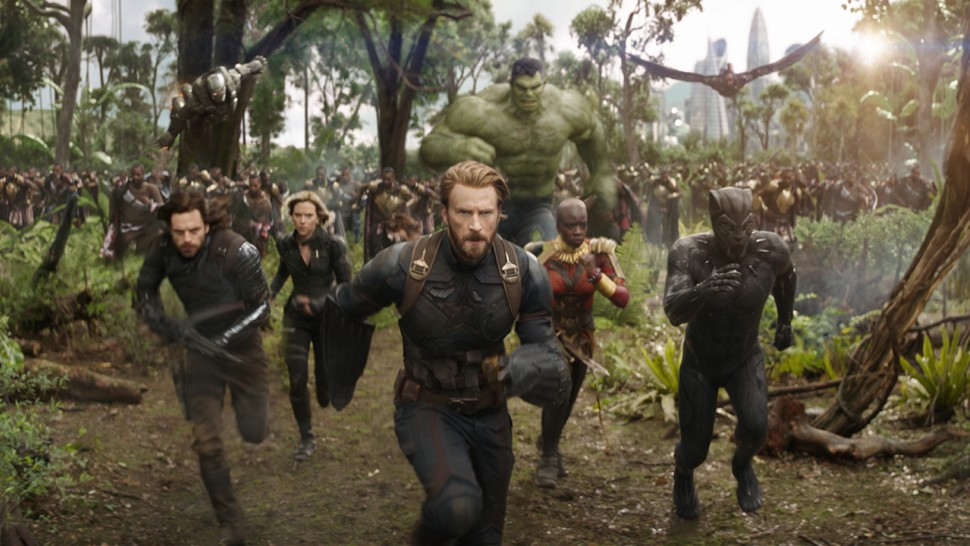
In the new Avengers: Infinity War film, Cap has a whole new look. Besides facial hair and muted uniform colors, another noticeable difference is his missing shield.

1280-avengers-infinity-war-image


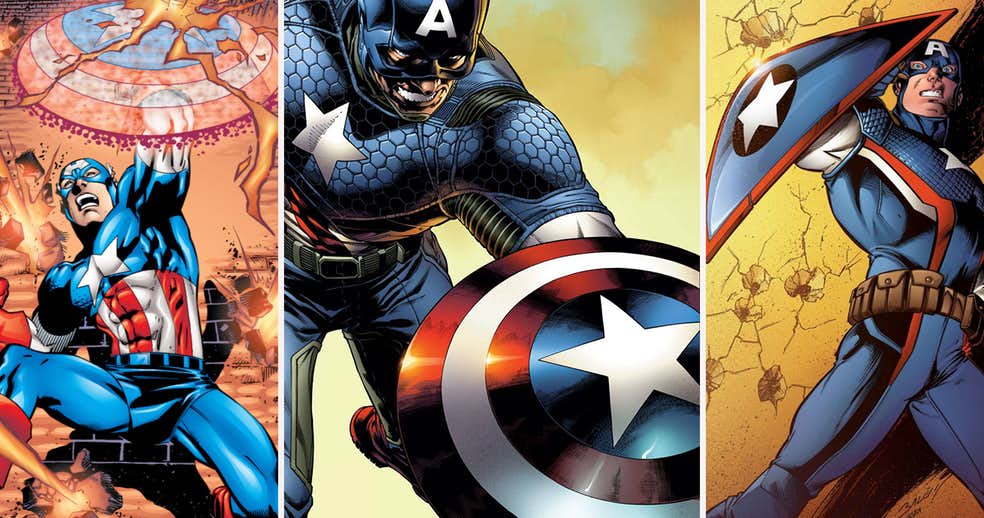
Over the course of decades and different media, the Star-Spangeled Avenger has used a variety of shields. In fact, the good folks at Comic Book Resources have published a list of TWENTY Captain America shields, ranked from worst to best.

cap shields


Each of these shields are unique, but they all serve as both defensive and offensive tools.

Captain America has his shield. Spider-man’s got his “web-shooters.” Batman has endless  batarangs. Green Lantern uses his ring (and lantern).


What trademark tools do teachers use?

Perhaps the most iconic tool of teachers is the chalkboard (and all its derivations). Just do a quick Google search of the word “teacher” and you’ll discover an array of people posing in front of a chalkboard:


This slideshow requires JavaScript.

As seen in these images, the chalkboard is cross-cultural and used world-wide.

Much like Captain America’s shield, teachers’ chalkboards have transformed over the years.

First we have the chalkboard:

chalkboard tr

In black OR green varieties!


Then we got the overhead projector:

overhead projector

You can face the entire class while you write – BONUS!


Then came whiteboards:

whiteboard1

Less chalk dust, but more mind-altering marker smells!


Add a projector and computer connectivity, and you get a SMARTBoard:

smartboard2


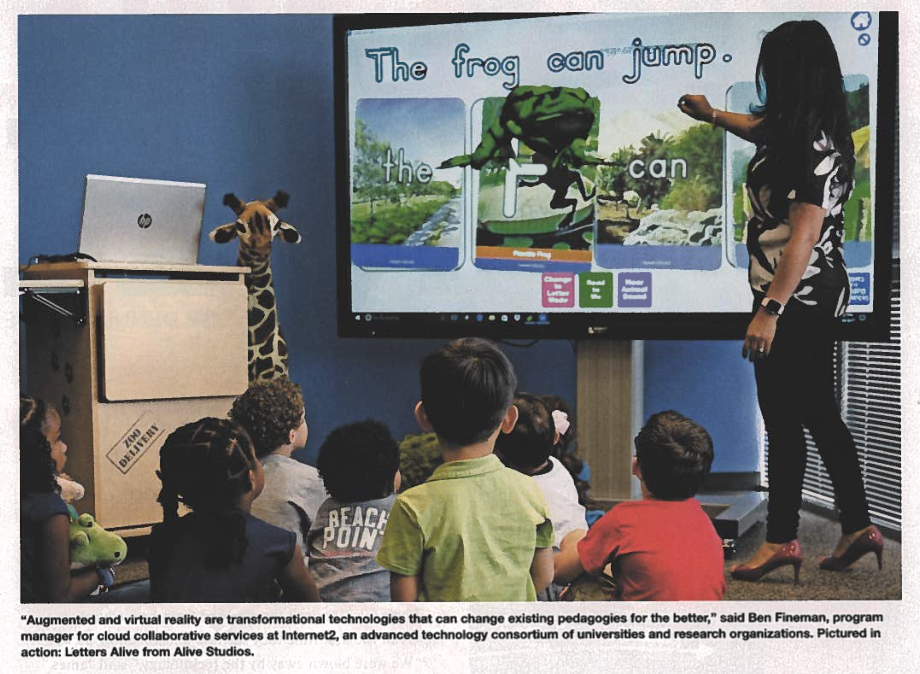
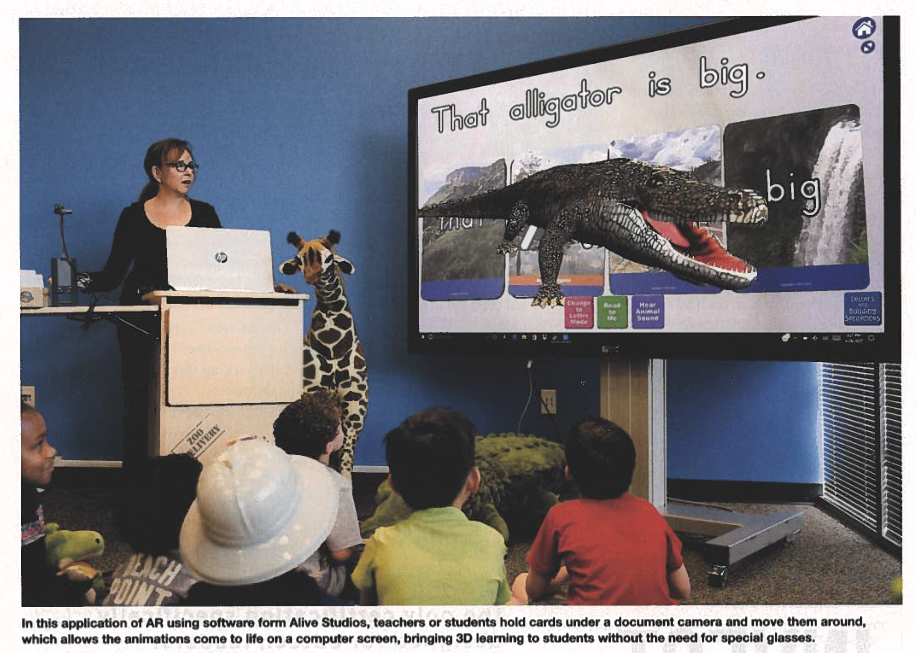
More recently, the advent of “Augmented Reality” (AR) is a new addition to standard SMARTBoards. Here are two photos courtesy of the March/April 2018 issue of THE Journal:

AR photo 1AR photo 2

No matter the board, each version serves in the same general capacity – to display visual information, record ideas, provide an avenue for students and teachers to share, and more.

And like Captain America’s shield, the actual effectiveness of the tool depends on the expertise and ingenuity of the user. A state-of-the-art tool used poorly yields shoddy results.

Honestly, the above photos of AR-using teachers are problematic. In one, the teacher is fixated on the board instead of the students; in the second, the computer station is a barrier blocking the teacher from her students. Both examples are just snapshots, but both could be improved with more flexibility and responsiveness to the students.

Let’s look again at Captain America’s multiple shields. Besides the standard round metal variety, I’m particularly fond of Cap’s energy shield.  One version of this tool could change according to the user’s purpose:

single-shield-shape


So teachers, whether you have a dusty chalkboard or spiffy AR-enhanced SMARTBoard, or anything between, please be sure to use it well. Practice to increase efficiency. Welcome student contributions. And use it creatively, adjusting to the context of the lesson and learners’ individual needs.