Reboot, Reteach, Recycle

Standard

Earth Day was just a few weeks ago, so here’s your annual reminder to take care of our planet EVERY day!

And if you need a SUPER reminder, here’s Captain Planet and his Planeteers!

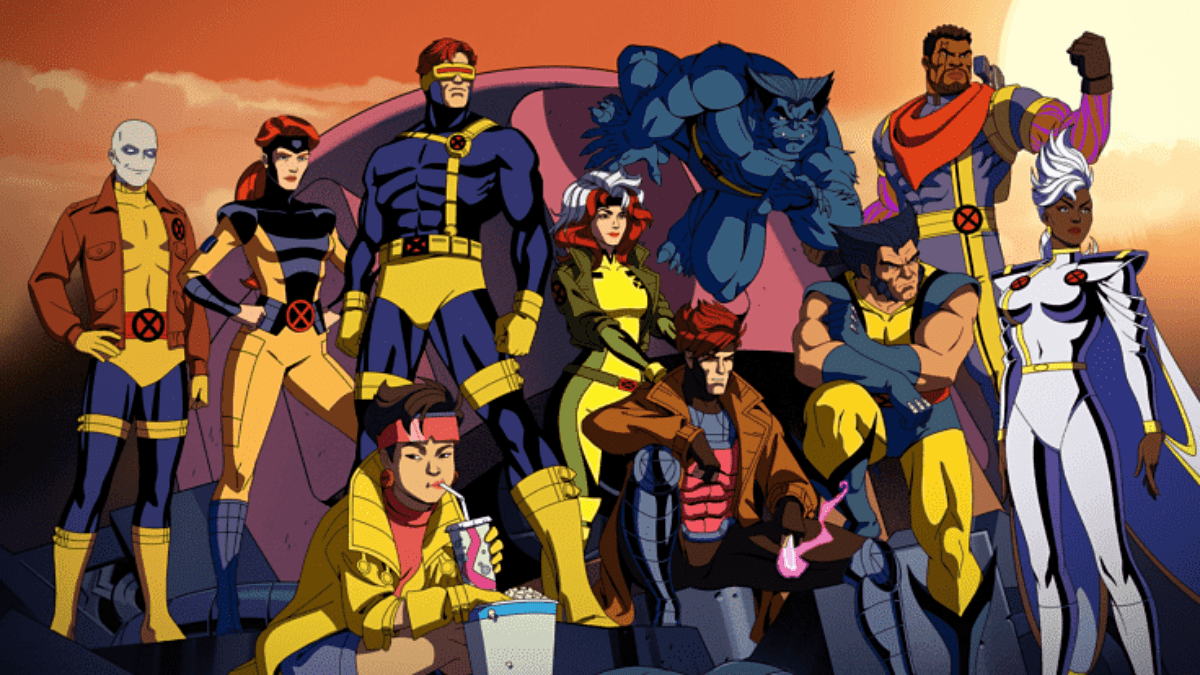
Another 1990s product has recently made a triumphant return. X-Men ’97 is receiving “rad” reviews for its continuation of character arcs and plot threads created over 30 years ago on a Saturday morning cartoon. Check out the show’s neo-retro trailer:

Confession time: While the X-Men were my “first love” among superhero comics, I didn’t pay much attention to the animated series. For one, our household TV didn’t get the Fox channel. Second, I thought the cartoon was a pale imitation of the more “authentic” comic book continuity.

I’ve consumed enough pop culture, however, to recognize that any continuity of a decades-long franchise is flimsy at best, beholden to whoever is in charge at the moment. Fans should just pick the stuff they enjoy and ignore the rest.

And now I’m enjoying this new/old cartoon with my own kids. The show captures two main draws of Marvel’s “merry mutants” in animated form:

1) Style (snazzy outfits with bonus buckles).

2) Soap opera melodrama (in a handful of episodes, we’ve already gotten deaths, births, rebirths, clones, time travel, and enough love triangles to prove the Pythagorean theorem thrice over).


Of course, one must always be careful with nostalgic viewing through ruby-quartz glasses (get it?). This applies to both entertainment and education.

Just because something evokes fond memories doesn’t mean it was flawless. We can easily forget the rough spots. In teaching, this comes up whenever you hear comments like, “Why can’t we go back to . . .?” and “Things were a lot better when . . .”

Ah yes, the good old days!

Of course, a similar hazard is ogling at the latest trend and thinking it’s all that and a bag of chips. (There’s another 90s reference for you.)

If you find yourself chasing fads, watch the following video from the Veritasium channel about “the most persistent myth” in education, namely the assumption that some new thing will revolutionize education:

There’s a third danger, particularly to veteran teachers. Anyone who’s been around education for a while will eventually experience déjà vu. That’s not surprising. Every year is an astronomical loop, back to where we started.

Hang around long enough in education, and you’ll notice hints of familiarity among “innovative” ideas. Teachers may be tempted to assume a jaded stance and grumble, “Here we go again,” or “We’ve already tried this.”

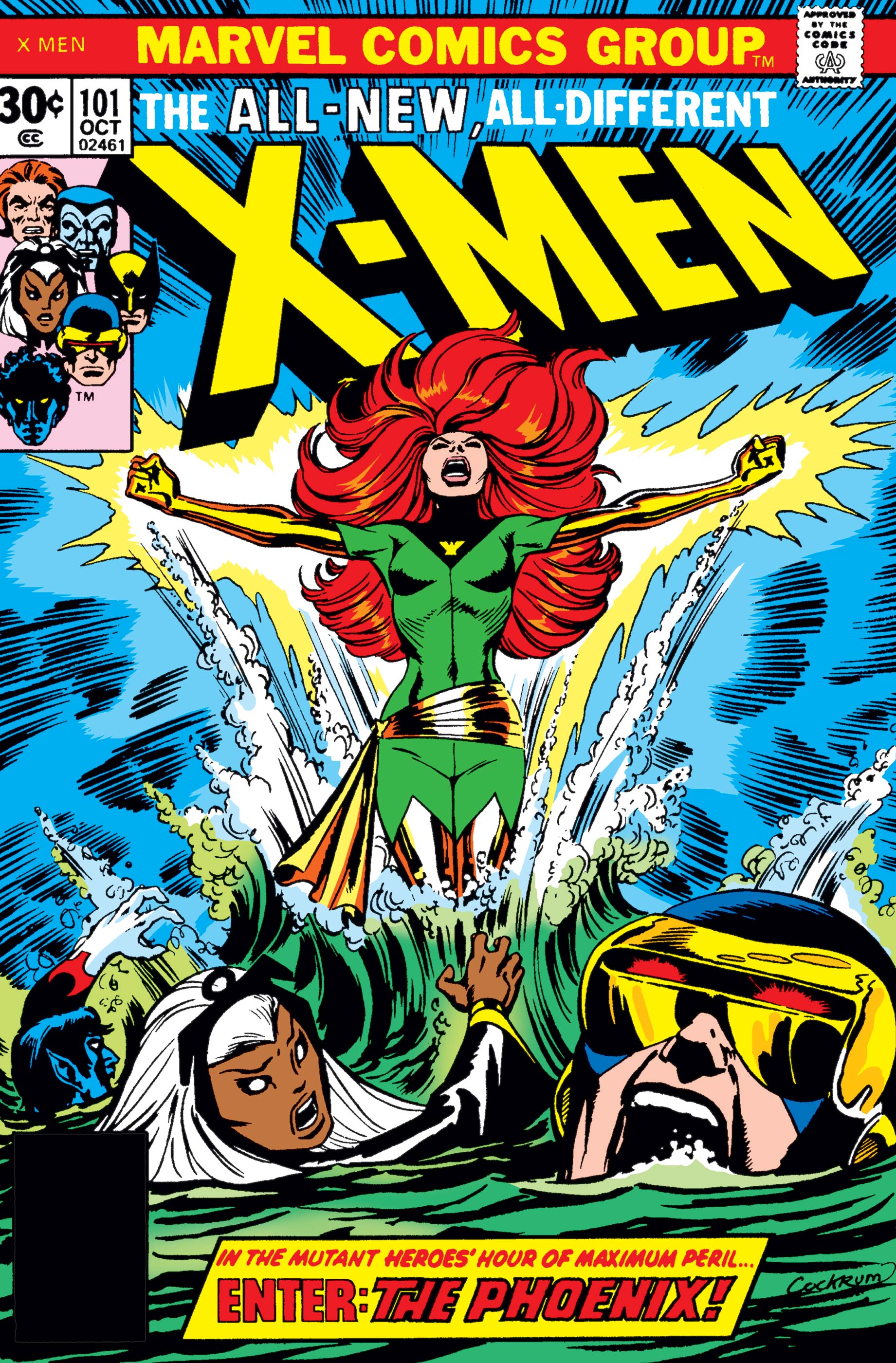
Please resist this apathetic posture. Yes, shiny school things are often simply repackaged relics. But consider the strength of something that runs through waves of reform. Maybe there’s a reason it reappears time and again. (Sort of like a phoenix?)

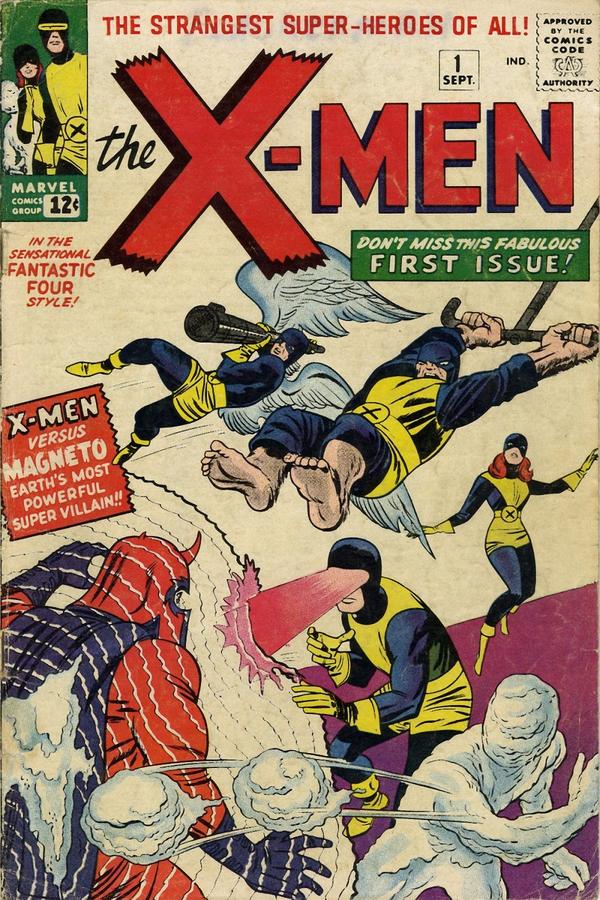
We’re talking about teaching here, but the same is true for the X-Men and other superheroes. How many times have classic stories and key character moments recurred over the years among different media?
Heck, as I’m writing these words, my family has been enjoying Little Women on TV. This is the 2017 “Masterpiece Theatre” version, not the movie from 2019. Or 1994. Or the four other films before those. There are other adaptations, too, like graphic novels and manga.
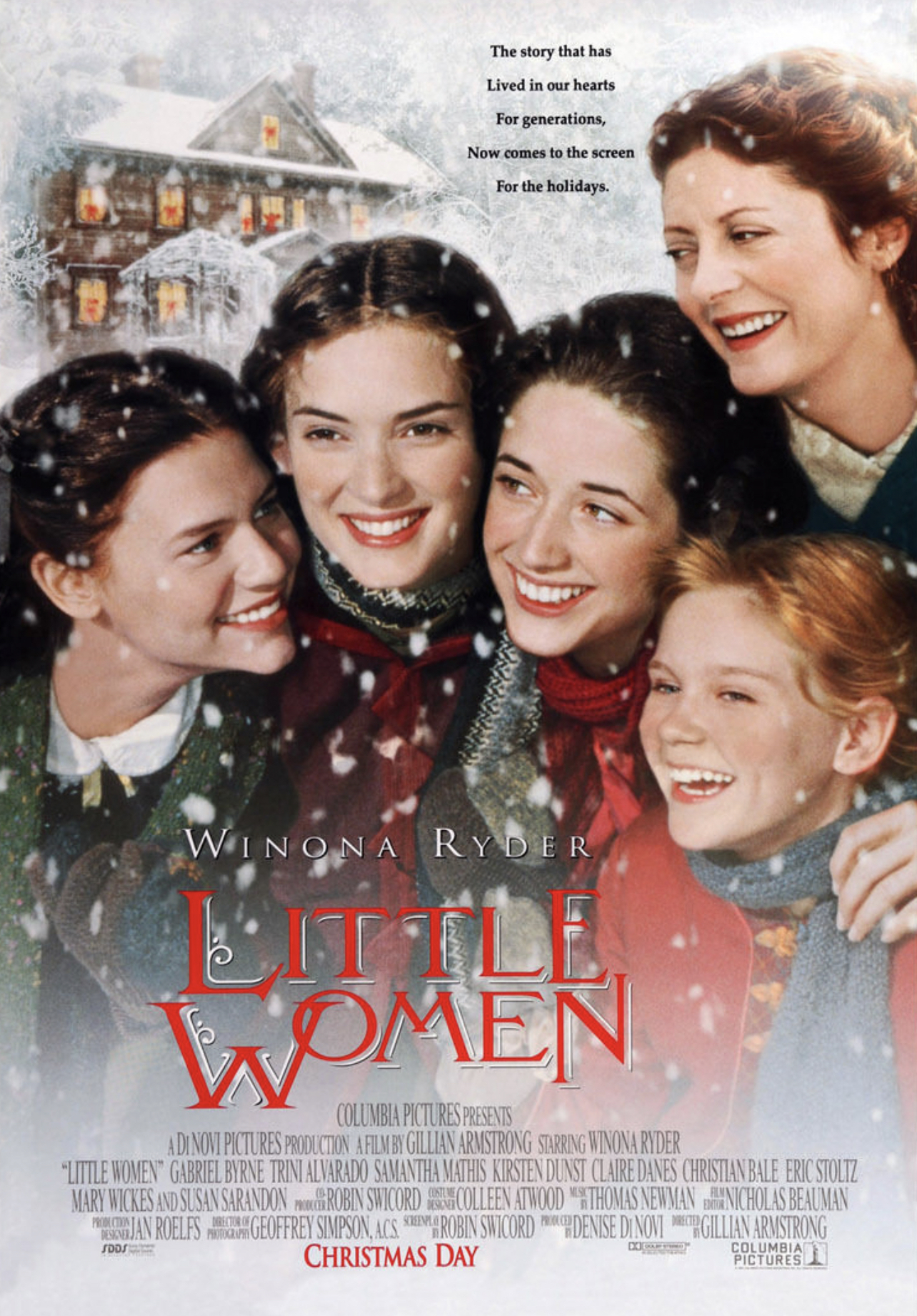
Multiple retellings reveal a beloved and durable tale. Whether it’s X-Men, Little Women, or classroom instruction, focus on elements that withstand the test of time and trendy tides.

This doesn’t mean sticking to a single interpretation, but rather celebrating and cultivating quality. Whether something is new or classic, deconstructed or reimagined, relevance relies on excellence.

Or rather, X-cellence!
Non-Mutant Teachers

Standard

My favorite superhero team has always been the X-Men.  I’ll admit, these mutant heroes first caught my eye with their nifty matching uniforms.  Plus, “X” is the absolute coolest letter in the alphabet by far.  (Uncanny Y-Men . . . just doesn’t cut it.)

X-Men_Vol_1_1

The main reason I like the X-Men, however, is because this superhero team’s origin starts at a school.  “Gifted youngsters” have gathered together not because they’re family or friends or famous heroes, but instead to learn and understand their powers and identities.  And ultimately, these students strive to “protect a world that hates and fears them.”

A new generation of students has taken up the cause of Professor X, as featured in the series Wolverine and the X-Men.  Unfortunately, headmaster Wolverine has recently died in the Marvel Comics world, leaving a void in the faculty at the Jean Grey School for Higher Learning.

I bet Wolverine’s health will improve soon, but in the meantime another hero has joined the staff of mutant educators:  your friendly neighborhood Spider-Man.

Spider-Man_The_X-Men_1_Preview_3

That’s Mr. Spider-Man to You

One potential problem, though:  Spider-Man is NOT a mutant.  In other words, he was not born with his extra-human abilities.  Peter Parker needed a radioactive spider bite to get his superpowers.  Remember this iconic scene?

1567552-parker_spider_bite_super

Pre-Spider Bite Peter Parker = Lame-o

Differences in genetic background and superhero lifestyle could become a source of conflict not only between Mr. Spider-Man and his students, but also with the mutant teachers and staff at the school.

Such educational discrepancies do not occur in comic books only.  They can also arise in real life.

Real World Research

Research studies have found a “racial/ethnic gap between students of color and their teachers,” something that has increased over the years (Villegas, Strom, & Lucas, 2012).  With a growing population of minority students, teachers from similar racial/ethnic backgrounds are in high demand (Bireda & Chait, 2011).

Why is it important to match teacher and student demographics?

One may assume that students react more positively to teachers who share common characteristics.  Likewise, minority teachers can serve as positive role models to minority students.  However, clear empirical evidence of these assumptions is hard to find, understandable given the complexities of schooling and learning.

Some research studies have found learning gains when teachers and students share similar ethnicity (Dee, 2004; Klein, Le, & Hamilton, 2001).  Nevertheless, these reports note an underlying factor that could have the greatest impact on student success:  the actual quality of the teacher.

peter_parker_spiderman

Mr. Parker

Spider-Man does have previous teaching experience.  While plainclothes Peter Parker during the day, he did a stint as science teacher for his alma mater, Midtown High School, in Queens, New York.

250px-Midtown_High_School_from_Spider-Man_Season_One_Vol_1_1

Home of the Fightin’ Living Brains!

Mr. Parker’s public school teaching experience reflects real world trends.  Typically, teachers like to teach close to where they grew up as students (Reininger, 2011).  Or if not the same or nearby location, teachers may teach in a similar type of district or community.

That was me.  I grew up in a small Nebraska town of ~4,000 people.  I graduated from a public high school with a class of ~70 students.  My first teaching job was in a small Nebraska town of ~4,000 people (about 130 miles from my hometown).  Each graduating class at this public school had ~70 students.

What about you?  Where did you go to school?  Where do you teach?  

One of the biggest advantages about the teaching profession is that it can take you anywhere in the world.  Once I had a student encourage me to apply for a teaching job in Dubai.  (Maybe he had selfish motives for introducing me to this opportunity.)

But one of the biggest challenges about teaching is that it requires extraordinary effort to assimilate the context and culture of the school when you first start.  Even teachers who teach in their hometown must navigate through this transitional period.  Moreover, imagine the degree of difficulty for teachers new to a community, culture, and/or country.

It makes sense that teacher recruitment initiatives focus on fostering “pipelines” to increase quality teachers from high-need urban and rural settings (CTEP, 2014Darling-Hammond, 2011).

Mutant or Non-Mutant?

As much as I’d like, I can’t turn myself into a mutant, or even a super-powered human.  (I’ve been bitten by spiders before.  No wall-crawling abilities yet.)  Still, I can be the best teacher I can be, no matter where or whom I teach.

Regardless of our ethnic, cultural, genetic, or other demographic descriptors, we can all work to cultivate meaningful relationships, creating memorable learning experiences for our students.  Part of this work includes finding ways to connect with the kids and their community.

Don’t try to fake it, however.  Students have a special (mutant?) ability to see through disingenuous teachers, even those with good intentions.  Admit your differences, if need be, and authentically work to find common ground.  A universal purpose in all schools is to expand understanding and appreciate learning.

Who knows how long Spider-Man will stay on staff at the Jean Grey School for Higher Learning?  You can read more about the creators’ plans for Spider-Man and the X-Men herehere, and here, if you’re interested.  I hope Mr. Spider-Man makes a positive difference during his tenure, long or short.

Spidey may not be a mutant, but he does know a little about struggling to make it in the world (of both heroes and humans).  Additionally, he has firsthand experience learning the importance of “great powers” and “great responsibility.”

And like the best teachers, Spider-Man should learn from his students as much as they learn from him.

Spider-Man__The_X-Men_Bengal_Variant-720x1093

Favorite Superhero Teacher?

Standard

Wolverine is staying with the whole “teacher thing” for another semester at the Jean Grey School for Higher Learning.  You can read more here and click on the image below to review Mr. Logan’s pedagogical methods:

WolvTr

(Don’t even ask about detention.)

So who’s your favorite superhero teacher?  Chime in!