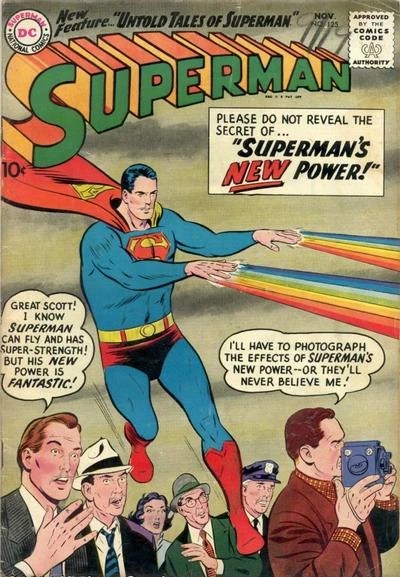
Let’s take a look at one more element of Superman lore and its educational applications – Kryptonite.
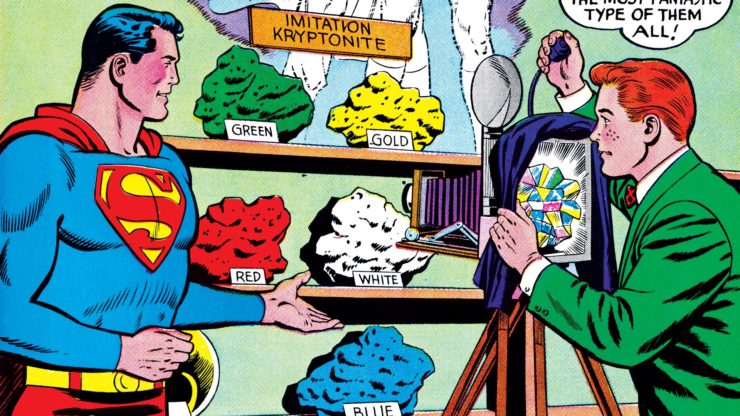
Most casual fans know that Kryptonite is the radioactive green mineral that can weaken or even kill Kryptonians like Superman. What you may not know is that there are ALL kinds of Kryptonite colors – each one with its own side effects.
My personal favorite is Periwinkle Kryptonite, which you can learn more about HERE.
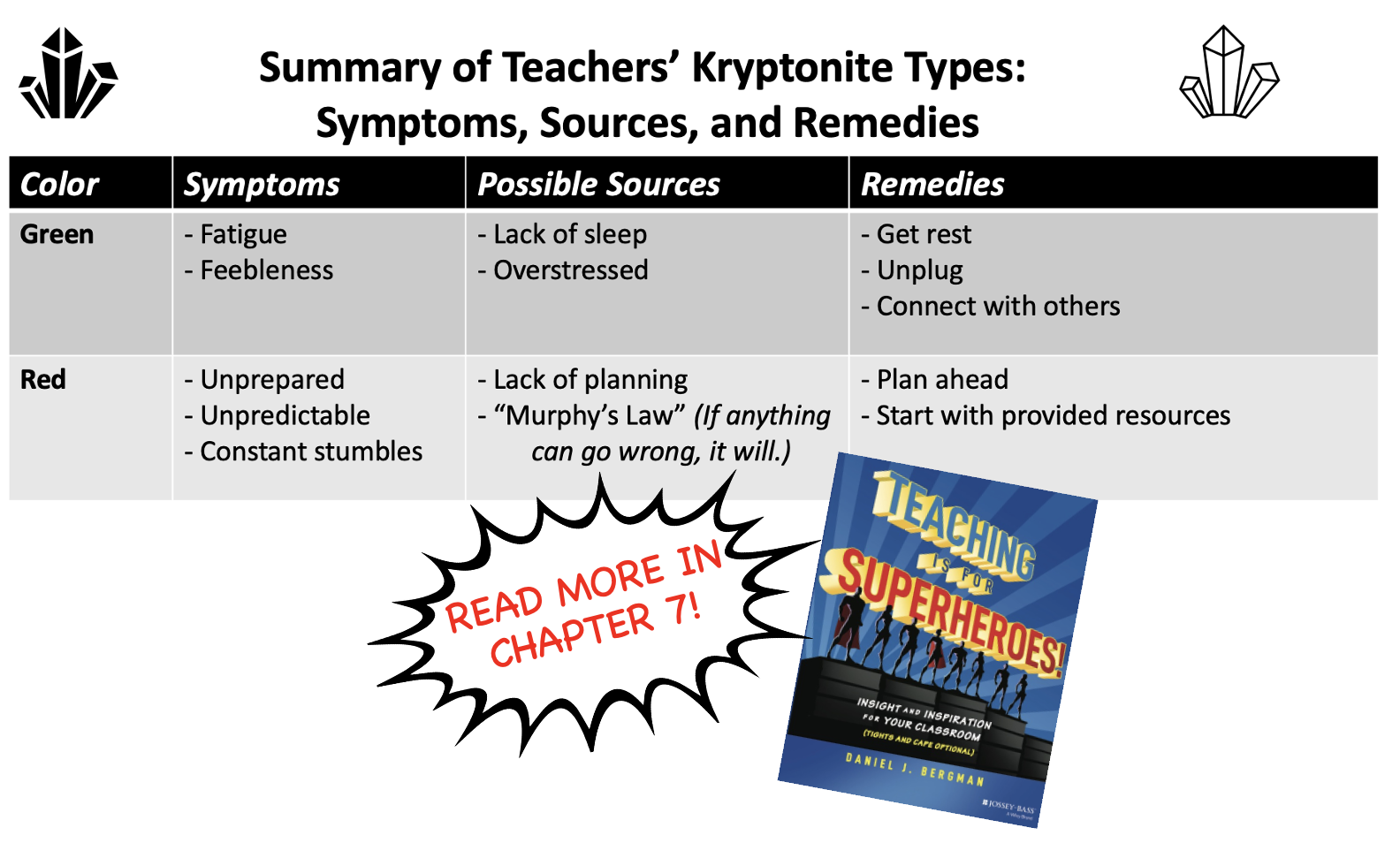
In my book, Teaching Is for Superheroes!, I devote an entire chapter to assorted Kryptonite colors and parallel vulnerabilities experienced by teachers(e.g. green = fatigue, red = unpredictability, white = lack of growth, etc.). Here’s a sneak peek:
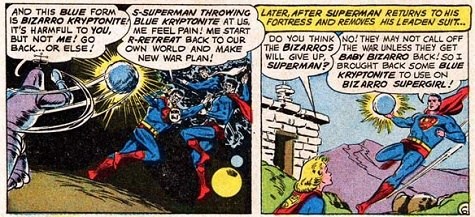
One color NOT covered in my book is Blue Kryptonite. This type is harmless to Superman, but is dangerous and lethal to his distorted doppelganger, Bizarro.
How does Blue Kryptonite apply to teachers? Each educator has their own strengths and weaknesses, personalities and professional expertise. It stands to reason, then, that we each may be vulnerable under different contexts and conditions.
Think of it this way: What’s an issue you consider no big deal, but is an incredible struggle for a colleague? When others want to rip out their hair, you simply shrug your shoulders.
This could be anything during a given school day or year. There are “big” things like curriculum choices, assessment plans, or management models. Or it might be something “small” like a fire drill, a jammed copier machine, or empty coffee pot*.
*If you’re not a coffee drinker, who cares? But watch out for Shannon, who gulps down three Ventis before lunch.
Many challenges become less of an issue as you gain experience and skills. Regardless, a seemingly “minor” item may be VERY “major” to a particular person.
Vulnerabilities often appear alongside our strengths. Teachers with meticulous lessons might struggle when plans change. Others who “wing it” day-to-day could falter when they must prepare for a substitute teacher or formal observation. Someone who’s a wiz with Apple technology could feel useless with a Chromebook, and vice versa.
Here’s the beauty of Blue Kryptonite: Those unaffected can help others who struggle. And we should ALL stay humble, knowing every one of us has our personal pitfalls.
Don’t view someone as “bizarre” for their unique liabilities. Instead, look for ways to support them and learn as a community of imperfect individuals.
This applies to our teaching colleagues as well as our students. Each classroom contains a colorful roster of characters-such as those in the new film! (See you at the theater!)
The latest Superman film is almost here, with a slew of predictions, hype, and interviews. (Sort of like every back-to-school season, right? No? At least we get a playlist.)
One interesting super-nugget came from a recent interview with writer/director/co-producer James Gunn. The movie’s official title has changed from Superman: Legacy to just Superman.
[I]t was called Superman: Legacy. Even though I was the one that gave it that title, I just wasn’t sure. First of all, I’m sick of the superhero title, colon, other-name thing. And then also it seemed to be looking back when we’re looking forward . . .
This is a trend in other DC film projects. Another immediate name change is to upcoming film Supergirl: Woman of Tomorrow, reducing it to Supergirl. Again, not a huge trim, but definitely simplified.
Heck, just take a look at the Superman movies over the last half-century and notice simplification to not only the titles, but the logos as well.
Maybe you’ve heard the acronym, KISS, for “Keep it simple, stupid.” Rather blunt, but I guess that’s the point. Don’t let things get too complicated or clunky to become a distraction or detriment.
In the world of education, we also see this emphasis on simplification (often from a reactionary stance). You can find calls to simplify in teacher advice, pandemic adjustments, blogs, businesses, and more.
Cognitive Overload (courtesy of jcomp via Freepiik)
Scientifically, keeping things simple helps avoid “cognitive overload,” which the American Psychological Association defines as “the situation in which the demands placed on a person by mental work (the cognitive load) are greater than the person’s mental abilities can cope with.”
You can find this definition and strategies for simplifying lessons at a helpful essay (and book excerpt) from Miriam Plotinsky and EdutopiaHERE.
You can also find inspiration from the American classic Walden by Henry David Thoreau, and his famous lines published waaaaaay back in 1854:
“Our life is frittered away by detail. Simplify, simplify, simplify! I say, let your affairs be as two or three, and not a hundred or a thousand; instead of a million count half a dozen, and keep your accounts on your thumb-nail.”
Educators can apply another idea from the James Gunn interview about producing multiple superhero projects. In discussing title changes, the creator describes a process he calls “premortem,” in which he and his team preview potential problems with their show and proactively address them. If the production were to fail, they challenge themselves to consider some reasons it might. This could be anything from casting to the aforementioned title.
Teachers, we should do the same thing for our lessons. How could the lesson fail? What are some potential pitfalls–logistically or academically? Where do you need additional details? Fewer? Where can you simplify?
If it helps, use a handy checklist like this one. Or maybe your school district provides guidelines. (Word of Caution: You can find a lotoftheseonline, and some could be simplified!)
A lesson that needs changes (courtesy of stockking via Freepik)
For all you teachers in the midst of your summer “break,” pause a moment to try two things.
First, perform a mental “premortem” on at least one of your challenging lessons or units. Where could you simplify or make other adjustments to improve student learning? (Maybe wait until your back-to-school week to really get into it. Until then, just jot down things to check as they come to mind.)
Second, in the meantime, get away and go somewhere–maybe a picturesque landscape that’s nearby–to reflect and refresh. It doesn’t have to be Walden Pond (or outer space), but wherever you can unplug and reconnect with what–and who–is important.
Have you seen the trailer for the NEW Superman movie yet?
Keen-eyed viewers will catch all kinds of deep cuts and cameos from the comics: Krypto the Super-Dog! Mr. Terrific! Guy Gardner Green Lantern! Metamorpho!
More important, however, is the overall message of HOPE. Things in that trailer certainly appear bleak for Superman, but that’s when his true heroism shines the most. You can read more about the movie’s themes of hope and unity here.
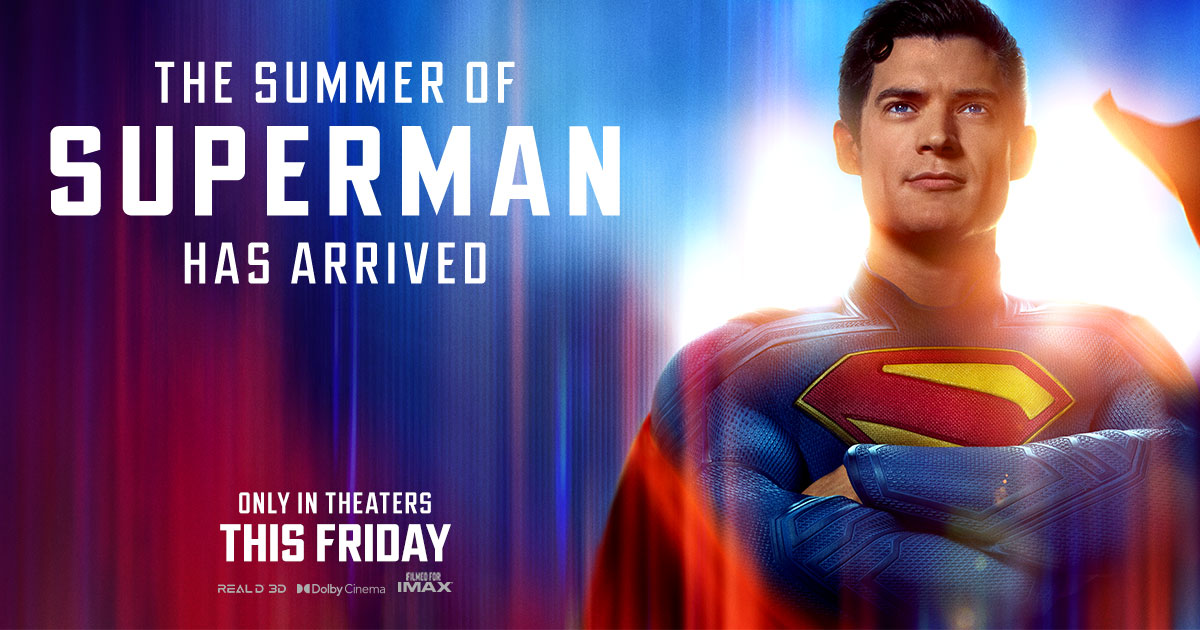
Or just look at the film’s first official poster below:
Speaking of “Looking Up,” this topic got me looking up resources on the role of HOPE in teaching and learning. Teachers can find some fascinating studies, scholarship, and strategies, starting with these:
“The Students Keep Me Hopeful”: Teacher Hope During the COVID-19 Pandemic by Suzanne Jones, LeAnn Putney, Brett Campbell, and Max Longhurst – A 2023 study of over two hundred K-12 teachers following the pandemic. In addition to examining various obstacles and challenges, the researchers found common traits among hopeful and resilient teachers: willpower, “waypower,” agency, administrative support, and more.
“The Disposition of Hope in Teaching” by Carrie Birmingham – A pre-COVID writing from 2009, but a useful analysis of the interdependence among “motivation, orientation, and disposition” toward hope. I’m particularly fond of the section on disciplined inquiry and the role of ongoing learning: “An orientation toward disciplined inquiry supports hope by seeking new possibilities and standing against the mistaken belief that existing school practices and conditions are given and unchangeable” (p. 36)
Finally, here are two Edutopia essays chockfull of tips and tools teachers can use to help bring hope to their classrooms and students:
Both of these essays appeared during the pandemic shutdown. Still, I’d argue they are just as timely today. One time (~20 years ago), I asked a teaching colleague about the #1 thing their students needed to succeed. Her answer? HOPE.
So as you look ahead to next summer’s Superman movie, don’t forget to look up. And share that hope with your students, their families, and your colleagues.
Or, to quote the Birmingham essay (p. 38):
“As long as there are teachers and students, there will be hope: teachers’ hope in students and teachers’ hope in themselves to meet the challenges of their work.”
This year was special not only because you could find bat-signals around various cities, but also because 2019 is the 80th anniversary of Batman!
Batman’s 80th birthday is also timely given recent news casting the upcoming movie’s Caped Crusader.
That’s right. Robert Pattinsonagreed to take on the role. He’s best known as Edward from the Twilight films, although I’d argue his best work was Cedric Diggory in Harry Potter and the Goblet of Fire. Nevertheless, this news lets us revisit one of the best meme images ever:
Some fans aren’t happy about Robert Pattinson’s casting, but that’s nothing new. It seems every Batman casting has its detractors, but things usually simmer down after a while.
Interestingly, another actor’s name came up in the recent Batman casting.
Milo Ventimiglia, the gone-but-never-forgotten hunky dad Jack from NBC’s This is Us, had been interested in donning the cape and cowl. But at 42, he was considered “too old” for the part.
(Author’s Note #1: Robert Pattinson is currently 33.)
(Author’s Note #2: No Batman role in my future, either.)
For now, let’s avoid any discussion of “age discrimination” and turn our attention to TEACHING.
Can you get TOO OLD to teach?
Let’s first look at the average teacher today. Below is a summary from a U.S. Department of Education study in 2017:
I’d argue that age has little to do with being “too old” to teach. Instead, the issue is a combination of a mental, emotional, and physical attributes.
I know some teachers who are qualified for retirement, but are still “young at heart.” They exude enthusiasm and energy in the classroom, becoming an inspirational example of learning for their students.
On the other hand, some relatively young teachers already show signs of being tired and uninspired (and uninspiring).
What makes the difference?
We often want our students to be “lifelong learners,” and I’d say the key is to model the same attitude and habits ourselves.
For some, that may mean teaching the same subject for decades, earnest in learning more ideas and methods to enhance their teaching and students’ learning. For others, it may mean adding certifications, degrees, or more, along with potential career changes within the field of education or beyond.
Here are a few other resources to help teachers maintain a youthful enthusiasm for students and education:
My favorite “old Batman” story is the Batman Beyond animated series, which features an elderly Bruce Wayne still fighting crime by mentoring a new futuristic (non)Caped Crusader:
Since it is officially summer according to astronomical coordinates, it’s time to officially celebrate summer for every teacher (even if you are still in a classroom somewhere).
For teachers who need something to do over the “break,” read the following resources:
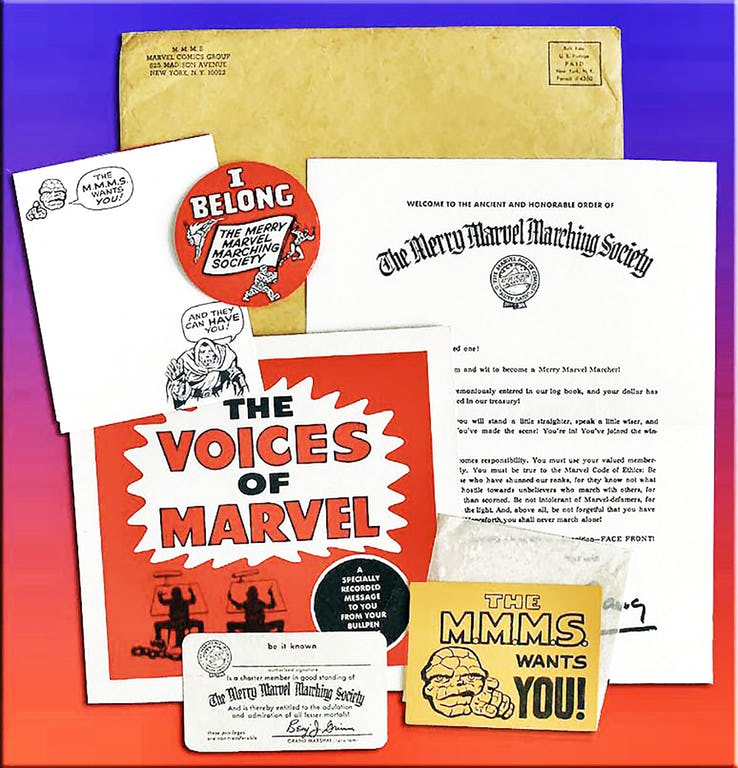
Even Netflix is honoring Stan Lee by encouraging viewers to use his catchphrase “Excelsior!” when searching for a show. Try it and see what happens.
My way of thanking Stan “The Man” Lee is to consider all the lessons teachers can learn from his example. How can we bring these same traits to our schools and classrooms?
Enthusiasm
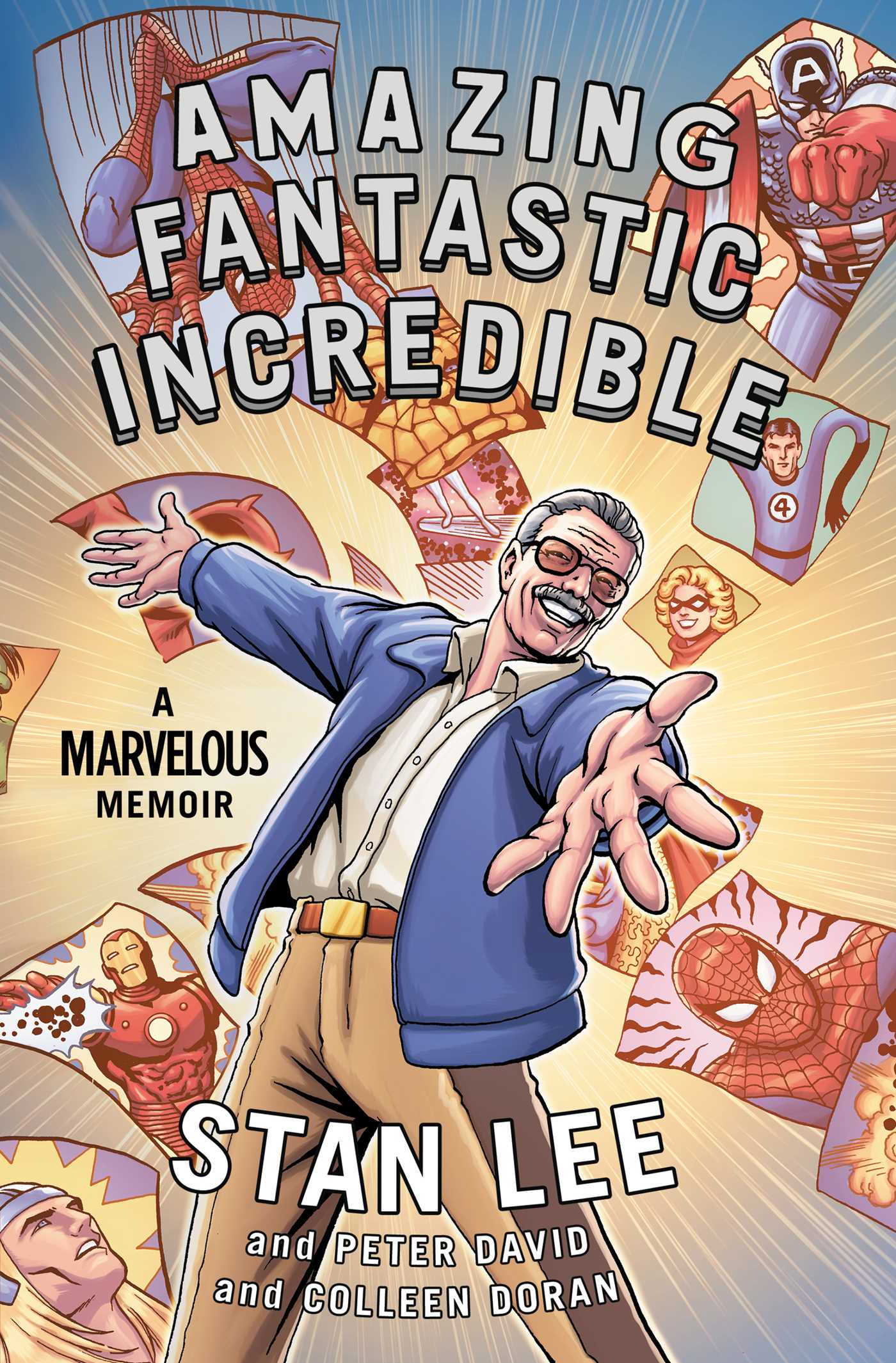
When I think of Stan Lee, the first thing that comes to mind is not the heroes and villains he helped create. Instead, it’s his overwhelming enthusiasm. Just take a look at this cover to his comic book-style autobiography:
Or this real comic book featuring a real photo of Stan Lee:
Although many people learned about Stan Lee through his various movie cameos, he actually had plenty of exposure first through comic book stories. Here is a neat article summarizing Stan’s various cameos through years of comic books. You’ll note a recurring theme of self-deprecating humor, fun, and energy.
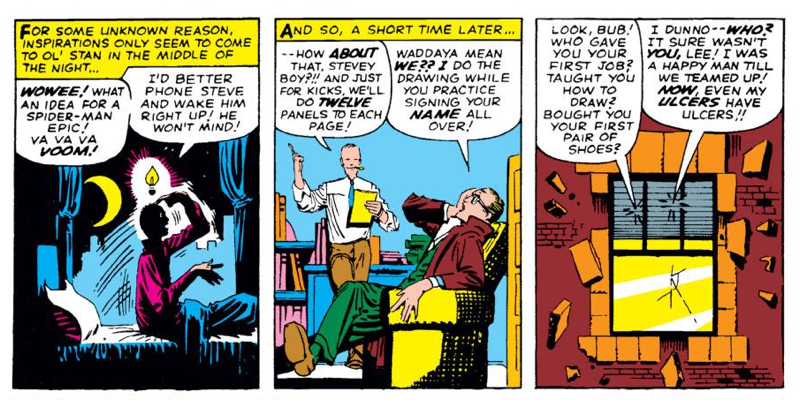
Here’s an early depiction of behind-the-scenes with Spider-Man artist Steve Ditko:
Much later, Stan made an appearance to narrate an entire issue of Generation X:
This stint prompted a company-wide event the next year, in which Stan appeared to introduce every Marvel comic book’s “flashback” story:
Advocacy
Stan Lee was an advocate for superheroes and their fans. Like the comic book example with Steve Ditko above, Stan introduced comic book readers to the creators and the creative process.
This was long before blogs and social media. Instead, Stan provided monthly updates in the comic books – Stan’s Soapbox, Bullpen Bulletins, and more. Moreover, he made it fun to be a fan.
Brandon Zachary from Comic Book Resources wrote an essay, “How Stan Lee Created Comic Book Celebrity and Modern Geek Chic,” explaining “He became every reader’s ‘Uncle Stan,’ a sarcastic but kind figurehead of comics. Stan Lee helped mold the modern idea of Geek Chic into what it is today, and turned Marvel Comics from an entertainment company into its very own culture.”
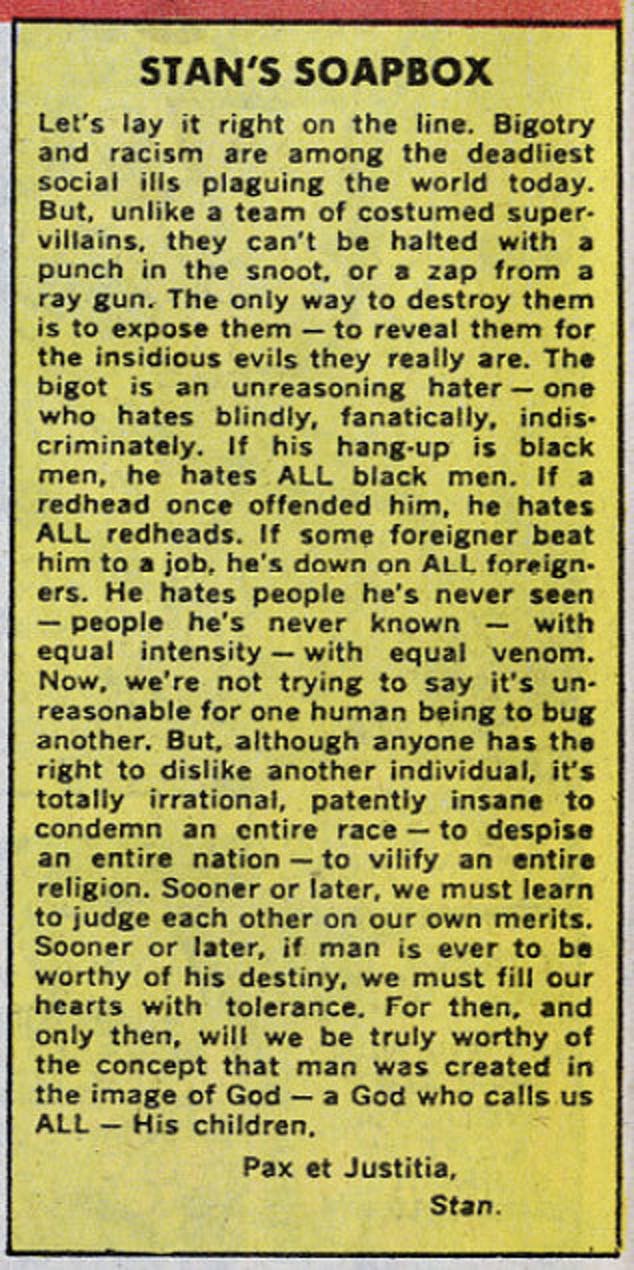
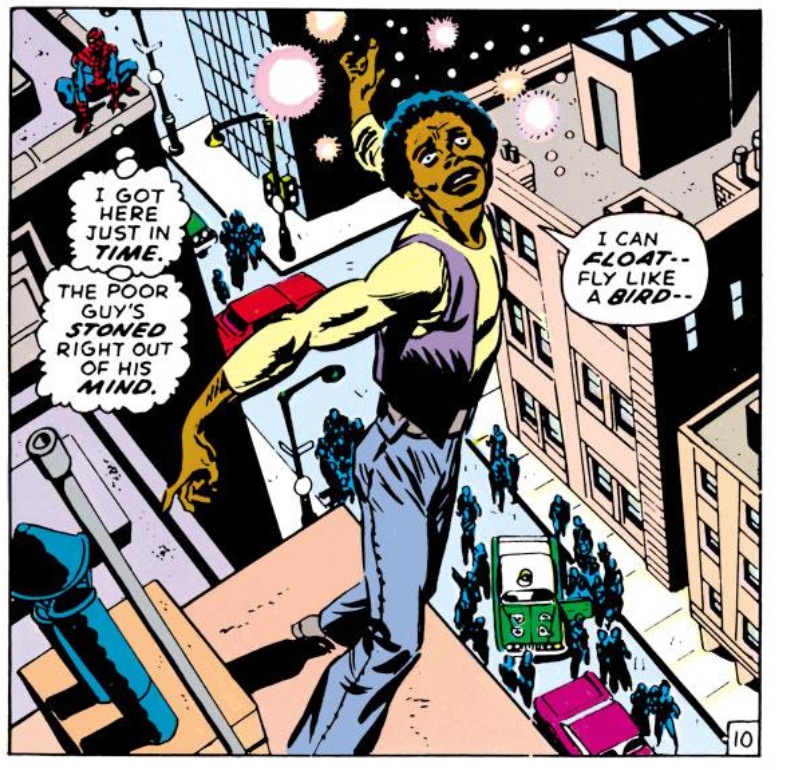
Stan advocated for more than just superheroes and comics. As a writer and editor, he shared stories dealing with issues like alcohol and drug abuse, racism, hate, and more. Here are five of his “Soapbox” writings addressing such issues, including the one below from 1968:
One noteworthy issue of Amazing Spider-Man is #96 in May, 1971. This was the first comic book published by Marvel or DC to NOT have the seal of approval by the Comics Code Authority. The “code” was used to ensure comic books were safe for young readers. But in Spider-Man #96, Stan Lee wanted to tackle the issue of drug abuse.
Forgoing the CCA’s seal of approval, Stan wrote and published the story. Soon after, the CCA updated its guidelines to consider depictions of controversial subject matter in individual stories.
Collaboration
Stan Lee is famous for pioneering the “Marvel Method” of making comics. Before this, writers scripted comic book stories with detailed descriptions and dialogue. To save time, Stan reduced the direction in his scripts and allowed the artists to decide things like page layout, number of panels, perspectives, etc. This created more trust with the artist, to the point where both writer and artist were credited as “co-plotters” in many comic book issues.
You can read more about this collaborative approach here, and hear Stan Lee describe the process himself in the following video:
Although Stan Lee frequently receives credit as creator of multiple Marvel heroes, he himself acknowledges the powerful role of co-creators and artists like Jack Kirby, Steve Ditko, Larry Lieber (Stan’s brother), and more.
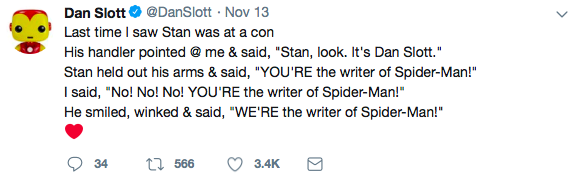
Here is another example of Stan’s collaborative spirit, shared by recent Spider-Man writer Dan Slott:
Stan’s spirit of collaboration (and marketability) is perhaps what led to the “shared” universe approach in Marvel Comics. Readers could relish guest appearances, cameos, and team-ups among various superheroes and villains. Such crossovers are much celebrated (and copied) in the series of movies in the Marvel Cinematic Universe.
Ageless Wonder
This is one of my favorite panels from Stan Lee’s memoir:
Stan Lee had worked in the comic book business for many years before he began his Marvelous run. This is a recent tweet from writer and reporter Brett White, reminding all of us it’s not too late to start something new:
During my own lifetime, Stan Lee’s work was less in comic books and more in other media. He moved from New York to Los Angeles in 1981 to oversee television and film versions of Marvel characters.
Soon after came video games, including Spider-Man for Atari in 1983. How many 60-year-olds do you know would gleefully help like Stan in this Blip magazine feature?
The first time I heard Stan Lee’s voice may have been in the PlayStation/N64 Spider-Man game, published in 2000. Even in his late 70s, Stan enthusiastically introduced “True Believers and Newcomers alike” into a “true superhero action thriller,” which you can enjoy here:
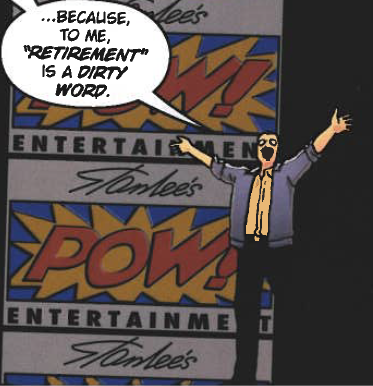
Stan Lee continued to try new things throughout his 80s and 90s. Some projects were more successful than others. Nevertheless, his work displays an energy envied by creators of all ages.
In 2001, Stan even wrote special “Just Imagine . . . ” comic book stories featuring characters from long-time rival DC Comics.
This slideshow requires JavaScript.
More recently, Stan Lee worked on several global projects. His last superhero creation was based on Chinese pop star G.E.M. He also helped create multiple heroes for Japanese anime and manga (making a few personal appearances, of course).
There will never be another Stan “The Man” Lee. But we can take inspiration from his enthusiasm, advocacy, collaboration, and lifelong learning. And we can remember Stan Lee’s example every time he pops up in a cameo.