
Happy Fall! (Astronomically speaking.)
Academically speaking, we already celebrated “Back to School” season (“Happy New Year!”) and are in the thick of things.

Soooooo. How are things going?
Educators frequently focus on the “First Days of School,” and rightfully so. The first days (or week) are when teachers (and students) establish expectations and routines about classroom environment and relationships.

These early days are so important that Harry and Rosemary Wong’s popular teaching book is the highest selling publication in the educational field. (4.5+ million copies? Not too shabby!)


Time marches on, however, and so does the school year. Eventually, teachers and students will encounter a “slump,” sensing a lack of motivation, focus, energy, and more. This often happens in mid-winter, but could be earlier in the semester–even right now!
Teacher slumps occurring later in the year are often referred to as “the doldrums,” marked by fatigue and listlessness. There’s actually meteorological meaning behind this sailing term, which you can learn more about here. Ahoy! ScienceI


Slumps that occur earlier relate to inertia–another scientific term! How can we build and maintain momentum once the “back-to-school” excitement dims? Like any new endeavor, a new school year can start with high hopes, only to face an “implementation dip” when reality sets in.
Michael Fullan is a “change expert” and has published a lot of neat research and resources on the subject. Here are a few images he shares to illustrate one’s experience with change over time. First, a simple picture . . .

Or a more complex version from an additional study:
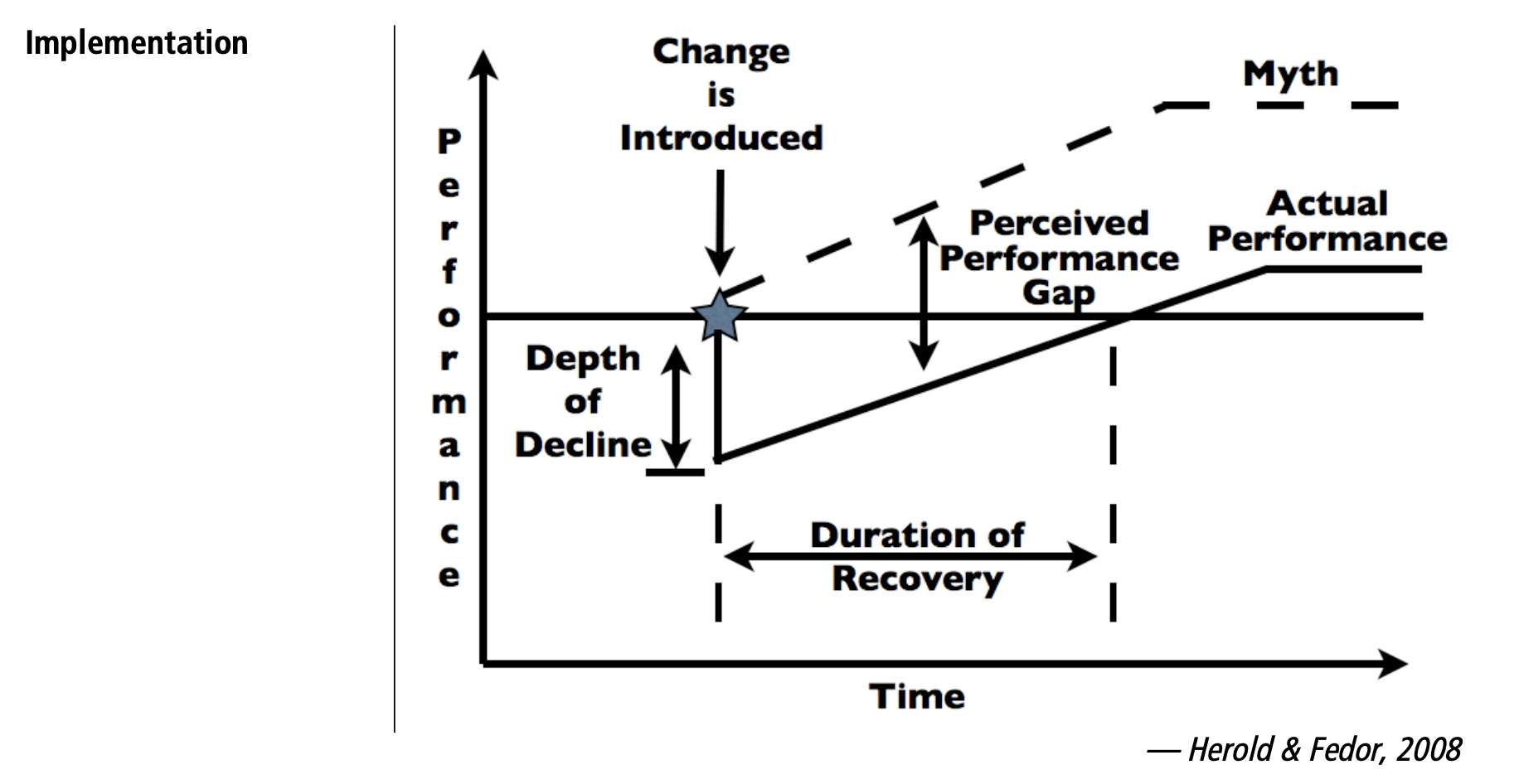
Whether simple or complex, the same pattern takes shape. The good news is things can improve with effort over time. Don’t rely on quick fixes or overnight success. Persistence pays off.
Recently, superhero movies have found immense financial success in their first weekend, only to lose steam in subsequent weeks. Even a film opening with over $100 million in ticket sales can “flop” if it fails to sustain enthusiasm.


This trend is growing to the point that The Hollywood Reporter has declared, “The Second Weekend Is the New Opening Weekend.” Business-wise, a winning formula is a big beginning PLUS ongoing interest. Positive buzz from critics and viewers will garner more attention, growing new and repeat audiences.
It’s not that different from teaching. Effective lessons start with an engaging “hook” and continue with motivating activities that encourage further learning, discussion, and wonder.
Ideally, this should happen each and every day. But it doesn’t. And that’s understandable.
It’s hard to maintain excitement when things get tough, busy, and repetitive. It may even feel like you’re trapped in a Time Stone loop from Doctor Strange!

This sensation is true for teachers as well as students. The seasonal slump is not a matter of “if” but “when.” Be ready.
Whenever you feel yourself slumping, consider how to regain ground and recharge your batteries. Below are a few resources:
- Creative English Teacher challenges teachers to remember their motivation and inspiration – which are NOT the same thing.
- The Teaching Channel has 6.5(!) tips that address teacher self-care, tangible actions ranging from lighting to baking.
- MiddleWeb features a blog with more strategies to battle a “stagnant classroom.” These are helpful since they serve both teachers AND students. Like other lists, common elements are enjoying humor, getting active, and trying something new.
You can find more ideas elsewhere, but hopefully this is a start!
Don’t wait for mid-winter.

Get going NOW!

 Teach Like a Superhero!