This post comes on the FIRST day of the year, a perfect time to talk history. Specifically, what’s your favorite?
Does it sound strange to have a favorite history? It happens all the time with superhero stories.
What’s your favorite “age” in comics – Golden, Silver, Bronze, Modern?

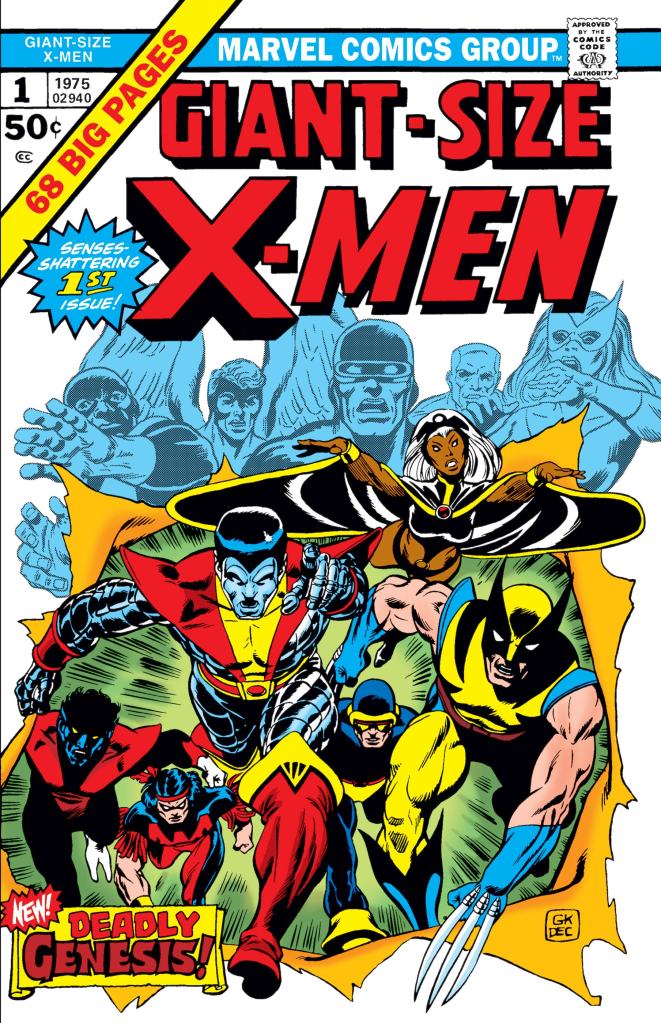
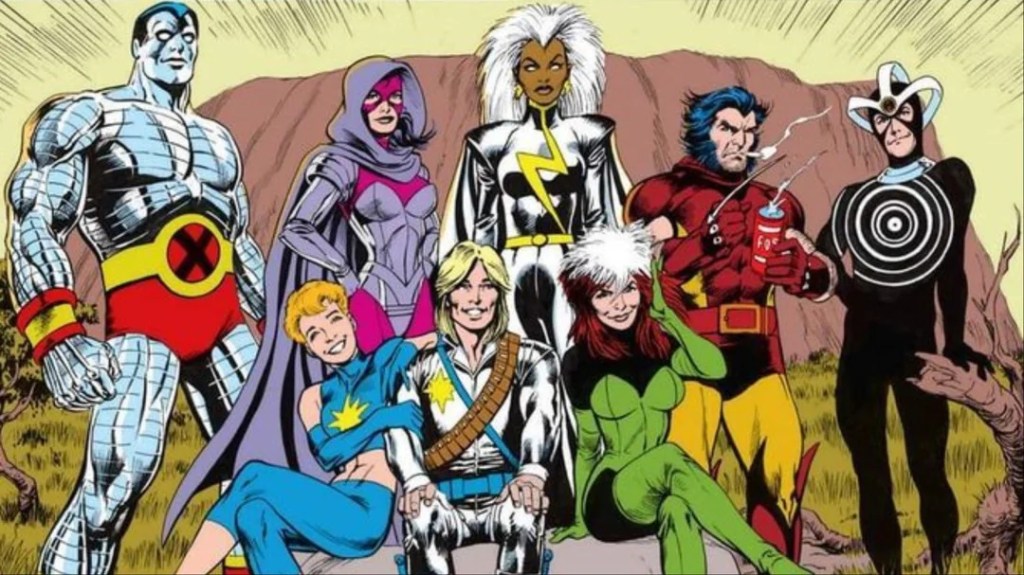
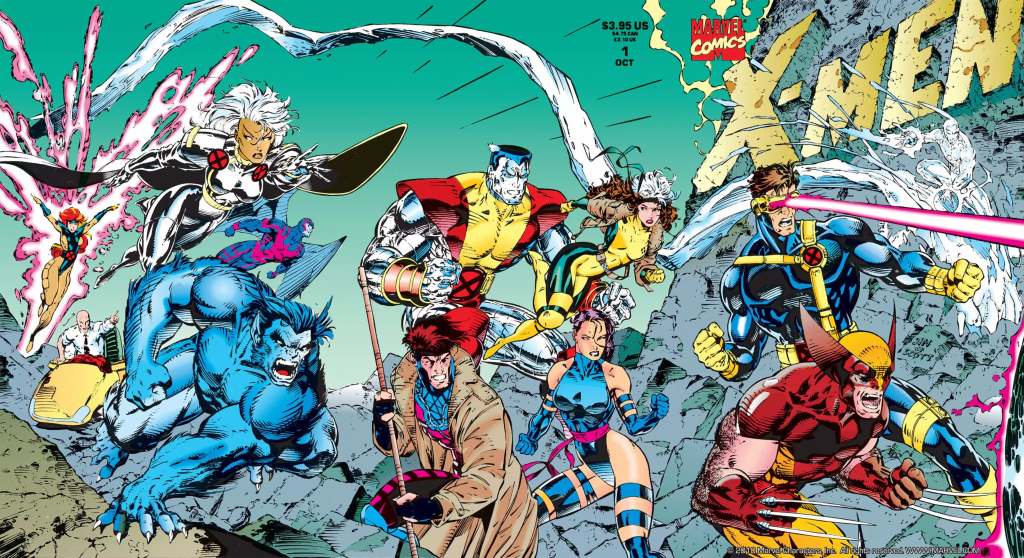
Or let’s talk about a specific cast of characters. What’s the best era in X-Men stories – Xavier’s School, Giant-Size, Australia, Blue/Gold, New X-Men, Krakoa, etc.?

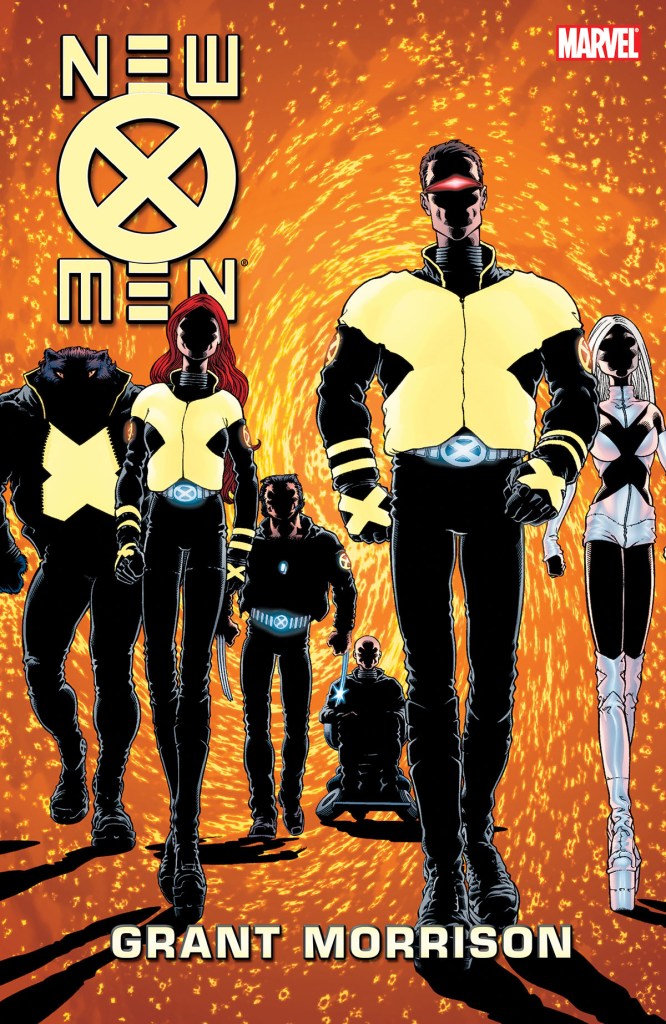
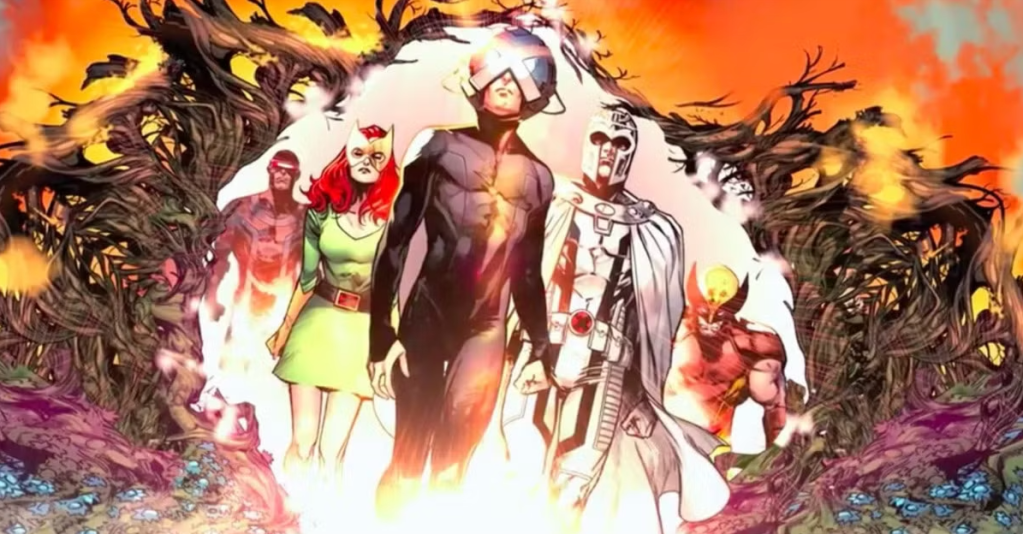
In 2025, DC Comics published a “New History” mini-series celebrating 90+ years of milestones across its comic book universe (and multiverses).
In the words of writer Mark Waid: “It’s a chance to realign all of DC’s sprawling continuity into one master timeline . . . With new information for even longtime fans, plus Easter eggs galore, this series will be an essential read for DC fans.”

Not too many comic book readers have been around to enjoy a near century of DC heroics. Still, I bet most fans have a particular favorite era or version of these iconic characters, their origins, and adventures.
Every few years, it seems DC or Marvel (or both) publish a special event like this to A) celebrate their history and/or B) recalibrate convoluted timelines. These stories usually sell well and provide ample opportunity for debate and discussion.

Real-world history is also a hot topic in education, or rather a hot-button topic. Depending on whom you ask, social studies curricula have become either too critical or too censored.
I’m sure each social studies teacher has their favorites when it comes to particular events, eras, or people in history.
Likewise, there may be a few topics teachers don’t enjoy teaching. They may not even personally agree or like some of the stuff they teach. But that does NOT mean they should skip it.
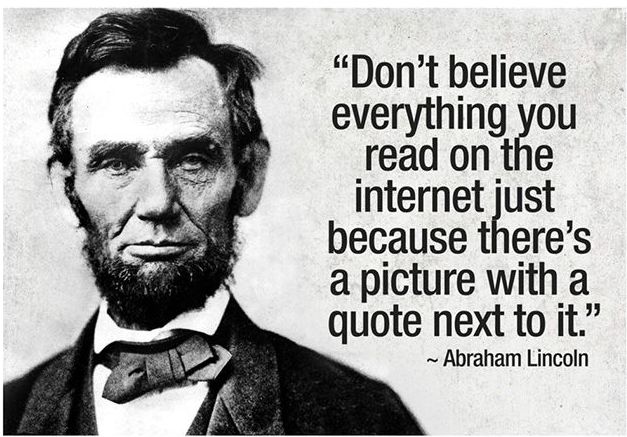
(Full disclosure: When I taught high school science, I was not a big fan of our unit on calorimetry and specific heat. The math was tricky, the labs could be messy or dangerous, and more. Even so, I taught those chapters the best I could, open flames and all.)

Put another way for social studies, a teacher shouldn’t ignore past or present problems. Doing so would be like a science teacher neglecting to share all the missteps and incorrect assumptions of previous scientists. Or consider the educational malpractice of a literature teacher who removes all context regarding authors and their creations.
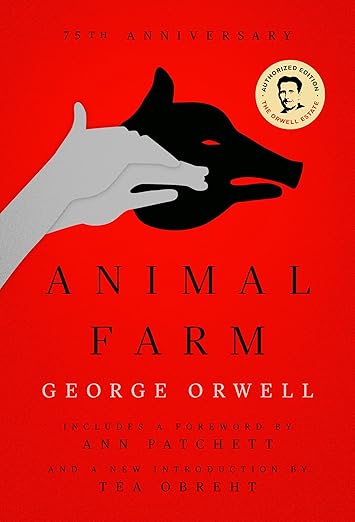
Animal Farm is NOT about agriculture.
It’s okay to have favorite parts of history, just like it’s okay to have favorite superheroes and sagas. A robust understanding, however, explores limitations and acknowledges imperfections. Furthermore, authentic learning involves application and ongoing growth. How can we make things better? How can we promote a HEALING history?
For one more science connection, consider Sir Isaac Newton’s famous quote: “If I have seen further it is by standing on the shoulders of Giants.”
None of those giants were perfect. And some may have been downright jerks. But Newton still learned from their work and developed new ideas and amazing discoveries from them, warts and all. The same is true for teachers and students today.
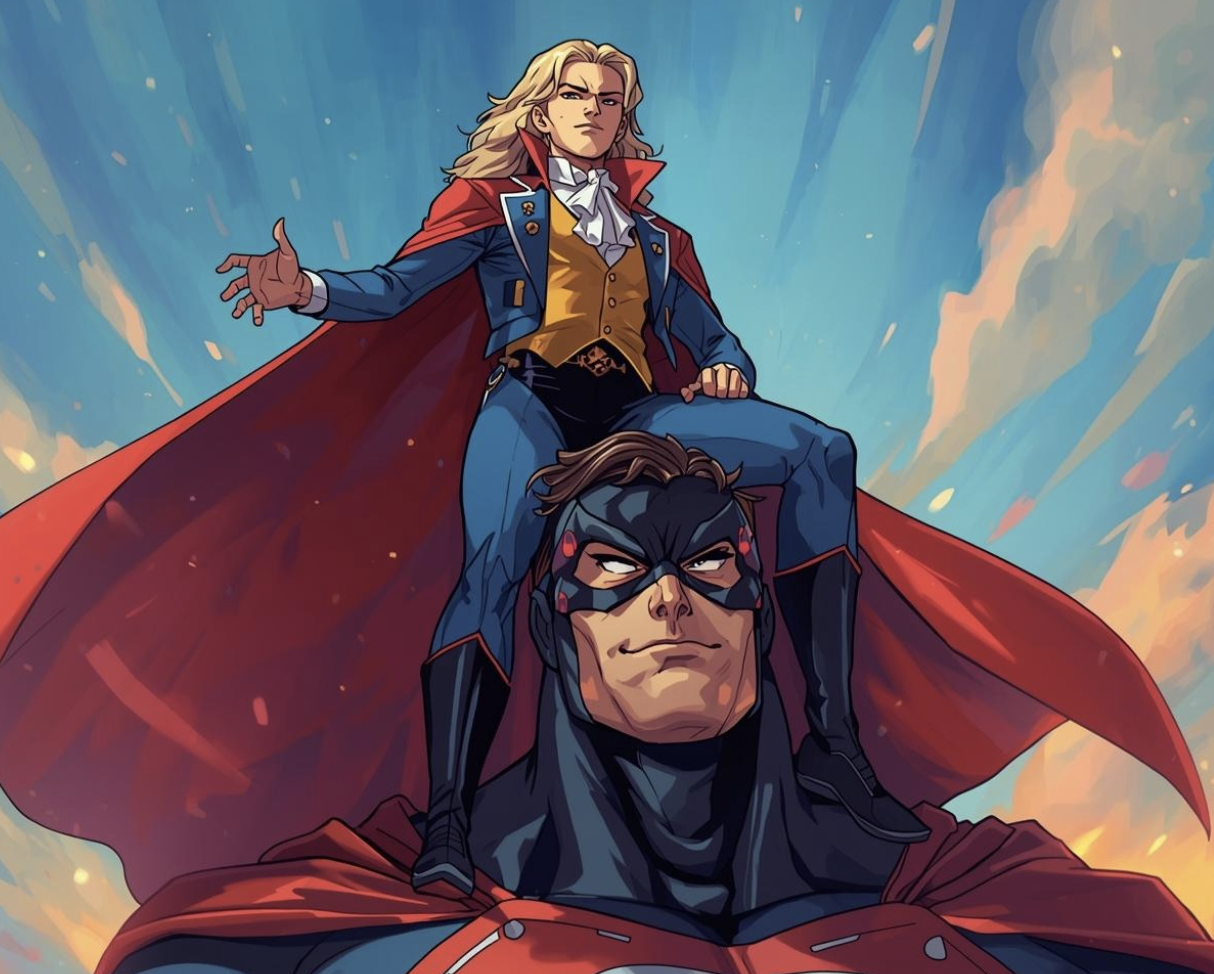
As an added bonus, I used Canva AI image generator to conjure a comic book styled Isaac Newton standing on a giant superhero. Huzzah! (We’ll examine ethical and educational AI issues in 2026, for sure.)
 Teach Like a Superhero!