
Academy, Asylum, or . . . ?

Standard

It’s Back-to-School time, and hopefully everyone is off to a terrific start, implementing new district policies and applying Harry and Rosemary Wong’s wisdom about “the first days of school.” (Routines and procedures, practice, practice, practice.)

The-First-Days-of-School-9780976423317

Batman is back in the news too, mainly the upcoming Ben Affleck movie version with Superman a la Frank Miller’s The Dark Knight Returns miniseries (e.g. short pointy ears). I’m sure we’ll have more to talk about that topic and teaching connections in the future (e.g. short pointy ears).

bat comparison

Comparison courtesy of artist Dean Trippe @deantrippe

In the near future, a bunch of new Batman-related comics are coming out. Namely, two series start this fall, as announced by Entertainment Weekly.

One title is Arkham Manor, in which Bruce Wayne (Batman’s nice face) decides to donate his Wayne Manor to house Gotham City’s criminally insane. The mansion that’s known for masking the underground Batcave has now become the new location for Arkham Asylum. There goes the neighborhood.

Arkham Manor     Gotham Academy
 

Another Bat-title from DC—Gotham Academy—focuses on the city’s private school for rich kids.  Plaid skirt uniforms and everything.

(Side note: I’m curious about the depiction of Gotham’s public schools.  If you are curious as well, the best we can do is watch the movie Dangerous Minds and assume that instead of being a former marine, Michelle Pfieffer’s character is Selena Kyle after giving up the Catwoman costume in Batman Returns. It almost works!)

As for the comics, we’ll see what happens as both series progress in the months to come. The reason I bring them up here is to encourage all of us teachers to consider our school environment.

Academy?

Does your school building feel like an academy? It’s a fancy word, coming from the Greek “grove of Akademos,” where Plato did his teaching. Good company, no? People nowadays use the term “academy” to refer to a special institution for scholarship or for the advancement of the arts or science. 

You don’t have to teach in a special institution to advance the ideas of scholarship and appreciation for culture. Wherever and whatever you teach, consider how you can promote an “academic” attitude in your students. I’m not talking about being a snob or out of touch with reality. But we can still create an environment where learning is looked upon as a noble endeavor and great adventure.

Sometimes our schools have too much adventure, though, and may even feel like an insane asylum.

Asylum?

Does anyone in your school drink from a mug like this?  

crazy mug

Or post this sign in their classroom or office?

crazy sign


Schools can often feel like a facility for the mentally unstable. Beyond the humor, though, there is some truth to that notion. Think about our students’ mental, emotional, and physical states. Most of them are, in fact, a little unstable. A little “shaky,” so to speak. They should be. They’re still growing up.

And that’s why we teach them. During a school year, teachers introduce students to hundreds of ideas and skills. Our students should investigate, reflect, and practice the content, all the while strengthening (and stabilizing) their foundations—intellectually, emotionally, and more. This learning process is often challenging and frustrating, even destabilizing at times, and ultimately rewarding.

Learning can create a sense of vulnerability, and students need a safe place to learn—no matter what kind of school or classroom. 

We looked at the origin of the word “academy,” so let’s do the same for asylum. Although often associated with housing the mentally ill, the word “asylum” comes from the Latin word for “sanctuary,” a “safe or secure place.”

We can never protect kids from every unsafe event or bad influence, but we can all do our part. None of us can do it alone. Heck, even Batman has the Justice League. (And Alfred. And several Robins. And Nightwing. And the Gotham City Police Department. And the Outsiders. And Batman Incorporated. And Batmen of All Nations. And Ace the Bat-Hound.)
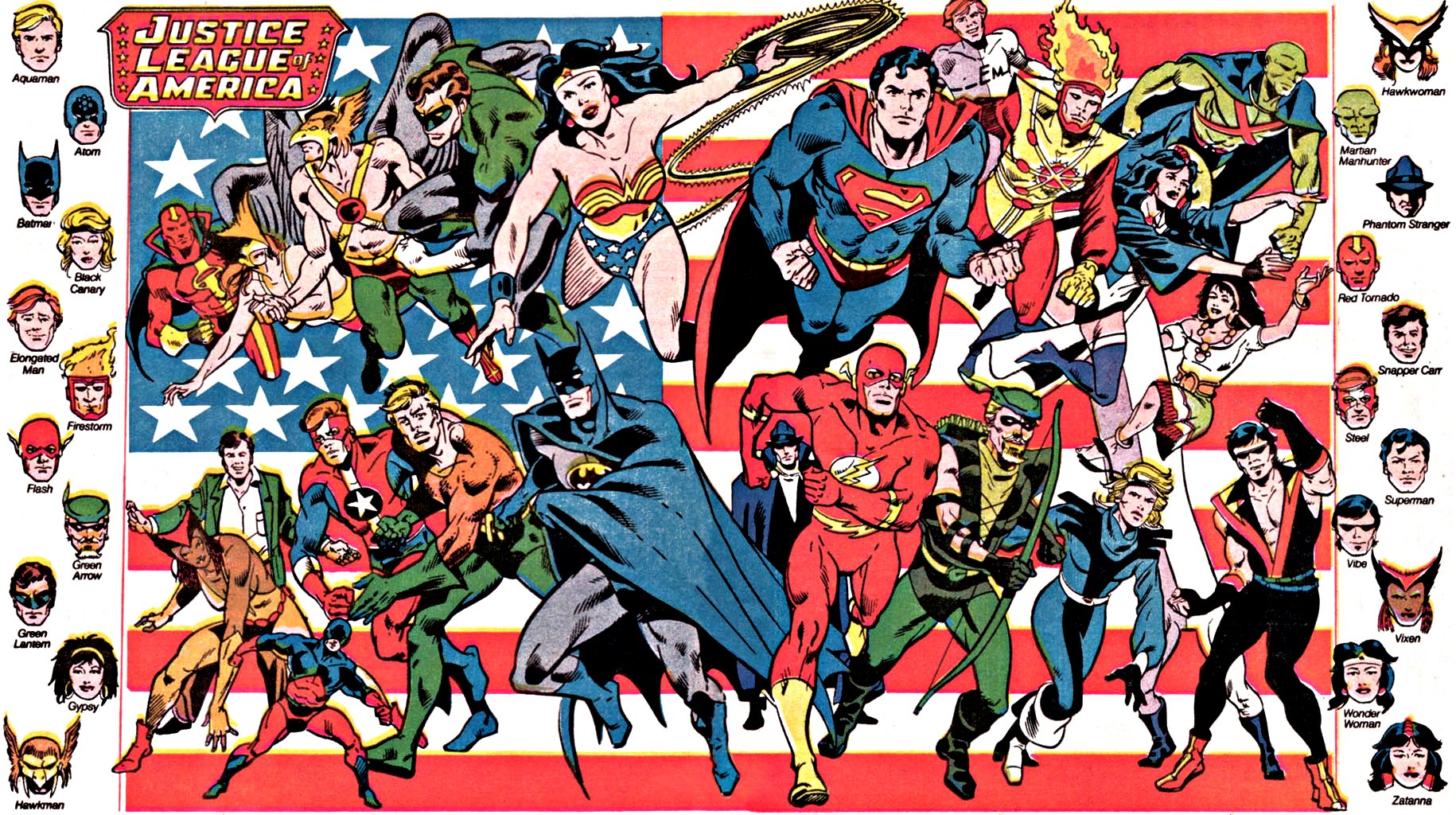
justiceleague


Fight the good fight with your trusted colleagues, mentors, and friends. (And pets.)  You get to pick who wears the cape.

Good luck in the coming year in whatever classroom you teach. Wherever you are, it can be both an academy and an asylum for your students. And so much more.


Secret Origins

Standard

ImageThis month sees the release of Secret Origins #1 by DC Comics, and you can read more about it here and see what people have to say about it here.

DC has published versions of Secret Origins before, and the purpose is to explore and explain the beginnings of superheroes and villains. Featured characters range from iconic to obscure. So if you want to know how Ambush Bug got his start, here’s your chance!

Image


Origins typically contain two essential ingredients: 1) How you get your powers, and 2) What is your motivation?


Just like superheroes, every teacher has an origin. We all come from somewhere, contrary to what my 8th Grade Earth Science teacher Mr. Musson used to say: “Teachers aren’t born; they just . . . appear.”

The same two pieces of an origin story apply to teachers, as well.


1) How did you get your powers?


Maybe you weren’t bitten by a radioactive spider or trained in the mystical martial arts of K’un-Lun, but I bet you’ve got something that makes you special.


Most of us licensed teachers have received professional preparation of some sort. Many earned our teaching credentials after completing a bachelor’s degree in education, often with a specific subject endorsement. Other non-traditional routes include “fifth year” programs as well as an assortment of alternative licensure options for college graduates who already have degrees in something other than education. In the latter case, individuals often complete formal teacher education coursework while at the same time teaching full-time in schools.


No matter what your route, the bottom line is that you studied, practiced, collaborated, reflected, and applied important concepts and skills necessary for becoming an effective educator. (The scary thing is, some people think teaching requires no formal preparation at all, and are willing to dump anyone into the classroom just to fill a need. We could talk about this important issue at another time, and I already have HERE in a newspaper editorial, if you’re curious.)


Outside of formal preparation, many of you also learned about teaching through other means. Maybe you have a teacher as a close family member or friend, or perhaps you’ve experienced teaching through various activities like sports, church, hobbies, and more. You got the bug, so to speak, and you wanted more.


That leads us to the second part of origin stories . . .


2) What’s your motivation?


Getting powers is not enough. A lot of people have skills but waste them or use them in selfish ways, just like a lot of super-powered characters.


Every good teacher needs not only special abilities, but also a special heart and passion for the classroom and beyond.


Many of us got into teaching because we love learning and want to share that joy with others. We want to make a difference in the lives of kids and their families.


Hopefully you didn’t go into teaching because of a so-called “summer vacation” or because you thought your workday would be 8:30 to 3:30.   If either of these were reasons you entered the profession, you probably learned that teachers put more total hours in the school year than most people do in 12-month jobs. You can learn some other important statistics about the teaching career here.


Unfortunately, origin stories sometimes reveal an individual’s weaknesses as well as their strengths. For example, Superman’s not a fan of green kryptonite, which came from the blown up bits of his home planet. And Iron Man sometimes likes to hit the bottle, thanks to the fast life of his alter ego Tony Stark.


I hope you do not falter to kryptonite or alcohol, but you should still be wary of potential flaws. I’ll use my “origin story” as an example:


Secret Origin . . . Revealed!


I’ve always liked school. I like to learn. I’ve had some great teachers in my family and in my schools, so it’s probably no surprise I pursued teaching as a profession.


Here’s a rare mug shot of my first year teaching way back in 1999. It’s black and white and grainy because I had to scan it from the school yearbook. It’s wrinkly and weary because it was my first year as a teacher. (To determine if I’ve aged well, compare this portrait with a more recent one on the editorial link above.)


Image
Vintage Mr. Bergman #1

The first year was tough—it always is—but I got better. Teaching is hard work, but it is worthwhile and can be a joy, even on the tough days. You stick with it and each year usually gets easier.


How else did I improve?


I learned the intricacies of my subject matter (science) to know how concepts were connected, what analogies illustrated tough ideas, and what activities gave the best opportunities to clearly master content. I also learned about my students: what motivates them, what strengths and weaknesses they possess, and how to strike a healthy balance between firm and easy when it comes to classroom management—something that can never be overestimated.


But here’s where my “secret origin” reveals some of my weaknesses.


I like school. Many students don’t. For the most part, I was a “goody-two-shoes” throughout school. Some of my students actually thrive on creating classroom chaos. So I have to overcome my nice guy tendencies and be ready and willing to draw the line when it comes to discipline. It’s not easy, but it has to be done.


Here’s another strength that can become a flaw:


I enjoy science. Some students fear it.   When I was a kid, I found satisfaction in filling out worksheets and completing exams. I was weird. A lot of students greet homework with hostility and suffer test anxiety.


So as a teacher, I have to reduce resistance in my students before I can open the doors to learning. And it starts with me. I can’t assume my students are just as eager to come to class and learn about electron configuration. I have to find out what motivates them and how I can connect concepts to their lives and interests. In a way, I have to learn the secret origins of every student.


I hope this post has helped you reflect on your past and consider how it can impact your future. Do you have special training? Hidden talents? A passion that can only be served by teaching? How did it all begin?


In other words . . .


What is YOUR origin story?


Please post a comment and share why and how you became a teacher. Your story doesn’t have to involve radioactivity.

But it’d be cool if it did.


Extreme Makeovers

Standard

new gr with car

Marvel Comics is redesigning Ghost Rider for an upcoming series, which you can read about here (courtesy of http://www.newsarama.com).

Personally, I think the new digs look like the Japanese manga/anime series Bleach more than any American comic book hero/anti-hero.   See the resemblance?

Bleach_125 Raw 051    GR_FinalBustShot_TraddMoore

I see that both Bleach’s “Soul Reaper” and the Ghost Rider’s “Spirit of Vengeance” may need some ointment.  Or maybe some Maybelline.

This latest superhero redesign has inspired Newsarama writers to revisit their list of Top 10 Superhero Extreme Makeovers–The Good, the Bad, and the Super Ugly.

Superhero makeovers typically last less than a year before the hero/heroine returns to his/her iconic design.  Usually, the change coincides with a slight bump in sales and fan interest (or outrage) before things return to normal (i.e. Electro-Superman, Beard-n-Hook-Aquaman).

superman makeover                    aquaman makeover

Have you noticed any parallel with teaching yet?

Fads come and go, but quality teachers base their decisions on well-founded research and well-grounded application.

For those superheroes whose costume changes DO last for decades (and beyond), it’s typically because the original design was somehow incomplete or inconsistent with the true nature of the character (see Green Arrow, Daredevil).  Or maybe something didn’t click with the readers.  (When I see the original yellow/red DD, I don’t think hero.  I think hot dog.)

greenarrow makeover                      daredevil makeover

Unfortunately, some teachers are in dire need of an extreme makeover.  Perhaps they were insufficiently prepared, or they’ve developed some bad habits as the years go by.  Or maybe they just lost their passion.

How about you?

Do you need an extreme makeover?  (Move that bus!  Move that BUS!)

Not just change for change’s sake.  Don’t settle for a surface-level image update that will last  only a season.  Instead, challenge yourself to seriously reflect on your practice and its impact on students.  Search for any rough spots needing a revision.

The best teachers always GET BETTER.

And the best “change for the better” is the kind that remains for the years–and students–to come.