Dress for Success

Standard

Back to school time is here, which means families are filling department stores to find the best bargains. But it’s not just students. Teachers are also looking to stock up on supplies and spruce up their wardrobes.

Take a look at a typical “Back To School” advertisement or website and you’ll see gobs of superhero clothing and accessories. Superheroes are famous for how they look just as much as they are for what they do.

IronMan

The good folks at Newsarama recently listed their “10 Best Live-Acton Superhero Costumes” and “10 Worst Live-Action Superhero Costumes.”

Here are some helpful lessons teachers can learn from these lists:

#1 – Maintain Functionality

Many of the “Best” costumes work because they look like something you could actually see in real life.  Rather than adhering too closely to garish comic book colors or styles, the designers keep things grounded and user-friendly.

TheDarkKnight Teachers should consider their daily tasks and possible actions, then dress appropriately.  Fabric that breathes, stretches, and covers is a must, along with some comfortable footwear.

Comfortable shoes, yes, but NO SNEAKERS (unless you teach gym).  Strapping on a pair of Asics Gel Virage 4 shoes is the quickest way to ruin an otherwise perfect teacher outfit.

Asics-Gel-Virage-4-Green-orange-White-Grey-Black-Silver-Red-Blue-Fluorescent-JYLRM

(It’s called “business casual,” NOT “business triathlon.”)

If you need super-supportive shoes that are also subtle, take a look at this list provided by We Are Teachers (although I squirm at the sight of #10).  This focus on footwear leads us to another lesson from live-action superheroes.

#2 – Focus on Simplicity

A quick comparison of the “Best” and “Worst” film costumes reveals a glaring difference in details.  In many cases, the outfits in the “Worst” category are just TOO MUCH.

BatmanAndRobin Resisting the impulse to add another buckle here or kneepad there, the “best” outfits keep it simple.  By doing so, these film versions highlight key elements that evoke iconic imagery.  In some cases, this means ditching the costume and favoring functional garb (see #1 above) with hints of style and symbolism.

Wolverine Teachers are iconic, and their choice of clothing should reflect their critical role in society.  Instead of chasing the latest fashion (floral vs. geometric print, fat tie vs. skinny tie, boot-cut vs. skinny jeans), focus on conveying an image that is classy and timeless–just like good teaching.

In case you think it’s passé to stick with the basics, take a look at two USA Today articles about teacher attire.  One is from 2003, the other from 2012.

Despite being nearly a decade apart, both articles list some of the same “Should’s” and “Should Not’s” for teacher apparel and appearance.  Neat and clean are always “in.”  Spaghetti straps, tight tops, short bottoms, excessive piercings and tattoos should stay out of the classroom.

#3 – Lean toward Conservative

We’re talking clothing here, not politics.  (Vote your conscience.)  In discussing attire, teachers should consider how to keep the focus on learning as opposed to fashion.

Whenever you struggle with what to wear, here are several mottos you can remember:  “Dress older.” “Dress like your boss.” “Dress for the job you want.”

HalleBerryCatwoman

“Teacher” is not the first profession that comes to mind.

These sayings will help with decisions as you stand in front of your closet.   Skewing conservative also works as you stand in front of the bathroom mirror.  Just like excessive makeup on movie superheroes, teachers with too much mascara will likely turn off their students.

#4 – Tone down the CGI

GreenLantern ‘Nuff said.

Hopefully these Hollywood examples will help teachers consider their choice of classroom attire.  For anyone wanting more ideas, check out this Education World article discussing jeans and flip-flops, or this About Education blog with useful guidelines, especially for younger teachers.

And remember:  Save the cosplay for your pets. Batman Dog

Weird Superpowers

Standard

As first reported by USA TodaySuperman is getting a new superpower in the DC Comics universe.

Clark Kent’s alter-ego gets a costume update, too, complete with fingerless gloves.  This makes me wonder if his new power includes playing clarinet for marching band.

superman new costume

Take a look at comic book panels revealing this new ability in action.  (No woodwind in sight . . . yet.)

superman new power panels

Art by John Romita, Jr.

DC is touting this new talent–the Super Flare–as Superman’s “first new power in decades.”  They’ve even provided a handy-dandy timeline:

superman-powers time line

Superman must be short for “Superfluous-man,” given Kal-El’s multiple Kryptonian skills.  He’s a walking flying Swiss Army Knife compared to most heroes’ singular power sets (e.g. Flash = fast; Green Lantern = ring; Batman = ruined childhood).

Both Newsarama and IGN recently came up with lists of Superman’s Weirdest Powers to celebrate the inaugural Super Flare.  There are 15 listed by IGN, and Newsarama includes 10 in their countdown.  You’ll notice some overlap as well as some rather obscure abilities in Superman’s 75-year multi-media history.

My personal favorite is “Super-Dancing,” which Clark Kent can employ without even changing outfits.

Super-Dancing

Many teachers possess this power, too.

Weird Teacher Powers

This examination of weird superpowers got me thinking about teachers’ own unique abilities.  As mentioned in a previous post, one joy of teaching is bringing personal skills and strengths to the classroom, building off of sound research and practice.

Bringing in your unique personality can also lead to sharing some special talents and abilities.  Instead of settling for America’s Got Talent or David Letterman’s Stupid Human Tricks, teachers can put these gifts to good use in schools.  So . . .

stupid human tricks

What’s your weird teacher power?  

I’m not talking about the Superman-like ability to eat a complete lunch in under five minutes.  That goes with the profession.

super eating

Fifth period starts in two minutes!

What we want to examine is using uncommon strengths for the common good:  learning.

How can you use “weird teacher powers” to inspire and educate students?

If it helps, here is how I’ve applied a few of my own particular capabilities in educational settings.

1. Left-footed.  To be honest, this one hasn’t been that useful in the classroom, except to show students that everyone is different in different ways.   Accept that fact and get along.  (I’m still waiting on Bill Belichick’s offer to punt for the New England Patriots.)

2. Music.  Not a strange talent in most cases.  It’s all how you use it, though.  I sing and play trumpet, and have done one or the other in various settings to get students’ attention, share a mnemonic memory trick, or illustrate the physics of sound.

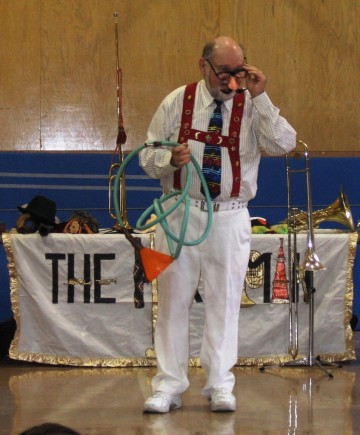
Plenty of weird potential, too.  When I student taught, one of my mentors taped a trumpet mouthpiece into one end of a garden hose, with a funnel sticking out the other end.  He would play his “hose-a-phone” on occasion, most frequently for students’ birthdays.  Not very educational, but certainly eye- and ear-catching among the students, something all teachers need.

CroppedHose-a-Phone-846x1024

Archival footage of hose-a-phone. Not actual mentor.

3. Goof.  Like my mentor’s example, often a teacher’s weird power lies in his or her ability to lower inhibitions and go for the gusto.  We don’t have to bounce off walls, but we can exhibit enthusiasm for school and learning in captivating and contagious ways.

I know an educator with a lively method of ending the class period on a day of doldrums.  When class limps into the last minute, this man pretends to get a call from the president via wristwatch, puts on a cape and cowboy hat, then runs out of the room yelling, “Super-Cowboy . . . AWAY!!!”

I’ve never tried that myself, but I have celebrated a unit assessment by theatrically revealing the test while blaring Strauss’s “Also Sprach Zarathustra” (a.k.a. the opening to 2001: A Space Odyssey).  Following a few confused faces, the triumphant entrance gets more laughs and eases anyone’s test anxiety.

During my chemistry classes’ Gas Laws unit, I make a point to wear the following t-shirt under my ordinary teacher outfit (shirt and tie, slacks).

sci never sucks t shirt

A gift from my brother (also a teacher).

The instant someone mentions the word “suck” to describe pressure differentials, I rip open my outer shirt to give the class a vivid reminder that “Science Never Sucks.”  To enhance the effect, I play Survivor’s “Eye of the Tiger” as accompaniment.

Silly?  Of course.  Memorable?  That’s the point.

Years later, all of my former students know there’s no such thing as a “suck force.”

And as an added bonus, for one fleeting minute I get to feel like a costumed superhero.

So maybe you can’t leap tall buildings in a single bound or outrace a speeding bullet.  But every teacher has special skills and quirks, able to spark meaningful and memorable learning in our students’ lives.

That makes us the most powerful superheroes ever.

Question(s) & Answer

Standard

Question_34

One comic book character who is prime for a screen adaptation is DC’s The Question.  In fact, the folks at  WhatCulture.com list The Question as one of their “10 Obscure Superheroes That Badly Need a Movie Treatment.”

A movie may work fine, but an ongoing Question TV Series would be a perfect fit, featuring a street-level noir hero with regular crimes and conspiracies to solve. If you want to see The Question in animated action, you can find some highly regarded appearances in the Justice League Unlimited series.

You can also find a nifty short YouTube documentary on “Who is the Question?” right here.  The most iconic version is Vic Sage, although more recently the moniker (and mask) was taken over by Renee Montoya, best known as a detective in the Gotham City Police Department.  [A live TV version of Det. Montoya has appeared in Fox’s Gotham series.  No sign of any Question(s), though.]

250px-Reneequestion

In case you’re wondering, there IS a superhero known as The Answer in comic books.  You can read more about The Answer here and here.  Judging from his appearance, I’d say a more appropriate name is The Exclamation Point or The Interjection!

the-answer-1

In teaching, we know that “Questions are the Answer.”  Often, what makes or breaks a lesson is how the teacher interacts with students during the activity.

Rather than just talking at students, teachers must ask questions throughout each lesson.  Questions and similar prompts are effective ways to encourage thoughtful reflection, promote engaged discussion, monitor student thinking, and more.

Unfortunately, research has found that a vast majority (70-80%) of questions asked by teachers require nothing more from students than reciting facts or guessing simple answers (Gall, 1984; Watson & Young, 1986; Bergman & Morphew, 2014).

So the question is this:  What kind of questions do you ask?  

Challenge yourself to challenge students by habitually asking  questions that require high-level thinking, such as those skills classified in Bloom’s taxonomy of educational objectives:  Application, Analysis, Synthesis, and Evaluation (Bloom, 1956).

How do you begin?  Here are a few resources I’ve recently come across that may be a good start:

– From Edutopia: “5 Powerful Questions Teachers Can Ask Students”

– From The Huffington Post*“25 Ways to Ask Your Kids ‘So How Was School Today?’ Without Asking Them ‘So How Was School Today?'”

*This second resource is more for parents, but teachers can gain ideas from the example questions for encouraging conversation.

The goal is to get kids thinking, reflecting, and sharing so you and their classmates can also think, reflect, and share ideas.

I’m glad there are two Questions running around in comic books. It reminds us that teachers need to use multiple questions in our interactions with students.  One question is often not enough.

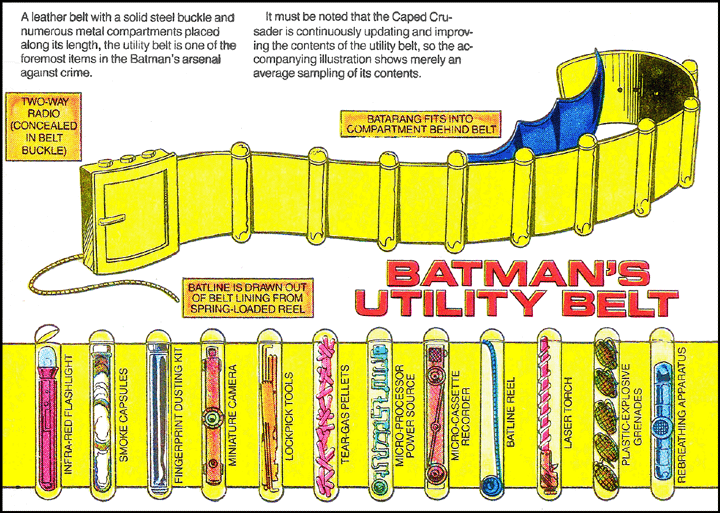
Like Batman and his utility belt, you should have an entire arsenal of prompts and queries at your ready, posing the right one at the right time.

Batman utility belt

I don’t own a utility belt, but I do keep a small index card in my pocket with question stems such as “In what ways . . .?”  “For what reasons . . .?”  “How might you . . .?” and many more.  Whenever I’m stumped for a good question, I can check my list to keep the conversation going.  And like Batman with his belt, you should continuously update and improve your questioning strategies.

Unlike the hero The Question, however, you will want to add engaging facial expressions.  Smile a little.  Make appropriate eye contact.  And talk in a welcoming tone of voice.

question image

Not the face you want to see in a classroom.

The Question wants to hide an identity and frighten bad guys.  Teachers, on the other hand, need to be personable and supportive of students.  Your questions and interactions, when used effectively, are an important part of this equation.

Speaking of which, there is no mainstream superhero called The Equation.  Get on it, math teachers!

Academy, Asylum, or . . . ?

Standard

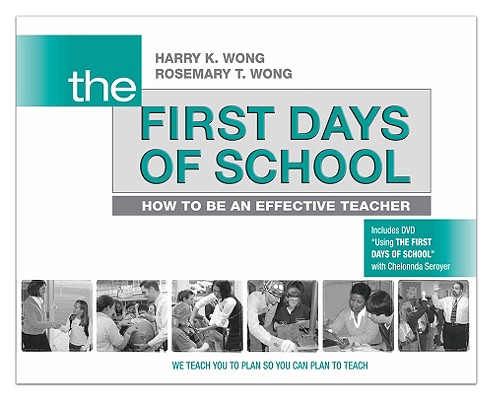
It’s Back-to-School time, and hopefully everyone is off to a terrific start, implementing new district policies and applying Harry and Rosemary Wong’s wisdom about “the first days of school.” (Routines and procedures, practice, practice, practice.)

The-First-Days-of-School-9780976423317

Batman is back in the news too, mainly the upcoming Ben Affleck movie version with Superman a la Frank Miller’s The Dark Knight Returns miniseries (e.g. short pointy ears). I’m sure we’ll have more to talk about that topic and teaching connections in the future (e.g. short pointy ears).

bat comparison

Comparison courtesy of artist Dean Trippe @deantrippe

In the near future, a bunch of new Batman-related comics are coming out. Namely, two series start this fall, as announced by Entertainment Weekly.

One title is Arkham Manor, in which Bruce Wayne (Batman’s nice face) decides to donate his Wayne Manor to house Gotham City’s criminally insane. The mansion that’s known for masking the underground Batcave has now become the new location for Arkham Asylum. There goes the neighborhood.

Arkham Manor     Gotham Academy
 

Another Bat-title from DC—Gotham Academy—focuses on the city’s private school for rich kids.  Plaid skirt uniforms and everything.

(Side note: I’m curious about the depiction of Gotham’s public schools.  If you are curious as well, the best we can do is watch the movie Dangerous Minds and assume that instead of being a former marine, Michelle Pfieffer’s character is Selena Kyle after giving up the Catwoman costume in Batman Returns. It almost works!)

As for the comics, we’ll see what happens as both series progress in the months to come. The reason I bring them up here is to encourage all of us teachers to consider our school environment.

Academy?

Does your school building feel like an academy? It’s a fancy word, coming from the Greek “grove of Akademos,” where Plato did his teaching. Good company, no? People nowadays use the term “academy” to refer to a special institution for scholarship or for the advancement of the arts or science. 

You don’t have to teach in a special institution to advance the ideas of scholarship and appreciation for culture. Wherever and whatever you teach, consider how you can promote an “academic” attitude in your students. I’m not talking about being a snob or out of touch with reality. But we can still create an environment where learning is looked upon as a noble endeavor and great adventure.

Sometimes our schools have too much adventure, though, and may even feel like an insane asylum.

Asylum?

Does anyone in your school drink from a mug like this?  

crazy mug

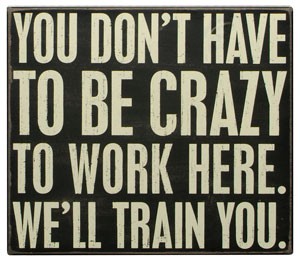
Or post this sign in their classroom or office?

crazy sign


Schools can often feel like a facility for the mentally unstable. Beyond the humor, though, there is some truth to that notion. Think about our students’ mental, emotional, and physical states. Most of them are, in fact, a little unstable. A little “shaky,” so to speak. They should be. They’re still growing up.

And that’s why we teach them. During a school year, teachers introduce students to hundreds of ideas and skills. Our students should investigate, reflect, and practice the content, all the while strengthening (and stabilizing) their foundations—intellectually, emotionally, and more. This learning process is often challenging and frustrating, even destabilizing at times, and ultimately rewarding.

Learning can create a sense of vulnerability, and students need a safe place to learn—no matter what kind of school or classroom. 

We looked at the origin of the word “academy,” so let’s do the same for asylum. Although often associated with housing the mentally ill, the word “asylum” comes from the Latin word for “sanctuary,” a “safe or secure place.”

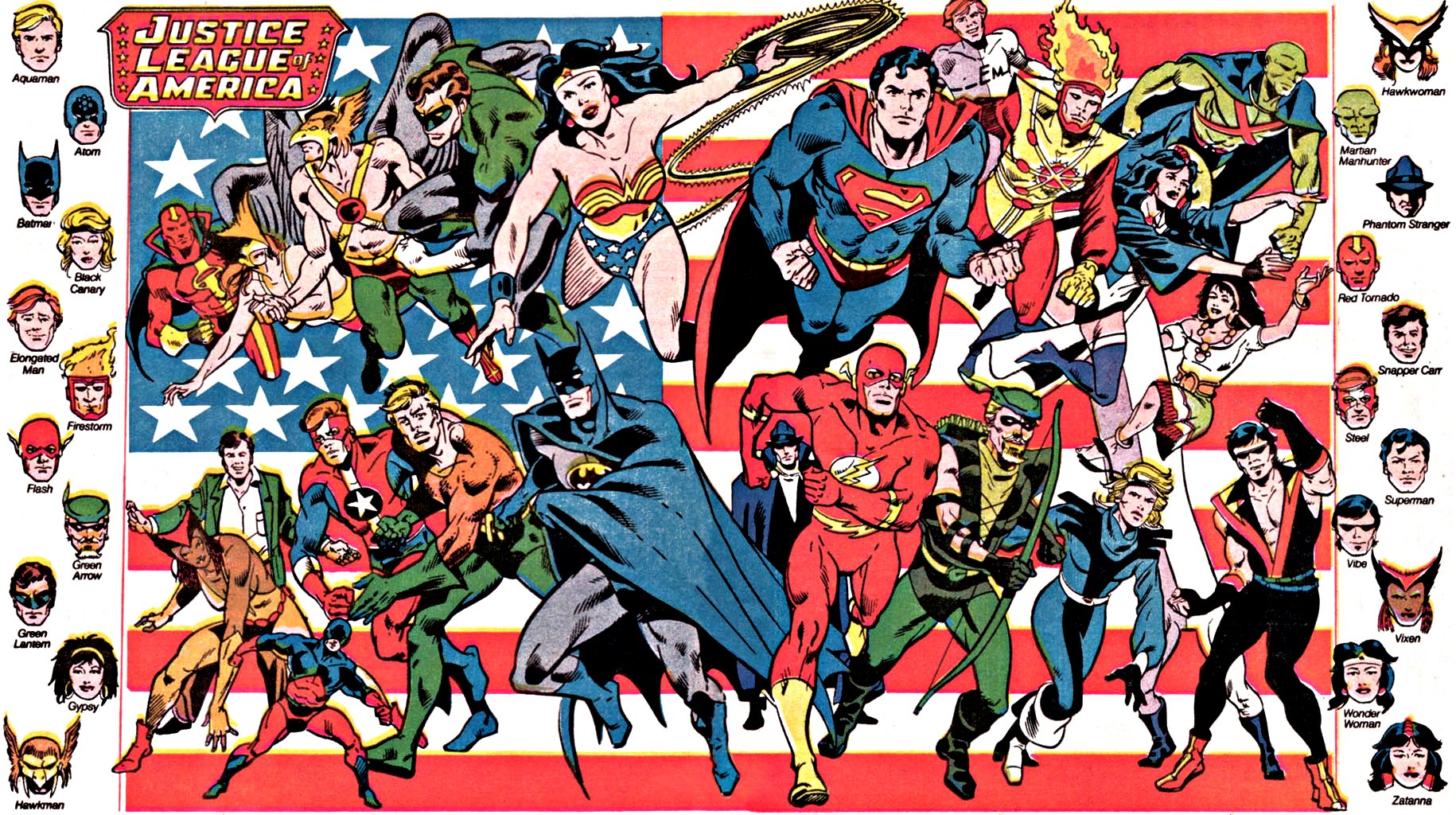
We can never protect kids from every unsafe event or bad influence, but we can all do our part. None of us can do it alone. Heck, even Batman has the Justice League. (And Alfred. And several Robins. And Nightwing. And the Gotham City Police Department. And the Outsiders. And Batman Incorporated. And Batmen of All Nations. And Ace the Bat-Hound.)

justiceleague


Fight the good fight with your trusted colleagues, mentors, and friends. (And pets.)  You get to pick who wears the cape.

Good luck in the coming year in whatever classroom you teach. Wherever you are, it can be both an academy and an asylum for your students. And so much more.


Favorite Superhero Teacher?

Standard

Wolverine is staying with the whole “teacher thing” for another semester at the Jean Grey School for Higher Learning.  You can read more here and click on the image below to review Mr. Logan’s pedagogical methods:

WolvTr

(Don’t even ask about detention.)

So who’s your favorite superhero teacher?  Chime in!